“I used to dream about escaping my ordinary life, but my life was never ordinary. I had simply failed to notice how extraordinary it was.”
— Jacob reflects on his life before discovering the peculiar world.

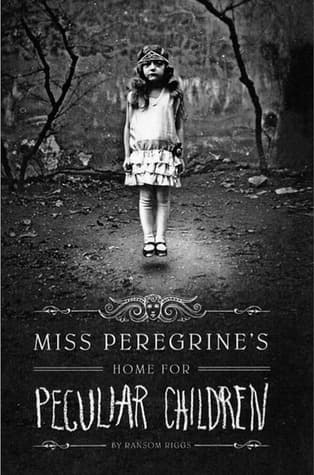
Ransom Riggs (2011)
Genre
Fantasy / Historical Fiction / Mystery / Young Adult
Reading Time
7 hr 30 min
Key Themes
See below
Sign in to track this book
A secluded Welsh orphanage, home to children with unusual abilities, becomes a terrifying reality for a teenager investigating his grandfather's mysterious death, blurring the lines between vintage photographs and a dangerous present.
Sixteen-year-old Jacob Portman grew up hearing his grandfather, Abraham 'Abe' Portman, tell stories of his childhood in a Welsh orphanage, filled with peculiar children and monsters. Jacob thought these were just war stories. One night, Jacob finds Abe dying in his backyard, his eyes removed, after an attack by a monstrous figure only Jacob can see. Abe's last words, 'Find the loop. September third, 1940. On the other side of the old man's grave. Emerson. The bird will tell you. Tell them what happened, Abe,' stay with Jacob. His parents and therapist, Dr. Golan, think Jacob's vision is from trauma. They suggest he travel to Cairnholm, Wales, where Abe's orphanage was, hoping it will help him cope.
Jacob and his father travel to the remote, gloomy island of Cairnholm, Wales. They find the old children's home, bombed out and abandoned, just as Abe had described. This makes Jacob believe his grandfather's stories more. While exploring the ruins, Jacob finds a hidden chest with old photographs of peculiar children, like the ones Abe had shown him. Driven by a strange feeling, Jacob returns to the site and meets a mysterious girl, Emma Bloom, who can make fire with her hands. She recognizes him as Abe's grandson and, believing he is peculiar, leads him into a hidden passage.
Emma leads Jacob through a hidden entrance. On the other side, Jacob finds an active home. He quickly realizes he has stepped into a time loop, specifically September 3, 1940, the day before the orphanage was bombed during World War II. Here, he meets Miss Peregrine, an Ymbryne (a peculiar who can manipulate time and turn into a bird), and the peculiar children, all living in an endless day. Miss Peregrine explains that the loop protects them from the outside world and the monstrous Hollowgasts, which hunt peculiars. Jacob learns that his grandfather, Abe, was also peculiar and had left the loop to fight these monsters.
Jacob spends time in the loop, watching the children and their abilities: Bronwyn Bruntley has superhuman strength, Millard Nullings is invisible, Olive Elephanta is light, Enoch O'Connor can reanimate the dead, and Hugh Apiston controls bees. He learns about the dangers of Hollowgasts and Wights, who are peculiars that failed an experiment to become immortal and now hunt peculiars for their eyes. Miss Peregrine explains that Ymbrynes create and maintain time loops to protect peculiars. Jacob feels a growing sense of belonging and purpose, very different from his ordinary life outside the loop.
One day, a peculiar boy named Victor, Bronwyn's brother, is found dead outside the loop, his eyes removed. This confirms a Hollowgast is on Cairnholm. Miss Peregrine and the children are upset, realizing their safe place is threatened. Later, while Jacob and Emma are out, they see a local man, Martin, being attacked by an invisible creature. Jacob, to his surprise, can see the monster – a thin, tentacled Hollowgast. He realizes his ability to see these creatures is why his grandfather could hunt them, and why he was drawn to the loop. This discovery strengthens his connection to the peculiar world.
Jacob returns to the loop to warn Miss Peregrine. He starts to suspect his therapist, Dr. Golan, who followed him to Cairnholm, is not who he seems. Jacob realizes Golan matches the description of a Wight – a Hollowgast in human form. Golan reveals himself, admitting he used Jacob to find the loop. He explains that he and other Wights, led by a powerful Wight named Barron, plan to capture Ymbrynes and force them to create a permanent loop, giving them true immortality. Golan captures Miss Peregrine and locks her up, revealing a larger conspiracy.
With Miss Peregrine imprisoned and the loop's guardian gone, the children are in danger. The loop, which resets daily, is about to close, leaving them open to the coming German bombing raid on September 4, 1940. Golan, now clearly a Wight, forces Miss Peregrine into her bird form and locks her in a cage. He says his plan is to gather other Ymbrynes for experiments. Jacob, with his unique sight, gathers the peculiar children. They are scared but determined to rescue their headmistress and escape the loop before it is too late.
Jacob leads the peculiar children in a daring rescue. They track Dr. Golan to a lighthouse, where he is preparing to transport Miss Peregrine and other captured Ymbrynes by boat. The children use their abilities together: Enoch reanimates an army of skeleton puppets, Bronwyn uses her strength, and Emma uses fire. During the fight, Jacob confronts Golan, who admits he was the Hollowgast that killed Abe. Jacob uses a crossbow to kill Golan, but the other Wights and their Ymbryne captives escape on a boat.
The children get Miss Peregrine's cage, but she is still a bird, unable to change back. They rush back to the loop, but it is too late; the loop's reset mechanism is broken, and the German bomber is overhead. They escape the loop moments before the bomb hits, destroying their home. Now outside the loop's protection, the children are exposed to the modern world and its dangers, with Miss Peregrine still a bird. Jacob, understanding his role, decides to stay with them, knowing he can see the Hollowgasts that hunt them.
With their home destroyed and Miss Peregrine stuck as a bird, Jacob and the peculiar children realize they must find another Ymbryne to help her change back and guide them. They decide to follow the Wights, hoping to intercept them and rescue the other captured Ymbrynes. The novel ends with Jacob and the children starting a new, dangerous journey across the sea. They want to find a new safe place and protect each other. Jacob has fully accepted his peculiar identity and his role as protector, ready for the unknown challenges with his new family.
The Protagonist
Jacob transforms from a fearful, ordinary teenager into a brave, self-aware peculiar who embraces his unique ability and leadership role.
The Supporting
Initially a firm protector, she becomes a vulnerable victim, relying on her children to save her, highlighting their growth and her reliance on them.
The Supporting
Initially guarded and skeptical of Jacob, she grows to trust him and eventually becomes his love interest and co-leader.
The Supporting/Mentioned
His past actions and experiences, though mostly relayed through his stories, directly influence Jacob's journey and reveal the origins of Jacob's own peculiarity.
The Supporting
He remains largely consistent in his cynical nature but proves his loyalty and usefulness in crucial moments.
The Supporting
His quiet but observant nature is consistently helpful, providing crucial information and assistance throughout the narrative.
The Supporting
Her strength and loyalty are consistently demonstrated, especially when defending her friends and avenging her brother.
The Antagonist
Revealed as the primary antagonist, his true nature and motivations drive the central conflict of the story.
The Supporting
Her character provides a sense of innocence and vulnerability within the peculiar group.
The Supporting
His loyalty and unique ability contribute to the group's defense and survival.
Jacob's journey is about finding his identity and accepting his peculiar heritage. He starts by feeling ordinary and misunderstood. When he arrives at Miss Peregrine's home and realizes he can see Hollowgasts, he finds purpose and belonging. He learns that what he thought was a problem is a unique gift, letting him step out of his grandfather's shadow and become a protector of peculiars.
“For the first time in my life, I felt like I belonged. Like I was home.”
The novel shows how important stories are, especially those passed down. Abe Portman's tales, first dismissed as fiction, become the key to Jacob's future. The peculiar children's lives in the time loop are proof of these stories, blurring the lines between myth and reality. The old photographs in the book also show how visual and oral histories keep identity and truth alive, shaping the present and guiding the future.
“I had always wanted to believe him. It was just that I couldn't.”
A main theme is finding family and belonging outside of blood relatives. Jacob feels disconnected from his parents but finds acceptance and purpose among the peculiar children. The orphanage, despite its unusual circumstances, acts as a loving, protective family. They are connected by their shared peculiarities and their reliance on Miss Peregrine. This theme shows that home is not just a place, but where one feels understood and valued.
“We are a family, Jacob. We may not share blood, but we share something much stronger. We share a bond that time cannot break.”
Peculiars are excluded and hunted for being different. This reflects real-world prejudice against 'others.' They must hide, protected by time loops, to escape persecution from 'normals' and the monsters. The story explores the fear and violence directed at those who do not fit in. The peculiar children's struggle is a metaphor for marginalized groups seeking safety and acceptance.
“We are a secret, Jacob. A secret that must be kept at all costs, for our own protection.”
Time loops are a central way the book explores time itself. The peculiar children live in an endlessly repeating day, which gives them a form of immortality but also stagnation. The Wights' desire for true, unchanging immortality drives their evil actions, showing the danger of trying to defy natural order. The story questions the value of a life lived outside the flow of time and the results of trying to cheat death, comparing the safety of the loop with the need for growth and change.
“A loop is not a prison, Jacob. It is a sanctuary. A place where we can live forever, safe from the world outside.”
A recurring 24-hour period that resets daily, protecting peculiars from the outside world.
Time loops are crucial to the plot, serving as sanctuaries for peculiars, created and maintained by Ymbrynes. Miss Peregrine's loop on September 3, 1940, allows the children to live indefinitely, safe from the dangers of the modern world and the predations of Hollowgasts. The loops prevent aging and provide a stable environment, but also trap their inhabitants in a perpetual day. The integrity of the loop and the ability to enter/exit it are central to the story's conflict and resolution, as its collapse forces the children into the present day.
Authentic antique photographs integrated into the narrative, illustrating the peculiar children.
The book is famously illustrated with actual vintage photographs, which are not merely decorative but integral to the storytelling. These haunting, often surreal images depict the peculiar children and their abilities, making the fantastical elements feel tangible and real. They serve as evidence of Abe's stories, clues for Jacob's investigation, and a unique way to immerse the reader in the peculiar world, blurring the lines between fiction and historical reality. The photos are presented as artifacts Jacob discovers, deepening his connection to his grandfather's past.
Invisible monsters and their human-like counterparts, the primary antagonists.
Hollowgasts are the monstrous, invisible creatures that hunt peculiars and consume their eyes. They are the result of a failed peculiar experiment to achieve immortality. Wights are Hollowgasts who have consumed enough peculiar souls to regain a human form and intelligence, though they retain their hunger for peculiars and their distinctive white, pupil-less eyes. These creatures serve as the primary antagonists, representing the existential threat to the peculiar community and driving much of the plot's tension and conflict, especially as Jacob is the only one who can see Hollowgasts.
Female peculiars who can transform into birds and manipulate time to create and maintain loops.
Ymbrynes are a specific type of peculiar, always female, who possess the unique ability to transform into a particular bird (like Miss Peregrine into a peregrine falcon) and, more importantly, to manipulate time. They are the guardians of the peculiar world, responsible for creating and maintaining the time loops that protect peculiar children from the outside world and the Wights. Their capture and the threat to their existence form the core of the antagonist's plot, as without Ymbrynes, the peculiar community is left vulnerable and without sanctuary.
“I used to dream about escaping my ordinary life, but my life was never ordinary. I had simply failed to notice how extraordinary it was.”
— Jacob reflects on his life before discovering the peculiar world.
“We cling to our fairy tales until the price for believing in them becomes too high.”
— Jacob's grandfather warns him about the dangers of their peculiar heritage.
“Strange, I thought, how you can be living your dreams and your nightmares at the very same time.”
— Jacob experiences the duality of his new life among peculiars.
“I didn't know what to call it, what was happening between us, but I liked it. It felt like a secret.”
— Jacob describes his growing connection with Emma.
“We are safe here, but we are not free.”
— Miss Peregrine explains the limitations of living in a time loop.
“The monsters were never under my bed. Because the monsters were inside me.”
— Jacob confronts his inner fears and peculiar abilities.
“You can't stay angry at someone who makes you laugh.”
— Jacob observes the dynamics among the peculiar children.
“I used to think that being peculiar was a curse, but now I see it's what makes me special.”
— Jacob embraces his peculiar nature.
“The past is a ghost, the future a dream, and all we ever have is now.”
— A reflection on living in the present amidst time loops.
“We are all peculiar in our own way, but some of us are just better at hiding it.”
— A general observation about human nature in the book.
“Fear is a funny thing. It can make you do things you never thought you could.”
— Jacob reacts to a dangerous situation with the hollowgasts.
“Home isn't a place, it's the people who make you feel like you belong.”
— Jacob finds belonging among the peculiar children.
“Sometimes you have to lose yourself to find who you really are.”
— Jacob's journey of self-discovery through chaos.
“The world is full of magic things, patiently waiting for our senses to grow sharper.”
— A philosophical note on perceiving the peculiar in the ordinary.
Ready to see how well you understood this book? Take our interactive quiz with 10 questions.
Biography coming soon.







