“Miss Hickory was a country mouse, for she had a hickory nut for a head and a body made of applewood.”
— Introducing the protagonist and her unique construction.

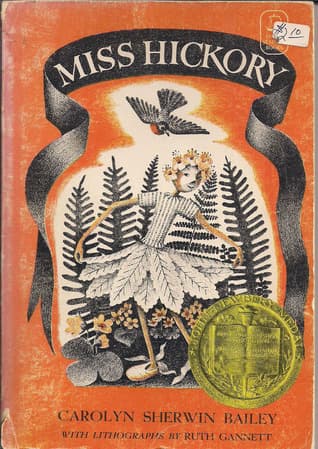
Carolyn Sherwin Bailey (1946)
Genre
Fantasy / Children's / Young Adult
Reading Time
90 min
Key Themes
See below
Sign in to track this book
Left behind by her owner, a feisty doll with a hickory nut head and apple-wood twig body must brave the New Hampshire winter alone, relying on her wit and the kindness of woodland creatures to survive.
The story begins at Ann's New Hampshire home, where Miss Hickory, a doll with a hickory nut head and an apple-wood twig body, lives a comfortable life. Ann is preparing to leave for Boston for school, and in the rush of packing, Miss Hickory is accidentally left on the windowsill. Ann's grandmother, who made Miss Hickory, is also moving out for the winter. Miss Hickory watches as the house is boarded up and Ann leaves, making her feel abandoned and vulnerable as winter approaches. Her initial shock turns into a growing sense of fear and loneliness, as she realizes she must now survive on her own in the wild.
As winter begins, Miss Hickory, realizing she cannot stay on the windowsill, tries to find a safer place. Her twig body makes moving hard, but she eventually tumbles into the yard. There, she meets Crow, a large, opinionated, and somewhat cynical bird. Crow, at first dismissive of Miss Hickory's situation, reluctantly offers her shelter in his nest in a nearby apple tree. He grumbles about her being a 'house doll' and not understanding the wild, but his actions show a grudging sense of responsibility, giving her temporary refuge and a harsh introduction to outdoor life.
Miss Hickory settles into Crow's nest, finding it a rough but secure home. She watches the changing seasons and the activities of the forest creatures. Her biggest challenge comes from Squirrel, who is always looking for hickory nuts to store for winter. Squirrel sees Miss Hickory's head as a good food source and repeatedly tries to steal it, to Miss Hickory's terror and Crow's annoyance. Crow often steps in, scolding Squirrel and protecting Miss Hickory, though he sometimes complains about the trouble she brings, showing the constant threat she faces in the wild.
As winter deepens and snow falls heavily, the apple tree becomes a less hospitable place. Crow, a migratory bird, will soon need to leave for warmer climates. Miss Hickory understands that Crow's nest is only a temporary solution and that she needs a more permanent, secure shelter to survive the New Hampshire winter. Her concern shifts from just surviving daily to finding a long-term solution, prompting her to consider other options and ask advice from her animal companions, especially the wise, old Groundhog.
Seeking guidance, Miss Hickory consults Groundhog, a wise, old creature known for his knowledge of the land and its secrets. Groundhog, after much thought, suggests that Miss Hickory should try to find shelter in the barn, a sturdy building that protects from the weather and predators. He explains that the barn is a traditional winter home for many small creatures. This advice gives Miss Hickory a new goal and direction, but also presents the challenge of traveling to the barn through the increasingly cold and snowy landscape.
With Groundhog's advice, Miss Hickory, helped by Crow and other creatures like the Blue Jay, begins her difficult journey to the barn. The journey is dangerous; she must go through deep snow, brave freezing temperatures, and avoid predators. Her small size and fragile twig body make every step a huge effort. The other animals, despite their initial doubt or indifference, offer encouragement and practical help, showing a growing sense of community and care for the vulnerable doll. This journey tests Miss Hickory's resilience and determination.
After a challenging journey, Miss Hickory finally reaches the barn. She finds it a busy, if somewhat messy, environment, filled with various farm animals and wild creatures seeking refuge from the cold. She quickly makes new friends, including Field Mouse, a practical and kind creature, and the Cow, who offers her a warm, safe spot within her stall. The barn provides not only physical shelter but also a sense of belonging and community that Miss Hickory had lacked since Ann's departure. She learns to adapt to barn life, finding a new purpose in her interactions with the animals.
Even within the barn's relative safety, Miss Hickory's hickory nut head remains a tempting target for Squirrel, who manages to follow her. Squirrel's constant attempts to steal her head continue to worry Miss Hickory. However, the barn also introduces her to the Barn Cat, a sleek and watchful predator who, surprisingly, takes an interest in protecting Miss Hickory. The Barn Cat's presence deters Squirrel and other potential threats, giving Miss Hickory a powerful, if somewhat distant, guardian. This alliance shows the complex relationships in the wild.
As the New Hampshire winter slowly passes, Miss Hickory endures the cold and the challenges of barn life. She observes the subtle signs of spring's approach — melting snow, the return of migratory birds, and the awakening of dormant life. Her experiences have changed her from a delicate house doll into a resilient survivor. She has learned the ways of the wild and formed deep bonds with her animal companions. Spring brings renewal and hope, but also a growing awareness that her time in the barn might be ending, and she must decide about her future.
With spring fully arrived, Miss Hickory faces a new problem. While she has found a community in the barn, it is not her original home. However, Field Mouse and his family, having grown fond of her, offer her a permanent place in their cozy nest. They propose she become their 'house doll' within the barn, a respected member of their family. This offer represents a choice between returning to her old life, if possible, or embracing a new identity and purpose within the wild. Miss Hickory is touched by their kindness and considers the offer seriously, feeling a deep connection to her new friends.
As summer approaches, Ann returns to her New Hampshire home for the holidays, and to Miss Hickory's surprise, she remembers and begins searching for her lost doll. Ann's return gives Miss Hickory her ultimate choice: to return to her former life as a cherished doll in a human home, or to remain in the wild with her animal friends who have become her family. This moment of decision is poignant, as Miss Hickory has grown and changed so much during her time away. She must weigh the comfort of her past against the love and belonging she has found in her new, wild existence.
In a key moment, Miss Hickory makes her choice. She decides not to return to Ann, understanding that she has outgrown her old life and found her true place in the wild. She has become a vital part of the animal community, her experiences having changed her from a passive doll into an active, resilient member of nature. She symbolically lets go of her desire for her old life, embracing her identity as a creature of the wild. Her decision shows her full integration into the natural world, having found a unique purpose and a loving, if unconventional, family among the animals, living a life of quiet contentment.
The Protagonist
From a helpless, abandoned doll, Miss Hickory transforms into a self-reliant and integrated member of the wild animal community, finding her true identity and purpose.
The Supporting
Crow initially reluctantly helps Miss Hickory but grows to genuinely care for her, demonstrating his underlying compassion.
The Antagonist
Squirrel remains consistent in his natural drive, representing a constant, instinctual threat rather than undergoing personal development.
The Supporting
Groundhog serves as a static source of wisdom and guidance, his role is to inform and direct the protagonist.
The Mentioned
Ann's character doesn't develop, but her presence serves as a bookend to Miss Hickory's journey.
The Supporting
Field Mouse consistently embodies kindness and community, offering Miss Hickory a sense of belonging without significant personal arc.
The Supporting
Barn Cat's role is to offer protection, showing a surprising tenderness amidst her predatory nature.
The Supporting
Blue Jay's character remains consistent as a helpful, if somewhat excitable, member of the animal community.
Miss Hickory's journey is about finding where she belongs and who she truly is. Initially, her identity is tied to being Ann's doll. When abandoned, she struggles with her place in the wild. Through her interactions with Crow, Groundhog, and the barn animals, she slowly sheds her 'house doll' persona. The climax of this theme is her choice to remain in the wild, rejecting her old identity to embrace a new one as an integrated member of the natural world, symbolized by Field Mouse's offer of a permanent home in the barn.
“She was Miss Hickory, a creature of the wild, and she had found her own place in it.”
The New Hampshire winter and the dangers of the wild force Miss Hickory to become resilient. Her twig body and nut head make her vulnerable, but she learns to adapt to her surroundings, moving from Crow's nest to the barn. She endures hunger, cold, and the constant threat of Squirrel. Her ability to survive and even thrive in an environment so alien to her original existence shows the power of adaptation and the strength found in overcoming adversity, demonstrating that even the smallest and most fragile can endure.
“A hickory nut head and an apple-wood twig body were not made for winter, but Miss Hickory was learning to manage.”
The book shows the web of life in the New Hampshire wilderness. Miss Hickory's survival depends on the help and interactions with various animals — Crow provides shelter, Groundhog offers wisdom, Field Mouse gives companionship, and even the Barn Cat offers protection. Predators like Squirrel and the Barn Cat are not evil but act according to their nature, part of the larger ecological balance. This theme emphasizes that all creatures, regardless of size or perceived importance, play a role in the ecosystem and are interdependent.
“In the wild, everything depended on everything else, and even a small doll could find her place.”
Miss Hickory's story is an allegory for a child's transition from dependence to independence. Her abandonment by Ann symbolizes leaving the sheltered world of childhood. Her journey through the wild, facing dangers and making her own decisions, mirrors the challenges of growing up. Her choice to remain in the wild, rather than returning to her 'owner,' signifies a coming-of-age, embracing self-reliance and forging her own path, much like a young adult stepping out into the world.
“She was no longer just Ann's doll; she was Miss Hickory, and she had a life of her own.”
Giving human qualities and speech to animals.
The most prominent plot device is the anthropomorphism of the animals. Crow, Groundhog, Squirrel, and all other creatures speak, reason, and display distinct personalities, allowing them to interact directly with Miss Hickory. This device enables the story to explore complex themes like friendship, responsibility, and community through animal characters, making the wild accessible and understandable to young readers while providing Miss Hickory with companions and mentors.
Miss Hickory's head represents her vulnerability and a coveted resource.
Miss Hickory's hickory nut head is a central symbol. It represents her most vulnerable point – a delicious food source for squirrels – constantly reminding her of the dangers of the wild. However, it also symbolizes her innate connection to nature; she is literally made of natural elements. Its value to Squirrel drives much of the conflict, making it a constant reminder of her precarious existence and the need for protection, ultimately highlighting her unique blend of fragility and natural essence.
Miss Hickory's physical and metaphorical journey of self-discovery.
The story employs a classic journey motif. Miss Hickory's physical journey from the windowsill to Crow's nest, and then to the barn, is a literal quest for survival and shelter. This physical movement mirrors her internal, metaphorical journey of self-discovery and transformation. Each stage of her journey introduces new challenges, characters, and lessons, pushing her to grow and adapt, ultimately leading her to a deeper understanding of herself and her place in the world.
The progression of seasons mirrors Miss Hickory's emotional and physical journey.
The narrative uses the progression of the New Hampshire seasons – from autumn to deep winter and then to spring – as a structural device. The onset of winter symbolizes Miss Hickory's initial despair and vulnerability, while the harshness of the season represents her struggles. The arrival of spring signifies renewal, hope, and her eventual decision to embrace her new life. This natural cycle not only grounds the story in a realistic setting but also mirrors Miss Hickory's emotional arc, moving from abandonment and fear to resilience and belonging.
“Miss Hickory was a country mouse, for she had a hickory nut for a head and a body made of applewood.”
— Introducing the protagonist and her unique construction.
“It was her nature to be practical and not to waste time on tears.”
— Describing Miss Hickory's resilient and no-nonsense personality.
“But a house is not a home without someone to live in it.”
— Miss Hickory reflecting on her empty dollhouse.
“The wind was a great storyteller, and it told Miss Hickory many tales of the world beyond her yard.”
— Miss Hickory's connection to nature and the world outside her immediate surroundings.
“She had to think, and thinking was hard work when one was only a doll.”
— Miss Hickory facing a difficult problem and emphasizing her small stature.
“Even the smallest of us can do great things if we put our minds to it.”
— A thematic message about courage and capability.
“Winter was not just a time of cold, but a time of waiting and dreaming.”
— The changing seasons as a metaphor for life's cycles.
“She was learning that even sorrow had its own kind of beauty, if one looked for it carefully.”
— Miss Hickory's developing understanding of life's complexities.
“To be truly alive, one must be willing to change.”
— A profound realization about adaptation and growth.
“The wild creatures were her neighbors, and she understood their language.”
— Miss Hickory's unique bond with the animals.
“Sometimes the best way to find what you've lost is to stop looking for it.”
— A paradoxical piece of wisdom Miss Hickory learns.
“She might be small, but her heart was as big as the whole wide world.”
— Highlighting Miss Hickory's inner strength and kindness.
“A journey is not just about where you go, but who you become along the way.”
— Reflecting on the transformative power of experience.
Ready to see how well you understood this book? Take our interactive quiz with 10 questions.







