“The world isn't always fair, but that doesn't mean you shouldn't try to make it better.”
— A mentor figure advising the young protagonist about the challenges ahead.

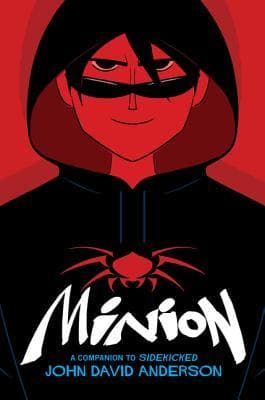
David Anderson, John David Anderson (2014)
Genre
Fantasy / Children's / Mystery / Science Fiction / Young Adult
Reading Time
360 min
Key Themes
See below
Sign in to track this book
In a city where villains are common and heroes are rare, a young inventor's life with his adoptive father changes when a mysterious Super arrives, forcing them to face the blurred line between good and evil.
Michael Morn, a young inventor, lives with his adoptive father in the struggling city of New Liberty, known for its lack of superheroes and common crime. They make unique, high-tech 'boxes' that grant various abilities, selling them to local mob boss, Mr. Henderson. Their life is a careful balance of invention, secrecy, and survival in a city where right and wrong are unclear. Michael often feels uneasy about their work but trusts his father, believing their creations, though used by criminals, are necessary to support their small family. This uneasy peace is about to end.
New Liberty's stability breaks with the sudden arrival of a new, powerful Super called 'The Comet.' This mysterious figure, seen as a blue streak in the sky, begins to systematically dismantle the criminal operations that have long controlled the city. The Comet's presence immediately affects Michael and his father, as their main clients, the mob, find their business increasingly difficult and dangerous. The demand for their 'boxes' changes, and the risks of their trade rise sharply. Michael sees the growing fear among criminals and feels a personal threat to their livelihood and safety as the city's established order crumbles.
Unexpectedly, The Comet approaches Michael's father with an unusual offer, rather than targeting him as a villain. The Comet shows a deep understanding of the 'boxes' and their capabilities, wanting to use their technology to clean up New Liberty. This surprising alliance confuses Michael. His father, usually guarded, seems interested, seeing a potential path to legitimacy and a safer life for Michael. This interaction makes Michael rethink his ideas about heroes and villains, and the true nature of his father's work.
As his father works more closely with The Comet, Michael learns more about the 'boxes.' He finds out their capabilities go far beyond simple criminal tools. They are advanced devices that can manipulate energy, create force fields, and enhance human abilities. Michael realizes his father has been hiding the full potential of his inventions, perhaps out of fear or a desire to keep them from the wrong hands, or to avoid attracting powerful Supers. This discovery fills Michael with both awe and worry as he considers the ethical issues of their creations.
The mob, led by Mr. Henderson, does not accept Michael's father's new alliance with The Comet. Seeing his shift as a betrayal, Henderson plans a violent attack on their workshop. The fight is intense, forcing Michael and his father to use their inventions defensively, showing their own hidden abilities and resourcefulness. The attack highlights the extreme danger they face and confirms they are now caught between two powerful forces: the criminal underworld they once served and the mysterious hero they are now helping. This event strengthens Michael's resolve to protect his father.
During a tense meeting, The Comet reveals a big secret: he and Michael's father were once partners, brilliant scientists who developed the 'box' technology together. They had a disagreement about the ethical uses of their inventions, leading to The Comet's departure and Michael's father's retreat into New Liberty's shadows. The Comet, whose real name is Dr. Elias Vance, explains he returned to New Liberty to reclaim their technology and fix past mistakes. This revelation gives Michael important context, explaining his father's guarded nature and the true origins of their powerful devices.
With the full truth revealed, Michael and his father face a significant ethical problem. Their technology, capable of great good or destruction, is now central to a conflict for New Liberty's future. Dr. Vance believes the 'boxes' must be used to completely dismantle the city's criminal system, even if it means changing society. Michael's father, however, remains cautious of such widespread intervention, fearing unintended consequences or the technology being misused by others. Michael struggles to balance his desire for a better city with his father's careful wisdom, understanding the huge responsibility they now have.
The conflict ends in a massive confrontation between The Comet, aided by Michael and his father, and New Liberty's united criminal groups, led by Mr. Henderson. The battle is a chaotic display of advanced technology, strategy, and raw power. Michael actively participates, using the 'boxes' in ways he never imagined, proving his ingenuity and bravery. His father also uses the full potential of his inventions, showing his skill. The Comet's powers are pushed to their limits as they fight to dismantle the criminal empire that has plagued the city for so long, aiming for a decisive victory.
After the intense battle, Michael's father makes a key decision. He chooses to share the 'box' technology, not just with The Comet, but with a newly formed, legitimate oversight committee. This ensures that their inventions' power will be used responsibly and prevents any single person or group from controlling it. This reflects his belief in shared responsibility and a rejection of their previous isolated, morally unclear life. This decision signals a new era for New Liberty, where technology is a tool for justice, not just for crime.
With New Liberty recovering and his father working with Dr. Vance and the new committee, Michael finds his own purpose. He continues to innovate, developing new uses for their technology, but now with a clear ethical guide. He is no longer just a 'minion' for a criminal enterprise but a legitimate inventor helping his city. He embraces the good potential of his inventions, looking forward to a future where New Liberty can truly live up to its name, free from crime and the moral ambiguity that once defined it. He has found his place as a hero, though an unusual one.
The Protagonist
Michael evolves from a hesitant accomplice in a criminal enterprise to a conscious and responsible inventor, embracing his role in shaping a better future for New Liberty.
The Supporting
He transitions from a reclusive, morally compromised inventor to a responsible leader, taking accountability for his creations and actively working for New Liberty's betterment.
The Supporting
The Comet returns to New Liberty as a seemingly black-and-white hero but learns the nuances of justice and collaboration, ultimately reconciling with his past partner.
The Antagonist
Henderson begins as a powerful criminal figure but experiences a decline in power due to The Comet's intervention, ultimately being defeated.
The Setting/Mentioned
New Liberty transforms from a corrupt, hopeless city to one with a burgeoning sense of justice and hope for the future.
The novel constantly blurs the lines between heroes and villains, challenging common definitions. Michael and his father, despite helping criminals, are not evil; they are driven by survival and love. The Comet, a 'hero,' initially seems to have a clear view but learns the city's complexities. This theme explores how circumstances, intentions, and relationships can complicate moral judgments, suggesting that 'good' and 'evil' are often matters of perspective, especially in a city like New Liberty where survival often dictates choices. This is clear when Michael's father creates 'boxes' for the mob to protect Michael, acting as a 'villain' for a 'good' reason.
“In New Liberty, there are only two kinds of people, after all: those who turn to crime and those who suffer.”
At its heart, the story is about the deep bond between Michael and his adoptive father. Their loyalty to each other drives many of their decisions, even those that lead them to crime. Michael's father's main reason for his illegal activities is to protect and provide for Michael. This theme explores the sacrifices made for family and the strength of chosen bonds, showing that loyalty can be a powerful, if sometimes morally compromising, motivator. The father's decision to work with The Comet is ultimately driven by his desire for a safer, more legitimate future for Michael.
“They provide for each other, they look out for each other, and they'd never betray each other. In New Liberty... this is as much of a family as anyone could ever hope for.”
The 'boxes' represent great technological power, and the novel explores the ethical responsibilities that come with creating such devices. Michael and his father deal with the consequences of their inventions being used for criminal purposes. The Comet's return forces them to confront their technology's full potential and the moral duty to use it for the greater good. This theme highlights that creators are accountable for their innovations' impact, and that power, whether technological or superhuman, carries a heavy ethical burden. The climax shows Michael's father choosing to share the technology responsibly.
“With great power comes great responsibility... but what if you didn't ask for the power, and the responsibility was just dumped on you?”
New Liberty itself is a character, embodying social inequality and urban decay. The city's widespread crime and lack of superheroes result from its economic disparity and broken social structures. The story shows how a desperate environment can push people towards crime, not out of malice, but out of necessity. This theme highlights the systemic issues that create a breeding ground for both villains and the morally ambiguous. It shows that true change requires addressing the root causes of poverty and injustice, not just fighting individual criminals. The story mentions the divide between rich and poor.
“New Liberty, known across the country as the City without a Super... a city torn apart by the divide between the rich and the poor, the moral and the immoral.”
Mysterious, advanced technological devices with various capabilities, central to the plot.
The 'boxes' are the primary plot device, serving as both the source of Michael and his father's livelihood and the catalyst for conflict. Initially presented as tools for criminals, their true nature as advanced, versatile energy manipulators slowly unfolds. They function as MacGuffins, driving the plot forward as both the mob and The Comet seek to control them. Ultimately, they represent the power of invention and the ethical dilemmas associated with it, evolving from instruments of crime to tools for justice, depending on who wields them. Their capabilities are gradually revealed, adding layers of mystery and potential.
A dystopian urban setting that shapes the characters and their moral choices.
New Liberty acts as a powerful setting device, almost a character in itself. Its reputation as a 'City without a Super' and its pervasive crime rate establish the moral landscape of the story. The city's decay and desperation justify the characters' morally ambiguous actions and provide the fertile ground for both criminal enterprises and the eventual emergence of a hero. The environment itself reflects the internal struggles of the characters, forcing them to make difficult choices and highlighting the systemic issues that contribute to the narrative's central conflicts. It is a constant reminder of what is at stake.
The concealed history between Michael's father and The Comet.
The mysterious past shared by Michael's father and The Comet is a crucial plot device, creating suspense and driving the narrative's revelations. The gradual unfolding of their former partnership, the reasons for their split, and the true origins of the 'boxes' provide crucial backstory that explains character motivations and the central conflict. This device builds intrigue, offering a deeper understanding of the characters' present circumstances and guiding their reconciliation. It allows for a slow reveal of information, keeping the reader engaged as the pieces of the puzzle come together.
The enigmatic Super whose arrival disrupts the status quo.
The Comet functions as a catalyst and a mystery device. His sudden appearance and unknown intentions initially create fear and uncertainty, disrupting New Liberty's established criminal order and Michael's family life. As his identity as Dr. Elias Vance and his connection to Michael's father are revealed, he transitions from an external force of change to an integral part of the narrative's central conflict and resolution. His actions force Michael and his father to confront their past and make decisions about their future, ultimately driving the shift towards justice in New Liberty.
“The world isn't always fair, but that doesn't mean you shouldn't try to make it better.”
— A mentor figure advising the young protagonist about the challenges ahead.
“Sometimes the smallest creatures hold the biggest secrets.”
— The protagonist discovers an unexpected clue from a seemingly insignificant source.
“Fear can be a powerful motivator, but courage is what truly changes things.”
— A character reflecting on their own bravery in the face of danger.
“Not all magic comes from wands and spells; some of it is in the way you see the world.”
— Explaining a unique form of 'magic' that relies on perspective and understanding.
“Even shadows have their own stories, if you know how to listen.”
— The protagonist learns to pay attention to subtle details and overlooked elements.
“The greatest adventures often begin with a single, unexpected knock at the door.”
— The inciting incident that kicks off the protagonist's journey.
“Trust is a fragile thing, easily broken, but incredibly strong when earned.”
— A character grappling with betrayal and the importance of loyalty.
“What you don't know can hurt you, but what you refuse to learn can destroy you.”
— A warning about ignorance and the necessity of knowledge.
“Every lock has a key, you just have to be clever enough to find it.”
— The protagonist faces a puzzle or obstacle that requires ingenuity.
“The past isn't always what it seems, and neither is the future.”
— A revelation about historical events or foreshadowing future twists.
“It's not about being the strongest, but about knowing when to be smart.”
— A character choosing strategy over brute force in a confrontation.
“Sometimes the most ordinary places hide the most extraordinary things.”
— Discovering a magical or mysterious element in an everyday setting.
“True friendship isn't about always agreeing, but about always supporting.”
— Friends having a disagreement but ultimately standing by each other.
“The universe has a peculiar way of balancing things, even if it takes a while.”
— Reflecting on the eventual consequences of actions, good or bad.
Ready to see how well you understood this book? Take our interactive quiz with 10 questions.
David Anderson is a fiction author known for his works "Posted" and "Minion." His writing often explores contemporary themes within the fiction genre, engaging readers with relatable narratives and compelling characters. Anderson's contributions to fiction have established him as a voice within the literary community.
Biography coming soon.







