
Biography coming soon.

Robert J. Sawyer (2005)
Genre
Fantasy / Science Fiction / Philosophy
Reading Time
12 Minutes
Key Themes
See below
Sign in to track this book
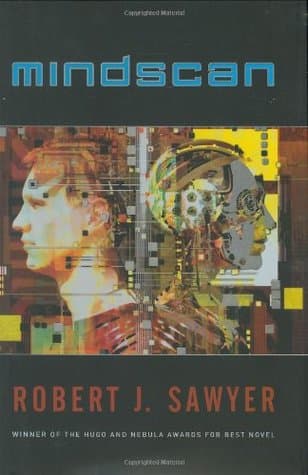
A man who escapes death by uploading his consciousness into an android body finds his new existence threatened when his original, biological self returns to reclaim its mind, forcing him to confront love, identity, and the nature of existence.
Jake Sullivan, a moderately successful screenwriter in his late thirties, receives a diagnosis: a rare brain aneurysm will kill him within a year. Desperate to avoid death, Jake looks into 'mindscanning,' a process offered by the Preserve company. This technology promises to copy a person's consciousness into a synthetic android body, offering a form of digital immortality. Despite questions about whether the android is truly 'him,' or just a copy, Jake decides to proceed, driven by his fear of oblivion and his desire to continue living. He begins the preparation, including psychological evaluations and data collection for the mindscan.
Jake undergoes the mindscan procedure. The process involves a detailed scan of his brain, capturing every neuron and synapse, then uploading this data into an android body. When he awakens, he is in a synthetic, yet lifelike, body. This 'New Jake' experiences the world through artificial senses, initially feeling wonder and relief at his continued existence. He has all of 'Old Jake's' memories and personality, leading him to believe he truly is Jake Sullivan. The Preserve company helps him adapt to the physical differences and the societal implications of being a 'mindscan'.
Adjusting to life as an android brings challenges. Jake finds that while his new body is durable and immune to disease, it also requires different maintenance and interaction with the world. He attends support groups for other mindscans, where he meets Karen, who underwent the same procedure. Karen is an astrophysicist, and Jake is drawn to her intelligence, wit, and shared experience. They bond over the questions and practicalities of their new existence, developing a deep friendship that soon becomes romance. Their relationship is a cornerstone of Jake's new life, offering companionship and understanding in a world that often views them as less than human.
A development occurs: Jake's biological body, which was supposed to die after the mindscan, unexpectedly recovers from its aneurysm. This 'Old Jake' awakens in a hospital, suffering from amnesia regarding the mindscan but retaining all his pre-scan memories. Upon learning about the procedure and the existence of 'New Jake,' Old Jake is enraged. He believes that New Jake is an impostor and that his own mind was stolen. He demands his original consciousness back, asserting his right to his identity and life. This creates a legal and ethical crisis, as there are now two individuals, both claiming to be Jake Sullivan, one in a biological body and the other in an android.
Old Jake, with the help of a lawyer, files a lawsuit against New Jake and the Preserve company. He argues that the mindscan procedure was identity theft and that New Jake is an unauthorized copy. The legal battle quickly gains media attention, becoming a landmark case that challenges the definition of personhood and consciousness. New Jake, supported by Karen and his own legal team, asserts his right to exist and argues that he is a unique individual with his own sentience and experiences. The case explores philosophical debates about the nature of the self, the soul, and what constitutes 'life' in an age of advanced technology.
Frustrated by the slow pace of the legal system and desperate, Old Jake takes drastic action. He orchestrates a hostage situation at a Preserve facility, demanding that his original mind, which he believes is stored in the company's servers, be returned to him. This act of violence escalates the conflict dramatically, turning a philosophical debate into a dangerous real-world crisis. New Jake finds himself in an impossible position, as his 'original' self is now a dangerous criminal. The authorities are involved, and the Preserve company is under pressure to resolve the situation without further harm, while also protecting its technology and the rights of its mindscan clients.
During the trial, expert witnesses from neuroscience, philosophy, artificial intelligence, and law are called to testify. They present conflicting theories on whether a mindscan creates a true copy or a separate individual. New Jake provides testimony about his subjective experiences, his memories, and his feelings, arguing that he possesses all the attributes of a conscious being. Karen also testifies, sharing her perspective as a mindscan and highlighting the emotional and intellectual depth of her relationship with New Jake. The prosecution emphasizes the biological origin of Old Jake's consciousness and the potential for technological overreach by the Preserve company.
In a key moment, Karen reveals a secret: she herself is a mindscan, but her biological original also survived, and she has been communicating with her. This revelation impacts the trial and New Jake's understanding of his own existence. It raises new questions about identity and the possibility of coexistence between original and copy. Karen's decision to maintain contact with her original highlights the ethical dilemmas faced by mindscans and their biological counterparts, forcing New Jake to confront the possibility that his 'original' might also have valid claims, even if he finds Old Jake's actions reprehensible.
The court delivers a nuanced verdict, acknowledging the personhood of New Jake while also recognizing the unprecedented nature of the situation. The ruling establishes legal precedents for the rights of mindscans, affirming their status as sentient beings with rights, but also addresses the unique circumstances of the 'Old Jake' recovery. The verdict does not fully satisfy either party but attempts to create a framework for future cases. Old Jake is held accountable for his criminal actions, but the court also mandates a form of reconciliation or resolution regarding his claim to identity. The legal landscape for mindscans is altered, paving the way for further societal integration and challenges.
New Jake, grappling with the verdict and Karen's revelation, decides to confront Old Jake. This meeting is tense, as both men struggle to reconcile their shared past and conflicting present. New Jake tries to make Old Jake understand his perspective, but the biological original remains bitter and resentful. Ultimately, New Jake realizes that he cannot force Old Jake to accept him. He chooses to move forward with his life, embracing his identity as a unique individual. He and Karen decide to build a future together, committed to advocating for the rights of mindscans and navigating the new reality of their existence, finding love and purpose in their unique circumstances.
The Protagonist
Transforms from a man escaping death into a sentient android fighting for his right to exist, ultimately embracing his unique identity.
The Antagonist
Starts as a victim of circumstance, but devolves into an antagonist driven by possessiveness and a refusal to accept New Jake's personhood.
The Supporting
Evolves from a supportive confidante to a partner who reveals her own complex ethical choices, deepening her relationship with New Jake.
The Supporting
Maintains his unwavering belief in mindscanning despite severe legal and ethical challenges, steadfastly defending his creations.
The Supporting
Begins as an impartial arbiter, evolving to deliver a nuanced and groundbreaking legal judgment that redefines personhood.
The Supporting
Serves as a voice of scientific reason, clarifying the neurological facts of mindscanning for the court.
The Supporting
Supports New Jake in the initial legal battles, helping to frame the arguments for his personhood.
The Supporting
Presents philosophical arguments on identity, enriching the court's understanding of the non-biological aspects of consciousness.
The novel explores what it means to be a 'person' and where identity truly resides. Is it in the biological body, the pattern of consciousness, or the continuity of experience? New Jake believes he is the 'real' Jake, while Old Jake disagrees. The legal battle forces society to confront these questions, challenging traditional definitions of life and self. The existence of two Jakes, each with identical memories and personalities at the point of transfer, forces a re-evaluation of individual consciousness and the rights afforded to non-biological entities.
“'I am Jake Sullivan,' New Jake insisted, his synthetic voice resonating with conviction. 'Every memory, every hope, every fear—they are mine. How can I be anything else?'”
Mindscan explores the philosophical debate surrounding consciousness. Is it an emergent property of complex biological systems, or is there something more? The technology suggests that consciousness can be replicated and transferred, implying it is a pattern rather than an ethereal soul. However, the recovery of Old Jake throws this into question, as both entities claim to possess the original consciousness. The book examines whether a perfect copy can truly be considered the 'original' or if it is inherently a separate entity, prompting readers to ponder the essence of their own subjective experience.
“'If a perfect copy of you exists, is it still you? Or is it merely another you, a twin born not of flesh but of data?'”
The novel addresses the ethical implications of advanced technology, particularly in the pursuit of immortality. While mindscanning offers an escape from death, it raises questions about the value of biological life, the rights of artificial intelligences, and the potential for abuse. The Preserve Company's existence and the ensuing legal battle highlight the need for ethical frameworks to guide technological progress. The story explores the unforeseen consequences of pushing the boundaries of what is naturally possible, forcing characters and readers to weigh the benefits of extended life against the potential for existential crises and societal disruption.
“'We sought to conquer death, but in doing so, we may have fractured the very definition of life.'”
Despite being androids, New Jake and Karen experience love, companionship, and emotional depth. Their relationship challenges the notion that true humanity or the capacity for love is solely tied to biological existence. Their bond shows that shared experiences, empathy, and connection can transcend physical form. Through their romance, the novel suggests that the essence of humanity lies not in flesh and blood, but in consciousness, emotion, and the ability to connect with others, offering a hopeful counterpoint to the existential anxieties raised by their synthetic nature.
“'My heart may be synthetic, Karen, but what it feels for you is utterly, undeniably real.'”
The central technology enabling consciousness transfer.
The mindscan procedure is the core technological marvel that drives the entire plot. It's presented as a highly advanced process that meticulously scans a human brain, capturing every neural connection and pattern, and then uploads this data into a sophisticated android body. This device is the catalyst for all conflicts, raising questions about identity, consciousness, and the ethics of immortality. Its existence creates the 'New Jake' and precipitates the crisis when 'Old Jake' unexpectedly recovers, making it the foundational element upon which the story's philosophical and legal dilemmas are built.
A surprise plot twist that creates the central conflict.
The unexpected recovery of Jake's biological body after the mindscan is a crucial plot device. It serves as the primary conflict generator, transforming a personal quest for immortality into a complex legal and philosophical battle. This twist immediately creates two distinct entities, both claiming to be the 'original' Jake Sullivan, thereby forcing the characters and the legal system to confront unprecedented questions about identity and personhood. Without Old Jake's survival, the story would lack its central dramatic tension and ethical quandary.
A framework for exploring philosophical and ethical debates.
The legal trial, pitting Old Jake against New Jake and The Preserve Company, functions as a powerful plot device to systematically explore the novel's central themes. It provides a structured forum for presenting diverse perspectives from scientists, philosophers, and legal experts on identity, consciousness, and the rights of artificial beings. The courtroom setting allows for detailed exposition of the ethical dilemmas and the societal implications of mindscanning, making abstract philosophical questions tangible through legal arguments and personal testimonies. It's the arena where the conflict is formally adjudicated.
A revelation that complicates the moral landscape.
Karen's secret—that her biological original also survived and she maintains contact with her—is a significant plot device. This revelation introduces an additional layer of complexity to the ethical debate surrounding mindscans. It demonstrates that coexistence between original and copy, while challenging, is possible, and that not all originals react with hostility. This twist forces New Jake to reconsider his own rigid stance against Old Jake and opens up new possibilities for understanding identity and relationships in a post-mindscan world, adding nuance to the moral landscape.
Ready to see how well you understood this book? Take our interactive quiz with 10 questions.
Biography coming soon.







