“The price of being unique is loneliness.”
— Mary reflects on her unusual abilities and isolation.

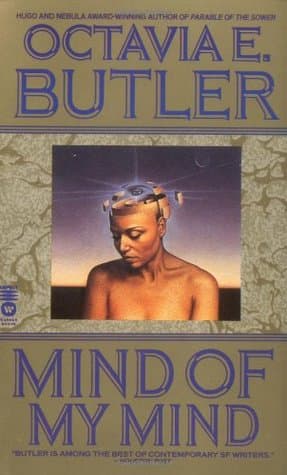
Octavia E. Butler (1977)
Genre
Fantasy / Science Fiction
Reading Time
224 min
Key Themes
See below
Sign in to track this book
An ancient immortal, Doro, secretly breeds a superhuman race from humanity's margins. A powerful young telepath, Mary, emerges from the ghetto to start a psychic war, challenging her creator and awakening her kind to claim their freedom.
Doro is an ancient, immortal entity who has existed for thousands of years by transferring his consciousness from one body to another upon the death of the previous host. He is a 'flesh-eater,' meaning he consumes the life-force of others to sustain himself and facilitate his transfers, though he prefers to do so only when necessary. For millennia, Doro has been manipulating human evolution, breeding specific lines of people to produce powerful psychics, whom he calls his 'children.' He sees himself as a shepherd, guiding humanity towards a new, superior species. He maintains a network of human 'collectors' who identify individuals with latent psychic abilities and bring them to his various compounds for breeding and observation, often with little regard for the individuals' autonomy. His ultimate goal is to create a fully realized psychic race.
Thousands of years before the main narrative, Doro encounters Anyanwu, a powerful African shapeshifter who is also immortal, able to heal from any injury and change her form at will. Unlike Doro, Anyanwu is connected to life and nature, finding Doro's methods of control and his disregard for individual lives abhorrent. Despite their differences, Doro is fascinated by her unique immortality and believes she can contribute to his breeding program, particularly by bearing children who might inherit both their unique traits. He pursues her relentlessly, eventually coercing her into a partnership and marriage, promising her a life of purpose and a place in his evolving society. Their relationship has much tension, as Anyanwu struggles against Doro's possessiveness and his callousness towards others.
Mary is born in a poor, predominantly Black neighborhood in the American South, a direct descendant of Doro's carefully managed bloodlines. She is a 'seed' — a latent psychic with immense potential. Her early life has poverty and a sense of being different, though she doesn't understand why. She experiences strange sensations and an intuitive understanding of people, which she initially dismisses or struggles to interpret. Her family is unaware of her true heritage or the powerful abilities dormant within her. As she grows into adolescence, these latent abilities begin to manifest subtly, causing her confusion and a feeling of alienation from those around her. She wants connection but also fears her own unexplained inner world.
Upon reaching puberty, Mary's psychic abilities fully awaken, a powerful and overwhelming experience. She becomes a 'Patternist,' able to link with and control other psychics, forming a collective mind. This sudden surge of power is disorienting and terrifying, as she inadvertently hurts people with her uncontrolled mental projections. Her awakening immediately draws the attention of Doro, who has been monitoring his breeding lines for such a powerful emergence. He sends his agents to find her and bring her to one of his compounds. Mary is initially resistant and frightened, but Doro, through manipulation and the promise of understanding and control, persuades her to join his community of psychics. She is introduced to a world she never knew existed, filled with others like her, though none as powerful.
Under Doro's guidance, Mary begins to understand and control her vast psychic abilities. She learns about the 'Pattern,' a collective mental network she can form with other psychics, allowing them to share thoughts, emotions, and even memories. As she practices, her power grows exponentially, and she quickly surpasses all other psychics in Doro's community. She finds herself naturally gravitating towards leadership, though she is still under Doro's strict supervision. Doro is both proud and wary of her rapid development, recognizing her potential but also sensing a nascent challenge to his absolute authority. Mary, for her part, grapples with the ethical implications of her power and Doro's often ruthless methods.
Mary begins to actively expand the Pattern, connecting with more psychics, not just those Doro has chosen. She discovers that many latent psychics exist outside Doro's immediate circles and brings them into the collective. This vast, interconnected network gives the psychics a sense of community and shared purpose, creating a collective identity independent of Doro. As the Pattern grows stronger, it also empowers individual psychics, giving them autonomy and strength they lacked before. Doro observes this with growing alarm. He had intended for his psychics to be powerful, but still subservient to him. Mary's Pattern, however, is becoming a self-sustaining entity, a true collective consciousness that could exist without him.
Anyanwu, who has endured centuries of Doro's possessiveness and manipulation, witnesses Mary's rise with hope and trepidation. She sees in Mary a power and a moral compass that could finally challenge Doro's millennia-long reign. Anyanwu has always been repulsed by Doro's cold pragmatism and his treatment of his 'children' as breeding stock. She subtly begins to advise and support Mary, sharing her insights into Doro's character and vulnerabilities. Their alliance is unspoken at first, a mutual understanding that Mary represents the best chance for the psychics to achieve true freedom and self-determination, rather than remaining Doro's genetic experiment.
As Mary's Pattern solidifies and the psychics gain a collective voice, Mary directly confronts Doro. She demands that he relinquish his absolute control over their lives and allow them to govern themselves. Doro, who has never known any challenge to his authority, refuses. He views the psychics as his property, his creations, and believes they cannot survive without his guidance. This ideological clash escalates into a psychic war. Doro, with his personal power and experience, tries to dismantle the Pattern and reassert his dominance. Mary, backed by the collective power of the Pattern and Anyanwu's subtle support, fights back, using the shared strength of her people against him. The battle is cataclysmic, causing widespread physical and mental devastation.
The psychic battle reaches a climax, with Mary, as the nexus of the Pattern, facing Doro directly. The collective will and power of the Pattern prove too much for Doro, despite his individual strength. He is overwhelmed, his mind shattered and reformed by the collective consciousness of the Pattern. He is not destroyed, but he is fundamentally changed, forced to experience the pain and suffering he has inflicted over the millennia. Mary, demonstrating her power and a desire for a new future, does not kill him. Instead, she integrates him into the Pattern, forcing him to become a part of the collective rather than its sole master. This act establishes the psychics' autonomy and Mary's leadership. Anyanwu, witnessing Doro's defeat, finally feels peace and vindication.
With Doro integrated and his absolute rule ended, the psychics, now calling themselves Patternists, begin to forge their own destiny under Mary's guidance. They establish communities where they can live openly and safely, free from Doro's manipulative breeding programs. The Pattern continues to grow, evolving into a complex, self-aware collective consciousness. Mary, while leading, ensures that individual autonomy within the Pattern is respected. Doro, now a part of the Pattern, is forced to witness and participate in the growth of the species he created but could not control. The novel concludes with the Patternists stepping into a new era, having achieved self-determination and beginning the journey of building a new psychic civilization, laying the groundwork for future generations and the world of the Patternist series.
The Antagonist/Creator
From absolute, unchallenged ruler of his psychic 'children' to a defeated but integrated part of the collective Pattern, forced to evolve beyond his singular dominance.
The Protagonist
Transforms from an isolated, confused individual into the powerful, compassionate leader and central consciousness of the Patternist species, challenging and ultimately integrating her creator.
The Supporting
From a long-suffering captive of Doro to a hopeful observer and subtle influencer in the rise of the Pattern, finding a measure of peace and purpose.
The Supporting
Shifts from a loyal, somewhat resentful subordinate of Doro to an eventual, if reluctant, member of Mary's Pattern, recognizing the inevitable change.
The Supporting
Evolves from an individual psychic within Doro's community to an integral, supportive member of the nascent Patternist collective under Mary.
The Supporting
Remains largely unchanged, serving as a contrast to Mary's rapid evolution, representing the human world left behind.
The Mentioned/Supporting
No specific individual arc, but as a group, their function is rendered obsolete by the rise of the Pattern.
The Supporting/Collective Protagonist
Evolve from isolated, controlled individuals into a unified, self-determining species under Mary's leadership.
The central struggle of the novel is about the right of Doro's 'children' to define themselves and their future, rather than being extensions of his will. Mary's journey is one of self-discovery, embracing her power, and then using it to forge a collective identity for the psychics. The Pattern's formation is an act of collective self-determination, as the psychics choose to govern themselves and evolve on their own terms, breaking free from Doro's control and his definition of their purpose. This theme shows the importance of agency and freedom for a nascent species.
“"He had made them, but he hadn't made them his. Not in the way that mattered."”
The novel contrasts Doro's exercise of power—cold, manipulative, and focused on control and breeding—with Mary's approach, which emphasizes empathy, connection, and collective well-being. Doro treats individuals as means to an end, sacrificing personal autonomy for the perceived good of the species. Mary, however, builds the Pattern on shared understanding and mutual support, valuing individual lives while fostering collective strength. Anyanwu, with her empathy, is a moral counterpoint to Doro, showing the destructive nature of unchecked power without compassion. The Pattern's ultimate victory suggests that true strength is in connected empathy, not solitary control.
“"He was a shepherd, but a shepherd who sometimes ate his flock."”
At its heart, the book explores the deliberate and accidental evolution of a new human species: the Patternists. Doro initiates this process through selective breeding over thousands of years, acting as a god-like figure. However, the actual evolution of the species' collective consciousness, the Pattern, is an emergent property that surpasses Doro's original intent. Mary's role is not just to lead, but to facilitate this evolutionary leap, guiding the psychics from disparate individuals to a unified, self-aware entity. The novel questions the ethics of guided evolution and celebrates the resilience of life to forge its own path, even beyond its creator's design.
“"You are my children. I made you. I will guide you."”
The novel presents two distinct forms of immortality through Doro and Anyanwu, exploring their psychological and moral implications. Doro's immortality, based on body-hopping and life-force consumption, leads to detachment, isolation, and a utilitarian view of human life. He becomes a 'flesh-eater,' perpetuating a cycle of death to sustain himself. Anyanwu's immortality, through shapeshifting and natural healing, connects her to life and the earth, making her more empathetic but also susceptible to Doro's control. Their contrasting experiences show how the nature of one's immortality can shape one's ethics and worldview, and the potential for both wisdom and cruelty over millennia.
“"He had lived too long to care about individual lives, only the species."”
The concept of family is central, though twisted by Doro's breeding program. He sees the psychics as his 'children' and his family, but his relationship with them is one of ownership and control, not nurturing. Mary's emergence creates a new kind of family—a psychic collective, the Pattern—where bonds are forged through shared consciousness and mutual respect. The novel examines the legacy of a creator, Doro, whose 'children' ultimately surpass and redefine his original vision, creating a legacy of their own that is both a continuation and a rejection of his initial designs. It questions what it truly means to be a parent and what responsibilities come with creation.
“"They were his. His children. His creations. But they were also hers."”
A collective psychic consciousness that unifies the Patternists.
The Pattern is the central plot device and a unique psychic phenomenon. It is a vast, interconnected mental network formed by psychics, initially facilitated and later led by Mary. It allows for shared thoughts, emotions, and experiences, creating a collective consciousness. The Pattern serves as the primary source of power for the psychics, enabling them to resist and ultimately defeat Doro. It represents the evolution of the species, a form of collective intelligence and a symbol of their unity and self-determination. Its formation and growth drive the narrative conflict and signify the birth of a new era for the psychic species.
The millennia-long, selective breeding of humans to cultivate psychic abilities.
Doro's breeding program is the foundational plot device that sets the entire narrative in motion. For thousands of years, Doro has systematically manipulated human reproduction, selecting individuals with latent psychic traits and orchestrating their unions to produce increasingly powerful psychic offspring. This program explains the existence of the psychics and their varied abilities. It also establishes Doro's role as a controlling, god-like figure and highlights the ethical dilemmas inherent in his quest for a 'master race,' as he treats humans as mere genetic material. The program's ultimate outcome, Mary and the Pattern, ironically defies Doro's absolute control.
Contrasting forms of eternal life that shape character motivations and the world.
The distinct forms of immortality possessed by Doro and Anyanwu serve as crucial plot devices. Doro's body-hopping, life-force-consuming immortality enables his millennia-long breeding program and fuels his detached, utilitarian worldview. It explains his ancient knowledge and his ability to survive. Anyanwu's shapeshifting and regenerative immortality provide her with a unique perspective, a deep connection to life, and a means to escape Doro's physical control, though not his emotional manipulation. Their contrasting immortal natures underscore the novel's themes of power, empathy, and the long-term psychological effects of eternal life, driving their conflict and their interactions with the mortal psychics.
The diverse mental powers that define the emerging species and fuel the conflict.
The various psychic abilities possessed by Doro, Mary, and the other psychics are fundamental plot devices. These powers, including telepathy, telekinesis, precognition, and the ability to link minds, are the very essence of the new species Doro is trying to create. They are the source of both their strength and their vulnerability. The manifestation, control, and collective use of these abilities drive the plot, particularly during the psychic war between Mary and Doro. The specific nature of these powers—especially Mary's unique ability to form and lead the Pattern—determines the course of the conflict and the ultimate triumph of the Patternists.
“The price of being unique is loneliness.”
— Mary reflects on her unusual abilities and isolation.
“Change is a good thing. Change is a necessary thing. And sometimes, change is the only thing.”
— Anyanwu speaks about the nature of life and adaptation.
“You can't solve all the world's problems. You can only solve the ones you're given.”
— Mary receives advice about the scope of her responsibilities.
“Power corrupts, and absolute power corrupts absolutely. But powerlessness also corrupts.”
— A character contemplates the effects of power, or lack thereof.
“To be human is to be flawed. To be human is to be capable of great good and great evil.”
— Reflecting on the duality of human nature.
“The greatest prison is a mind closed to new possibilities.”
— A character considers intellectual freedom and growth.
“Fear is a tool. It can be used to control, or it can be used to motivate.”
— Exploring the nature and utility of fear.
“You don't have to like someone to understand them. Sometimes, understanding is more important.”
— Mary grapples with difficult relationships.
“Every choice has consequences. Some are small, some are vast, but none are truly insignificant.”
— Contemplating the ripple effect of decisions.
“The past is never truly gone. It shapes the present, and it will shape the future.”
— Characters confront their histories and their impact.
“Sometimes, the only way to save yourself is to let go of what you think you are.”
— A character undergoes a profound transformation.
“There are things in the world that cannot be explained, only experienced.”
— Discussing the limits of reason in the face of the supernatural.
“To truly live is to embrace the chaos, to find your own order within it.”
— A philosophical outlook on life's unpredictable nature.
“We are all connected, whether we want to be or not. That is both our strength and our vulnerability.”
— Exploring themes of community and interdependence.
Ready to see how well you understood this book? Take our interactive quiz with 10 questions.
Biography coming soon.







