“Birth is not a disease. It's a miracle.”
— Sibyl Danforth's core belief about childbirth.

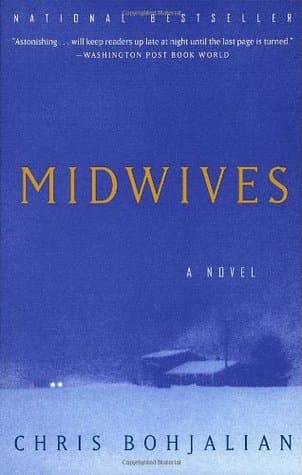
Chris Bohjalian (1997)
Genre
Historical Fiction / Mystery
Reading Time
9-10 hours
Key Themes
See below
Sign in to track this book
In 1981 rural Vermont, a dedicated midwife performs an emergency C-section during a blizzard to save a baby, leading to a murder trial as her daughter recounts the community's struggle with truth and guilt.
On a frigid March night in 1981, midwife Sibyl Danforth, her fourteen-year-old daughter Connie, and new assistant Stephenie go to Charlotte Bedford's isolated home for her labor. A massive blizzard has cut off power and phone lines. Charlotte has a seizure and appears to die, her body becoming cold and rigid. Fearing for the baby, Sibyl performs an emergency C-section with Stephenie's hesitant help and Connie's observation. The baby girl is delivered and revived, but the ethical and legal questions about Sibyl's actions immediately arise, especially for Stephenie.
After the delivery, Sibyl and Stephenie take Charlotte Bedford's body to the local hospital and the baby to a pediatrician. Dr. Richard Starr, a skeptical obstetrician, performs an autopsy. Initial findings are unclear about the exact time of death, but the C-section incision raises concerns. Stephenie, shaken and conflicted, tells Dr. Starr she believes Charlotte might have been alive when Sibyl cut her. This accusation quickly turns a tragic medical incident into a criminal investigation. Sibyl initially trusts her actions, believing she saved a life, but doubts begin to spread in the medical community.
Weeks later, authorities, prompted by Stephenie's testimony and the medical examiner's report, arrest Sibyl Danforth. She is charged with involuntary manslaughter. The news shocks Reddington, Vermont, a small community where Sibyl has been a respected midwife for fifteen years. Connie, her daughter, is devastated and struggles to reconcile her compassionate mother with the serious criminal charges. Legal proceedings begin, and Sibyl's husband, Carl, a lawyer, defends her despite his own internal conflict and the immense family pressure.
The case goes before a grand jury, where Stephenie testifies against Sibyl, giving her account of that blizzard night. The grand jury indicts Sibyl, moving the case to a full trial. Local and national media cover the story, sensationalizing the 'midwife murder trial' and portraying Sibyl negatively. This public scrutiny adds immense pressure on Sibyl and her family, especially Connie, who watches her mother's reputation crumble. The community divides, with some supporting Sibyl and others influenced by the prosecution's story.
The trial begins, with prosecutor Janice Neufeld leading the case against Sibyl. Neufeld meticulously presents evidence, including medical reports and expert testimonies, aiming to prove that Charlotte Bedford was alive when Sibyl performed the C-section. Stephenie's emotional testimony is a key part of the prosecution's case, as she describes seeing Charlotte's chest move and hearing a gasp. Carl Danforth, as Sibyl's defense attorney, tries to counter these claims, emphasizing the extreme blizzard conditions and Sibyl's desperate attempt to save a life, but the initial testimonies paint a damaging picture for the midwife.
During the trial, forensic pathologists and medical experts testify, presenting complex medical terms and conflicting opinions on Charlotte Bedford's exact time of death. The defense argues that rigor mortis, a key sign of death, had already set in, making the C-section a post-mortem procedure. The prosecution, however, introduces 'catalepsy,' a rare condition that mimics death, suggesting Charlotte could have been in such a state. This scientific debate creates significant ambiguity, making it hard for the jury to determine if Charlotte was alive or dead when Sibyl made the incision, further complicating Sibyl's defense.
Sibyl Danforth takes the stand in her defense, recounting the terrifying events of that night. She describes Charlotte Bedford's seizure, her apparent stop in breathing and heartbeat, and her body's subsequent coldness and rigidity. Sibyl states her absolute belief that Charlotte was dead and her only goal was to save the baby. She details the desperate measures she took, the lack of other options, and the immense pressure she felt. Her testimony is heartfelt, but under cross-examination by Janice Neufeld, Sibyl's confidence is subtly questioned as Neufeld probes her methods and potential for error.
Throughout the trial, Connie Danforth, now sixteen and narrating the story years later, provides her unique view. She observes the courtroom drama, the lawyers' strategies, and the emotional toll on her family. Connie struggles with the accusations against her mother, remembering Sibyl's dedication and love for her patients. She revisits her own memories of that night, trying to reconcile what she saw and heard with the prosecution's claims. Connie's narration shows her evolving understanding of truth, justice, and human morality as she grapples with the possibility of her mother's guilt.
After intense deliberation, the jury delivers its verdict. Sibyl Danforth is found not guilty of manslaughter. While a relief for Sibyl and her family, the verdict does not erase the trial's trauma or the lingering questions. The legal victory comes at a significant personal cost. Sibyl's midwifery practice effectively ends, her reputation is tainted, and her trust in the legal and medical systems is deeply shaken. The event profoundly impacts Connie, shaping her views on life, death, and morality's blurred lines. The baby, now named Willow, is adopted by Charlotte's sister, and her survival remains the one undeniable good outcome.
Many years later, when Connie is an adult, Sibyl, now frail and elderly, confesses a devastating truth. She admits that she saw a flicker of life, a slight movement in Charlotte Bedford's chest, just before she made the incision. She acknowledges that she ignored it, driven by a desperate, almost primal urge to save the baby. This confession shatters Connie's long-held belief in her mother's complete innocence and forces her to re-evaluate everything she thought she knew about the trial and her mother. Connie is left with the heavy burden of this secret, grappling with the moral ambiguity of her mother's actions and the profound implications of her confession.
The Protagonist
Sibyl transforms from a confident, respected midwife to a woman deeply scarred by public scrutiny and a harrowing trial, ultimately confessing to a moral transgression that redefines her past actions.
The Narrator and Secondary Protagonist
Connie evolves from a loyal, somewhat naive daughter to a mature woman burdened by her mother's secret, grappling with the complexities of truth and morality.
The Supporting
Carl remains a pillar of support for his family, navigating the legal challenges with determination, though the trial deeply impacts him.
The Supporting/Antagonist
Stephenie's role shifts from a nervous assistant to a pivotal, yet conflicted, witness whose testimony drives the legal proceedings against Sibyl.
The Antagonist
Janice Neufeld steadfastly pursues a conviction, representing the legal and institutional opposition to Sibyl.
The Mentioned
Charlotte's death serves as the catalyst for the entire plot, her fate sparking the central conflict.
The novel explores how truth is subjective and changes, especially when filtered through individual perception and memory. The trial hinges on whether Charlotte Bedford was truly dead when Sibyl performed the C-section, a question with no definitive answer due to the extreme circumstances and conflicting eyewitness accounts. Connie's narration, reflecting on the events years later, highlights how her understanding of 'truth' evolves, particularly with Sibyl's eventual confession. The story questions whether objective truth is possible or if it is always shaped by personal biases, emotional states, and time.
““The truth is, I don't know what I saw. I only know what I remember seeing.””
The book examines the complexities of justice, especially when legal definitions conflict with moral imperatives. Sibyl's actions, though possibly illegal, came from a strong moral conviction to save a baby's life. The trial becomes a place for debating whether the law can truly account for such desperate situations. It raises questions about intent versus outcome, and whether a good outcome (a saved baby) can justify a morally ambiguous or legally questionable act. The 'not guilty' verdict offers legal absolution, but Sibyl's later confession reveals a deeper, unresolved moral conflict within her.
““There are times when the law is a blunt instrument, and justice is a finely honed one.””
A key theme is the tension between the established medical community and alternative healthcare, specifically midwifery. Sibyl, as a midwife, works outside the traditional hospital system, favoring a more personal, holistic approach to childbirth. Her actions are scrutinized by doctors like Richard Starr and prosecutor Janice Neufeld, who represent the skepticism and often hostility of mainstream medicine toward practices they consider unregulated or unsafe. The trial itself becomes a battleground for these differing philosophies, with Sibyl's methods judged not just on legal grounds but also on their perceived deviation from conventional medical standards.
““Midwifery, to the medical establishment, was a quaint relic, a risky dabbler in the sacred art of birth.””
The novel explores the profound and often desperate aspects of motherhood, focusing on the lengths one will go to ensure a child's survival. Sibyl's decision to perform the C-section is an extreme act of maternal instinct, prioritizing the baby's life above all else, even potentially at the cost of the mother's dignity or her own freedom. The story also touches on mothering through Connie's loyalty and her deep emotional connection to her own mother, Sibyl. The survival of Charlotte Bedford's baby, Willow, shows this powerful, life-affirming drive, regardless of the ethical problems it creates.
““A mother's instinct, Sibyl always said, was the most powerful force on earth.””
Connie Danforth narrates the story as an adult, looking back on her mother's trial.
This device allows for a layered perspective. Connie, as a child, was an eyewitness to the events, providing immediate, raw observations. As an adult narrator, she can reflect, analyze, and offer philosophical insights, adding depth and complexity to the 'truth' of the events. Her adult voice provides distance and maturity, enabling her to explore the nuances of morality, justice, and memory, while still conveying the emotional impact of the trial on her younger self and her family.
Connie's narration is shaped by her loyalty to her mother and her evolving understanding of truth.
While Connie strives for accuracy, her narration is inherently colored by her love for Sibyl and her initial belief in her mother's complete innocence. This unreliability is subtle, not deceptive, but it means the reader experiences the events through her emotional filter. The ultimate revelation of Sibyl's confession retroactively casts a shadow of unreliability on Connie's earlier, more confident assertions, forcing both Connie and the reader to re-evaluate previously accepted 'facts' and confront the subjective nature of memory and truth.
The severe winter storm isolates the characters and symbolizes the chaotic, unpredictable nature of life and death.
The blizzard is more than just a setting; it's a critical plot device. It isolates Charlotte Bedford's home, cutting off communication and preventing access to conventional medical care, thereby forcing Sibyl to take extreme measures. Symbolically, the blizzard represents the chaotic and unpredictable forces of nature, mirroring the sudden and tragic turn of events during Charlotte's labor. It also serves as a metaphor for the moral fog and uncertainty surrounding Sibyl's actions, making it difficult to discern clear right from wrong amidst the desperate circumstances.
Sibyl's late-life admission to Connie that she saw a flicker of life in Charlotte.
This plot device serves as the ultimate turning point and revelation, shattering the reader's and Connie's prior understanding of the events. It retroactively redefines Sibyl's character and actions, transforming her from a legally exonerated but morally ambiguous figure into someone who knowingly made a profound, ethically compromising decision. The confession reframes the entire narrative, forcing a re-evaluation of the trial, the verdict, and the nature of truth itself, leaving Connie with a heavy moral burden and the reader with lingering questions about human fallibility.
“Birth is not a disease. It's a miracle.”
— Sibyl Danforth's core belief about childbirth.
“The truth is a stubborn thing.”
— Implied throughout the trial, especially regarding the 'dead' baby.
“Sometimes, the hardest thing is to forgive yourself.”
— Sibyl grappling with her actions and their consequences.
“A secret is a heavy burden, especially when it's not yours to carry.”
— Connie dealing with the burden of her mother's secret.
“Every birth is a story, and every woman has a right to tell her own.”
— Sibyl's respect for a woman's birthing experience.
“Fear can make people do terrible things.”
— Exploring the motivations behind some characters' actions.
“There are some things you can never unsee, never unhear.”
— Connie reflecting on the disturbing details of the trial.
“Justice isn't always fair, but it's all we have.”
— The limitations and frustrations of the legal system.
“The human heart is capable of great love and great deception.”
— Considering the complexities of character motivations.
“What you don't know can hurt you, but what you do know can hurt you even more.”
— Connie's struggle with uncovering the full truth.
“A mother's instinct is a powerful force.”
— Highlighted in Sibyl's actions and her connection to her patients.
“The past is never truly dead; it's not even past.”
— How past events continue to influence the present.
“Sometimes, doing the right thing means breaking the rules.”
— Sibyl's moral dilemma in certain situations.
“The weight of a lie can crush you, no matter how well-intentioned.”
— The long-term consequences of the hidden truth.
Ready to see how well you understood this book? Take our interactive quiz with 10 questions.

Chris Bohjalian is a prolific author known for his gripping novels that often explore complex moral and ethical dilemmas. His works, including the bestselling 'Midwives,' 'The Double Bind,' and 'The Guest Room,' have garnered critical acclaim and a dedicated readership. Bohjalian's writing is often characterized by its suspenseful plots, well-developed characters, and insightful social commentary.







