“The island was a story, and the story was the island.”
— A recurring thought about the cyclical nature of the island's history and its inhabitants.

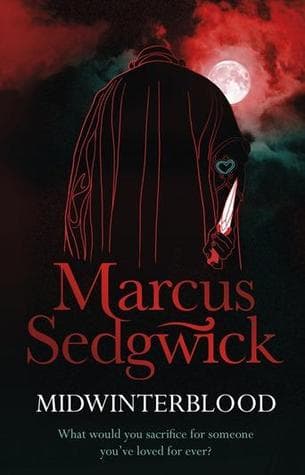
Marcus Sedgwick (2011)
Genre
Fantasy / Historical Fiction / Mystery / Young Adult / Romance
Reading Time
5-6 hours
Key Themes
See below
Sign in to track this book
On a mysterious, isolated island, two souls are bound by an ancient curse, reliving fragmented lives and searching for each other across seven distinct historical eras, each marked by a different moon.
Eric Seven, a journalist, travels to the isolated Swedish island of Blessed (Öland) in 2073 AD to research its unusual longevity and customs for an article. Upon arrival, he meets Merle, the island's archivist. He is immediately struck by a powerful sense of déjà vu and a strong connection to her. Merle is also drawn to Eric. They spend the day exploring the island, sharing stories and experiencing a profound bond. Eric learns about the island's legend of the 'Blessed Ones' and its ancient rituals, while Merle hints at a deeper, mystical history. Their connection deepens into a passionate, yet unsettling, romance, as Eric feels he has known Merle for an eternity, despite their recent meeting.
The narrative jumps back to Blessed in 1900 AD. Erik, a young fisherman, loves Mhairi, a girl ostracized by the community due to a superstitious belief that she brings misfortune. Mhairi's family is poor, and she is seen as an outcast. Despite the village's warnings and the social stigma, Erik is undeterred, drawn to Mhairi's gentle spirit and beauty. He defies his family and community to be with her, planning to marry her and leave the island. Their love is pure and intense, but the villagers' fear and superstition create tension, hinting at an impending tragedy that threatens to tear them apart. The recurring imagery of the moon and the island's oppressive atmosphere foreshadow a difficult fate for the lovers.
In 1710 AD, Merle, a kind young woman on Blessed, has an innate ability to heal, often using herbs and ancient remedies. Her unusual gifts, however, are misinterpreted by the superstitious villagers, who accuse her of witchcraft, especially after a series of unexplained misfortunes befall the island. Erik, a local hunter, initially shares the community's fear and suspicion, but he is secretly drawn to Merle and witnesses her genuine compassion. As the witch hunt intensifies, fueled by the manipulative Pastor and the island's elders, Erik is torn between his duty to the community and his growing belief in Merle's innocence. He eventually tries to protect her, but the mob's hysteria is too powerful, leading to a tragic confrontation.
The story transports to 1500 AD, when Viking culture still holds sway on the island. Eric, a respected Viking warrior, arrives on Blessed as part of a raiding party or a new settlement. He encounters Meril, the chieftain's strong-willed daughter, and they are instantly captivated by each other. Their love blossoms amidst the harsh realities of tribal life, ancient pagan rituals, and the constant threat of conflict. Meril practices old ways, connected to the island's mystical energies. Their relationship is passionate and intense, but it is challenged by strict societal norms and escalating tensions between different factions or invading forces. A central conflict involves a sacred ritual or object, and their love becomes entangled with the fate of their people, leading to a violent and heartbreaking climax.
Around 1000 AD, a young Erik lives on Blessed during a harsh winter. He is a shepherd boy, his life intertwined with the island's wild nature. He meets Meara, a girl who is also an outcast, perhaps due to a physical difference or a mysterious past. They form a deep, almost telepathic bond, communicating more through instinct and shared understanding than words. A significant event, possibly a severe blizzard or a wolf attack, forces them to rely on each other for survival. A lone wolf, a recurring symbol, appears to watch over them or guides them. Their connection is pure and innocent, showing enduring loyalty and companionship in a brutal world. This segment highlights the raw, primal nature of their bond, focusing on survival and an unspoken understanding.
In 500 AD, Erick, a Roman soldier, is shipwrecked or stranded on the island of Blessed after the Roman Empire's influence in the region collapsed. He is a stranger, cut off from his previous life. He is discovered and cared for by Merla, a native islander who belongs to an ancient, pre-Christian community. Despite the language barrier and cultural differences, they develop a profound connection. Merla introduces Erick to the island's ancient beliefs and its deep connection to nature. Their love is a quiet, resilient force, bridging two vastly different worlds. This chapter explores themes of displacement, belonging, and the enduring power of human connection against a backdrop of historical upheaval and the fading echoes of an empire.
This final, earliest segment, set around 0 AD, reveals the origin of the curse that binds Erik and Merle to their cycle of reincarnation and tragic love. It depicts the very first iteration of their relationship. Erik and Merle are part of a primitive, perhaps Celtic or Norse, community on the island. They are deeply in love, but their union is forbidden or disrupted by a powerful, jealous figure—possibly a priest, chieftain, or rival—or an act of violence. Their deaths are intertwined, perhaps a double suicide or a sacrifice, leading to a powerful, ancient curse or prophecy that destines their souls to find each other across time, only to be tragically separated again and again. This chapter explains the 'why' behind the recurring pattern, tying together all previous narratives with a sense of cosmic inevitability and enduring love.
As the reader progresses through the distinct historical segments, the overarching pattern of Eric and Merle's reincarnated love becomes clear. Each 'life' presents a variation on their fated meeting, intense connection, and inevitable, often violent or sorrowful, separation. The island of Blessed acts as a constant, a crucible for their repeated encounters, its ancient stones and customs bearing witness to their eternal dance. The subtle clues, recurring names, and thematic echoes across the centuries build a powerful sense of destiny. The narrative structure itself becomes a plot device, forcing the reader to piece together the fragments of their story and understand the cyclical nature of their tragedy and the enduring power of their bond, transcending time and circumstance, yet always ending in heartbreak.
By the end of the book, especially as the reader connects the 'New Moon' segment to the preceding ones, the full extent and nature of the curse become evident. It is not simply a series of coincidences but a deeply ingrained, almost physical, bond that pulls their souls together on Blessed, only to tear them apart. The island itself, with its ancient, mystical energy, is not just a setting but an active participant in their fate, perhaps even the origin point of the curse. The specific details of the initial transgression or sacrifice in the 'New Moon' chapter reveal why their love is destined for tragedy. This revelation adds a layer of cosmic sadness to their story, explaining why their powerful love can never find lasting peace or resolution within a single lifetime.
Despite the relentless cycle of heartbreak and separation across millennia, the most powerful message that emerges is the enduring and unbreakable bond between Eric and Merle. Each incarnation, though distinct in its historical context and specific challenges, reaffirms the profound, almost magnetic, attraction they share. Their love transcends societal pressures, fear, violence, and even death itself. The book, while tragic in its individual narratives, celebrates the resilience of love, portraying it as a force that defies time and mortality. It suggests that some connections are so fundamental that they persist through countless lives, constantly seeking to reunite, even if only for a brief, precious moment before the cycle begins anew.
The Protagonist
His arc is cyclical, repeatedly falling in love with Merle and facing tragic separation, ultimately revealing the enduring nature of his love despite eternal heartbreak.
The Protagonist
Her arc, like Eric's, is cyclical, repeatedly finding and losing her soulmate, highlighting her resilience and the tragic beauty of her fated love.
The Supporting/Antagonist
The island remains a constant, unchanging force, witnessing and facilitating the cyclical tragedy of Eric and Merle, emphasizing its role as a spiritual anchor for their fate.
The Antagonist/Supporting
The collective attitude of the villagers remains largely consistent—fearful, superstitious, and often destructive—serving as a constant external antagonist to the lovers' happiness.
The Antagonist
His arc is limited to his specific historical period, serving as a clear antagonist who exploits communal fear to persecute Merle.
The Antagonist/Supporting
Specific to his era, he serves as a powerful obstacle or antagonist, ensuring the fated separation of Eric and Meril through his authority or actions.
The Supporting/Symbolic
The wolf's presence is symbolic, representing the wild, untamed spirit of the island and the primal nature of the lovers' bond.
The central theme is the profound and unbreakable bond between Eric and Merle, which transcends time, death, and circumstance. Each story reiterates their fated connection, the immediate recognition, and the deep passion they share. However, this love is consistently met with tragic limitations—be it societal prejudice (Mhairi in 1900), religious fanaticism (Merle in 1710), tribal conflict (Meril in 1500), or simply the harshness of their respective eras. The book explores how love can persist eternally, yet rarely find lasting peace or resolution within a single lifetime, making it both a powerful and heartbreaking force.
“Perhaps love is not about the finding, but about the seeking. Perhaps we are meant to seek each other, always, and in that seeking, we find ourselves, again and again.”
The novel's structure is built entirely around the concept of reincarnation. Eric and Merle are destined to find each other in different eras, under different names and circumstances, but their souls are eternally linked. This theme explores the idea of a 'soulmate' or a 'fated pair' whose journey together spans millennia. The recurring motifs, names, and the island of Blessed itself reinforce the idea that their meeting is not coincidental but preordained. It addresses the philosophical question of whether fate is immutable or if free will can ever break the cycle, suggesting a powerful, almost cosmic, destiny at play.
“There was a feeling, a certainty, that he had known her before, in a place beyond memory, beyond time.”
The non-linear narrative, moving backward through history from 2073 AD to 0 AD, emphasizes the cyclical nature of time. Not only do the protagonists reincarnate, but the challenges they face often echo across the centuries—fear of the unknown, community prejudice, and the struggle for survival. The island of Blessed remains a constant, a silent witness to these repeating patterns, suggesting that while the specific details change, fundamental human experiences and conflicts recur. This theme highlights how history repeats itself and how ancient forces or curses can continue to influence the present.
“The island had seen it all before. The same sun, the same moon, the same love, the same loss. Time was not a line, but a circle, endlessly turning.”
Across several segments, particularly in 1900 AD and 1710 AD, the conflict between superstition and reason is stark. Merle's healing abilities are condemned as witchcraft, and Mhairi is ostracized as a bringer of bad luck, both driven by the villagers' irrational fears and ingrained beliefs. This theme explores how fear of the unknown, coupled with a lack of understanding, can lead to prejudice, persecution, and tragedy. It highlights the destructive power of collective hysteria and how easily communities can be swayed by irrational beliefs, often at the cost of innocent lives and true love.
“Fear was a sickness on the island, more virulent than any plague, and it twisted the hearts of good men.”
The island of Blessed is not merely a backdrop but an active force in the narrative. It is a place steeped in ancient magic, folklore, and a strong sense of history. Its isolation preserves old traditions and superstitions, making it a crucible for the fated encounters of Eric and Merle. The island seems to hold a mystical energy that continually draws their souls back, making it an intrinsic part of their destiny and the curse that binds them. It embodies the idea that certain places can possess a profound, almost sentient, influence on human lives and fates.
“The island was in their blood, as much as they were in its soil. It was the beginning, and it would be the end, every time.”
The story unfolds backward in time, from 2073 AD to 0 AD.
This is the primary structural device of the novel. By starting in the future and moving backward, the reader is initially presented with the immediate, intense connection between Eric and Merle, then gradually uncovers the historical layers of their shared past. This creates a sense of mystery and discovery, as each chapter reveals an earlier iteration of their love and the recurring patterns. It builds suspense, forcing the reader to piece together the overarching narrative and the nature of their curse, rather than simply following a linear progression of events.
The protagonists' souls are repeatedly reborn and drawn to each other across different eras.
This device is fundamental to the entire plot. Eric and Merle are not just similar characters in different stories; they are the same souls experiencing different lives. This concept explains their immediate, inexplicable connection in each chapter and provides the underlying reason for the recurring tragic patterns. It allows the author to explore the enduring nature of love and destiny across vast stretches of time, making each 'new' encounter resonate with the weight of countless past lives.
Slight variations of 'Eric' and 'Merle' and symbolic imagery appear in each chapter.
The consistent, yet subtly altered, names (Eric, Erik, Erick; Merle, Mhairi, Meril, Meara, Merla) serve as a crucial identifier for the reincarnated protagonists across different eras. This device helps the reader track their journey and reinforces the idea of their enduring essence despite changing circumstances. Additionally, recurring motifs like the moon, the wolf, or specific island landmarks act as subtle clues and symbolic anchors, weaving the disparate historical segments into a cohesive, fated narrative.
The remote island of Blessed serves as the sole, unchanging setting for all the stories.
The island's consistent presence across millennia is a powerful plot device. It acts as a fixed point in a constantly changing world, emphasizing the cyclical nature of time and the enduring power of ancient forces. The island functions as a microcosm, reflecting broader historical shifts and human conflicts while remaining intimately tied to the specific fate of Eric and Merle. Its isolation allows for the preservation of ancient beliefs and the manifestation of a long-standing curse, making it integral to the lovers' tragic destiny.
“The island was a story, and the story was the island.”
— A recurring thought about the cyclical nature of the island's history and its inhabitants.
“Every time, a new name, a new face, but the same old blood.”
— Reflecting on the reincarnation cycle and the enduring connections between characters.
“Some things are meant to be broken, so they can be put back together differently.”
— A philosophical observation about change and the necessity of destruction for renewal.
“Love, it seemed, was a disease, and they were all infected.”
— Describing the intense and often tragic romantic entanglements that span across lives.
“The past isn't dead. It isn't even past.”
— A realization about how past events and lives profoundly influence the present.
“On the island, time was a circle, not a line.”
— Explaining the non-linear progression of events and the cyclical nature of life on the island.
“There are no coincidences, only patterns we are too blind to see.”
— A character's belief in an underlying order and interconnectedness of events.
“Fear is a powerful thing. It can make you do things you never thought you would.”
— Discussing the influence of fear on human actions and choices.
“The sea remembers. It always remembers.”
— Referring to the enduring memory of the sea as a witness to the island's history.
“We are all just echoes of what has been before.”
— A character's reflection on the cyclical nature of their existence and the lives they've lived.
“Sometimes, the truth is a wound you don't want to open.”
— A comment on the painful nature of uncovering certain historical or personal truths.
“The island whispered its secrets, if you only knew how to listen.”
— Describing the subtle ways the island reveals its history to those attuned to it.
“To be truly free, you must first understand what binds you.”
— A philosophical insight into the nature of freedom and the importance of self-awareness.
“History isn't just dates and names; it's the blood and bone of who we are.”
— Emphasizing the deeply personal and visceral connection to historical events and ancestry.
Ready to see how well you understood this book? Take our interactive quiz with 10 questions.

Biography coming soon.







