“There are no monsters. Only people.”
— Early in the story, before the true nature of the evil is revealed.

Genre
Thriller / Fantasy
Reading Time
540 min
Key Themes
See below
Sign in to track this book
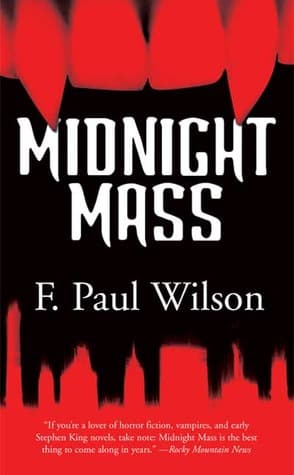
In a world overrun by vampires, a disgraced priest, a warrior nun, a desperate uncle, and a wise rabbi must unite in a small New Jersey town to uncover an ancient weakness and spark humanity's last, bloody stand against the undead.
The narrative opens with the world already largely overrun by vampires, referred to as 'Night,' and their human collaborators, 'Cowboys.' In the small New Jersey shore town of Seafront, the arrival of the Night is imminent. Father Joe, a disgraced priest haunted by false accusations of child abuse and battling alcoholism, is holed up in his rectory basement, resigned to humanity's fate. Meanwhile, Sister Carole, a former nun, has already adapted to the brutal new reality, having become a hardened survivor and adept killer of Cowboys. Dan, a local resident, is anxiously awaiting the arrival of his niece, Gina, who is making her way from the overrun New York City, hoping to find refuge with him. The initial phase of the vampiric takeover involves the systematic rounding up of humans by the Cowboys, establishing the new order of predator and prey.
Rabbi Zev Wolpin, a respected member of the Seafront community, witnesses the vampires' peculiar aversion to holy objects firsthand. During an encounter with the creatures of the Night, he observes their fear and repulsion towards a simple crucifix and holy water. This discovery shakes his understanding of the world and the nature of the vampiric threat. Realizing that these ancient religious symbols, dismissed by many in the modern age, hold actual power against the seemingly invincible vampires, Rabbi Wolpin begins to formulate a desperate plan for resistance. This insight becomes the catalyst for uniting disparate individuals in Seafront who are unwilling to simply surrender to the Night.
Rabbi Wolpin actively seeks out individuals who show resilience or possess unique skills. He approaches Father Joe, despite the priest's despair, recognizing his spiritual authority could be crucial. Sister Carole, already a formidable fighter, is a natural ally, her combat skills invaluable. Dan, concerned for his niece Gina, joins the growing resistance, driven by a desire to protect her and reclaim a semblance of normalcy. Gina, having witnessed the horrors of New York's fall, brings firsthand knowledge of the vampires' tactics and a fierce will to survive. Together, this unlikely group—a disgraced priest, a warrior nun, a concerned uncle, a traumatized survivor, and a visionary rabbi—form the core of Seafront's resistance movement, united by the Rabbi's revelation and their shared desperation.
The resistance faces a devastating internal betrayal when Father Francis, Father Joe's superior, reveals his true allegiance, having become a vampire himself. This act of treachery not only deepens Father Joe's personal crisis but also provides the vampires with crucial intelligence about the human resistance. Father Francis, now a creature of the Night, leads an assault on the remaining human congregants and the nascent resistance. This confrontation forces Father Joe to confront his past and his faith, compelling him to shed his self-pity and take a stand. Sister Carole and Dan fight fiercely, demonstrating the growing effectiveness of their improvised tactics against the vampire and Cowboy forces, but the betrayal leaves a bitter taste.
Through a combination of Rabbi Wolpin's theological research and the group's direct encounters, the resistance discovers a critical weakness in the vampire hierarchy: the vampire kings. Unlike lesser vampires, the kings are tied to a specific, ancient relic or location that is the source of their immense power. Destroying this source would not only kill the king but also potentially disrupt the entire vampiric network under his command. This revelation transforms their desperate struggle into a strategic mission with a defined objective. The information empowers the group, shifting their focus from mere survival to an offensive strike that could turn the tide of the war against the Night.
With the knowledge of the vampire kings' vulnerability, the resistance sets their sights on the Vampire King of New York, a powerful entity whose dominion extends over a vast territory. The plan is audacious and fraught with peril: infiltrate the heavily fortified, vampire-controlled New York City, locate the king's power source, and destroy it. This mission requires meticulous planning, leveraging each member's unique skills. Father Joe's renewed faith and understanding of religious power, Sister Carole's combat prowess, Dan's resourcefulness, Gina's knowledge of the city's fallen state, and Rabbi Wolpin's strategic mind are all essential. The stakes are incredibly high, as the success or failure of this mission could determine the fate of humanity on the East Coast.
The resistance group begins their dangerous trek towards New York City, a journey through a landscape transformed by the Night. They navigate abandoned roads, avoid roving patrols of Cowboys, and evade detection by the powerful vampires. The journey tests their resolve and forces them to confront the pervasive horror of the new world order. They encounter other survivors, some hostile, some broken, reinforcing the isolation and desperation of humanity. These encounters also provide opportunities for the group to hone their combat skills and strengthen their bonds, solidifying their trust in one another as they face the increasing threats that stand between them and their ultimate objective: the heart of the Vampire King's domain.
After a perilous journey, the resistance team successfully infiltrates the ruins of New York City, now a desolate and terrifying stronghold of the Night. The cityscape is a haunting reminder of humanity's defeat, with shadows lurking in every corner and the constant threat of vampiric attack. Gina's prior knowledge of the city's layout proves invaluable as they navigate the treacherous streets and abandoned buildings, avoiding detection. They witness the full extent of the vampires' control and the plight of the remaining human cattle, fueling their determination. The infiltration is a tense and nerve-wracking operation, demanding stealth, quick thinking, and the unwavering resolve of each member to reach their target without being discovered.
Deep within the desolated city, the resistance locates the source of the New York Vampire King's power. It is an ancient, unholy artifact or a deeply rooted nexus of dark energy, far more potent than they initially imagined. The discovery confirms Rabbi Wolpin's theories and shows the sheer scale of the challenge before them. As they prepare for the final confrontation, the team faces overwhelming odds, with countless vampires and Cowboys guarding the king's domain. The weight of their mission, the fate of humanity resting on their shoulders, becomes intensely palpable. They must combine their spiritual and physical strengths to overcome the formidable defenses and strike at the heart of the Night's power.
The resistance engages in a brutal and climactic battle against the Vampire King of New York and his legions. Father Joe, wielding newfound spiritual strength, confronts the king directly, using holy symbols and prayers as potent weapons. Sister Carole, a whirlwind of deadly precision, dispatches countless vampires and Cowboys. Dan and Gina fight with desperate courage, protecting each other and contributing to the assault. The fight is a desperate struggle for survival, with heavy losses on both sides. The team must work in perfect synergy, leveraging every weakness they've discovered, to destroy the king's power source and bring down the seemingly invincible monarch, hoping to ignite a glimmer of hope for a world plunged into eternal night.
Following the grueling battle, the resistance achieves a hard-won victory against the Vampire King of New York. The destruction of his power source causes a ripple effect, weakening or destroying many of the vampires under his command. The immediate aftermath is one of exhaustion and grief for those lost, but also a profound sense of accomplishment. The act proves that humanity is not entirely helpless and that the Night can be fought and defeated. While the war is far from over, this decisive strike provides a crucial turning point, inspiring other scattered human enclaves and offering a fragile but potent dawn of hope in a world shrouded in perpetual darkness. The survivors realize their mission has only just begun.
The Protagonist
Father Joe transforms from a despondent, alcoholic priest into a spiritual warrior, reclaiming his faith and leading the charge against the vampires.
The Protagonist/Supporting
Sister Carole evolves from a devout nun to a hardened, effective warrior, retaining her moral compass while adapting to the brutal necessities of survival.
The Supporting
Rabbi Wolpin confirms his faith through direct confrontation with evil, becoming the intellectual architect of humanity's counterattack.
The Supporting
Dan transforms from an ordinary man into a resilient fighter, driven by his love for his niece and his will to survive.
The Supporting
Gina moves from traumatized survivor to an active participant in the resistance, using her experiences to aid the fight.
The Antagonist/Mentioned
Father Francis descends from a man of God to a creature of the Night, betraying his vows and humanity.
The Antagonist
The Vampire King exists as a static, powerful entity whose reign is challenged and ultimately ended by the human resistance.
The Antagonist/Mentioned
The Cowboys remain static in their role as human enforcers, ultimately serving as disposable pawns for the vampires.
The novel deeply explores the theme of faith, particularly through Father Joe's journey. Initially a broken priest who has lost his way, his encounter with the tangible power of religious symbols against the vampires forces him to confront his spiritual crisis. His redemption is tied directly to the resurgence of his faith, transforming him from a despairing alcoholic into a spiritual warrior. Rabbi Wolpin's unwavering faith and scholarly approach to religious texts also highlight how deeply held beliefs can provide strength and strategy in the face of overwhelming evil. The effectiveness of holy water and crosses is not just symbolic; it is a literal manifestation of spiritual power, suggesting that true faith holds a potent, albeit often forgotten, force.
““They fear the cross. They fear the holy water. Not because of superstition, but because there is real power there. A power we have forgotten.””
The vampires represent an ancient, pervasive evil that seeks to reduce humanity to mere cattle. This theme explores not just the physical threat but also the spiritual and moral degradation they inflict. Against this overwhelming darkness, the story champions humanity's resilience. Characters like Sister Carole, who adapts and fights with fierce determination, and Dan, who finds courage to protect his niece, embody this. The resistance itself, an unlikely alliance of disparate individuals, shows that even when seemingly defeated, the human spirit can find a way to fight back, often drawing on forgotten strengths and communal bonds. It is the enduring will to survive and reclaim what is lost.
““We are not cattle. We will not be led to slaughter. Not while there is breath in our bodies.””
The theme of betrayal is starkly presented through Father Francis, who forsakes his vows and humanity to become a vampire. This act highlights how easily individuals can be corrupted by promises of power or survival, even at the cost of their soul. The Cowboys further exemplify this, trading their fellow humans for the empty promise of eternal life from the vampires. This theme is a chilling reminder that the greatest threats to humanity can sometimes come from within, from those who choose self-preservation or perceived power over loyalty and morality. It shows the insidious nature of the vampiric conquest, which preys on human weakness as much as on their blood.
““He traded his soul for a lie, and in doing so, condemned us all.””
Set in a world already largely conquered by vampires, the pervasive atmosphere is one of despair. Humanity is on the brink of extinction, reduced to prey. Yet, the novel consistently weaves in threads of hope. Rabbi Wolpin's discovery of the vampires' weakness, the formation of the resistance, and their daring mission to New York all represent acts of defiance against overwhelming odds. The act of fighting back, even against a seemingly invincible enemy, is portrayed as a powerful act of hope. It suggests that even in the darkest night, a single spark of resistance can ignite a flame, offering the possibility of a dawn, no matter how fragile.
““Even in the deepest night, there is a flicker. A chance. If we are brave enough to seize it.””
A specific relic or location that anchors and empowers a vampire king.
This plot device is crucial as it transforms the conflict from an impossible fight against an undefeatable foe into a strategic mission with a clear objective. By establishing that the vampire kings, despite their immense power, are tied to a specific, vulnerable source, the narrative provides a tangible target for the human resistance. Destroying this source is not just about killing one vampire; it's about dismantling a key part of the vampiric hierarchy and weakening their overall control. This device introduces a 'weak point' that allows for a decisive, high-stakes confrontation, giving humanity a fighting chance.
Holy objects like crosses and holy water possess actual, tangible power against vampires.
This device subverts the modern, secular understanding of religious artifacts by giving them literal, supernatural efficacy against the vampires. It's not just about faith; it's about the inherent power within these objects, which the vampires fear and are harmed by. This discovery, made by Rabbi Wolpin, is the initial spark of hope and the foundational strategy for the human resistance. It highlights a forgotten wisdom and provides the protagonists with unexpected tools against a technologically and physically superior enemy, emphasizing a spiritual dimension to the conflict.
Father Joe's past accusations and alcoholism serve as a personal obstacle and arc driver.
Father Joe's disgraced status and alcoholism are a classic plot device used to create a character with a significant internal struggle and a clear path to redemption. His personal failings make him relatable and his eventual resurgence of faith and leadership more impactful. This device allows for an exploration of themes like guilt, forgiveness, and the power of second chances. His journey from despair to spiritual warrior is directly fueled by overcoming his past, making his leadership in the fight against the Night a testament to his personal growth.
Humans who aid the vampires, highlighting moral compromise and false promises.
The Cowboys serve as a powerful plot device to explore the darker aspects of human nature under duress. They represent the moral decay and self-preservation that can occur when faced with overwhelming evil. Their existence creates an internal human conflict, making the fight not just against monsters but against those who betray their own kind. This device adds a layer of complexity to the antagonist forces, showing that the threat to humanity is not solely external but also comes from within, driven by fear and false hope.
“There are no monsters. Only people.”
— Early in the story, before the true nature of the evil is revealed.
“Faith is a choice. Always.”
— A recurring theme, often discussed by Father Frank and others.
“The greatest trick the Devil ever pulled was convincing the world he didn't exist.”
— While not original, it's used to underscore the insidious nature of the antagonist.
“Sometimes you have to break a few rules to save a lot of souls.”
— Father Frank contemplating morally ambiguous actions for the greater good.
“Fear makes us do terrible things. And sometimes, good things.”
— Observing the reactions of the townspeople under duress.
“God helps those who help themselves. And sometimes, those who can’t.”
— A reflection on divine intervention versus self-reliance.
“The true measure of a man isn't how he acts when things are good, but when everything is falling apart.”
— Assessing the character of various individuals during the crisis.
“There are some things worse than death.”
— Characters facing fates that go beyond mere physical demise.
“Hope is a dangerous thing. It can keep you going, or it can crush you.”
— Reflecting on the double-edged sword of maintaining hope in dire circumstances.
“Even in the darkest night, there is always a flicker of light.”
— A moment of optimism amidst the overwhelming darkness.
“The past is never truly dead. It’s not even past.”
— Exploring how past events and choices influence the present crisis.
“Sometimes the greatest evils come disguised as the greatest goods.”
— Understanding the seductive nature of the antagonist's promises.
“To fight a monster, you must be willing to become a monster, if only for a moment.”
— Characters contemplating extreme measures to combat the supernatural threat.
“Redemption isn't given. It's earned.”
— A character reflecting on their past sins and the path to absolution.
Ready to see how well you understood this book? Take our interactive quiz with 10 questions.

Biography coming soon.







