“It is a narrow mind which cannot look at a subject from various points of view.”
— Narrator reflecting on the limitations of rigid thinking in the community.

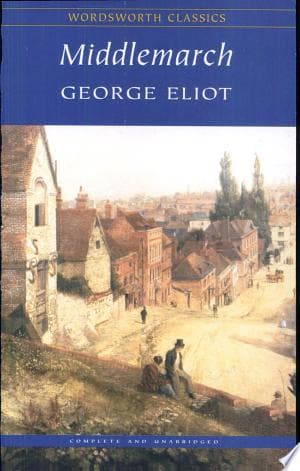
George Eliot (2018)
Genre
Historical Fiction / Romance
Reading Time
1500 min
Key Themes
See below
Sign in to track this book
In the Victorian town of Middlemarch, Dorothea Brooke seeks purpose in a stifling marriage, while Dr. Lydgate battles societal resistance and personal mistakes. This story shows human aspiration, disappointment, and the quiet strength of everyday life.
Dorothea Brooke, a wealthy and religious young woman in Middlemarch, wants to do good, often improving her tenants' homes. Sir James Chettam, a kind neighbor, courts her, but Dorothea finds him too traditional. Instead, she is drawn to the older scholar, Reverend Edward Casaubon, who is writing a 'Key to All Mythologies.' Dorothea believes marrying him will let her help with a big intellectual project and live a life of purpose, despite her sister Celia's practical concerns. She sees Casaubon as the intellectual and spiritual person she wants, ignoring his dry personality.
Around the same time, Dr. Tertius Lydgate, a young, ambitious, and educated doctor, arrives in Middlemarch. He wants to bring modern medicine and scientific research to the town. He wants to challenge old medical ways and start a new fever hospital. Lydgate, a man of science, also has some pride and wants a comfortable life. He first tries to stay out of town politics, but his good looks and skill quickly make him popular, especially with Rosamond Vincy, who is charming but shallow and sees him as a good match to improve her social standing.
The honeymoon in Rome shows Dorothea the truth about her marriage to Casaubon. She finds that his 'Key to All Mythologies' is disorganized and based on old theories. Casaubon is emotionally distant, dislikes her help, and is insecure about his own lack of knowledge. He sees her excitement as an invasion. Dorothea's dreams of an intellectual partnership disappear, replaced by loneliness. During this time, she meets Casaubon's young cousin, Will Ladislaw, who shows sympathy for her and gently criticizes Casaubon's work, further highlighting her marriage's emptiness.
Lydgate finds himself drawn to Rosamond Vincy, even though he first decided to avoid romance and focus on science. Rosamond, beautiful and refined, wants to marry Lydgate, seeing him as a way to a higher social status. She uses her charm and seeming gentleness to get him. Lydgate, charmed by her beauty and wanting a pleasant home life, proposes to her. He overlooks her shallowness and expensive tastes. Their marriage, though passionate at first, soon shows Rosamond's materialism and her inability to understand Lydgate's professional goals. This causes big financial problems and Lydgate's growing sadness.
Casaubon's health worsens, and he has a heart attack. Dorothea, despite her unhappiness, cares for him. He becomes more possessive and jealous, especially of Will Ladislaw, whom he suspects has feelings for Dorothea. Before he dies, Casaubon makes Dorothea promise to follow his wishes for his manuscript, though she does not fully understand what this means. After his death, his will is read. It includes a cruel condition: Dorothea will lose his inheritance if she marries Will Ladislaw. This shocks Dorothea and makes a future with Will seem impossible without great sacrifice.
After Casaubon's death, Will Ladislaw, who had been in Middlemarch to help Casaubon (though mostly unwelcome), starts working in journalism and gets involved in local reform politics, supporting Mr. Brooke's campaign. He visits Freshitt Grange, Dorothea's childhood home, often, and their intellectual and emotional connection grows. Will knows about the will's condition and how society would view it, which makes him not want to tell Dorothea he loves her, fearing he would seem to be after her money. His true affection and respect for Dorothea are clear, but their path to a relationship faces social disapproval and the will's terms.
Fred Vincy, Rosamond's irresponsible but good-hearted brother, loves Mary Garth, the sensible daughter of Caleb Garth, the estate manager. Fred's expensive habits and repeated failures to get a good job, including losing money meant for Mary's family, constantly upset Mary and her father. Caleb Garth, an honest and hardworking man, disapproves of Fred's lack of steady work and says Fred must prove himself worthy of Mary. Fred must overcome his laziness and find a career that will earn Mary's respect, eventually becoming a farmer.
Nicholas Bulstrode, a rich and seemingly religious banker, has a lot of power in Middlemarch. He often uses his money for religious and charity work. However, he has a secret from his past: he made his money through questionable means, including marrying a rich widow whose previous husband had disappeared, and later hiding information about the missing heir (Will Ladislaw's mother) to keep the inheritance. John Raffles, a man from Bulstrode's past who knows his secret, threatens to expose him. Bulstrode's attempts to silence Raffles lead to a moral compromise that ruins his reputation in the community.
Lydgate and Rosamond's financial situation gets bad because of her spending and his refusal to do less ethical but more profitable work. They get into a lot of debt, leading to public shame. In desperation, Lydgate accepts a loan from Bulstrode. When Raffles dies under suspicious circumstances while Lydgate is caring for him and Bulstrode is involved, rumors spread that Lydgate helped Bulstrode silence Raffles. Lydgate is innocent of wrongdoing, but his connection to Bulstrode, plus his debts, destroys his professional reputation in Middlemarch, making him consider leaving town.
Dorothea is affected by Lydgate's disgrace. She believes he is innocent despite the town's judgment. She visits Rosamond, hoping to get her to support Lydgate. During this visit, she mistakenly thinks Rosamond and Will Ladislaw are together. Heartbroken, Dorothea faces her feelings for Will. Eventually, Will, unable to hide his love, tells Dorothea. Despite the social disapproval and losing her inheritance from Casaubon's will, Dorothea chooses to marry Will. She puts love and intellectual partnership over money and social approval. Their marriage, while not achieving the big public projects she once imagined, brings her personal happiness and a supportive partner.
Dorothea and Will Ladislaw move to London. Will becomes a successful public figure, and Dorothea finds satisfaction supporting his work and raising their children. Lydgate and Rosamond leave Middlemarch; Lydgate's medical career is ruined, and he becomes a popular but unhappy doctor to the wealthy, dying young. Rosamond, still beautiful and shallow, marries a rich man after Lydgate's death. Fred Vincy, having shown his worth through hard work, marries Mary Garth and becomes a successful land agent, finding happiness in his practical life. Bulstrode, disgraced, lives out his days alone with his devoted wife. The novel's 'Finale' reflects on the quiet lives of many, and how even those with big dreams like Dorothea often have their influence channeled in unseen ways.
The Protagonist
Dorothea moves from naive idealism and intellectual yearning to a more pragmatic understanding of love and personal fulfillment, finding happiness in a supportive partnership rather than a grand, abstract cause.
The Protagonist
Lydgate descends from ambitious idealism and professional integrity to financial ruin and a compromised, unfulfilling career, largely due to his poor judgment in marriage and his entanglement with local corruption.
The Antagonist/Supporting
Casaubon remains static in his intellectual vanity and emotional coldness, ultimately dying without completing his life's work or achieving personal growth, leaving behind a legacy of disappointment and a cruel codicil.
The Supporting/Love Interest
Will evolves from a somewhat aimless, artistic young man to a dedicated journalist and politician, proving his worth and integrity to Dorothea and society, and ultimately marrying her.
The Supporting
Rosamond remains largely static, never truly growing beyond her superficiality and self-interest, ultimately contributing to her husband's downfall and living a life of comfortable but unfulfilled materialism.
The Supporting
Fred transforms from a charming but irresponsible young man into a diligent and successful land agent, earning the respect of his community and the hand of Mary Garth through hard work and integrity.
The Supporting
Mary remains steadfast in her principles and love for Fred, inspiring his transformation and ultimately marrying him after he proves his worth.
The Supporting/Antagonist
Bulstrode's meticulously constructed facade of piety and respectability crumbles as his hidden past is exposed, leading to his public disgrace and a life of isolated repentance.
The Supporting
Caleb Garth remains a steadfast figure of integrity and hard work throughout the novel, consistently upholding his values and serving as a moral anchor for those around him.
The Supporting
Mr. Brooke remains largely unchanged throughout the novel, a consistent source of mild amusement and ineffectual good intentions, never quite achieving the intellectual or political impact he imagines for himself.
The novel shows how noble goals often meet the ordinary, compromising realities of life. Dorothea Brooke's strong idealism leads her to marry Casaubon, thinking she can help a great scholar, but she finds herself in a lonely marriage with a dry, insecure man. Lydgate's goal to change medicine is stopped by his own mistakes, especially his marriage to Rosamond, and the social and financial pressures of Middlemarch. The characters' big ideas are often brought back to reality by their own human flaws, social limits, and complex relationships.
“For the married woman, an existence of pleasing and of being pleased, of adorning and being adorned, of nothing more, was a fate to be endured rather than chosen.”
Marriage is a key part of Middlemarch. It is shown not as an ideal romance but as a complex social and economic agreement with big effects on people's lives. The novel shows different kinds of marriages: Dorothea's disappointing marriage to Casaubon, Lydgate's financially ruinous marriage to Rosamond, and Fred and Mary's more harmonious but hard-won union. Eliot carefully examines the expectations, compromises, and power in these relationships. She shows how a bad choice in a spouse can stop ambition, ruin happiness, and even lead to financial disaster, especially for women.
“We are all of us born in moral stupidity, taking for granted that the world is as we find it and that things will go on for ever in the same way.”
Eliot looks at different kinds of ambition, from Dorothea's wish for a life of purpose to Lydgate's scientific goals, and Casaubon's scholarly pride. The novel asks what real success and fulfillment mean, often showing how outside factors, personal flaws, and the limits of a small town can hinder even promising efforts. Lydgate's professional honesty is hurt by his financial problems and town gossip, while Casaubon's 'great work' turns out to be an empty pursuit. The theme suggests that true ambition needs not only talent but also moral strength and a realistic understanding of one's situation.
“For the fragment of a life, however typical, is not the whole, and the best of us are but poor interpreters of the larger whole.”
The novel explores the secrets and moral compromises hidden in respectable society. Nicholas Bulstrode's careful image of piety is broken when his dark past is revealed. This shows how past sins can haunt and destroy reputations. This theme looks at cause and effect, where small acts of dishonesty can have far-reaching and destructive results. It also highlights how judgmental society is and how hard it is to truly know someone's inner life or past actions, often leading to unfair judgment.
“There is no general doctrine which is not capable of a false application, no profession which does not carry its own dangers of a peculiar bias.”
Eliot calls Middlemarch a 'web,' showing how different lives and events are connected. One character's actions, whether a big decision like Dorothea's marriage or a small one like Fred's debt, affect the whole community in unexpected ways. Lydgate's professional fall, for example, is not only because of his own choices but also because of Bulstrode's scandal, Rosamond's spending, and town gossip. This theme highlights how much community, social structures, and individual choices influence the shared fate of its members, making it hard for anyone to live alone.
“A human life, I think, should be well rooted in some spot of a native country, where it may get the love of tender kinship for the earth.”
A highly intrusive and philosophical narrator who offers extensive commentary on characters and society.
George Eliot's narrator is a distinct character in itself, frequently interjecting with philosophical observations, moral judgments, and psychological insights into the characters' inner lives and the broader human condition. This omnipresent voice guides the reader, offering context, foreshadowing, and often ironic commentary on the events and motivations within Middlemarch. The narrator's extensive reflections deepen the novel's thematic explorations and provide a critical lens through which to view Victorian society, human nature, and the complexities of moral choice, making the novel more than just a story but a profound social and psychological study.
Several distinct but interconnected storylines follow different characters, illustrating the 'web' of society.
Instead of a single protagonist, Middlemarch employs multiple, carefully interwoven plotlines centered around different characters (Dorothea, Lydgate, Fred, Bulstrode, etc.). These storylines, while initially appearing separate, gradually converge and influence one another, demonstrating the intricate social fabric of the town. This structure allows Eliot to explore a wide range of social classes, ambitions, and moral dilemmas, showing how individual lives are shaped by and, in turn, shape their community. The interconnectedness reinforces the novel's central metaphor of society as a complex, interdependent 'web.'
Detailed and accurate portrayal of Victorian provincial life, its customs, and social hierarchies.
Eliot employs social realism to meticulously depict the everyday life, customs, political factions, and class structures of a provincial English town in the 1830s. This includes detailed descriptions of domestic scenes, medical practices, political campaigns, and the gossip networks that define community life. The realism extends to the psychological depth of the characters, portraying their motivations, flaws, and internal struggles with unflinching honesty. This device grounds the novel in a specific historical and social context, making the characters and their struggles feel authentic and providing a rich tapestry against which the larger themes are explored.
Subtle and sharp commentary on human folly, societal pretensions, and moral hypocrisy.
Eliot uses irony and satire, often delivered through the omniscient narrator, to critique the limitations and absurdities of Victorian society and human nature. This is evident in the portrayal of characters like Mr. Brooke, whose well-meaning but muddled intellect is gently mocked, or Casaubon, whose scholarly pretensions are exposed as hollow. The irony often highlights the gap between characters' self-perception or public image and their true nature or impact. This device adds intellectual depth and humor to the novel, allowing Eliot to make incisive social commentary without resorting to overt didacticism.
“It is a narrow mind which cannot look at a subject from various points of view.”
— Narrator reflecting on the limitations of rigid thinking in the community.
“But the effect of her being on those around her was incalculably diffusive: for the growing good of the world is partly dependent on unhistoric acts; and that things are not so ill with you and me as they might have been, is half owing to the number who lived faithfully a hidden life, and rest in unvisited tombs.”
— Final lines of the novel, describing Dorothea's quiet impact.
“We are all of us born in moral stupidity, taking the world as an udder to feed our supreme selves.”
— Narrator commenting on human selfishness and moral development.
“What do we live for, if it is not to make life less difficult for each other?”
— Dorothea Brooke expressing her idealistic view of purpose.
“The growing good of the world is partly dependent on unhistoric acts.”
— Part of the novel's conclusion, emphasizing quiet contributions.
“I like trying to get the utmost possible amount of sweetness out of all things.”
— Celia Brooke, Dorothea's sister, speaking about her pragmatic approach to life.
“Our deeds still travel with us from afar, and what we have been makes us what we are.”
— Narrator reflecting on how past actions shape character.
“To be a poet is to have a soul so quick to discern that no shade of quality escapes it, and so quick to feel, that discernment is but a hand playing with finely ordered variety on the chords of emotion.”
— Narrator describing the sensitive nature of artistic perception.
“Marriage is so unlike everything else. There is something even awful in the nearness it brings.”
— Dorothea reflecting on the intimacy and challenges of marriage.
“The troublesome ones in a family are usually either the wits or the idiots.”
— Mrs. Cadwallader making a cynical observation about family dynamics.
“It is always fatal to have music or poetry interrupted.”
— Will Ladislaw expressing his passion for art and beauty.
“We mortals, men and women, devour many a disappointment between breakfast and dinner-time; keep back the tears and look a little pale about the lips, and in answer to inquiries say, 'Oh, nothing!' Pride helps us; and pride is not a bad thing when it only urges us to hide our own hurts—not to hurt others.”
— Narrator on the quiet endurance of daily disappointments.
“The best piety is to enjoy—when you can. You are doing the most then to save the earth's character as an agreeable planet.”
— Mr. Brooke offering his lighthearted, somewhat shallow philosophy.
“An eminent philosopher among my friends, who can dignify even your ugly furniture by lifting it into the serene light of science.”
— Narrator humorously describing Mr. Casaubon's dry intellectualism.
Ready to see how well you understood this book? Take our interactive quiz with 10 questions.
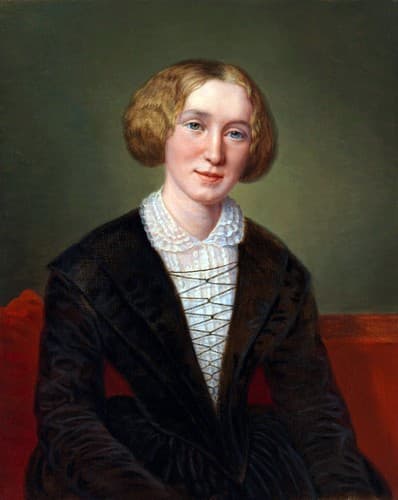
Mary Ann Evans, known by her pen name George Eliot, was an English novelist, poet, journalist, translator, and one of the leading writers of the Victorian era. She wrote seven novels: Adam Bede (1859), The Mill on the Floss (1860), Silas Marner (1861), Romola (1862–63), Felix Holt, the Radical (1866), Middlemarch (1871–72) and Daniel Deronda (1876). Like Charles Dickens and Thomas Hardy, she emerged from provincial England; most of her works are set there. Her works are known for their realism, psychological insight, sense of place and detailed depiction of the countryside.







