“We are the first generation to grow up with computers and to feel that they are as natural as a telephone.”
— Reflecting on the unique experience of the microserfs' generation.

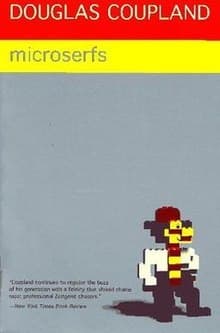
Douglas Coupland (1995)
Genre
Literary Fiction / Technology
Reading Time
450 min
Key Themes
See below
Sign in to track this book
In the pixelated glow of 90s Microsoft, a band of code-crunching 'microserfs' escape the corporate grind to chase innovation, love, and humanity in a Silicon Valley startup, grappling with a digital coming-of-age.
The novel opens with Dan Underwood, a Microsoft programmer, narrating his life and the lives of his five housemates and colleagues in Redmond, Washington, through entries on his PowerBook. They are all 'microserfs,' dedicated to coding, existing within the culture of Microsoft in the mid-90s. Their days are dominated by work, fear of 'flames' from Bill Gates, and a devotion to technology. They eat bland foods, communicate largely through email, and their social lives are almost nonexistent outside their shared house. Dan records their habits, their anxieties about their careers, and their sense of being disconnected from the 'real' world, even as they create the digital tools that shape it.
Dan's father, a traditional, blue-collar worker, visits him in Redmond. The visit highlights the vast difference between their worlds and values. Dan's father expresses his disappointment in Dan's career choice, viewing his son's work as abstract and lacking the tangible results of his own labor. This confrontation affects Dan deeply, forcing him to re-evaluate his life at Microsoft. The experience makes him question his future and the true meaning of his work, pushing him to consider what a fulfilling life might look like beyond the corporate giant.
Abraham, one of Dan's housemates and a fellow programmer, decides to quit Microsoft. This act of rebellion, driven by his desire to create something truly his own, sends ripples through the group. Abraham's departure is a catalyst, forcing the remaining microserfs to confront their own professional stagnation and the appeal of independent creation. His vision for a new kind of software, one that is more intuitive and less corporate, begins to form the idea of a startup, offering an alternative to their current existence.
Inspired by Abraham and a collective desire for autonomy, Dan, Karla, Todd, Susan, and Michael decide to quit Microsoft together. They pack their belongings, including their computers, and relocate to Silicon Valley, specifically Palo Alto, California. Their goal is to launch their own software startup, which they name 'Oop!' (Object-Oriented Programming). This move represents a dramatic break from their comfortable but stifling lives in Redmond, a leap of faith into the competitive and uncertain world of tech entrepreneurship.
In Palo Alto, the group establishes their new base of operations and living space, which they call 'Our House of Wayward Mobility.' This communal living arrangement is a mix of idealism and pragmatism, as they pool their resources and talents to bring Oop! to life. The transition has challenges; they deal with financial instability, the pressure of developing their prototype, and the complexities of living and working together in close quarters. They try to maintain their unique hacker culture while attempting to integrate into the broader Silicon Valley ecosystem.
As they work on Oop!, the characters also try to cultivate 'real' lives outside of their screens. This includes tentative forays into dating, attempting to understand human emotions beyond algorithms, and engaging in activities that don't involve computers. Dan struggles with his feelings for Karla, while Susan deals with her body image and identity. Todd tries to connect with a woman he meets, and Michael continues his eccentric, almost spiritual, relationship with technology. This period is marked by awkward social interactions and a growing awareness of their emotional deficiencies.
In a surprising turn of events, Bill Gates himself pays an unannounced visit to 'Our House of Wayward Mobility' to see Oop!'s progress. This encounter is a significant moment for the former microserfs, bringing a mix of validation, fear, and a strange sense of closure. Gates, the inscrutable genius, offers cryptic feedback and a glimpse into his own relentless drive. The visit highlights the enduring influence of Microsoft on their lives, even as they try to forge their own path, and provides a benchmark for their nascent company.
The team at Oop! soon confronts the challenge of securing venture capital. They navigate a series of pitches to potential investors, facing skepticism and the cutthroat nature of the startup world. The pressure mounts as their initial funds dwindle. This struggle highlights the precariousness of their venture and forces them to refine their vision, confront their weaknesses, and learn the practicalities of business beyond pure coding. It's a test of their resilience and their collective belief in Oop!'s potential.
The intense pressure of the startup, coupled with their close living arrangements, begins to strain the relationships within the group. Personal insecurities, creative differences, and unaddressed emotional issues surface. Dan's unrequited feelings for Karla create an unspoken tension, while Susan's struggles with her identity and body image become more pronounced. Todd faces his own anxieties about success and failure. These internal conflicts threaten to unravel their communal and professional endeavor, forcing them to confront not just technical challenges but also their own humanity.
After much effort, Oop! is finally launched. The initial reception is a mix of cautious optimism and the usual industry scrutiny. The launch marks an important moment, but it doesn't immediately solve all their problems. The characters are left to process the reality of their achievement, the ongoing challenges of running a company, and their individual paths forward. Dan continues to document their journey, reflecting on their growth, their failures, and the evolving definition of success and happiness in their lives. The future remains uncertain, but they have achieved a significant milestone.
As Oop!'s launch settles, the characters begin to find more meaningful connections. Dan and Karla's relationship evolves, hinting at a romantic future beyond their platonic coworker dynamic. Susan starts to come to terms with her body image and self-worth, finding a nascent sense of confidence. Todd experiences a significant personal breakthrough, moving past his anxieties. While their professional journey with Oop! continues, the focus shifts to their personal growth, their attempts to build fulfilling relationships, and their search for a more balanced existence, demonstrating a slow but steady integration into the 'real' world.
By the end of the novel, the 'House of Wayward Mobility' and the Oop! team have become more than just a startup and a shared living space; they have formed a new kind of family. They've learned to rely on each other, support each other through professional and personal crises, and create a sense of belonging in a world that often feels dislocated. Dan's final entries reflect on this evolving definition of 'home' and 'family,' recognizing that true connection can be found in unconventional places and through shared experiences, even for those deeply immersed in the digital realm.
The Protagonist/Narrator
Dan evolves from a detached observer trapped in the Microsoft bubble to an active participant in building a new life and company, learning to express his emotions and seek genuine connection.
The Supporting
Karla transitions from being emotionally guarded to allowing herself to be vulnerable and exploring a romantic relationship with Dan.
The Supporting
Todd learns to overcome his deep-seated insecurities and anxieties, finding self-acceptance beyond external validation.
The Supporting
Susan confronts and begins to overcome her body image issues, finding confidence and a sense of belonging within the group.
The Supporting
Michael remains largely consistent in his unique perspective, but his interactions with the group subtly broaden his understanding of human connection.
The Supporting
Abraham initiates the group's entrepreneurial journey, maintaining his visionary drive while adapting to the realities of a startup.
The Mentioned
N/A - serves as a symbolic figure.
The Mentioned
N/A - serves as a symbolic figure representing traditional values and a source of conflict for Dan.
The microserfs, despite their professional success at Microsoft, feel an emptiness and lack of authenticity in their lives. They are driven by a desire to create something 'real' and meaningful, both in their work and their personal relationships. This quest appears in their decision to leave Microsoft and start Oop!, and in their awkward attempts to form romantic connections and engage with the non-digital world. Dan's narration frequently questions the purpose of their intense coding and the value of a life lived primarily through screens, as seen when his father expresses disappointment in his abstract work.
“What do you do with a life after you've been working at Microsoft? Are we just a bunch of brain-damaged savants whose only function is to write code? Or are we something more?”
The novel explores how individuals form communities and find belonging in an increasingly digital and isolated world. The microserfs, initially bound by their shared work at Microsoft, deepen their bond through communal living in 'Our House of Wayward Mobility.' This shared space becomes a place for their personal and professional growth, evolving into a surrogate family. They rely on each other for emotional support, creative collaboration, and a sense of identity, highlighting the human need for connection even when their lives are dominated by technology.
“We were not just roommates; we were a tribe. A very strange, very digital tribe.”
Coupland portrays the isolating and dehumanizing aspects of an obsessive dedication to technology. The microserfs' lives are characterized by long hours, bland diets, social awkwardness, and a pervasive fear of their corporate overlords. Their deep immersion in coding often comes at the expense of their emotional development, physical well-being, and ability to form 'normal' human relationships. The novel suggests that while technology offers creative potential, it can also lead to a disconnection from the self and the world outside the screen, as seen in Michael's almost spiritual, yet isolating, relationship with his computer.
“We were all trying to compute our way out of loneliness.”
The book examines the drive to create and innovate, contrasting the corporate, hierarchical environment of Microsoft with the independent, passionate spirit of a startup. The characters' desire to build Oop! is fueled by a yearning for creative autonomy and the satisfaction of bringing a unique vision to life, rather than being cogs in a larger machine. It explores the collaborative process of software development, the challenges of turning an idea into a tangible product, and the risks and rewards of entrepreneurship. Their struggle to get Oop! off the ground highlights the blend of passion, intellect, and will required for innovation.
“We didn't want to just make software; we wanted to make something that mattered, something that was truly ours.”
Microserfs highlights the contrast between the emerging digital culture of the 1990s and more traditional societal values. Dan's relationship with his blue-collar father shows this divide, as his father struggles to understand the abstract nature of Dan's work and the unconventional lifestyle of the microserfs. This theme explores the anxieties and misunderstandings that arise when new technologies and ways of living challenge established norms, creating a gap between generations who perceive 'real work' and 'real life' very differently.
“My dad built things you could touch. I built things you could only see on a screen.”
The entire novel is presented as Dan Underwood's personal digital diary.
The novel is entirely narrated through the first-person perspective of Dan Underwood, presented as entries typed into his Apple PowerBook. This device immerses the reader directly into Dan's mind, allowing for intimate access to his thoughts, observations, and anxieties. It also reflects the characters' deep connection to technology and the emerging digital communication methods of the 1990s. The fragmented, diary-like structure mimics the way programmers might document their lives, providing a raw and immediate account of their experiences and reflecting the insular nature of their world.
A threatening email from Bill Gates, symbolizing corporate power and fear.
The 'flame' is a recurring motif, referring to a critical or angry email from Bill Gates. It functions as a powerful symbol of the corporate hierarchy, the omnipresent authority of Microsoft's founder, and the constant fear and pressure under which the microserfs operate. The dread of receiving a 'flame' underscores their lack of autonomy and the precariousness of their positions, driving their eventual desire for independence. It represents the negative, fear-driven aspect of their professional lives at Microsoft.
The communal living and working space for the Oop! team.
This shared house in Palo Alto serves as a central setting and a powerful symbol. It represents the group's collective identity, their aspirations for independence, and their attempt to forge a new kind of family and community. The house is both a haven for their creative endeavors and a crucible for their interpersonal tensions, embodying the blend of idealism and struggle inherent in their startup journey. It's a physical manifestation of their shared dream and their unconventional chosen family.
A quirky detail symbolizing the characters' neglect of physical needs.
The microserfs' preference for 'flat' foods (like Kraft singles or pizza, which can be passed under closed doors) is a recurring, humorous, yet telling detail. It symbolizes their intense focus on work to the exclusion of basic human needs, their insular lifestyle, and their detachment from the 'real world.' This detail highlights the often-unhealthy habits of dedicated programmers and serves as a subtle commentary on the physical and social neglect that can accompany technological obsession.
“We are the first generation to grow up with computers and to feel that they are as natural as a telephone.”
— Reflecting on the unique experience of the microserfs' generation.
“Most people don't know what they want until you show it to them.”
— Contemplating the nature of innovation and consumer desire.
“Every morning I wake up and think: 'I'm a microserf.' And then I think: 'I'm a human being.'”
— Daniel's internal struggle with identity and his job.
“Life is just a series of things that happen, and then we die.”
— A somewhat nihilistic observation about existence.
“We're all just trying to make sense of the world, and sometimes the best way to do that is to build something.”
— Daniel's reflection on the motivation behind creating software.
“The future isn't something that happens to us. It's something we make.”
— An empowering thought about agency and technological progress.
“Being a microserf isn't just a job, it's a way of life. It's a culture.”
— Describing the pervasive influence of Microsoft culture on its employees.
“You can't go home again, but you can always go online.”
— Contrasting physical and virtual spaces for connection.
“We're all just nodes in a vast network, trying to find our connection.”
— Using a technological metaphor to describe human relationships.
“The greatest freedom is to be able to choose what you want to work on.”
— Daniel's aspiration for creative control and autonomy.
“Sometimes the best way to solve a problem is to just walk away from it for a while.”
— A practical approach to problem-solving, often applicable to coding.
“We're all just trying to find our own little corner of the universe where we can be useful.”
— A poignant reflection on the search for purpose.
“The world is full of interesting things. You just have to know where to look.”
— An optimistic outlook on discovery and observation.
Ready to see how well you understood this book? Take our interactive quiz with 10 questions.
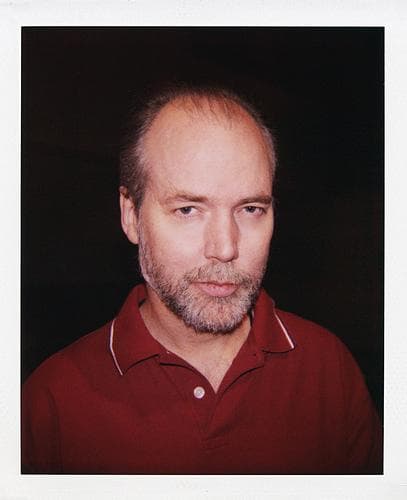
Douglas Coupland is a Canadian novelist and visual artist. He gained international recognition for his 1991 debut novel, "Generation X: Tales for an Accelerated Culture," and has since published numerous critically acclaimed works including "Microserfs," "JPod," and "The Gum Thief." Coupland is celebrated for his sharp, satirical observations on contemporary culture, technology, and consumerism.







