“It was just a bike ride. Just a stupid bike ride. But he wasn't wearing his helmet.”
— Phoebe reflecting on the accident that killed Mick.

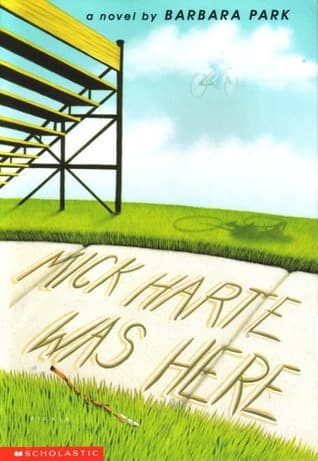
Barbara Park (1995)
Genre
Children's / Young Adult
Reading Time
90-120 min
Key Themes
See below
Sign in to track this book
Phoebe deals with the sudden death of her mischievous younger brother, Mick, after he rides his bike without a helmet, leaving her to navigate a world changed by his absence.
The story begins with Phoebe Harte, a seventh-grader, remembering the day her older brother, Mick, died. She describes her parents arriving home, visibly upset, and her mother's pained explanation that Mick had been in a bicycle accident and was gone. Phoebe initially struggles to understand death, expecting Mick to walk through the door. Her father, usually a quiet man, breaks down, showing the shock and grief that instantly filled their family. The news is delivered directly, and Phoebe's world immediately shifts into mourning.
Phoebe describes the preparations for Mick's funeral, a confusing and draining process for her. She observes how family members and friends react, noting different ways people show grief. A central point of pain for Phoebe and her parents is that Mick was not wearing his bicycle helmet at the time of the accident. This detail becomes a recurring, painful reminder of how his death could have been prevented. The funeral is a blur of faces and quiet conversations, leaving Phoebe feeling detached and overwhelmed by the sympathy and the reality of Mick's absence.
Throughout her narration, Phoebe mixes the sad events with vivid memories of Mick. She describes a loud, funny, and somewhat mischievous twelve-year-old. She remembers his pranks, like putting a ceramic eye in a defrosted chicken to scare their mom, or his wild dance during a school assembly that both embarrassed and charmed others. These stories show Mick's personality, emphasizing the void left by his death. Phoebe's memories are a mix of frustration and affection, showing their typical sibling dynamic.
Phoebe describes Mick's room remaining untouched, showing his sudden departure. She is drawn to it, yet also pushed away by its stillness. The family's routines are broken, and their home, once full of Mick's energy, now feels quiet. Phoebe watches her parents grieve, particularly her mother's sadness and her father's quiet withdrawal. The physical spaces they share are filled with Mick's absence, making it hard for Phoebe to escape the constant reminder of her loss, even at home.
Returning to school after Mick's death is difficult for Phoebe. She dreads the sympathy and stares from her classmates, many of whom don't know how to react. Some avoid her, others offer clumsy condolences, and a few try to treat her normally, which she appreciates. Her best friend, Chrissy, tries to be supportive but struggles to understand Phoebe's pain. Phoebe feels isolated, even among her friends, as she deals with a grief no one else her age can truly understand. School, once a routine place, now feels strange and full of silent judgments.
Phoebe's parents decide the family should attend a grief support group for people who have lost loved ones. Initially reluctant, Phoebe observes the other participants and their stories. She hears about different types of loss and ways people cope. While she doesn't immediately find comfort, the group provides a space where her family's grief is normalized, and they are not alone in their pain. It is an important step in their healing, allowing them to share feelings and listen to others who understand mourning.
Christmas, a time of joy and family, brings a fresh wave of grief for the Hartes. Phoebe describes the difficulty of trying to maintain holiday traditions when a family member is missing. The usual festive atmosphere is replaced by a quiet sadness. Her parents struggle with decorating and gift-giving, as every action reminds them of Mick's absence. This holiday shows the lasting impact of their loss, demonstrating how even cherished family rituals are altered by grief, forcing them to redefine what 'celebration' means.
As time passes, Phoebe slowly shifts from intense sorrow to a more reflective remembrance of Mick. She realizes that while his death was tragic, his life was full of joy, humor, and a unique spirit. Instead of dwelling only on the accident, she starts to cherish memories of his personality, his pranks, and his love for life. This shift is not about forgetting Mick, but about integrating his memory into her life in a way that allows for healing and appreciation, rather than just pain. She starts to understand that grief is a process, not an end.
The thought of the unworn helmet is a source of pain and anger for Phoebe. She constantly replays the scenario, wondering if Mick would still be alive had he simply put it on. This 'what if' question is central to her grief, showing the unfairness and preventability of his death. She struggles with anger towards Mick for his carelessness, and the frustration that such a simple act could have saved him. This internal conflict shows the complex emotions in grieving, especially when there is an element of perceived fault.
By the end of the book, Phoebe has not 'gotten over' Mick's death, but she has learned to live with it. She understands that grief is ongoing, and that Mick will always be a part of her. Her family, too, starts to find a new normal, changed but still connected. Phoebe realizes that Mick's spirit lives on in her memories and the lessons she has learned. The story ends with a sense of hopeful resilience, emphasizing that while the pain of loss remains, life continues, and love for those lost endures, leading to a greater appreciation for life's preciousness.
The Protagonist
Phoebe moves from initial shock and disbelief to anger, and eventually to a more reflective acceptance of her brother's death, learning to carry her grief while continuing to live.
The Mentioned/Central Figure
Mick's character is static, presented through past memories, but his absence drives the arc of all other characters.
The Supporting
She moves from intense, debilitating grief towards a gradual, though painful, acceptance and a commitment to helping her family heal.
The Supporting
He grapples with his grief internally, eventually finding ways to process it and support his family, moving towards a quiet resilience.
The Supporting
Chrissy remains a steadfast friend, showing her care for Phoebe, but her character arc is secondary to Phoebe's.
The Supporting
Her role is to provide support during the initial crisis, remaining a consistent, caring figure.
The Mentioned
Their collective presence helps the Harte family begin their healing journey by providing a safe space and shared understanding.
The book explores the immediate, raw experience of grief, especially through a child's eyes. It addresses the intense pain, confusion, and anger that come with loss. Phoebe's narration details the initial shock, the physical feelings of sorrow, the awkwardness of others' condolences, and the emptiness Mick left behind. The family's struggles — her mother's tears, her father's quiet withdrawal, and Phoebe's internal turmoil — show grief as a pervasive force. The unworn helmet highlights the tragic 'what if' that often affects those left behind.
“And then, after all the crying, it wasn't just my eyes that hurt, it was my whole face. And my chest hurt. And my stomach hurt. And my legs hurt. And my arms hurt. I hurt all over the place.”
A central, agonizing theme is that Mick's death could have been prevented, shown by the fact that he wasn't wearing his bicycle helmet. This detail creates a shadow of 'what if' over the entire story, adding frustration and anger to the family's grief. Phoebe often returns to this point, dealing with the idea that a simple, overlooked safety measure could have saved her brother's life. This theme is both a source of deep pain for the characters and a powerful, implicit message to the reader about safety and responsibility, especially for children.
“And it was that dumb helmet. That stupid, dumb, ugly, plastic, stupid, dumb, ugly helmet that Mick had taken off just five minutes before he was killed.”
The book shows various ways individuals and families cope with profound loss. Phoebe uses humor, vivid memories of Mick's antics, and eventually, the act of telling the story itself, to process her grief. Her parents attend a grief support group, which, while uncomfortable at first, provides a space for shared experience and validation. The story shows that healing is not about 'getting over' the loss, but about learning to live with it, integrating the memory of the loved one into one's life. It is a slow, non-linear process, with both setbacks and small steps forward.
“I'm still crying. But not all the time. I'm still hurting. But not all over the place. I'm still remembering. But not only the bad things.”
Despite the sorrow and disruption Mick's death causes, the Harte family's bond remains a core strength. Their shared grief, though sometimes isolating, also brings them closer. Phoebe observes her parents' individual struggles but also their mutual support. The efforts to maintain some normalcy, like the difficult first Christmas without Mick, show their commitment to each other and to continuing as a family. The support group scenes further emphasize the importance of family connection and collective healing, even as individual journeys through grief differ.
“Even though Mick was gone, we were still a family. And families were supposed to stick together, especially when things were bad.”
Phoebe narrates the story from a future point, reflecting on past events.
The entire story is told from Phoebe's perspective, looking back on the events surrounding Mick's death. This allows for a mature, reflective tone, even though the events are experienced by a child. This device enables Phoebe to interweave immediate reactions with later insights and to present a more complete emotional arc. It also allows her to share personal memories and internal thoughts directly with the reader, creating a strong sense of intimacy and empathy. The retrospective lens also hints at a degree of healing, as she is able to articulate her feelings and the sequence of events.
Phoebe frequently recalls specific, often humorous, memories of Mick.
Throughout the narrative, Phoebe punctuates the somber recounting of Mick's death and its aftermath with vivid flashbacks and anecdotes about Mick's life. These memories serve multiple purposes: they vividly characterize Mick as a lively, mischievous boy, making his absence more poignant; they provide moments of levity amidst the grief; and they demonstrate how Phoebe is processing her loss by holding onto the positive, vibrant aspects of her brother's personality. These interspersed memories prevent the story from becoming solely focused on the tragedy, highlighting the life that was lived.
The bicycle helmet symbolizes the preventable nature of Mick's death and the lingering 'what if'.
The unworn bicycle helmet is a powerful and recurring symbol in the story. It represents the tragic irony and preventable nature of Mick's death, becoming a tangible focus for the family's grief, anger, and guilt. For Phoebe, it's a constant reminder of the 'what if' – the simple act that could have changed everything. This concrete object embodies the unfairness of the situation and the difficulty of accepting a loss that feels avoidable, making the abstract concept of death painfully real and frustrating for the characters and the reader alike.
Phoebe occasionally speaks directly to the reader, breaking the fourth wall.
Phoebe sometimes addresses the reader directly, using phrases like 'You know,' or 'Let me tell you.' This device creates a conversational and confessional tone, drawing the reader into Phoebe's emotional experience and making her story feel more immediate and personal. It enhances the sense that Phoebe is sharing her deepest thoughts and feelings, fostering a strong connection and empathy between the narrator and the audience, and making the heavy subject matter more accessible to young readers.
“It was just a bike ride. Just a stupid bike ride. But he wasn't wearing his helmet.”
— Phoebe reflecting on the accident that killed Mick.
“And then, after that, I think I stopped being a kid. I think I grew up a lot that day.”
— Phoebe describing the immediate aftermath of Mick's death.
“I used to think that the worst thing that could ever happen to me was that Mick would make fun of my hair or something. Now I know that's not even close.”
— Phoebe contrasting her old worries with her current grief.
“It's like a big hole in our family. And no matter what we do, we can't fill it up.”
— Phoebe explaining the lasting impact of Mick's absence on her family.
“Sometimes I just want to yell at him. 'Why, Mick? Why didn't you wear your helmet?'”
— Phoebe expressing her anger and frustration at Mick.
“He was just… Mick. And now he's not.”
— Phoebe grappling with the finality of Mick's death.
“My mom says that sometimes when people die, they leave a little piece of themselves behind. Like a memory, or a feeling.”
— Phoebe's mother trying to comfort her about Mick.
“I don't think I'll ever be able to look at a bike helmet the same way again.”
— Phoebe's lasting association of helmets with Mick's death.
“It's funny how you don't even think about something until it's too late.”
— Phoebe reflecting on the overlooked importance of safety.
“I used to think that 'forever' was a really long time. Now I know it's just… gone.”
— Phoebe's understanding of time and permanence altered by death.
“Nobody tells you how much it hurts. Nobody tells you how much you're going to miss them.”
— Phoebe expressing the unexpected depth of her grief.
“He was always doing crazy stuff, but he was *my* crazy brother.”
— Phoebe recalling Mick's adventurous nature and her bond with him.
“And sometimes, when I'm really quiet, I can almost hear him laughing.”
— Phoebe finding a way to keep Mick's memory alive.
“It wasn't fair. It just wasn't fair.”
— Phoebe's raw expression of injustice regarding Mick's death.
Ready to see how well you understood this book? Take our interactive quiz with 10 questions.

Barbara Park was a beloved American author of children's and young adult fiction, celebrated for her humorous and relatable stories. Her notable works include 'The Graduation of Jake Moon' and 'Mick Harte Was Here,' both praised for their sensitive portrayal of complex emotional themes. Park's writing often explored the challenges and triumphs of childhood with warmth and wit, earning her a dedicated readership.

Dan Gemeinhart
4.5

Kate O'Hearn
4.4

Jeanne Birdsall
4.4

Jen Wang
4.4

Wendelin Van Draanen
4.3

John Marsden
4.3

Chris Van Allsburg
4.3

Jennifer A. Nielsen
4.2