“The world has a right to know that you have been wronged, and that a prince, yes, a prince himself, has not been ashamed to commit injustice against you.”
— Kohlhaas's initial motivation for seeking justice.

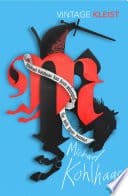
Heinrich von Kleist (2021)
Genre
Historical Fiction
Reading Time
120 min
Key Themes
See below
Sign in to track this book
A wronged horse-dealer, failed by a corrupt 16th-century legal system, wages a bloody war for justice, blurring the lines between vigilante hero and dangerous enemy of the state.
Michael Kohlhaas, an honest horse-dealer from Brandenburg, is traveling to Saxony for market when he is stopped at Junker Wenzel von Tronka's castle. The castellan demands a travel pass, which Kohlhaas does not have, and insists he leave two of his best horses as collateral. Kohlhaas complies, leaving his stableman Herse with the horses. Upon his return, Kohlhaas finds his horses emaciated and ill-treated, and Herse beaten for protesting. He tries to sue Tronka for damages, but discovers Tronka is related to influential figures in the Saxon court. His complaints are dismissed or ignored, leaving him frustrated by the corruption and injustice.
Determined to obtain justice, Kohlhaas prepares a detailed petition outlining his grievances against Junker Wenzel von Tronka and submits it to the Elector of Saxony. He believes the Elector, as the ultimate arbiter of justice, will correct the wrongs. However, Tronka's powerful relatives within the court, particularly Lord High Chancellor Hinz von Tronka, block the petition. The Elector, influenced by his advisors or overwhelmed by other matters, never properly reviews Kohlhaas's plea. This rejection, after exhausting all legal avenues, pushes Kohlhaas to despair and ignites his resolve to seek justice by other means.
Before resorting to violence, Michael Kohlhaas's devoted wife, Lisbeth, a religious woman, volunteers to personally deliver his petition to the Elector in Berlin. She hopes her innocent appearance will bypass corrupt court officials. Despite her efforts, the Elector's guards push her aside, causing a severe chest injury. She returns home gravely wounded and soon dies, leaving Kohlhaas heartbroken and furious. Her death, a direct result of the legal system's failure, shatters Kohlhaas's remaining faith in authority. It transforms his quest for justice into a desire for revenge.
Following Lisbeth's death, Michael Kohlhaas sells his property, gathers his loyal servants, and issues a 'Kohlhaas Mandate.' This decree, published widely, declares Junker Wenzel von Tronka an outlaw and himself an executor of divine justice, since earthly courts have failed him. He demands the return of his horses in their original healthy condition and compensation for his losses. He threatens destruction upon anyone who harbors or aids Tronka. This act marks his change from a law-abiding citizen into a vigilante, convinced he is acting on God's behalf to correct an injustice the state refused to address.
Michael Kohlhaas, with a growing band of followers, launches his first major act of retribution by attacking Tronkenburg, Junker Wenzel von Tronka's castle. The castle is burned, and many of Tronka's servants are killed. However, Tronka himself escapes. This act of violence signals Kohlhaas's complete break from the legal system and his full commitment to extralegal justice. The burning of Tronkenburg sends a clear message to authorities and the public that Kohlhaas is a force to be reckoned with. He will stop at nothing to achieve his demands, even if it means widespread destruction.
As Junker Wenzel von Tronka continues to evade capture, Michael Kohlhaas and his followers escalate their campaign. They burn down towns and villages that refuse to surrender Tronka or are perceived as harboring him or his sympathizers. Cities like Wittenberg and Leipzig are threatened, causing widespread panic and disruption throughout Saxony. Kohlhaas's actions, initially focused on a specific grievance, now take on a broader, more destructive character. He issues new mandates, declaring that anyone who protects Tronka will face the same fiery fate, establishing himself as a formidable force challenging state authority.
The reformer Martin Luther, alarmed by Michael Kohlhaas's escalating violence and the chaos it causes, publishes a public letter condemning Kohlhaas as a 'rebellious and bloodthirsty man.' However, Luther also acknowledges the legitimacy of Kohlhaas's initial grievance regarding the horses and the failure of the legal system. He summons Kohlhaas to Wittenberg under a promise of safe conduct for a discussion. This intervention offers Kohlhaas a hope for a peaceful resolution and a chance to present his case to a respected moral authority, forcing him to reconsider his violent path, at least temporarily.
Following his meeting with Martin Luther, Michael Kohlhaas is offered a free pass to Dresden to negotiate a settlement, with the promise of amnesty if he disbands his forces. He accepts, hoping for justice through legal channels once more. However, upon arriving in Dresden, authorities quickly arrest him, reneging on the amnesty. They claim he violated the terms by not fully disbanding his men. This betrayal by the Saxon court confirms Kohlhaas's suspicions about the corrupt justice system and reignites his fury, leaving him feeling deceived and trapped.
While imprisoned, Michael Kohlhaas meets a mysterious gypsy woman who reveals a prophecy. She gives him a small lead capsule containing a slip of paper. The prophecy states that the Elector of Saxony will die on the same day Kohlhaas is executed, and that the Elector's dynasty will also fall through the actions of a specific individual. Kohlhaas is instructed to keep the capsule until his execution. This supernatural element adds a fatalistic dimension to the story, suggesting that Kohlhaas's fate is intertwined with that of the Elector and that his actions have far-reaching consequences.
Michael Kohlhaas is brought to trial for his crimes of rebellion, arson, and murder. Despite facing overwhelming charges, he remains firm in his conviction that he acted justly. During the trial, a new Elector of Brandenburg intervenes, recognizing the initial injustice against Kohlhaas. Through this intervention, Kohlhaas's original demand for the return of his two horses, now fully restored and healthy, and compensation for his stableman's injuries, is finally granted. On the day of his execution, just before his head is severed, Kohlhaas swallows the lead capsule containing the prophecy, ensuring the Elector of Saxony does not learn its contents. He dies with a sense of grim satisfaction, having secured justice for his initial grievance, even at the cost of his life.
Immediately after Michael Kohlhaas's execution, the Elector of Saxony, who had witnessed the event, falls ill and dies. This sudden death fulfills the gypsy's prophecy, which Kohlhaas had swallowed to prevent the Elector from knowing his own fate. The Elector's demise, directly linked to Kohlhaas's execution, highlights the impact of Kohlhaas's quest for justice. It suggests that even in death, Kohlhaas's actions have a lasting consequence on the powerful, validating his belief that he was an instrument of a higher, albeit brutal, form of justice.
The Protagonist
Kohlhaas transforms from a law-abiding citizen into a radical vigilante, convinced he is an instrument of God, ultimately sacrificing his life to achieve his initial, specific demand for justice.
The Antagonist
Tronka remains largely unchanged, a symbol of aristocratic impunity, though his actions inadvertently lead to widespread destruction and his own family's downfall.
The Supporting
Lisbeth's brief but impactful arc moves from a voice of caution to a tragic martyr, her death serving as the pivotal moment for Kohlhaas's radicalization.
The Supporting
Herse serves as an early casualty, embodying the initial injustice, and later as a loyal follower, dying in the service of Kohlhaas's cause.
The Supporting
Luther attempts to guide Kohlhaas back to a lawful path, highlighting the tension between divine and human justice, but ultimately fails to prevent his tragic end.
The Supporting
The Elector's arc moves from an oblivious ruler to a direct target of rebellion, ultimately meeting a prophetic demise tied to Kohlhaas's fate.
The Supporting
Hinz von Tronka consistently uses his power to subvert justice, serving as a primary obstacle to Kohlhaas's legal efforts.
The Mentioned
The gypsy woman serves as a brief, prophetic messenger, highlighting the story's themes of fate and divine justice.
The main theme explores the conflict between an individual's sense of absolute justice and the often corrupt, imperfect legal system. Michael Kohlhaas's initial trust in the law shatters when the Saxon courts, riddled with nepotism, deny him redress for the wrong committed by Junker Tronka. His subsequent vigilantism is an attempt to enforce what he perceives as divine justice when human law fails. The story questions whether a just outcome can be achieved when legal mechanisms are flawed, and at what point an individual is justified in taking the law into their own hands. This is exemplified when he states, 'Let the world be unjust, for God is just!' after his petition is rejected.
“Woe to the state where the law is a tool for the powerful, and where justice is a commodity!”
The narrative explores the causes and consequences of rebellion. Kohlhaas's rebellion is not born of a desire for anarchy or personal gain, but from a sense of having been wronged and a desperate need for justice. His change from a respected citizen to a 'dangerous enemy of the peace' shows how systemic injustice can radicalize an individual. The story examines the fine line between a righteous uprising and destructive violence, as Kohlhaas's campaign, while initially focused on a specific grievance, escalates to widespread arson and murder. Martin Luther's intervention highlights the moral complexities, condemning the violence while acknowledging the initial injustice that sparked it. The rebellion forces the state to confront its own failures.
“He would not lay down his arms until justice was done to him, though the world should perish in the attempt.”
This theme contrasts Kohlhaas's demand for absolute, uncompromising justice with the pragmatic, often compromised nature of real-world legal and political systems. Kohlhaas insists on the precise restoration of his horses to their original condition and full compensation, viewing any lesser outcome as a continuation of injustice. This unwavering demand clashes with the state's desire for order, compromise, and the protection of its powerful elites. The story shows how Kohlhaas's pursuit of an ideal, absolute justice ultimately leads to his own destruction. Yet, it also forces the system to, at least partially, acknowledge his original right. His execution, immediately followed by the Elector's death, hints at a higher, unyielding form of justice at play.
“Let me but have my rights! I will then gladly pay the forfeit of my life.”
Kleist includes elements of fate and divine providence, particularly through the gypsy's prophecy. This suggests that Kohlhaas's actions and their far-reaching consequences, including the Elector's death, are not merely coincidental but part of a larger, predetermined plan. The prophecy elevates Kohlhaas's personal quest to a cosmic scale, implying that he is an instrument of a higher will, even if his methods are violent. This theme adds a layer of fatalism and ambiguity, questioning the extent of free will versus a divinely ordained destiny in the pursuit of justice, and whether Kohlhaas's destructive path was ultimately 'meant to be' to correct a deep-seated wrong.
“Heaven itself seemed to have taken up the cause of this extraordinary man.”
The novel shows how power, particularly unchecked aristocratic power, can corrupt the legal system and society. Junker Wenzel von Tronka's initial act of petty tyranny is enabled and shielded by his powerful relatives, like Lord High Chancellor Hinz von Tronka, who manipulate the courts. This systemic corruption demonstrates how those in authority can pervert justice for personal gain or to protect their own class. The Elector of Saxony, by allowing such corruption to persist in his court, inadvertently fuels Kohlhaas's rebellion and ultimately pays a high price. The story is a cautionary tale about the dangers of a justice system that favors the powerful over the righteous.
“The great ones of the earth, who have power, use it for their own advantage, and not for the common good.”
Symbol of injustice and the object of Kohlhaas's unwavering demand for justice.
The two black horses are the initial catalyst for the entire narrative. They symbolize the personal property and dignity of Michael Kohlhaas, and their mistreatment by Junker Tronka represents the arbitrary abuse of power by the aristocracy against commoners. Kohlhaas's unwavering demand for their restoration to their original healthy state, and compensation for their decline, becomes the concrete manifestation of his absolute demand for justice. The horses serve as a tangible measure of the injustice and the ultimate symbol of his triumph when they are finally returned, even at the cost of his life.
A public declaration of vigilante justice, challenging state authority.
The 'Kohlhaas Mandate' is a written proclamation issued by Michael Kohlhaas, declaring himself an executor of divine justice and Junker Tronka an outlaw. It serves as a direct challenge to the authority of the state and its failed legal system. This device is crucial in showing Kohlhaas's transformation from a litigant to a rebel, legitimizing his extralegal actions in his own eyes and those of his followers. It also publicizes his grievance and demands, turning a personal dispute into a widespread social and political crisis, forcing the authorities to acknowledge his existence and his cause.
Introduces a fatalistic and supernatural element, intertwining Kohlhaas's fate with the Elector's.
The gypsy's prophecy, delivered to Kohlhaas in prison, adds a layer of mystical fatalism to the story. Contained within a lead capsule, it foretells the Elector of Saxony's death on the same day as Kohlhaas's execution and the downfall of his dynasty. This device elevates Kohlhaas's personal quest for justice to a higher, almost divine, plane, suggesting that his actions are part of a predetermined cosmic order. It provides a sense of poetic justice, ensuring that even in death, Kohlhaas has a profound and lasting impact on the powerful, reinforcing the idea that his cause was sanctioned by a force beyond human law.
A moral and theological intervention that temporarily shifts the narrative's direction.
Martin Luther's public letter and subsequent meeting with Michael Kohlhaas serve as a critical turning point. This device allows for an external, highly respected moral authority to weigh in on Kohlhaas's actions, condemning his violence while acknowledging the legitimacy of his initial grievance. It offers Kohlhaas a temporary path back to legal means, highlighting the tension between religious morality and secular law. Luther's intervention underscores the societal impact of Kohlhaas's rebellion and provides a moment of introspection for the protagonist, even if the subsequent betrayal by the state ultimately pushes him back to his original resolve.
“The world has a right to know that you have been wronged, and that a prince, yes, a prince himself, has not been ashamed to commit injustice against you.”
— Kohlhaas's initial motivation for seeking justice.
“Fiat justitia, pereat mundus.”
— Kohlhaas's unwavering motto, even when it leads to destruction.
“For if a man is to live in the world, he must also be protected in the world.”
— Kohlhaas reflecting on the necessity of a functioning legal system.
“The state is an institution that must protect its citizens; if it does not, it is nothing but a band of murderers.”
— Kohlhaas's radical view of a failed state.
“He who demands justice must first be just himself.”
— A counter-argument to Kohlhaas's methods, highlighting hypocrisy.
“When the highest power on earth refuses me justice, then I am thrown back on the world and must take my own right.”
— Kohlhaas explaining his turn to self-justice.
“There is no stronger bond among men than a shared injustice.”
— The narrator's observation about the solidarity formed by shared suffering.
“The law is a spider's web, in which the great flies break through, and the small ones are caught.”
— Kohlhaas's cynical view of the legal system's bias.
“A man who has been wronged loses his sense of proportion.”
— An insight into the psychological effect of injustice on Kohlhaas.
“He would not let his soul be broken, but rather his body.”
— Describing Kohlhaas's resolute determination even in the face of death.
“The justice he sought was not for himself alone, but for all who might be wronged in the future.”
— The broader implications of Kohlhaas's struggle for justice.
“It is not enough to be just, one must also appear to be just.”
— A comment on the importance of reputation and public perception.
“Such a man is a dangerous citizen, for he knows no fear, and no limit, when his sense of right has been violated.”
— A description of Kohlhaas's character from the perspective of authority.
“He would rather perish with the world than live without justice.”
— Reiterating Kohlhaas's ultimate commitment to his principle.
Ready to see how well you understood this book? Take our interactive quiz with 10 questions.
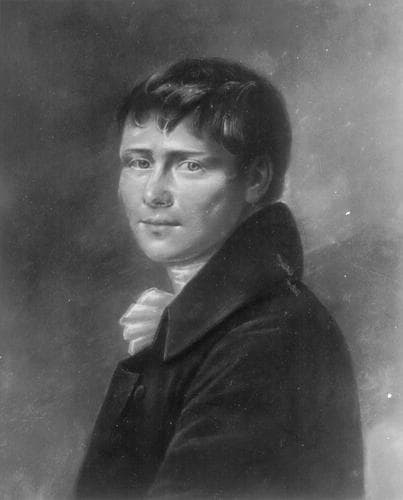
Biography coming soon.







