“The metro is the whole world. There is nothing beyond it.”
— Artyom reflects on the confined reality of life in the Moscow Metro after the nuclear apocalypse.

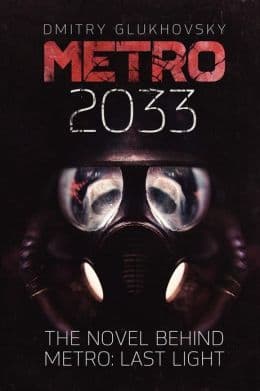
Dmitry Glukhovsky (2011)
Genre
Fantasy / Science Fiction
Reading Time
9 hr
Key Themes
See below
Sign in to track this book
In Moscow's irradiated ruins, Artyom must travel through the monster-filled Metro, humanity's last refuge, to warn Polis of a threat that could end civilization.
In 2033, humanity lives in the Moscow Metro. Artyom, a young man with a memory of his adoptive father, Sukhoi, leaving his birth station, lives at VDNKh, a prosperous northern station. One night, Hunter, a Stalker, arrives. Hunter talks about the surface and dangers outside the Metro. He says VDNKh faces a new threat from 'Dark Ones,' who use psychic attacks, causing madness and death. Hunter plans to investigate and gives Artyom a dog tag and a mission: if he does not return, Artyom must go to Polis, the Metro's center, to warn everyone and get help for VDNKh.
Hunter does not return. Artyom, with his friend Zhenya, starts his trip to Polis. At Exhibition station, they see the fear caused by the Dark Ones. Zhenya gives in to the fear and goes back to VDNKh. Artyom continues alone and meets Bourbon, a trader. Bourbon offers to guide him to Prospekt Mira for a favor. Their trip through the dark, monster-filled tunnels is dangerous, showing Artyom's inexperience and the Metro's harsh reality. Bourbon's practical and cynical view of life in the Metro differs from Artyom's initial innocence.
Bourbon dies mysteriously from a psychic force near Kuznetsky Most. Khan, a wanderer who understands the Metro's spiritual side, rescues Artyom. Khan guides Artyom through the fortified Red Line, a communist group controlling much of the Metro. They see the Red Line's oppressive rule and its fights with other groups. Khan’s knowledge of the Metro's supernatural elements helps Artyom survive encounters with mutants and the tunnels' psychic effects. Khan leaves Artyom at Kitay-Gorod, telling him to find Andrew the Blacksmith.
Following Khan's advice, Artyom goes into the Fourth Reich's territory, a fascist group. He is captured at Tverskaya, a station known for its hatred of outsiders and cruelty. There, he sees the Reich's extreme ideas and harsh treatment of 'impure' people. Artyom escapes with help from Pavel and Ulman, two Resistance fighters also going to Polis. Together, they travel through the Reich's dangerous and guarded stations, facing threats from fascists and mutants. Their escape shows the harshness of inter-group conflict in the Metro.
To reach Polis, Artyom, Pavel, and Ulman must cross the surface, a contaminated and dangerous place. They aim for the Great Library, a place with pre-war knowledge, which has a map or information for Polis. With gas masks, they go to the surface, facing radiation and mutants, including the Librarians. The trip through the Library is difficult, testing their courage. Pavel dies from a Librarian, leaving Artyom and Ulman to continue, showing the high cost of surviving above ground.
Artyom and Ulman reach Polis, the Metro's center and its governing council. Artyom tells them about the Dark Ones and the threat to VDNKh. But the Polis Council, made of representatives from powerful stations, mostly ignores his claims. They are busy with their own political fights and the war with the Red Line and Fourth Reich. They see Artyom's story as an exaggeration or a local problem, unwilling to send help to a distant station. Melnik, a Stalker and Order leader, is the only one who takes Artyom seriously, but even he is limited by the Council's rules.
Despite the Council's inaction, Melnik believes Artyom's story and acts on his own. He recruits Artyom and a small team of Stalkers, including Ulman, to find a secret military bunker called D6. This bunker is rumored to have powerful weapons or a missile system to stop the Dark Ones. The trip to D6 is dangerous, going through forgotten tunnels, monster-filled areas, and a haunted station. This mission shows Melnik's practical way of solving problems, bypassing Polis's political issues.
The way to D6 goes through the 'Dead City,' a Metro section abandoned due to its dangers and mutant activity. This area is physically and psychologically hard, filled with echoes of past tragedies and unseen presences. They meet stronger mutants, including a large bear-like creature, and navigate environmental dangers. The team loses members, showing the mission's extreme risks. Artyom's toughness and growing experience as a Stalker are tested as they go deeper into the unknown.
After much difficulty and loss, Melnik's team finds and enters the D6 bunker. Inside, they find a working, pre-war missile launch facility. The bunker is an old world relic, more advanced than anything in the Metro, but it has automated defenses and remains of its old crew. The team works to activate the missile system, realizing it could be the ultimate weapon against the Dark Ones. This discovery is a big moment, offering a possible solution for VDNKh and a strong reminder of humanity's past destructive power.
With the missile system ready, Artyom must climb the Ostankino Tower, a surface structure, to activate a laser targeting system for the missiles to hit the Dark Ones' nest. As he climbs, Dark Ones confront him. Instead of attacking, they try to communicate telepathically. Artyom has visions and feels a connection, realizing the Dark Ones are not evil but trying to make contact, perhaps to help humanity. This moment of doubt, however, is overshadowed by his urgent mission and what he has learned on his journey.
Despite his unsettling discovery, Artyom, believing he is protecting humanity, activates the laser guidance. Missiles launch from D6, destroying the Dark Ones' nest. From the tower, Artyom sees the impact, a costly victory that saves VDNKh but destroys a mysterious, possibly misunderstood species. The book ends with Artyom thinking about his actions, burdened by the idea that he might have made a terrible mistake, ending the last hope for understanding between species. The ending leaves him with regret and the Metro's future uncertain.
The Protagonist
Artyom transforms from an inexperienced, sheltered youth into a hardened Stalker burdened by the weight of his actions and a profound moral dilemma.
The Supporting
He remains a steadfast figure, representing the safety and home Artyom is fighting to protect.
The Supporting
Hunter sets the plot in motion and his fate remains unknown, a symbol of the Metro's dangers.
The Supporting
Bourbon serves as Artyom's initial, pragmatic guide, whose abrupt demise highlights the Metro's random perils.
The Supporting
Khan acts as a spiritual mentor, broadening Artyom's understanding of the Metro beyond mere physical survival.
The Supporting
Melnik evolves from a skeptical leader to Artyom's most crucial ally, orchestrating the final solution to the Dark One threat.
The Supporting
Ulman serves as a steadfast and reliable companion, a consistent presence during Artyom's most dangerous missions.
The Antagonist/Ambiguous
The Dark Ones evolve from a shadowy, terrifying threat to an ambiguous species, potentially misunderstood, whose destruction forms the novel's tragic climax.
The Supporting
Pavel briefly serves as a crucial ally, showcasing the dangers of the surface before his demise.
A main theme of Metro 2033 is humanity's desperate fight to survive after the apocalypse. Each character and group wants to survive, often at any cost. This shows in the constant battle against mutants, radiation, hunger, and human conflict. The book explores how extreme conditions remove social rules, showing both human strength and cruelty. Artyom's journey shows the endurance needed to live in the Metro, where every step is a risk.
“Man has handed over stewardship of the earth to new life-forms. Mutated by radiation, they are better adapted to the new world. Man's time is over.”
Artyom's journey also involves finding himself, as he faces his past and his place in the broken world. His memory of Sukhoi leaving him at VDNKh, and his dream of his birth station, suggest a search for his origins and identity. Beyond Artyom, the stations form small societies, each with its own identity, beliefs, and sense of belonging. Fights between these groups, like the Red Line and the Fourth Reich, show how people cling to group identities when humanity is not united, often leading to hatred and violence.
“Stations have become mini-statelets, their people uniting around ideas, religions, water-filters - or the simple need to repulse an enemy incursion.”
Fear is a strong force in the Metro, both a psychological weapon and a constant presence. The Dark Ones mainly attack with psychic fear, driving people mad. Unknown dangers in the tunnels, surface radiation, and mysterious forces that cause deaths (like Bourbon's) all create a feeling of dread. The book shows how humans react to the unknown – with aggression, superstition, or a desperate search for understanding. Artyom's initial fear slowly becomes grim determination, but the truth about the Dark Ones challenges his ideas of fear and who the enemy is.
“A new and terrible threat has appeared.”
The Metro reflects humanity's past conflicts, with stations forming distinct groups: the communist Red Line, the fascist Fourth Reich, and the more democratic Polis. These groups constantly fight, mirroring pre-war political divisions and showing the human tendency to form tribes and wage war, even when extinction is near. Artyom moves through these dangerous political areas, seeing the brutality and absurdity of these conflicts, which often hide the larger threat to humanity. The book criticizes how such divisions continue even when survival requires unity.
“It is a world without a tomorrow, with no room for dreams, plans, hopes. Feelings have given way to instinct - the most important of which is survival. Survival at any price.”
Despite the Metro's bleakness, hope exists, though fragile. Artyom's mission is an act of hope, a desperate try to save his home. Polis, with its attempts at government and preserving knowledge, represents a fragile hope for a better future. However, despair is always present, fueled by the darkness, constant threats, and the idea that humanity might be doomed. The ending, with Artyom's moral problem, gives a complex view of hope, suggesting that even saving actions can lead to deep regret.
“He holds the future of his native station in his hands, the whole Metro - and maybe the whole of humanity.”
A labyrinthine, oppressive, and symbolic setting for humanity's last stand.
The Moscow Metro system is not merely a setting but a character in itself. Its vast, dark, and claustrophobic tunnels symbolize humanity's confinement and regression. The abandoned stations and unexplored passages represent the unknown dangers and the lost world above. The Metro's structure (lines, stations, dead ends) dictates the plot's progression and creates a sense of constant peril and limited resources. It functions as a last refuge but also a suffocating prison, reflecting the diminished scope of human existence.
The primary mode of attack and communication for the Dark Ones, blurring lines between physical and mental threats.
The psychic abilities of the Dark Ones are a central plot device. They don't just kill; they induce madness, fear, and hallucinations, making them a unique and terrifying adversary. This device introduces a psychological dimension to the horror, where the enemy can attack the mind directly. Crucially, it also becomes the means of ambiguous communication between Artyom and the Dark Ones, leading to his profound realization at the end. It challenges the conventional understanding of 'enemy' and 'threat' in a post-apocalyptic world.
A symbolic repository of lost knowledge and a dangerous surface landmark.
The Great Library is a significant surface location that represents the remnants of pre-war civilization and knowledge. It is a dangerous place, guarded by terrifying mutants (Librarians), symbolizing the difficulty and peril of reclaiming humanity's lost heritage. For Artyom and his team, it serves as a crucial waypoint to Polis, believed to hold vital information. Its existence highlights the value placed on knowledge in a world where most history has been lost, and it forces characters to brave the deadly surface to access it.
A hidden, pre-war military facility containing humanity's last hope for a decisive weapon.
D6 is a legendary, secret military bunker from before the war, rumored to contain advanced technology or weaponry. It acts as a MacGuffin for a significant portion of the plot, driving Melnik's expedition. Its discovery and the activation of its missile systems provide the means to confront the Dark Ones. D6 represents the destructive power of the old world, now repurposed for a new threat, and its existence is a testament to humanity's capacity for both self-destruction and desperate survival.
A specific psychic experience that foreshadows the true nature of the Dark Ones and creates Artyom's moral dilemma.
Throughout the narrative, Artyom experiences unsettling visions and a strange connection to the Dark Ones, starting with his childhood memory. This device culminates in his direct telepathic encounter at Ostankino Tower. These visions are crucial for building suspense and gradually revealing the ambiguous nature of the Dark Ones, shifting them from pure monsters to potentially misunderstood beings. It is this direct, unfiltered communication that plants the seed of doubt in Artyom's mind, leading to the novel's tragic and morally complex ending.
“The metro is the whole world. There is nothing beyond it.”
— Artyom reflects on the confined reality of life in the Moscow Metro after the nuclear apocalypse.
“Fear is the most ancient and strongest of human emotions.”
— Artyom contemplates the pervasive fear that governs life in the Metro.
“We are all prisoners of our own fears.”
— A character discusses how fear limits human potential and survival.
“In the Metro, there is no such thing as a safe place.”
— Artyom realizes the constant danger lurking in every station and tunnel.
“The darkness has its own laws, and they are not human laws.”
— Describing the unnatural threats that emerge from the tunnels.
“Every man has his own war, and every war has its own end.”
— Reflecting on the personal struggles and conflicts within the Metro.
“Hope is the last thing to die. But in the Metro, it dies first.”
— A bleak observation on the loss of optimism in a post-apocalyptic world.
“We fight not for territory, but for the right to remain human.”
— A character argues about the purpose of survival amidst chaos.
“The past is a ghost that haunts every tunnel.”
— Artyom thinks about how memories of the old world linger in the Metro.
“In the end, we are all just stories waiting to be told.”
— A philosophical moment about legacy and existence in the Metro.
“The strongest walls are those built by fear.”
— Commenting on how fear divides stations and factions.
“To survive is to adapt, but to live is to remember.”
— Artyom distinguishes between mere survival and retaining humanity.
“The Metro does not forgive weakness.”
— A harsh truth about the merciless environment of the tunnels.
“We are the children of the Metro, born in darkness, raised in fear.”
— Describing the generation that has never seen the surface world.
Ready to see how well you understood this book? Take our interactive quiz with 10 questions.

Dmitry Glukhovsky is a Russian sci-fi author best known for his "Metro" series, including the acclaimed "Metro 2033." His post-apocalyptic novels, often set in the Moscow Metro, explore themes of survival, societal collapse, and the human condition. Glukhovsky's work has gained international recognition and spawned successful video games and sequels.







