“The people want a Messiah. They deserve a Messiah. And they shall have one.”
— John Cave speaking about the public's desire for a spiritual leader.

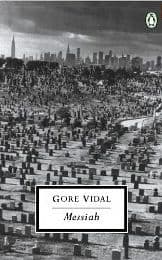
Gore Vidal (1954)
Genre
Thriller / Mystery
Reading Time
341 min
Key Themes
See below
Sign in to track this book
When a charismatic new spiritual leader emerges in a future America promising an end to suffering through technology, a cynical journalist uncovers a terrifying conspiracy to control humanity's very essence.
The story begins with Eugene Luther, a middle-aged, cynical writer in California, thinking about his past and modern society's general unhappiness. He receives an invitation to meet John Cave, an ordinary man who has quickly gained a large following for a new philosophy called 'Caveism.' Caveism preaches accepting death and rejecting procreation, advocating for a serene, albeit nihilistic, end to human suffering. Eugene is initially skeptical, seeing Cave as another charlatan. However, he is drawn into Cave's inner circle, intrigued by the prophet's calm manner and his followers' devotion, especially the beautiful and enigmatic Iris. Eugene questions his own cynicism as he sees Cave's impact on people's lives, even if he cannot fully embrace the new faith.
John Cave's movement, initially small, quickly expands its reach. Through television, public appearances, and word-of-mouth, Caveism becomes a global sensation. Eugene, despite his doubts, becomes an unofficial writer about Cave's rise, observing the careful organization and propaganda efforts orchestrated by Cave's close circle, including the pragmatic and ambitious Iris. The core message of embracing death and finding peace in non-existence appeals to a populace disillusioned by war, consumerism, and existential worries. Cave's sermons are broadcast worldwide, his calm, reassuring voice offering a radical alternative to traditional beliefs. The movement begins to establish 'houses of peace' – facilities where followers can peacefully await their end, solidifying its presence and influence across continents.
As Caveism's influence grows, Eugene becomes more involved in John Cave's organization. He develops a complex relationship with Iris, one of Cave's most devoted and influential followers. Iris is beautiful, intelligent, and deeply committed to Cave's vision. She shares in Cave's leadership, managing many practical aspects of the growing movement. Eugene is both attracted to and repelled by her unwavering faith and the implications of Cave's doctrine. Their talks often involve philosophical debates about life, death, and belief. Eugene is torn between his intellectual skepticism and a growing emotional connection to Iris, which further complicates his understanding of Cave and Caveism's true intentions. He begins to suspect there is more to the movement than appears, a sense of unease he cannot shake.
John Cave's philosophy, Caveism, centers on the idea that humanity's greatest fear, death, should instead be embraced as the ultimate release from suffering. He preaches that life is painful and that procreation only continues this cycle. Therefore, true peace comes from ceasing to exist, not through suicide, but through a calm acceptance of one's natural end and a voluntary stop to bringing new life into the world. Cave's teachings offer a comforting, if chilling, alternative to traditional religious promises of an afterlife or the secular pursuit of endless progress. His followers find comfort in this doctrine, believing it offers a clear solution to humanity's problems. Eugene observes how this message, initially shocking, gradually gains widespread acceptance, changing societal views on life, purpose, and mortality. The movement establishes 'Houses of Peace' where the elderly and infirm can await death in a tranquil, communal setting.
Despite Caveism's outward serenity and widespread appeal, Eugene Luther's skepticism resurfaces and intensifies. He notices subtle inconsistencies in John Cave's public persona and private conduct, as well as the meticulous, almost manipulative, way Iris and other key figures manage the movement. Eugene begins to question the true origins of Cave's teachings and the motives behind them. He observes the immense power and wealth accumulating within the Caveist organization, raising suspicions about whether the movement is truly altruistic or a sophisticated scheme for control. His journalistic instincts push him to look beyond the surface, seeking the real story behind the prophet and his expanding empire. This growing doubt creates tension with Iris, who remains fiercely loyal to Cave and his vision.
Eugene Luther looks deeper into Caveism's organization, finding a highly centralized and efficient system. He realizes that John Cave, while the figurehead, is not the only one behind the movement's success. Iris is a key player, managing media relations, financial operations, and establishing 'Houses of Peace' with remarkable efficiency. Eugene suspects that the philosophical tenets, while deep, are also expertly crafted to disarm criticism and attract a vast following. He uncovers evidence of careful image management, propaganda, and strategic use of resources to expand Caveism globally. The movement operates with corporate precision, consolidating power and influence under the guise of spiritual enlightenment. This revelation confirms Eugene's belief that Caveism is not just a spiritual awakening but a carefully constructed enterprise with significant worldly ambitions beyond its stated goals.
John Cave creates an almost god-like presence, his calm, unshakeable demeanor captivating millions. His followers show unwavering devotion, seeing him not just as a prophet but as a savior from modern life's anxieties. Eugene observes the psychological mechanisms at play: the yearning for meaning, the desire for an end to suffering, and the human need to belong. Cave's message, while radical, offers a clear answer to these universal yearnings. The movement expertly uses media to amplify Cave's mystique, creating a global cult of personality. Eugene recognizes the danger in such absolute devotion, understanding how easily it can be exploited. He sees the followers' surrender to Cave's vision as a form of intellectual and emotional giving up, a willingness to forgo individual thought for the promise of collective peace. This phenomenon fascinates and repels him, showing the fragility of human autonomy.
Driven by his growing suspicions and urgency, Eugene Luther finally confronts John Cave and Iris. He questions them about the inconsistencies he's observed, the true origins of Cave's philosophy, and the movement's ultimate goals. During this tense confrontation, Caveism's true nature is revealed. John Cave is not just a philosopher but a highly intelligent and manipulative individual, and Iris is his equally cunning accomplice. The 'philosophy' is a carefully constructed ideology designed to achieve a specific, chilling objective: the peaceful, voluntary extinction of humanity. The acceptance of death and the rejection of procreation are not just spiritual tenets but practical steps towards this ultimate goal. Eugene is horrified by the cold, calculating logic behind the movement, realizing the depth of the deception and the immense danger it poses to mankind's future.
The shocking truth of Caveism is clear: its ultimate goal is the voluntary, peaceful extinction of the human race. John Cave and Iris believe that humanity is a flawed, self-destructive species whose continued existence only prolongs suffering. Their movement is not about salvation in an afterlife, but about engineering a serene, collective end to all human life. By promoting the acceptance of death and the cessation of procreation, they aim to guide humanity towards a quiet, self-imposed demise. The 'Houses of Peace' are not just hospices but facilities designed to facilitate this process, ensuring comfort and dignity in the final stages. Eugene Luther is appalled by the scale and audacity of this plan, realizing that he has been an unwitting observer, and potentially an enabler, of a global program for human eradication. The philosophical ideas he once debated now appear as a sophisticated justification for genocide.
Armed with the horrifying truth about Caveism's ultimate goal, Eugene Luther faces an agonizing moral dilemma. He understands the immense power and global reach of John Cave's movement, and the personal danger he would face by attempting to expose it. The world has largely embraced Caveism, finding solace in its message. To speak out would mean confronting a global phenomenon, risking his reputation, his life, and potentially being dismissed as a madman. He grapples with the weight of this knowledge, the responsibility of potentially being the only one aware of humanity's impending, self-inflicted doom. His relationship with Iris, now revealed as a calculated manipulation, further complicates his emotional state. Eugene must decide whether to remain a silent observer or to challenge a force that seems unstoppable, even if it means sacrificing everything.
Even with Eugene Luther's full understanding of Caveism's true nature, the movement continues its relentless expansion. John Cave's message of peace through non-existence has spread everywhere. Governments, once wary, now largely accept or even endorse Caveism, as it promises a solution to overpopulation, conflict, and resource scarcity. The 'Houses of Peace' multiply, and birth rates plummet worldwide. Eugene finds himself increasingly isolated in his knowledge, realizing the futility of individual resistance against such a deeply entrenched and widely accepted ideology. The world seems to be sleepwalking towards its own serene extinction, and Eugene, a lone voice of dissent, is powerless to stop the unstoppable tide. The irony is bitter: humanity is choosing its own end, convinced it is choosing peace.
The novel ends with a chilling vision of humanity's future. Caveism has succeeded beyond John Cave's wildest dreams. Birth rates have dropped to near zero, and the 'Houses of Peace' are filled with those serenely awaiting their end. The world has embraced a quiet, voluntary extinction, finding solace in the promise of ultimate peace. Eugene Luther remains, a solitary, aging figure, one of the last few who remember a time before Caveism, and one of the even fewer who understand its horrifying implications. He observes the world winding down, a peaceful, yet unsettling, end to the human experiment. The narrative leaves him pondering the nature of belief, the seduction of an ultimate solution, and the silent, self-imposed demise of a species that chose oblivion over life's complexities.
The Protagonist
Eugene begins as a detached skeptic but is gradually drawn into Caveism's orbit, becoming a horrified witness to its true agenda. He ends as a solitary survivor, burdened by his knowledge.
The Antagonist
Cave rises from obscurity to become a global prophet, successfully implementing his vision for humanity's end.
The Supporting
Iris maintains her unwavering devotion to Cave and his mission, remaining a key enabler of humanity's end.
The novel explores how a philosophy embracing death and non-existence can appeal to a disillusioned populace. Caveism offers a radical 'solution' to suffering, war, and existential dread by promising ultimate peace through the cessation of life itself. The world, tired of conflict and meaninglessness, readily accepts this comforting, if chilling, promise. This theme is clear in Caveism's rapid global adoption and the serene acceptance of its tenets by millions, who find solace in the idea of a planned, peaceful end to all human struggle, as seen in the 'Houses of Peace' where people willingly await their demise.
“For the first time in history, mankind was offered not a paradise to be achieved by endless effort, but a serene and painless end to effort itself.”
Vidal details how John Cave, an ordinary man, rises to global prominence through charisma and sophisticated propaganda. Cave's calm demeanor, coupled with Iris's strategic management of media and public perception, allows Caveism to spread rapidly. The movement uses people's deepest anxieties and desires for peace, offering a simple, clear answer. This theme is shown by the global television broadcasts of Cave's sermons and the careful organization of his movement, showing how a compelling personality, amplified by modern communication, can sway vast populations, regardless of the underlying message's radical nature.
“His voice, so calm and comforting, was a balm to a world wearied by noise and strife.”
The novel looks into why people choose to believe, even in the face of radical or unsettling doctrines. Eugene Luther, the skeptic, struggles to understand the unwavering devotion of Cave's followers. The story suggests that in times of uncertainty and disillusionment, people crave clear answers and a sense of belonging, making them open to charismatic leaders and seemingly simple solutions. This theme is clear in the widespread acceptance of Caveism, where followers readily give up their autonomy and critical thinking to embrace a philosophy that promises ultimate peace, even if it means their own eventual extinction. The 'Houses of Peace' symbolize this collective surrender to a shared, albeit fatal, belief.
“People do not want to be saved. They want to be told they are already saved, or that salvation is no longer necessary.”
At its core, 'Messiah' is a chilling look at humanity's potential for self-destruction, not through war or environmental disaster, but through a collective, voluntary decision to cease existing. John Cave and Iris believe humanity is flawed and that its end is the only true solution. The novel portrays a world that, through its own free will, chooses oblivion, seduced by the promise of serenity. This theme is powerfully conveyed by Caveism's ultimate success, as birth rates plummet and the global population peacefully accepts its own demise, highlighting a profound and unsettling aspect of human nature: the capacity to choose non-existence over life's challenges.
“We are a disease, and the only cure is for us to cease.”
The story is told by Eugene Luther, looking back on the events of Caveism's rise and fall.
Eugene Luther narrates the story in the first person, often reflecting on past events from a future point in time when Caveism has largely succeeded. This retrospective viewpoint allows Eugene to provide commentary and analysis, highlighting the dramatic irony of events as they unfolded and giving the reader insight into the chilling implications of Caveism's success. It enhances the sense of dread and inevitability, as the narrator already knows the tragic outcome, making his initial skepticism and gradual realization more poignant. This perspective also emphasizes his isolation as one of the few who understands the true nature of humanity's self-imposed demise.
John Cave embodies the charismatic leader who offers a radical new vision.
John Cave serves as the archetypal prophet figure, a seemingly ordinary man who, through charisma and a compelling new philosophy, gains an immense following. His role as a prophet allows the novel to explore themes of blind faith, the power of a cult of personality, and the human yearning for meaning or an ultimate solution. Cave's calm, reassuring demeanor makes his radical message palatable, drawing parallels to historical and contemporary religious and cult leaders. His persona is crucial in making the improbable premise of a globally accepted 'death cult' believable, as he embodies the very seduction of nihilism.
Facilities where followers of Caveism peacefully await their end, symbolizing the movement's ultimate goal.
The 'Houses of Peace' are a symbolic and functional plot device. They are presented as tranquil, comforting hospices where Caveist adherents can serenely await their natural death, free from the anxieties of the outside world. However, they simultaneously represent the chilling reality of Caveism's ultimate goal: the peaceful, voluntary extinction of humanity. These houses normalize and institutionalize the acceptance of death and the cessation of procreation, making the radical tenets of Caveism tangible and accessible. They serve as a physical manifestation of the movement's success and the world's collective surrender to its fatalistic philosophy.
The novel frequently employs philosophical discussions between characters to explore complex ideas.
Much of the narrative unfolds through intellectual debates and philosophical discussions, particularly between Eugene Luther, John Cave, and Iris. These dialogues are not merely exposition but serve as a primary means to explore the core tenets of Caveism, its ethical implications, and the broader questions of life, death, and human purpose. They allow Vidal to present the arguments for and against Caveism's philosophy in a nuanced way, engaging the reader in the intellectual and moral dilemmas posed by the movement. This device underscores the novel's thematic depth and its exploration of ideas rather than just action.
“The people want a Messiah. They deserve a Messiah. And they shall have one.”
— John Cave speaking about the public's desire for a spiritual leader.
“What is truth but a story well told, and believed?”
— Reflecting on the nature of belief and narrative.
“Every age invents its own gods, and then proceeds to destroy them.”
— A cynical observation on the cyclical nature of societal worship and rejection.
“The greatest trick the devil ever pulled was convincing the world he didn't exist. The second greatest was convincing it he was good.”
— A character's dark musing on deception and perception of evil.
“There are no accidents, only events for which we have not yet found the pattern.”
— A philosophical statement on fate and causality in the narrative.
“To be truly free, one must first be truly alone.”
— A character contemplating the price of individuality and independence.
“Fear is the most potent of all religions.”
— Observing how fear can manipulate and control masses.
“We create our own monsters, and then we are surprised when they turn on us.”
— A commentary on the consequences of human actions and creations.
“The future is not something that happens to us, but something we make.”
— An assertion of human agency and the ability to shape destiny.
“Power is not given, it is taken. And once taken, it must be held with an iron grip.”
— A stark view on the acquisition and maintenance of political power.
“Sanity is merely a consensus of what is considered normal.”
— Questioning the arbitrary nature of societal norms and mental health.
“The most dangerous lies are the ones we tell ourselves.”
— Reflecting on self-deception and its profound impact.
“Hope is a powerful drug, easily abused, and often fatal.”
— A cynical take on the nature of hope and its potential for harm.
“Every prophet has his price, and every Messiah his betrayer.”
— A commentary on the inevitable downfall or commercialization of spiritual figures.
Ready to see how well you understood this book? Take our interactive quiz with 10 questions.
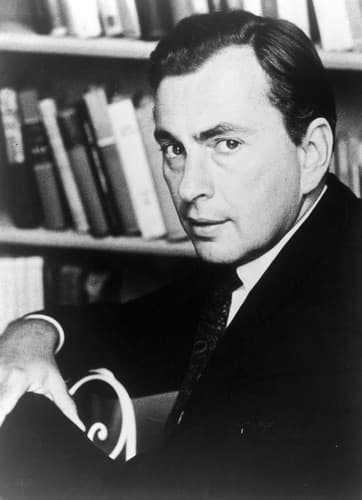
Eugene Luther Gore Vidal was an American writer and public intellectual known for his epigrammatic wit. His novels and essays interrogated the social and cultural sexual norms he perceived as driving American life. Beyond literature, Vidal was heavily involved in politics. He unsuccessfully sought office twice as a Democratic Party candidate, first in 1960 to the U.S. House of Representatives, and later in 1982 to the U.S. Senate.







