“I would give up everything for just one day on land.”
— Lenia, the mermaid princess, expresses her longing for the human world.

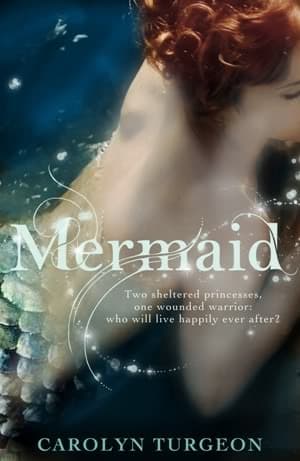
Carolyn Turgeon (2011)
Genre
Fantasy / Young Adult / Romance
Reading Time
180 min
Key Themes
See below
Sign in to track this book
In a kingdom at war, a hidden princess nurses a rival prince back to health, believing a mysterious mermaid brought him to her for a reason, while the mermaid sacrifices everything for a chance at human love.
Princess Margrethe of Denmark, cloistered in a convent during her kingdom's war with Norway, sees a beautiful, red-haired mermaid carrying a nearly drowned man to shore before disappearing back into the icy sea. Margrethe, driven by curiosity and a strange sense of purpose, rushes down to find the unconscious man. She brings him back to the convent, where she and the nuns nurse him back to health. To her shock, he is Prince Christopher of Norway, the son of Denmark's enemy king. Meanwhile, in the depths of the ocean, Princess Lenia, the mermaid who saved Christopher, is consumed by her love for him. She seeks out the Sea Witch, desperate to gain legs and pursue the prince on land. The Sea Witch demands her voice as payment, along with the condition that every step on land will feel like walking on sharp knives, and if Christopher marries another, Lenia will turn into sea foam.
As Prince Christopher recovers, Margrethe finds herself drawn to his gentle nature and the shared experience of their isolation. She also sees a political opportunity: a marriage alliance between herself and Christopher could end the long-standing war between Denmark and Norway. Despite the risks and her father King Christian's disapproval, Margrethe begins to subtly, then more openly, propose this idea to Christopher. She believes the mermaid's intervention was a sign, a divine push towards peace. Christopher, tired of war and intrigued by Margrethe's intelligence and kindness, considers her proposal, though he is still haunted by the fleeting memory of the beautiful creature who saved him from the sea.
Having paid the price, Lenia endures the transformation, her tail splitting into legs with every step feeling like daggers. She washes ashore, mute and disoriented, near the Danish coast. Her beauty is undeniable. She is soon found by servants of King Christian and brought to the royal court in Copenhagen. Her inability to speak makes her an object of fascination and pity. She learns that Prince Christopher is also at the court, recovering and being courted by Princess Margrethe. Lenia, despite her constant pain and the strangeness of human life, is filled with a desperate hope that Christopher will recognize her and choose her, just as he did in her dreams.
At the Danish court, Lenia, now known as 'the mute girl' or 'the foundling,' struggles to adapt. Her silence is both a curse and a mysterious allure. She dances with grace, captivating the court, especially Christopher, who is drawn to her enigmatic beauty and sorrowful eyes, reminding him vaguely of the creature from the sea. Margrethe, seeing Christopher's growing interest in Lenia, feels a pang of jealousy and insecurity. She redoubles her efforts to charm Christopher, emphasizing their shared royal duties and the future of their kingdoms. King Christian, while initially wary of Christopher, begins to see the strategic advantage of the match, pushing Margrethe to secure the engagement.
After weeks of courtly dances, conversations, and political maneuvering, Christopher, swayed by Margrethe's intelligence, her genuine care for her people, and the logic of their union, proposes marriage to Princess Margrethe. The court rejoices, and wedding preparations begin immediately. For Lenia, this news is a death knell. She watches Christopher and Margrethe together, her heart breaking with each loving glance he gives her rival. The pain in her legs intensifies with her despair, and she knows her time is running out. She tries to communicate her true identity to Christopher, but her muteness makes it impossible, and he remains unaware of her true nature and the sacrifice she made for him.
As the wedding day approaches, Lenia's despair reaches its peak. She retreats to the shore, longing for the sea. There, she is met by her mermaid sisters, who have traveled from the depths to find her. They are horrified by her suffering and the dire consequence of her bargain. They say the Sea Witch's magic can be undone, but only through a terrible sacrifice: Lenia must kill Christopher with a magical knife before dawn on his wedding day. If she does so, his blood will turn her back into a mermaid, and she will be free. If she fails, she will turn into sea foam at sunrise. The sisters present her with the gleaming, sharp knife, leaving her with an impossible choice.
On the eve of her wedding, Margrethe is filled with a mix of excitement and unease. She loves Christopher, but she also recognizes the political motivations behind their union. She wonders if he truly loves her, or if he is simply accepting his duty. Meanwhile, Lenia, clutching the knife, makes her way to Christopher's chambers. She finds him asleep, looking peaceful and handsome. The memory of saving him, her love for him, and the vision of their future together, however impossible, flashes before her. She raises the knife, but her love is too pure to commit such an act of violence. She cannot bring herself to harm the man she loves, even to save herself.
As the first rays of dawn touch the horizon, Lenia, unable to kill Christopher, makes her way back to the sea. She drops the knife into the waves, choosing to sacrifice herself rather than betray her love. Her sisters are waiting, heartbroken, but understanding. As the sun rises fully, Lenia's human form begins to dissolve. She feels a peace as her body turns into shimmering sea foam, dispersing into the ocean. Her love for Christopher, though unrequited in the human world, remains eternal, a part of the vast, boundless sea.
Unaware of Lenia's ultimate sacrifice, Margrethe and Christopher proceed with their wedding. The ceremony is grand, uniting the two kingdoms in a fragile but hopeful peace. They are crowned King and Queen, and their marriage signifies the end of a long, bloody war. Christopher, though occasionally haunted by the memory of the beautiful mute girl and the fleeting image of a creature from the sea, settles into his life with Margrethe. Their union is one of respect, shared purpose, and a growing affection, built on the foundation of their political alliance and their commitment to their people. The story concludes with a sense of bittersweet resolution, as one love ends in tragedy, and another begins with hope.
The Protagonist
From a cloistered princess, she becomes a queen who actively shapes her kingdom's future, finding love and purpose in a political marriage.
The Protagonist
From an impulsive, lovesick mermaid, she undergoes a painful transformation, ultimately choosing selfless love over her own life.
The Supporting
From a war-weary prince, he becomes a king who embraces peace through an arranged marriage, remaining unaware of the mermaid's ultimate sacrifice.
The Supporting
Remains a static, powerful force of nature, facilitating Lenia's transformation but not undergoing a personal arc.
The Supporting
His initial resistance to an alliance with Norway shifts to acceptance, driven by his daughter's diplomatic efforts.
The Supporting
They act as a collective force, attempting to intervene in Lenia's fate but ultimately respecting her choice.
The Mentioned
Static background characters who serve to establish Margrethe's initial setting and Christopher's recovery.
This theme is central to Lenia's story. She sacrifices her voice, her home, her health, and ultimately her life for a love that is never recognized or returned by Christopher. Her choice not to kill Christopher, even when offered as a way to save herself, makes her love a pure, selfless form, showing the tragic beauty of giving everything without expectation of return. Margrethe's 'sacrifice' is more practical, giving up personal choice for political duty, yet it still involves a form of self-denial for a greater good.
“Every step felt as if she were treading on sharp knives, and the pain was almost unbearable, yet she would have borne it a thousand times over for a glimpse of his face.”
Both Margrethe and Lenia deal with this conflict. Lenia's desire for Christopher overrides her duty to her mermaid world and her own well-being, leading to her tragic fate. Margrethe, conversely, initially prioritizes her duty to her kingdom by proposing a political marriage, even if her personal desire for Christopher is still developing. Her story explores how duty can lead to a fulfilling, if not initially passionate, love, while Lenia's shows the destructive power of unchecked desire when it clashes with harsh realities. Christopher also faces this, choosing duty to his kingdom over the vague, romantic pull he feels towards Lenia.
“Peace was a fragile thing, and sometimes it required a princess to put aside her own heart for the good of her people.”
Lenia's muteness is the primary example of this theme. Her inability to speak prevents her from revealing her true identity and the depth of her love and sacrifice to Christopher, leading to misunderstanding and ultimately, her demise. Her beautiful dancing is her only form of expression, but it is not enough to bridge the gap. Margrethe, on the other hand, is articulate and uses her words skillfully to negotiate peace and win Christopher's affection, showing the power of effective communication in contrast to Lenia's tragic silence. The entire plot relies on Christopher's inability to comprehend Lenia's true nature without her voice.
“She longed to tell him, to make him understand, but the words were trapped behind her silent lips, a constant, agonizing ache.”
The novel presents contrasting forms of love. Lenia's love is an all-consuming, romantic, almost obsessive passion, born of a single encounter and leading to self-destruction. Margrethe's love for Christopher is more practical, growing from respect, shared purpose, and a mutual commitment to peace, ultimately leading to a stable and fulfilling partnership. The book questions the traditional fairy tale idea of 'love at first sight' as the only valid form of love, suggesting that deeper, more enduring connections can be made through shared experiences and mutual understanding, even if they lack initial grand passion.
“He might not have seen a mermaid, but he saw a future, and in her eyes, he saw a queen worthy of his kingdom.”
A classic fairy tale trope driving the mermaid's tragic transformation.
This device, directly borrowed from Hans Christian Andersen's 'The Little Mermaid,' is the central catalyst for Lenia's plotline. It establishes the high stakes and irreversible nature of her decision, dictating her physical pain, muteness, and the ultimate consequence of turning into sea foam. It creates dramatic tension and highlights the themes of sacrifice and the cost of desires. The specific conditions — pain with every step and the sea foam fate — are crucial for building sympathy for Lenia and emphasizing her suffering.
A symbol of Lenia's ultimate choice between love and self-preservation.
Another direct reference to the original fairy tale, the magical knife presented by Lenia's sisters forces her into an impossible moral dilemma. It externalizes her internal conflict between her desire to live and her profound love for Christopher. Her decision to drop the knife into the sea rather than use it is the ultimate act of selfless love, solidifying her tragic fate and defining her character arc as one of pure, unrequited devotion. It is the literal turning point for Lenia's story.
A narrative constraint that emphasizes themes of communication and misunderstanding.
Lenia's loss of her voice is not just a physical consequence of the bargain but a powerful narrative device. It directly prevents her from revealing her identity and intentions to Christopher, creating dramatic irony and fueling the central misunderstanding that drives the plot. Her muteness forces her to communicate through actions, dancing, and pained expressions, making her plight more poignant and highlighting the limitations of non-verbal communication in a human world.
Alternating viewpoints to explore two intertwined narratives.
The novel employs parallel narratives, alternating between Margrethe's and Lenia's perspectives. This allows the reader to understand the motivations and inner worlds of both protagonists, creating a nuanced and often ironic contrast. We see Christopher through the eyes of two different women who love him, and we witness the unfolding events from their distinct, often conflicting, vantage points. This structure deepens the emotional impact and allows for a richer exploration of themes like love, sacrifice, and duty, as the reader is privy to information that the characters themselves lack.
“I would give up everything for just one day on land.”
— Lenia, the mermaid princess, expresses her longing for the human world.
“Love is not a choice; it is a force of nature.”
— Reflecting on the uncontrollable nature of love in the story.
“The sea holds secrets deeper than any human heart.”
— Describing the mystical and mysterious nature of the ocean.
“To be human is to feel pain, but also to feel joy.”
— Lenia learns about the complexities of human emotions.
“A crown is heavy, but a heart is heavier.”
— Lenia grapples with her royal duties versus her personal desires.
“In the silence of the deep, I found my own voice.”
— Lenia discovers her inner strength while underwater.
“Magic is not in the transformation, but in the choice to change.”
— Highlighting the power of personal decisions over mere enchantment.
“The world above is a dream, but the sea is my reality.”
— Lenia acknowledges her true home despite her fascination with land.
“Every wave carries a story, if you know how to listen.”
— Emphasizing the wisdom and tales hidden in the ocean.
“Love can drown you faster than any storm.”
— A warning about the dangers of intense emotions.
“I traded my tail for a chance at a soul.”
— Lenia explains her sacrifice to become human.
“The moon pulls the tides, but it is the heart that pulls us.”
— Comparing natural forces to the power of emotions.
“In the end, we are all just stories waiting to be told.”
— A philosophical reflection on life and legacy.
Ready to see how well you understood this book? Take our interactive quiz with 10 questions.

Carolyn Turgeon is a fiction author known for her evocative prose and explorations of myth and the human psyche. Her most acclaimed novel, "Mermaid," delves into themes of identity and transformation with a lyrical, dreamlike quality. Turgeon's work often blends magical realism with literary fiction, captivating readers with its unique voice and imaginative storytelling.







