“The world breaks everyone, and afterward, some are strong at the broken places.”
— From 'A Farewell to Arms', though often misattributed to this collection's themes.

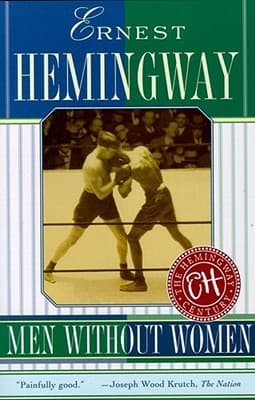
Ernest Hemingway (1927)
Genre
Literary Fiction
Reading Time
180-240 min
Key Themes
See below
Sign in to track this book
In a world stripped bare by war, sport, and the unspoken tensions between men and women, Hemingway's characters grapple with betrayal, loss, and the stark realities of existence in these gritty, formative tales.
Manuel Garcia, known as Maera, is an aging bullfighter trying to make a comeback after being gored many times. He gets a fight in Madrid, which worries his manager, Retana, and makes younger matadors doubt him. Maera insists on fighting the most dangerous bulls, refusing easier ones. During the fight, he is gored again but continues to fight with great courage and skill, eventually killing the bull. Severely wounded, he is carried to the infirmary where the doctor treats his injuries. Despite his physical defeat, Maera keeps his dignity and feels an internal victory. He shows 'grace under pressure' even as his career is clearly over.
An unnamed American narrator, a wounded soldier in Milan during World War I, undergoes daily physical therapy with other officers using experimental machines. He becomes friends with a group of Italian officers, including a major who was once Italy's greatest fencer. The major is at first doubtful about the machines' effectiveness, having lost the use of his hand. The narrator and another young officer receive medals for bravery, but the major criticizes the narrator for his perceived lack of true courage. Later, the major says his young wife, whom he married only a few months before, has died unexpectedly of pneumonia. Despite his stoicism, his deep grief is clear. This shows the random nature of loss and how the machines cannot heal emotional wounds.
An American man and a girl named Jig are waiting for a train to Madrid at a station in rural Spain. They order beers and discuss the surrounding area. Jig says the hills look like white elephants, a comparison the man dismisses. The conversation soon turns subtly but clearly to an abortion. The man calls it a 'simple operation' and says it is 'perfectly natural.' He pressures Jig, telling her he will love her again if she does it. But she expresses deep uncertainty and feels she will lose something important. The tension between them is clear. It is a quiet struggle over a life-altering decision that leaves their future uncertain and their relationship broken.
Two professional hitmen, Al and Max, enter Henry's lunchroom in Summit, Illinois, just before dinner. They terrorize the staff and customers, tying up George and Nick Adams, the counterman and a regular. The hitmen say they are there to kill a boxer named Ole Andreson, who eats dinner at the lunchroom every night at six o'clock. When Andreson does not show up, they leave. Nick, disturbed by the event, goes to warn Andreson. He finds him lying in bed, resigned to his fate. Andreson refuses to flee, saying there is nothing he can do. Nick returns to the lunchroom, telling George he is leaving town because he 'can't stand to think about it.'
Two American men, one of whom is the narrator, are driving through Italy. They pick up two Italian women who offer sexual favors for money, which the men decline. Later, they pick up a friendly Italian priest who shares his food and drink with them. The priest says he wants to return to America. The narrator and his companion observe the poverty and moral decline in post-war Italy. They see prostitution, corruption, and a general sense of disillusionment. The journey has a constant feeling of unease and a lack of clear moral compass. This shows the disillusionment and moral ambiguity of the era, as the men remain detached observers.
Jack Brennan, an aging but still strong boxer, is training for a fight against a younger opponent, Walcott. Jack is under pressure from gamblers, including his manager and a man named Jerry, to lose the fight. He feels unwell and struggles with the decision. During the fight, he intentionally fouls Walcott, hoping to be disqualified, but the referee does not see it. In a desperate move, Jack head-butts Walcott, which results in Walcott hitting him below the belt. Jack claims the foul, winning by disqualification. This ensures the gamblers' payoff and his own moral compromise. The story explores corruption in boxing and the protagonist's internal conflict.
An Italian major, Major Paravicini, calls his orderly, Pinin, to his quarters. The major asks Pinin a series of strange and probing questions about his appearance, specifically his hair, and whether he has ever been 'fondled.' Pinin, a young and innocent-looking man, is confused and uncomfortable by the questions. The major's inquiries suggest a homosexual interest, which he struggles to say or act upon directly. The interaction is tense and unspoken. This shows the major's repressed desires and the orderly's bewilderment, creating an atmosphere of unspoken tension and suppressed longing within the strict military environment.
Young Nick Adams is returning home with the Garner family after a Fourth of July celebration. On the way, they meet a group of ten Indians, some of whom are drunk. Nick's father makes a disrespectful remark about the Indians. Later that night, back at home, Nick's father casually tells him that he saw Prudence, Nick's Indian girlfriend, with another boy, an 'Indian boy.' Nick at first pretends not to care, but the news deeply affects him. He goes to bed, trying to suppress the pain and disillusionment of his first heartbreak. He feels a deep sense of loss and betrayal that marks a significant step in his emotional development.
An American couple is traveling on a train through France. In their compartment, they share space with an older American woman obsessed with her canary. She is taking it to her daughter in Nice as a gift. The woman recounts her daughter's romantic misfortunes, saying 'American men make the best husbands.' The narrator and his wife listen, but their own conversation is strained and shows a deep emotional distance between them. As the train passes through the French countryside, the narrator thinks about the impending end of his marriage. This is subtly conveyed through their lack of intimacy and the wife's comment that they 'aren't going to America.'
Nick Adams and another man named John are on a skiing trip in the Alps. They stop at a village inn where they hear a strange story from the innkeeper. A peasant named Franz, whose wife died in the winter, kept her body in the woodshed until spring. When asked why, Franz explained that he had put a lantern in her mouth so he could see to hang up his hayrake. The innkeeper recounts the incident with disgust and bewilderment. The story shows the grim realities of peasant life, the unusual ways grief can appear, and the clash between different cultural understandings of death and respect. Nick and John are disturbed by the tale.
A man named Bill is trying to find his friend, a stage manager named William Campbell, who has left their traveling show in Spokane. Bill eventually finds Campbell in a hotel room, disheveled and clearly under the influence of drugs, likely opium. Campbell is delusional and speaks erratically, obsessed with a girl named Louise. Bill tries to reason with him and bring him back to the show. But Campbell is resistant and lost in his own world of drug-induced fantasy and despair. The story shows the destructive power of addiction and the difficulty of helping someone who has lost their grip on reality. It portrays a man in a state of deep mental and physical decline.
Three Roman soldiers are drinking wine in a bar after the crucifixion of Jesus. They discuss the event with a detached, almost casual air. One soldier says Jesus was 'pretty good' and 'tough,' enduring the pain without complaint. Another soldier expresses sympathy for Jesus, while the third is more cynical, focused on practicalities and the relief that the day's work is done. The conversation is brief and stark. It shows the soldiers' professional indifference to the suffering they witnessed, yet also hints at a lasting impression left by Jesus's stoicism. The story offers a minimalist, secular perspective on a religious event.
This story begins as a commentary on literary magazines and the state of modern writing, especially the trend of publishing 'banal stories' and sentimental poetry. The narrator expresses dislike for the superficiality and lack of substance in contemporary literature. The narrative then shifts to a heartfelt tribute to the bullfighter Maera (from 'The Undefeated'). It praises his courage, skill, and integrity in the arena. It contrasts the authenticity and raw emotion of Maera's life and death with the artificiality of the literary world. It suggests that true art is in confronting reality directly, even if it is brutal or tragic, rather than escaping into sentimentality.
The narrator, a soldier named Nick, suffers from severe insomnia after experiencing trauma during the war. To cope, he develops an elaborate ritual: he lies awake in bed, recounting every detail of his childhood, from fishing trips to encounters with animals, to avoid thinking about the war and the fear of death. He also listens intently to the sounds of the silkworms eating mulberry leaves in the room, finding a strange comfort in their continuous, rhythmic chewing. His orderly, an Italian named Paravicini, stays with him, also unable to sleep. The story captures the deep psychological impact of war and the desperate measures individuals take to maintain their sanity when facing trauma.
The Protagonist
From a naive boy experiencing first love and heartbreak to a war-scarred man seeking coping mechanisms for his trauma.
The Protagonist
He attempts a comeback, faces his physical limits, and achieves a moral victory through his unwavering courage and dignity in the face of inevitable defeat.
The Protagonist
He remains largely static, unable to understand or empathize with Jig's emotional turmoil, highlighting his self-centered perspective.
The Protagonist
She struggles internally with a profound decision, revealing her vulnerability and growing disillusionment with her partner.
The Supporting
From a cynical, proud veteran to a man utterly broken by unexpected personal tragedy.
The Supporting
He remains static, already having accepted his fate, serving as a catalyst for Nick's disillusionment.
The Protagonist
He grapples with his integrity, ultimately finding a way to fulfill his obligation to the gamblers while preserving a personal sense of dignity.
The Antagonist
They are static characters, serving as instruments of violence and fate.
The Protagonist
He is already in a state of decline, unable to break free from his addiction and delusions.
Hemingway explores masculinity, often through his 'code hero' — a man who faces life's challenges with courage, stoicism, and grace under pressure. Maera in 'The Undefeated' is an example. He endures severe injuries with dignity and commitment to his craft. The Major in 'In Another Country' shows stoicism even in deep grief. Jack Brennan in 'Fifty Grand' navigates a corrupt world with a practical yet honorable approach. This theme examines how men confront physical pain, emotional loss, and moral compromise while trying to maintain self-respect and integrity in a harsh, often indifferent world.
“'It was a good bull. If I had not been hurt it would have been a great bull.'”
Many stories in 'Men Without Women' deal with various forms of loss. These include the physical and emotional casualties of war and the disillusionment of love and ideals. The Major's sudden loss of his wife in 'In Another Country' shatters his stoic facade. Nick Adams experiences the pain of first heartbreak in 'Ten Indians' and the trauma of war in 'Now I Lay Me.' The couple in 'A Canary for One' faces the quiet death of their marriage. This theme shows how fragile happiness is and how hope is often met with tragedy. Characters are left to cope with deep emptiness and broken expectations.
“'I am afraid to think about it.'”
A repeated theme is the breakdown or difficulty of communication, especially between men and women. This leads to misunderstanding and emotional distance. In 'Hills Like White Elephants,' the couple's conversation about abortion is full of unspoken tension and misaligned desires. This shows their inability to truly connect. The American's dismissive attitude towards Jig's feelings shows a basic lack of empathy. In 'A Canary for One,' the American couple's strained dialogue and internal thoughts show the gap in their relationship. This theme shows how silence, subtext, and unaddressed desires can create barriers between individuals.
“'Would you please please please please please please please stop talking?'”
Hemingway directly portrays the harsh realities of existence, including violence, death, and human suffering. 'The Killers' presents a random and chilling encounter with professional murderers, emphasizing how casual impending death can be. 'The Undefeated' graphically depicts the physical brutality of bullfighting and Maera's struggle against death. 'An Alpine Idyll' shows the morbid and disturbing way a peasant copes with his wife's death, showing the grimness of rural life. This theme confronts readers with the constant presence of pain, violence, and mortality, often presented without sentimentality. It forces characters and readers alike to face life's starkest truths.
“'There's nothing to do.'”
The collection often explores the deep and lasting effects of World War I. 'In Another Country' shows wounded soldiers undergoing physical therapy, but unable to heal emotional scars or prevent further tragedy. 'Now I Lay Me' depicts Nick Adams's severe insomnia and psychological trauma, forcing him into elaborate mental rituals to avoid thinking about the war. The entire atmosphere of 'Che Ti Dice La Patria?' shows a morally ambiguous and disillusioned post-war Italy. This theme shows how war not only causes physical wounds but also leaves deep psychological scars, changing individuals and societies long after the fighting has ended.
“'I did not think about the war at night.'”
A literary style where much of the story's meaning is left unstated, implied through subtext.
Hemingway's signature style, the Iceberg Theory, is prominent throughout 'Men Without Women.' This device dictates that the true meaning of a story lies beneath the surface, with only a small portion of information explicitly stated. For example, in 'Hills Like White Elephants,' the word 'abortion' is never explicitly used, yet the entire conversation revolves around it, forcing the reader to infer the underlying tension and conflict. In 'The Killers,' the reasons for Ole Andreson being targeted are vague, adding to the sense of arbitrary, unexplained violence. This technique encourages active reader participation and lends a powerful sense of realism and emotional depth to the narratives.
The use of a consistent character across multiple stories to explore themes of growth and trauma.
Nick Adams appears in several stories, serving as a semi-autobiographical proxy for Hemingway himself. This device allows the collection to explore a character's development and experiences across different stages of life, from childhood innocence ('Ten Indians') to the disillusionment of war ('Now I Lay Me'). Nick's recurring presence provides a thread of continuity, allowing readers to witness the cumulative effects of life's challenges, such as first love, violence, and psychological trauma. His journey provides a deeper, more nuanced exploration of themes like loss of innocence, the search for meaning, and the impact of experience on the self than a single story could achieve.
Minimalist, realistic dialogue that reveals character, advances plot, and creates atmosphere.
Hemingway's dialogue is characterized by its realism, brevity, and directness. In 'Hills Like White Elephants,' the sparse, repetitive dialogue between Jig and the American subtly conveys their strained relationship and the unspoken gravity of their decision. In 'The Killers,' the hitmen's stylized, almost theatrical dialogue creates an immediate sense of menace and their professional detachment. The dialogue often serves to reveal character's inner states, power dynamics, and underlying conflicts without explicit narration. This device makes the conversations feel authentic and forces the reader to pay close attention to the subtext and implications within each exchange.
Objects or phrases that carry deeper, often unspoken, meaning.
Symbolism is subtly woven throughout the stories. The 'white elephants' in 'Hills Like White Elephants' symbolize something unwanted, costly, and difficult to get rid of – the unborn child and the burden it represents for the couple's current lifestyle. The experimental 'machines' in 'In Another Country' symbolize the futile hope for miraculous healing in the face of profound physical and emotional wounds from war. The 'canary' in 'A Canary for One' represents a misplaced hope for happiness, a gift meant to bring joy but which ironically highlights the profound unhappiness and impending divorce of the American couple. These symbols enrich the narrative by adding layers of implied meaning.
A character archetype embodying stoicism, integrity, and grace under pressure.
A defining literary device in Hemingway's work, the 'code hero' is a character who faces life's challenges, especially death or profound loss, with dignity, courage, and a commitment to a personal code of conduct. Maera in 'The Undefeated' is a prime example, enduring severe injuries in the bullring with unwavering professionalism and honor. The Major in 'In Another Country' maintains his composure and stoicism even after learning of his wife's sudden death. These characters demonstrate an inner strength and adherence to principles in the face of an indifferent or hostile world, embodying a particular ideal of masculinity and resilience.
“The world breaks everyone, and afterward, some are strong at the broken places.”
— From 'A Farewell to Arms', though often misattributed to this collection's themes.
“It was a pleasant café, warm and clean and friendly.”
— From 'A Clean, Well-Lighted Place', describing the setting.
“It was a good morning, and the sun was coming up over the mountains.”
— From 'The Killers', setting the scene for the day.
“He was an old man, and he was alone.”
— From 'A Clean, Well-Lighted Place', referring to one of the characters.
“He went on, thinking of nothing, going nowhere.”
— From 'Fifty Grand', reflecting on the character's state.
“What did he fear? It was not fear or dread. It was a nothing that he knew too well.”
— From 'A Clean, Well-Lighted Place', exploring the waiter's thoughts on nada.
“You're an expatriate. You've lost touch with the soil. You get precious. Fake European.”
— From 'The Killers', a harsh assessment of a character.
“He had never seen a man that could take it like that.”
— From 'Fifty Grand', admiring a boxer's endurance.
“It was a good café, and he liked to sit there.”
— From 'A Clean, Well-Lighted Place', the old man's perspective.
“The snow was falling, and it was cold.”
— From 'An Alpine Idyll', setting a bleak scene.
“He just wanted to be a good man, and he was.”
— From 'The Undefeated', reflecting on a bullfighter's character.
“No, I don't want to go anywhere. I just want to stay here.”
— From 'Now I Lay Me', a character seeking peace.
“He was a man who knew how to live.”
— From 'The Undefeated', describing a bullfighter.
“It was not a pleasant business.”
— From 'The Killers', a direct statement about the grim situation.
Ready to see how well you understood this book? Take our interactive quiz with 10 questions.
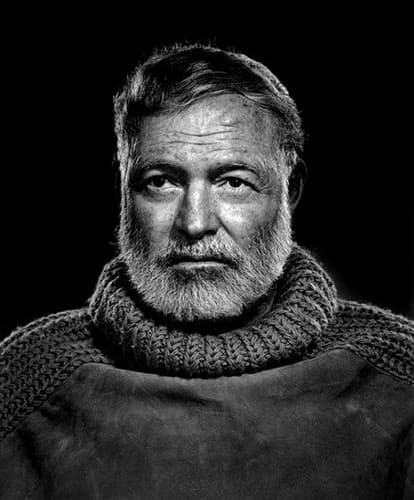
Ernest Miller Hemingway was an American novelist, short-story writer, and journalist. His economical and understated style—which included his iceberg theory—had a strong influence on 20th-century fiction, while his adventurous lifestyle and public image brought him admiration from later generations. Hemingway produced most of his work between the mid-1920s and the mid-1950s, and he was awarded the 1954 Nobel Prize in Literature. He published seven novels, six short-story collections, and two nonfiction works. Three of his novels, four short-story collections, and three nonfiction works were published posthumously. Many of his works are considered classics of American literature.







