“Memory is a house with a thousand rooms, and each room is a different color, a different temperature, a different smell.”
— Reflection on the nature of memory and its complexity.

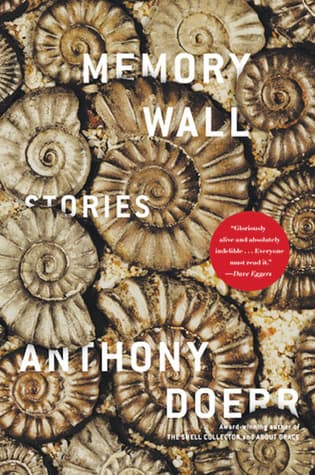
Anthony Doerr (2010)
Genre
Literary Fiction / Historical Fiction / Science Fiction
Reading Time
360 min
Key Themes
See below
Sign in to track this book
Anthony Doerr tells stories of forgotten pasts, lingering ghosts, and the human search for meaning and connection across continents and through history.
In the story 'Memory Wall,' set in South Africa, Alma, an older white woman, is slowly losing her memories to Alzheimer's disease. Her husband, Luvo, a black man, cares for her. They hire Alpha, a young, poor black boy, to help around their isolated home. Alma has a 'memory wall,' a device that lets her re-experience her past through recorded brain patterns. She often goes back to a traumatic childhood memory involving a cave and a friend she lost. Alpha, drawn to the device and Alma's broken memories, secretly starts using her memory wall. He pieces together her youth, especially her friendship with a girl named Naomi and a later tragedy.
As Alma's health worsens, Alpha gets better at using her memory wall. He finds out that Alma and Naomi, as children, had explored a dangerous cave. During one trip, Naomi fell into a deep hole. Alma, frozen by fear and guilt, did not get help right away, which led to Naomi's death. This event has bothered Alma her whole life, showing up as a constant, broken memory she tries to understand. Alpha sees Alma's strong feelings and the guilt she carries. He understands that the device, while keeping the past, also makes her relive her deepest regrets.
Alpha, now knowing Alma's most painful secret, feels a strange bond with her. He starts to understand the burden she has carried for decades. In one moving scene, he brings Alma a small stone from near the cave, a quiet sign that he knows her past. Alma's mind keeps getting worse, so she cannot confess or be forgiven with words. But there is a sense of shared understanding. Alpha, by secretly looking at her memories, becomes a reluctant keeper of her secret. He offers her companionship and maybe even peace in her last days, as her memories fade, but the truth has been seen.
In 'The River Nemunas,' fifteen-year-old Margaret, an orphan from Kansas, goes to live with her estranged Lithuanian grandfather, Anton, in a remote village near the Nemunas River. Margaret struggles with the harsh, poor environment and Anton's quiet nature. The villagers hold onto old, pagan beliefs, especially about the river and its 'river-children' – children lost to the current who they believe become part of the river. Margaret is at first doubtful, but the mystical feeling and her grandfather's quiet certainty start to change how she sees things, challenging her Western upbringing and logical view.
Margaret sees several strange things that seem to prove the villagers' beliefs. She sees a young boy, later called a 'river-child,' seemingly come from the water and then vanish. Anton, a former fisherman, tells her stories of the river's power and its lost souls, often with quiet, firm belief. Margaret also learns about her own family's link to the river, including stories of her grandmother's disappearance. These experiences, along with her loneliness and the widespread folklore, make her question what she knows about the world. She is caught between her logical upbringing and the clear presence of the mystical.
'Village 113,' set in China, follows a seedkeeper's careful life in a remote village that will be torn down and flooded for the Three Gorges Dam. The seedkeeper, whose name is not given but is called by his job, is in charge of a large collection of seeds. These seeds represent his community's farming history and different plants. He also informally records the village's history, carefully writing down its stories, traditions, and the lives of its people. As the moving deadline gets closer, he faces the hard task of choosing which seeds and stories to save, knowing most will be lost forever.
The seedkeeper spends his days documenting and preparing his collection. He carefully dries, labels, and stores seeds, a physical act of defiance against the coming destruction. He also records interviews with villagers, capturing their memories and stories before their homes are submerged. The story shows the huge personal and cultural loss when people are forced to move and modernize. The seedkeeper knows that while he can save some of the physical and historical legacy, the core of the village, its lived experience, will be gone forever. He shows the quiet resistance and sadness of a culture facing destruction.
In 'Afterworld,' the last story, an older woman named Sarah, who survived Auschwitz, lives in modern America. She is haunted by very clear, almost dream-like memories of her childhood friends in Germany, especially her best friend, Ilse. These memories are not just recollections; they are constant, sensory experiences that often feel more real than her current life. Sarah's grandson, Julian, is her main caregiver and tries to understand what she goes through, often listening patiently to her broken stories. Sarah believes her lost friends are waiting for her in an 'afterworld,' a place made from her memories, and that their presence is a constant, almost physical, companionship.
Julian, though young, feels a strong connection to Sarah. He carefully draws maps of her childhood town based on her descriptions and helps her through her often confusing memories. He comes to understand that for Sarah, the past is not truly past; it exists with her present. He sees the beauty and terror in her memories, knowing that her 'afterworld' is how she keeps those she lost alive. He gives her comfort and a stable presence, acting as a bridge between her traumatic past and her quiet present, finding his own meaning in her stories and the weight of her survival.
As Sarah gets closer to the end of her life, her memories get stronger. She often mistakes Julian for her lost friends or family, blurring time. However, Julian's steady love and presence give her unique comfort. He becomes a living storehouse for her stories, making sure her experiences, and the lives of those she lost, will not be completely forgotten. The story ends with a feeling of acceptance and the lasting power of human connection to ease even the deepest grief and loss. It suggests that memory, even when painful, shows love and survival, passed down through generations.
The Protagonist
Alma's arc is less about development and more about the tragic decline of her cognitive functions, tempered by the unexpected re-emergence and witness of her central trauma through Alpha.
The Supporting
Alpha develops from a curious, somewhat mischievous boy into a compassionate and empathetic individual burdened by the knowledge of Alma's trauma.
The Protagonist
Margaret transforms from a skeptical, isolated orphan into someone more open to the mysteries of the world and connected to her ancestral heritage.
The Supporting
Anton remains largely consistent in his stoicism and belief, serving as a grounding force and a gateway to the ancient world for Margaret.
The Protagonist
The Seedkeeper's arc is one of quiet, dignified resistance and profound grief as he navigates the irreversible loss of his community's heritage.
The Protagonist
Sarah's arc is one of continuous struggle with her traumatic past, finding a measure of peace and connection through her grandson's love and understanding.
The Supporting
Julian develops a profound understanding and empathy for his grandmother's experiences, becoming a keeper of her stories and a source of comfort.
The Supporting
Luvo's arc is one of enduring love and caregiving in the face of his wife's decline.
Memory is the core of identity and meaning in all the stories. In 'Memory Wall,' Alma's Alzheimer's shows how losing memories erodes the self. Alpha's access to her memories reveals the lasting power of the past. Sarah in 'Afterworld' shows how traumatic memories can define a person, creating an 'afterworld' that feels more real than the present. The Seedkeeper fights to save collective memory from physical destruction, understanding that a community's identity is tied to its history. The book consistently explores how personal and shared memories shape who we are and how we understand the world.
“What is a life but a string of memories, and what is a person without them?”
The collection looks at different kinds of loss—of loved ones, culture, and self—and the human wish to save what is temporary. Alma loses her memories, the Seedkeeper loses his village and its plants, Margaret loses her parents, and Sarah loses her childhood and friends to the Holocaust. Each story has characters dealing with this impermanence and trying to save or honor what is being lost. The 'memory wall' device, the seed bank, and Julian's map drawing are all strong symbols of the fight against being forgotten, showing the human need to remember and hold onto precious parts of life.
“Every seed holds a story, and every story is a seed.”
Several stories explore the unclear line between objective reality and personal belief, especially when facing the unknown or mystical. In 'The River Nemunas,' Margaret's logical American upbringing clashes with the old, spiritual beliefs of her Lithuanian grandfather and his village. This makes her face a world where myths seem real. Sarah's 'afterworld' in 'Afterworld' is a very personal reality, where her lost friends are always present, blurring her perception. These stories suggest that reality is often shaped by culture, personal experience, and the stories we choose to believe, challenging a single, objective truth.
“The river takes what it wants, and sometimes, it gives back. Not always in the way you expect.”
A repeated idea is the strong connection that can form between different generations, often bridging gaps in experience and understanding. Alpha's unexpected entry into Alma's memories creates a unique, empathetic bond that offers a kind of forgiveness. Julian's devoted care for Sarah, including his efforts to picture her past, lets him share the burden of her trauma and gives her comfort. Margaret's relationship with Anton, though difficult at first, eventually connects her to her family history. These relationships show how empathy and love can cross time and experience, offering healing and continuity.
“He was drawing a map of a world that no longer existed, for a woman who lived as much in that world as in this one.”
The weight of guilt and how hard it is to find forgiveness are central to 'Memory Wall.' Alma's life is defined by the unspoken guilt over Naomi's death in the cave, a memory she constantly revisits. Though she cannot say it, Alpha's seeing her trauma gives a kind of external acknowledgment, perhaps a step toward an unspoken forgiveness. The story suggests that some burdens are carried for a lifetime, and forgiveness, if it comes, can be found in unexpected places or through someone else, even if the person cannot fully understand it mentally.
“The memory came to her like a wave, always the same, always breaking over her in the same place.”
A futuristic neural recording technology that allows users to re-experience past memories.
In the titular story, this speculative technology is a device that records and plays back neural patterns, allowing Alma to relive her memories. It serves as a literal manifestation of the story's central theme of memory. The device is both a blessing and a curse: it preserves Alma's past but also forces her to endlessly relive her trauma. Its unauthorized use by Alpha drives the plot, allowing him to uncover Alma's secret and creating a unique ethical dilemma and intergenerational connection. It's a sci-fi element used to explore deeply human questions about consciousness, guilt, and the nature of self.
The act of collecting and transmitting personal and communal narratives.
This device is prominent in 'Village 113' and 'Afterworld.' The Seedkeeper meticulously records the stories and interviews of his villagers, understanding that these oral histories are as vital as the physical seeds for preserving their culture. In 'Afterworld,' Sarah's fragmented, vivid recounting of her past to Julian is her way of keeping her lost friends alive. Julian's patient listening and mapping of her memories become an act of co-creation and preservation. Storytelling here is not just entertainment but a crucial means of transferring memory, meaning, and a legacy across generations, especially when facing loss or oblivion.
The integration of ancient, supernatural beliefs into the contemporary narrative.
Central to 'The River Nemunas,' the local Lithuanian folklore about 'river-children' and the mystical power of the Nemunas River profoundly influences Margaret's perception of reality. These myths are not merely background but become a tangible, almost real presence in the story, challenging the protagonist's rational worldview. The folklore serves to highlight cultural differences, the power of belief, and the ways in which communities construct meaning around their environment and experiences. It blurs the line between the fantastical and the real, inviting the reader to consider different ways of knowing.
Representing life, heritage, potential, and the fragility of existence.
In 'Village 113,' the seeds are a powerful, multifaceted symbol. They represent the biological heritage and agricultural history of the village, a tangible link to its past and a potential for its future. The Seedkeeper's meticulous preservation of them is an act of defiance against destruction and a hope for continuity. Beyond their literal function, seeds symbolize the inherent fragility of life and culture, the potential for growth even after devastation, and the preciousness of what is often overlooked. Their collection underscores the theme of loss and preservation on both a physical and metaphorical level.
A subjective, internal realm where lost loved ones persist through memory.
In 'Afterworld,' Sarah's concept of an 'afterworld' is a unique psychological construct. It's not a literal afterlife but a vivid, sensory space within her mind where her lost childhood friends continue to exist. This device illustrates the profound impact of trauma and the mind's capacity to cope with loss by creating a persistent, internal reality. It highlights how memory, particularly traumatic memory, can be so overwhelming that it feels more tangible than the present, offering both solace and continued suffering. It also serves as a poignant metaphor for how loved ones endure in the minds of those who remember them.
“Memory is a house with a thousand rooms, and each room is a different color, a different temperature, a different smell.”
— Reflection on the nature of memory and its complexity.
“We are all just stories in the end.”
— A character contemplates the essence of human existence.
“The past is a country we can never return to, but we can visit it in our minds.”
— Philosophical musing on the unreachable nature of the past.
“Sometimes the things we remember are not the things that happened.”
— Observation on the fallibility and subjectivity of memory.
“Every memory is a ghost, haunting the present.”
— Describing how memories influence and linger in current life.
“In the silence between heartbeats, the whole world can change.”
— A moment of profound realization or transition.
“We carry our histories like shells on our backs.”
— Metaphor for the burden and weight of personal history.
“The future is a blank page, but the past is written in ink that never fades.”
— Contrasting the malleability of the future with the permanence of the past.
“Love is the only thing that outlives us.”
— Reflection on the enduring power of love beyond death.
“We are all prisoners of our own memories.”
— Acknowledging how memories can confine and define us.
“The world is made of stories, not atoms.”
— Emphasizing the importance of narrative over physical reality.
“To forget is to die a little.”
— Highlighting the vital connection between memory and identity.
“In the end, we are all just echoes of what we once were.”
— Meditation on the passage of time and the fading of self.
“The heart remembers what the mind forgets.”
— Suggesting emotional memory persists beyond cognitive recall.
Ready to see how well you understood this book? Take our interactive quiz with 10 questions.
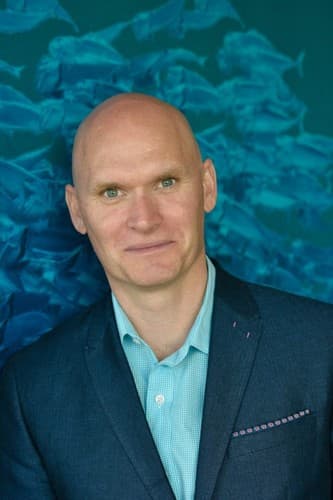
Anthony Doerr is a Pulitzer Prize-winning author celebrated for his evocative prose and compelling storytelling. His novel "All the Light We Cannot See" earned him widespread acclaim, including the Pulitzer Prize for Fiction. Doerr's other notable works include "The Shell Collector" and "Memory Wall," showcasing his mastery of historical fiction and intricate character development.







