““I’m not a monster, Eve. I’m a man. A man who loves you.””
— Roarke reassures Eve after a particularly dark case.

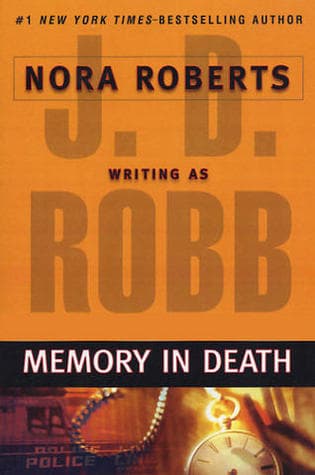
J.D. Robb (2006)
Genre
Thriller / Mystery / Science Fiction / Romance
Reading Time
7-8 hours
Key Themes
See below
Sign in to track this book
Detective Eve Dallas confronts the murder of her abusive foster mother, Trudy Lombard, forcing her to untangle a web of vengeance while facing her own past.
Lieutenant Eve Dallas responds to a strange death: a man dressed as Santa Claus has fallen 37 stories. While the initial assessment suggests an accidental fall from a holiday party, Eve's instincts say otherwise. Back at Central, her focus breaks when Trudy Lombard, her former foster mother and abuser, appears without warning. Trudy, a woman Eve hasn't seen in decades, claims she just wanted to check on Eve, but her presence immediately triggers Eve's deep trauma. Eve struggles to stay calm, barely tolerating Trudy's false pleasantries.
After her unsettling visit to Eve, Trudy Lombard boldly goes to Roarke's office, trying to extort money from him. She threatens to expose painful details of Eve's childhood abuse to the media if Roarke doesn't pay a large sum. Roarke, very protective of Eve, barely controls his anger. He calmly, but firmly, refuses her demands, making it clear he will not be blackmailed, and warns her to leave New York and never approach him or Eve again. His encounter with Trudy confirms his suspicion that her visit to Eve was not innocent.
Just days after her failed attempt to blackmail Roarke, Trudy Lombard is found dead in her hotel room, brutally beaten and strangled. The discovery shocks Eve. As a homicide detective, Eve must investigate the murder, but the victim's identity creates a deeply personal and ethically complex situation. The department, aware of Eve's history with Trudy, assigns her the case, trusting her professionalism but also recognizing the emotional toll it will take. Eve, despite her personal feelings, is determined to solve the case, if only for Trudy's estranged son, K.T. Lombard.
Eve and Detective Delia Peabody begin investigating Trudy Lombard's murder. They interview K.T. Lombard, Trudy's son, who describes a strained and painful relationship with his mother, calling her manipulative and selfish. He expresses a complicated mix of grief and relief. The investigation quickly reveals that Trudy Lombard had a long history of exploiting and abusing people, not just Eve. They start compiling a list of potential suspects, realizing many people had strong reasons to want Trudy dead, including former foster children, ex-lovers, and business associates she had cheated.
As Eve and Peabody dig deeper, they find a disturbing pattern in Trudy Lombard's life. She consistently used and abused people, leaving a trail of emotional and financial ruin. They interview various individuals who had suffered because of Trudy: former foster children who experienced trauma similar to Eve's, business partners she defrauded, and romantic interests she exploited. Each interview paints a clearer picture of Trudy as a predator, making it clear her murder could have been committed by many people seeking revenge or justice. The large number of potential suspects greatly complicates the investigation.
While Eve focuses on the criminal investigation, Roarke, deeply concerned for Eve and determined to support her, starts his own investigation into Trudy Lombard's finances and background. Using his vast resources, he uncovers evidence of various scams, fraudulent investments, and hidden assets Trudy had gained through illegal means. His findings provide important context to Trudy's motives and relationships, showing a woman driven by greed and a complete disregard for others. Roarke's investigation helps narrow the pool of potential suspects by highlighting individuals who had lost significant money or been severely exploited by Trudy.
The investigation forces Eve to confront her past trauma. Interviewing other adults who were abused by Trudy Lombard as children is very difficult for Eve, as their stories mirror her own painful experiences. She finds a strange connection with these individuals, understanding their anger and desire for justice. These encounters are emotionally draining, but they also give Eve a deeper understanding of the wide effect of Trudy's cruelty. The shared pain helps Eve process some of her own unresolved feelings, even as she remains professional to solve the murder.
As the investigation continues, Eve finds a critical link between Trudy Lombard's murder and the earlier death of the 'Santa' reveler, Arthur 'Art' Demming. She realizes the Santa's death was not an accident but a murder, and that both victims were involved in a complex, multi-million-dollar scam. Trudy and Art were partners in a scheme to defraud wealthy individuals through a sophisticated investment fraud. This connection drastically changes the investigation's scope, shifting the focus from individual acts of revenge to a larger criminal enterprise.
With the connection established, Eve and Roarke carefully piece together the remaining clues. They identify the killer as Roger 'Rog' Meeks, Trudy and Art's third partner in the elaborate investment fraud. Rog, feeling cheated and fearing exposure, had murdered Art Demming to silence him and then killed Trudy Lombard when she threatened to expose him. The motive was not personal revenge for past abuses, but a cold, calculated move to protect his illegal gains and prevent their criminal enterprise from collapsing. The revelation brings professional closure for Eve, though the personal impact of Trudy's life remains.
Eve and her team track down Rog Meeks and confront him with the evidence. During the intense interrogation, Meeks eventually breaks down and confesses to the murders of both Art Demming and Trudy Lombard, detailing his motives and methods to cover his tracks. With the case officially closed, Eve feels a complex mix of emotions. While justice has been served, the investigation made her revisit the darkest parts of her past. However, by confronting Trudy's legacy and bringing her killer to justice, Eve takes another step in healing from her childhood trauma, supported by Roarke and her chosen family.
The Protagonist
Eve confronts her deepest childhood trauma, leading to a significant step in her emotional healing and solidifying her chosen family.
The Supporting
Roarke reinforces his role as Eve's anchor, demonstrating his boundless love and support as she navigates her trauma.
The Victim/Antagonist (posthumous)
As a victim, Trudy's past actions are fully exposed, revealing her as a serial abuser and con artist whose life of exploitation ultimately led to her demise.
The Supporting
Peabody continues to grow as a detective, offering unwavering support to Eve through a personally challenging case.
The Supporting
K.T. grapples with the complex emotions surrounding his mother's death and his own unresolved trauma from her actions.
The Antagonist
Meeks's greed leads him from fraud to double murder, culminating in his capture and the exposure of his crimes.
The Supporting
Whitney continues to exemplify strong leadership, trusting Eve's judgment even in her most challenging personal case.
The Supporting
Mira provides critical psychological support to Eve, helping her confront and process the trauma evoked by Trudy's murder.
This theme is central to the novel, exploring how early abuse shapes an individual's adult life. Eve Dallas's character is defined by the trauma Trudy Lombard inflicted. Her stoicism, her drive for justice, her difficulty with intimacy, and her emotional shutdowns all come from her past. The novel explores the psychological scars, the struggle to confront painful memories, and the long road to healing. The investigation into Trudy's murder forces Eve to revisit these wounds, but ultimately helps her move towards greater emotional integration, as seen when she allows herself to fully rely on Roarke.
“She had to walk through the fire to get to the other side. And she would.”
The novel explores the line between seeking justice and wanting revenge, especially when the victim is someone as bad as Trudy Lombard. Eve, despite her personal hatred for Trudy, is committed to upholding the law and finding the truth, rather than celebrating her abuser's death. The narrative also examines the motives of other characters who suffered at Trudy's hands, some of whom wanted retribution. The case's resolution, where Trudy is killed by a criminal partner for money rather than by a victim of her abuse, shows that true justice, even for a villain, must follow due process.
“Justice wasn't about what she felt, but what the law demanded.”
This theme contrasts the destructive nature of biological family ties (Trudy and K.T., Trudy and Eve as foster mother) with the power of chosen family. Eve's 'family' includes Roarke, Peabody, Mira, and even Whitney – people who give her unwavering love, support, and acceptance, creating a safe emotional space she never had as a child. Roarke's strong protectiveness and Peabody's steady loyalty are prime examples. The novel emphasizes that true family is built on love, trust, and mutual respect, not blood or legal ties, and that these chosen bonds are essential for healing and survival.
“He was her anchor, her safe harbor, the one who saw all of her and still loved her.”
Beneath the personal drama, the novel shows the widespread influence of greed and corruption. Trudy Lombard's life shows this, as she constantly manipulates and defrauds others for money. The ultimate reason for her murder, and that of Arthur Demming, is a large-scale investment scam orchestrated by Roger Meeks. This theme highlights how unchecked greed can lead to betrayal, violence, and the destruction of lives, showing that the villainy extends beyond personal abuse to systemic financial exploitation.
“Money. It always came down to money, in the end.”
The victim's morally reprehensible character complicates the search for justice.
Trudy Lombard is not a sympathetic victim; she is an abuser and con artist with a long list of enemies. This device creates a complex moral landscape for Eve, forcing her to professionally investigate the murder of someone she personally despises. It challenges the reader's expectations and highlights Eve's unwavering commitment to the law, regardless of her personal feelings. The 'unreliable victim' also expands the suspect pool significantly, as many people had legitimate reasons to hate Trudy, making the motive less clear.
The murder victim is directly linked to the protagonist's traumatic past.
The personal case device throws Eve Dallas into a professional and emotional maelstrom. Trudy Lombard's murder forces Eve to confront her deepest childhood trauma head-on, blurring the lines between her professional duty and her personal demons. This device is crucial for Eve's character development, as it pushes her to process unresolved grief and anger. It also raises the stakes, making the investigation intensely personal for Eve and testing her emotional resilience and objectivity.
Eve's police investigation is complemented by Roarke's independent inquiries.
While Eve conducts the official police investigation, Roarke uses his vast private resources, connections, and criminal past knowledge to conduct a parallel inquiry into Trudy Lombard's financial dealings and background. This device allows for a broader scope of information gathering, often uncovering details that official channels might miss. It also highlights the unique partnership between Eve and Roarke, demonstrating how their combined skills and resources ultimately lead to solving the complex crime, while also reinforcing Roarke's supportive role.
Numerous individuals with strong motives divert attention from the true killer.
Due to Trudy Lombard's long history of abuse, manipulation, and fraud, there are numerous individuals who had legitimate reasons to wish her harm. Former foster children, business partners she swindled, and ex-lovers all present as plausible suspects. This device creates suspense and complexity, leading Eve down various investigative paths before the true, less obvious motive (financial gain by a partner) is uncovered. It effectively masks the real killer and keeps the reader guessing until the final reveal.
““I’m not a monster, Eve. I’m a man. A man who loves you.””
— Roarke reassures Eve after a particularly dark case.
““There was no such thing as a clean kill. Not when it came to humans.””
— Eve reflects on the nature of murder and its impact.
““Sometimes the past doesn’t stay buried. Sometimes it claws its way out.””
— Eve considers the resurfacing of old traumas during a case.
““The dead had their secrets. And sometimes, the living had to pay for them.””
— Eve muses on the consequences of past actions affecting current events.
““You can’t outrun your own mind, Dallas. It’ll always catch up.””
— Roarke offers insight to Eve regarding her internal struggles.
““Every killer thinks they’re justified. That’s the problem.””
— Eve contemplates the twisted logic of murderers.
““Love wasn’t a weakness. It was a weapon. A shield. A reason to fight.””
— Eve understands the strength derived from her relationship with Roarke.
““The city never slept, and neither did its demons.””
— Eve reflects on the constant presence of crime in New York City.
““There were a million shades of gray between right and wrong, but murder wasn’t one of them.””
— Eve holds firm to her moral compass regarding homicide.
““Memory was a dangerous thing. It could comfort, or it could destroy.””
— Eve considers the dual nature of memory in the context of the case.
““He was her anchor, her calm in the storm. And sometimes, her storm.””
— Eve's complex feelings about Roarke and their dynamic.
““Justice wasn’t always clean, but it had to be done.””
— Eve's pragmatic approach to solving crimes and bringing perpetrators to account.
““The dead couldn’t tell their stories, but someone had to listen for them.””
— Eve's dedication to giving a voice to victims.
Ready to see how well you understood this book? Take our interactive quiz with 10 questions.

Biography coming soon.







