“Freedom isn't free. It comes at a cost, and sometimes that cost is blood.”
— Mitch Rapp reflecting on the sacrifices made for liberty.

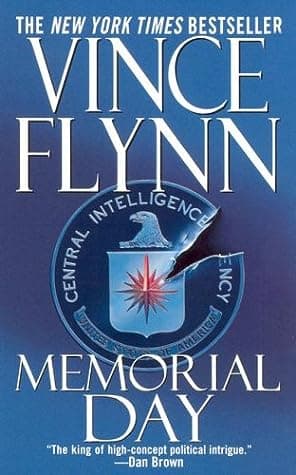
Vince Flynn (2011)
Genre
Thriller / Mystery
Reading Time
1148 min
Key Themes
See below
Sign in to track this book
As Washington D.C. prepares for Memorial Day, CIA agent Mitch Rapp uncovers a nuclear terror plot from an al-Qaeda base in Afghanistan, beginning a desperate race to stop a catastrophe on American soil.
CIA agent Mitch Rapp, with his trainee Mike Nash, leads a Special Activities Division team into a remote Afghan village near the Pakistani border. They target an al-Qaeda base believed to be planning a major attack on the U.S. During the intense raid, Rapp's team kills many terrorists and finds key intelligence: a laptop with detailed plans for a nuclear strike on Washington D.C. The laptop shows the attack is set for Memorial Day, during a tribute to WWII veterans, and the device is already heading to the U.S. This discovery makes the mission much more urgent and important, as Rapp sees the threat is bigger than first thought.
Back in the United States, Mitch Rapp briefs President Hayes and National Security Advisor Dr. Irene Kennedy on the recovered intelligence. Rapp describes the nuclear threat, stressing its truth and immediate danger. However, his direct and often confrontational style clashes with some administration members, especially Deputy National Security Advisor Marcus DuBois, who doubts the intelligence and sees Rapp as a dangerous rogue agent. DuBois, driven by political ambition and a desire to control information, tries to sideline Rapp and downplay the threat, causing immediate conflict in the White House's response. Kennedy, however, trusts Rapp's judgment completely.
With time running out, Rapp, supported by Dr. Kennedy, starts a frantic search for the stolen nuclear material. Intelligence indicates the device, a 'suitcase nuke' or Special Atomic Demolition Munition (SADM), came from Russia and is being smuggled into the U.S. Rapp's team, including Nash and technical expert Scott Coleman, uses all available resources, from satellite images to human intelligence, to track its path. They find a complex smuggling operation, showing the wide reach and abilities of the terrorist network led by the mysterious mastermind, Abu Hagana. The task is huge, as the terrorists are skilled at avoiding detection.
As Rapp's team gets closer to leads, Abu Hagana activates multiple sleeper cells across the United States. These cells start diversions and smaller, coordinated attacks to create chaos and pull law enforcement away from the main nuclear threat. One incident involves a series of seemingly random bombings and cyberattacks, causing widespread panic. This strategy clogs intelligence channels and forces federal agencies to respond on many fronts, making it harder for Rapp to focus only on the nuclear device. The activation shows how deeply the terrorists have infiltrated and Hagana's careful planning.
Rapp starts to notice troubling patterns: every time his team makes progress, the terrorists seem to know their moves. This leads him to suspect a mole in the U.S. government or intelligence community. His suspicions point especially to Marcus DuBois, whose actions and attempts to block Rapp seem increasingly suspicious. Rapp secretly tells Coleman and Nash to investigate DuBois, while also being wary of other high-ranking officials. The hunt for the mole becomes a crucial second mission, as any leak could endanger the entire operation to stop the nuclear attack and risk countless lives.
Mitch Rapp, with growing evidence of DuBois's suspicious actions, confronts the Deputy National Security Advisor. The confrontation is tense, with Rapp directly accusing DuBois of obstruction and possibly aiding the enemy, though without solid proof of treason yet. DuBois strongly denies the accusations, using his political power to try and discredit Rapp. President Hayes and Dr. Kennedy are caught in the middle, but Kennedy's trust in Rapp outweighs DuBois's political maneuvers. This confrontation confirms Rapp's belief that DuBois is either compromised or actively working against the mission, making him a dangerous obstacle.
Through careful analysis of recovered laptop data, intercepted communications, and high-tech surveillance, Rapp's team finally finds the location of the nuclear device. The intelligence points to a highly symbolic and populated area in Washington D.C. – specifically, a hidden compartment in a seemingly ordinary vehicle or structure placed to cause the most casualties during the Memorial Day celebrations. The discovery sends a shock of terror through the intelligence community, as the device is not only in the capital but placed to have maximum impact, confirming the terrorists' bold plan.
Further investigation by Scott Coleman and Mike Nash uncovers clear evidence linking Marcus DuBois to the terrorist network. It is revealed that DuBois, driven by a twisted ideology and a desire for power and revenge against what he sees as a corrupt system, has been a deep-cover asset for Abu Hagana for years. He was not just obstructing; he was actively helping the attack, providing key intelligence and manipulating the government's response. The revelation is a devastating blow, confirming the extent of the internal threat and showing how vulnerable the nation's security is to betrayal from its highest ranks.
With the nuclear device found and the mole exposed, Mitch Rapp and his elite team, including Nash and Coleman, launch a high-stakes, covert operation to stop the threat. They enter the area where the device is hidden, facing heavily armed and fanatical terrorists. The mission is extremely dangerous, as any mistake could detonate the bomb. Rapp, using his combat skills and tactical genius, leads the charge, fighting terrorists in close quarters. The pressure is immense, with the Memorial Day deadline quickly approaching and millions of lives at stake.
In a climactic scene, Rapp's team breaks through the terrorist defenses. Rapp personally confronts Abu Hagana, who is overseeing the final preparations for the detonation. A brutal and intense hand-to-hand fight happens between the two enemies. At the same time, Scott Coleman, an explosives expert, races to disarm the nuclear device, guided by Rapp's desperate instructions. With seconds to spare, Coleman successfully stops the bomb, preventing a disaster. Rapp, after a tough fight, finally captures or kills Abu Hagana, ending his terror and securing the nation's capital.
Immediately after, Washington D.C. breathes a collective sigh of relief, unaware of the full horror narrowly avoided. President Hayes and Dr. Kennedy acknowledge Rapp's heroic actions, though much of his work remains secret. The aftermath of DuBois's betrayal is huge, leading to internal investigations and a scramble to tighten security. While the nuclear threat is gone, the experience leaves a lasting mark on Rapp and his team, showing the constant watch needed against both outside and inside enemies. The novel ends with the understanding that while one battle is won, the war against terror continues, and Rapp remains on the front lines.
The Protagonist
Rapp's arc reinforces his role as an indispensable, albeit controversial, protector of the nation, solidifying his methods as necessary in the face of evolving threats.
The Supporting
Kennedy's arc demonstrates her unwavering commitment to national security and her ability to make difficult decisions under immense pressure, further solidifying her political power.
The Supporting
Nash's arc showcases his growth as a leader and an independent operative, solidifying his position as a key player in the CIA's counter-terrorism efforts.
The Supporting
Coleman's arc reinforces his role as a steadfast and indispensable technical and tactical expert, consistently delivering under extreme pressure.
The Supporting
President Hayes's arc demonstrates his growth in leadership, learning to trust unconventional methods and individuals like Rapp when conventional approaches fail.
The Antagonist
DuBois's arc is one of escalating villainy, culminating in his exposure as a treacherous mole and a direct threat to the nation.
The Antagonist
Hagana's arc depicts his meticulous planning and execution of a devastating plot, culminating in his direct confrontation with Rapp and the ultimate failure of his mission.
The novel shows how modern warfare goes beyond traditional battlefields, extending into intelligence, cyber warfare, and infiltrating domestic groups. The threat is not just from outside; it is also internal, making it hard to find and stop enemies who operate within society and even within the government. Rapp's use of unusual methods and his constant fight against bureaucracy show how traditional military and political responses are not enough for a spread-out, uneven enemy. The activation of sleeper cells and the discovery of a high-level mole, Marcus DuBois, illustrate this theme, showing that the enemy is often hidden in plain sight.
““The enemy isn’t just outside our borders anymore, Irene. He’s in our cities, in our neighborhoods, and sometimes, he’s even in our goddamn White House.””
A main theme is how important trust is in high-stakes operations and how damaging betrayal can be. Mitch Rapp works with a small group he trusts, like Irene Kennedy, Mike Nash, and Scott Coleman. Their loyalty and belief in each other are vital for their success. In contrast, the betrayal by Marcus DuBois, a high-ranking government official, is the ultimate breach of trust, threatening to destroy the entire counter-terrorism effort. This theme highlights the constant watch needed not only against outside threats but also against the hidden danger of internal corruption and disloyalty within the very institutions meant to protect the nation.
““In our line of work, trust isn't a luxury, it's a weapon. And betrayal is a bullet to the back.””
The novel suggests that defending freedom comes with a significant personal and moral cost, requiring constant watch and hard choices. Mitch Rapp embodies this theme, giving up a normal life and often working in morally gray areas to protect his country. His methods are brutal and firm, but the story implies they are needed to counter an equally ruthless enemy. The Memorial Day setting itself emphasizes this theme, as the nation honors past sacrifices while facing a new, major threat. The book argues that constant watch, even when unpopular or politically difficult, is the only way to protect liberty from those who seek to destroy it.
““Freedom isn’t free, President. It’s paid for every single day, in blood and secrets, by people you’ll never know.””
This theme explores the conflict between strict bureaucratic processes and the urgent need for quick action in a crisis. Mitch Rapp often struggles with the political maneuvering, slow decisions, and risk avoidance common in government. His direct, often violent, approach frequently clashes with the more cautious and protocol-driven attitudes of many officials, especially Marcus DuBois. Dr. Irene Kennedy acts as a key link, navigating the political landscape to give Rapp the operational freedom he needs. The novel suggests that while bureaucracy has its place, it can be a dangerous hindrance when facing an immediate and major threat, requiring individuals willing to bypass it for the greater good.
““The biggest threat to this country isn’t always the one with a bomb. Sometimes it’s the one with a pen, signing off on another layer of red tape.””
The imminent Memorial Day deadline for the nuclear attack.
The 'ticking clock' is a crucial plot device, creating relentless tension and urgency throughout the narrative. The discovery of the nuclear plot, specifically timed for Memorial Day, imposes a strict deadline on Mitch Rapp and his team. This finite timeframe forces rapid decision-making, high-stakes gambles, and constant pressure, elevating every setback and amplifying the sense of impending catastrophe. It drives the characters to push beyond conventional limits, making the race to find and defuse the bomb a desperate, breathless struggle against time itself, intensifying the thriller aspect of the story.
A high-ranking government official secretly aiding the terrorists.
The 'mole' device, embodied by Marcus DuBois, serves to introduce an element of internal sabotage and distrust, complicating the hero's mission. This device not only provides a shocking twist but also highlights the vulnerability of national security from within. The mole's actions create misdirection, leaks, and political obstruction, forcing Rapp to fight on two fronts: against the external terrorist threat and the internal betrayal. It raises the stakes by making the antagonist's reach appear limitless and forces the protagonist to question whom he can truly trust, adding layers of paranoia and intrigue to the plot.
The stolen nuclear bomb that drives the central conflict.
The stolen nuclear device functions as the primary MacGuffin in the story. While its specific technical details are important for the defusal sequence, its main role is to propel the plot forward, motivate the characters, and establish the immense stakes. The threat of a nuclear attack on Washington D.C. is the ultimate goal the terrorists seek and the catastrophe Mitch Rapp must prevent. Its presence creates constant tension and provides a clear, tangible objective for the hero, around which all other plot elements revolve, from intelligence gathering to direct action, making it the focal point of the entire narrative.
A cunning and elusive terrorist leader orchestrating the plot.
Abu Hagana serves as the archetypal 'mastermind antagonist,' a brilliant and highly organized leader who orchestrates the entire complex plot from the shadows. This device creates a formidable, seemingly omnipresent foe for Mitch Rapp, whose intellectual prowess and extensive network make him incredibly difficult to track and defeat. The mastermind's ability to anticipate moves, activate sleeper cells, and even infiltrate the government through a mole showcases his tactical brilliance, raising the stakes and making Rapp's victory feel hard-won. It provides a clear, intelligent adversary for Rapp to outwit and ultimately confront.
“Freedom isn't free. It comes at a cost, and sometimes that cost is blood.”
— Mitch Rapp reflecting on the sacrifices made for liberty.
“The world was a dangerous place, full of dangerous people, and sometimes the only way to fight them was to be more dangerous.”
— Mitch Rapp's internal monologue about the nature of his work.
“Trust was a luxury he couldn't afford, not in his line of work.”
— Rapp's general philosophy regarding his intelligence operations.
“Some battles you win, some you lose, but the fight never truly ends.”
— A broader reflection on the ongoing struggle against terrorism.
“He didn't seek revenge; he sought justice. And sometimes, justice was a very messy business.”
— Rapp's motivation for his actions against terrorists.
“The enemy wasn't some faceless entity; it was an ideology, and ideologies were harder to kill than men.”
— A discussion about the nature of the war on terror.
“You can't negotiate with evil. You have to destroy it.”
— Rapp's hardline stance on dealing with extremist groups.
“Fear was a weapon, but only if you let it be.”
— Rapp overcoming a moment of doubt or danger.
“The weight of the world often rested on the shoulders of a few good men.”
— A reflection on the burden carried by special operatives like Rapp.
“Every mission was a gamble, and the stakes were always life or death.”
— Rapp assessing the risks of an upcoming operation.
“He knew the darkness well, had embraced it many times to fight an even greater darkness.”
— Rapp's internal struggle with the morally gray aspects of his job.
“Patriotism wasn't blind loyalty; it was a willingness to protect what you believed in, even from within.”
— Rapp's complex view of serving his country.
“The past was never truly buried; it always found a way to claw its way back to the surface.”
— A recurring theme of past events influencing present conflicts.
“There were no easy answers, only hard choices.”
— Rapp contemplating a difficult decision in the field.
Ready to see how well you understood this book? Take our interactive quiz with 10 questions.

Biography coming soon.







