“The true travelers are those who leave for leaving.”
— Hadrian reflecting on the nature of travel and exploration.

Marguerite Yourcenar (2005)
Genre
Historical Fiction / Philosophy
Reading Time
10-12 hours
Key Themes
See below
Sign in to track this book
This novel shows the burdens of power, the comfort of philosophy, and the human search for meaning through the eyes of a dying emperor.
The novel begins with Hadrian, an old and sick emperor, writing to his adopted grandson and successor, Marcus Aurelius. He thinks about his failing health and coming death, which leads him to write down his life's experiences and philosophies. He describes his early life, military training, and the vast Roman Empire he inherited. Hadrian wants to understand himself and his actions, not to praise them, but to give an honest account of his reign, his loves, and his intellectual pursuits. This opening reflection sets the thoughtful tone for the entire memoir, as he addresses the challenges and successes of power.
Hadrian discusses his youth, which was privileged but sometimes lonely after his parents died. He describes his education in Greek and Latin literature, philosophy, and rhetoric, which shaped his mind. His early military career under Emperor Trajan is detailed, including his part in various campaigns and his growing political influence. He recounts his marriage to Sabina, a political match rather than a love match, and his complex relationship with Trajan and Plotina, Trajan's wife, who supported him. These early experiences formed his character, ambition, and deep appreciation for Greek culture.
Hadrian details Trajan's final illness and death, and his own difficult succession. He addresses rumors of a fake adoption document, acknowledging the political maneuvering involved. He recounts the immediate challenges of securing power, including the execution of four important senators seen as threats. Hadrian explains why he made these difficult choices, stating his commitment to stability and the Empire's welfare. He immediately began to change imperial policy away from aggressive expansion, focusing instead on strengthening and internal reform, a clear change from Trajan's military goals.
After securing his position, Hadrian committed to personally inspecting every province of the Roman Empire. He describes his constant travels, covering Britain, Gaul, Hispania, North Africa, and the Eastern provinces. During these journeys, he focused on strengthening borders, notably with the building of Hadrian's Wall in Britannia. He oversaw improvements to infrastructure, including roads, aqueducts, and public buildings, and worked directly with local people and military groups. These travels were not just administrative; they were also philosophical, allowing him to understand the diverse cultures and peoples under Roman rule and to carry out policies that brought unity and stability.
Hadrian describes meeting Antinous, a handsome young Bithynian, and the deep love that grew between them. He portrays Antinous as a symbol of youth, beauty, and the Greek ideal, and their relationship as the most important emotional connection of his life. He recounts their travels together, sharing private moments and intellectual talks. The story builds to Antinous's tragic drowning in the Nile River, an event that devastates Hadrian. He grapples with the mystery of Antinous's death, considering both accident and ritual sacrifice. In his grief, Hadrian made Antinous a god, creating a cult and founding cities in his name, preserving his memory across the Empire.
Hadrian reflects on his love for architecture and his many building projects across the Empire, but especially in Rome and at his private villa in Tivoli. He describes his personal involvement in the design and construction of the Pantheon, seeing it as a symbol of cosmic harmony and the unity of all gods. His Hadrian's Villa at Tivoli is shown as a small version of his travels and intellectual pursuits, bringing together elements from various cultures he admired. These building projects were not just displays of power but expressions of his philosophical ideas, his love for beauty, and his vision for a stable and lasting Roman civilization. He saw building as a way to leave a mark on the world.
Hadrian reflects on one of the most painful and violent times of his reign: the Bar Kokhba revolt in Judea. He explains his initial plans to make the province more Greek and build Aelia Capitolina on the ruins of Jerusalem, which started the large Jewish uprising. He details the brutal three-year war, the many Roman and Jewish lives lost, and the eventual, harsh suppression of the revolt. Hadrian describes his despair and anger, acknowledging the deep cultural clash and the tragic results of his policies. This event contrasts sharply with his usual preference for peace and cultural integration, leaving a lasting mark on his conscience and his legacy.
As his health declines, Hadrian thinks more about who will succeed him. He recounts the difficult process of choosing an heir, first picking Lucius Ceionius Commodus Verus, who sadly dies. This forces him to adopt Antoninus Pius, on the condition that Antoninus in turn adopt Marcus Aurelius and Lucius Verus. Hadrian reflects on the wisdom needed for such decisions, aiming to secure the Empire's future stability. His final years are marked by severe physical pain from dropsy, leading to deep thoughts about death, the nature of the soul, and the legacy he will leave. He prepares for the inevitable end, finding some peace.
Throughout his memoirs, and especially in his later thoughts, Hadrian explores the philosophical nature of power. He describes the great burden and loneliness of being emperor, the constant need for watchfulness, and the difficult choices that often have no perfect answer. He thinks about how short human achievements are compared to eternity and the vastness of the cosmos. He questions the true meaning of glory and immortality, finding comfort in the pursuit of knowledge, beauty, and the Empire's welfare. His reflections show a ruler who was well aware of his limits and the contradictions of his absolute authority.
In his final thoughts, Hadrian accepts his approaching death with a calm mind. He reflects on his life's journey, recognizing both his successes and his failures, and feels a sense of completion. He writes his famous poem, 'Animula vagula blandula,' a tender address to his soul, thinking about its journey beyond the body. He describes his final arrangements and his peaceful surrender to the inevitable, seeing death as a natural part of existence. His last words convey a deep sense of serenity and acceptance, having lived a life dedicated to reason, beauty, and the lasting legacy of Rome.
The Protagonist
From an ambitious, calculating young man, Hadrian evolves into a wise, melancholic emperor who accepts the burdens of power and the inevitability of death.
The Supporting
Antinous remains a static character, serving as a catalyst for Hadrian's emotional and artistic expression, tragically cut short.
The Supporting
Sabina's character remains largely static, a figure of duty and resentment within Hadrian's personal life.
The Supporting
Trajan is a historical figure whose legacy Hadrian must grapple with and ultimately diverge from.
The Supporting
Plotina's role is primarily to facilitate Hadrian's rise to power, and her influence wanes after his ascension.
The Mentioned
Marcus Aurelius is a symbolic figure representing the future and the continuation of Hadrian's philosophical legacy.
The Supporting
Antoninus is chosen as a crucial link in Hadrian's planned succession, ensuring the Empire's stability.
The Supporting
Apollodorus represents a challenge to Hadrian's authority and vision, ultimately succumbing to imperial power.
Hadrian often thinks about the great responsibilities and loneliness of being an emperor. He deals with the weight of making decisions that affect millions, the need for firmness, and the compromises required to keep things stable. He describes the isolation of his position, where true friends are rare and the final responsibility is his alone. This theme appears in his constant travels to personally check on the Empire, his careful attention to administration, and his philosophical thoughts on governance, as seen in his reasons for executing the four senators or his sadness over the Jewish Revolt.
“I was both the ship and the storm.”
Hadrian is deeply concerned with leaving a lasting mark, not through conquest but through culture, architecture, and stable political systems. His many building projects, especially the Pantheon and Hadrian's Villa, are physical signs of this wish. His making Antinous a god and founding cities in his name are attempts to make beauty and love immortal. Even writing these memoirs is an effort to understand and preserve his own life and thoughts for future generations, especially for Marcus Aurelius, ensuring a philosophical legacy beyond his physical life.
“I had always been astonished that men could build so little when they could dream so much.”
The novel deeply explores Hadrian's love for Antinous and the crushing grief he feels after his death. This relationship is shown as the most intense and important emotional experience of his life, a sharp contrast to his politically arranged marriage with Sabina. Hadrian's efforts to immortalize Antinous through deification and monuments show the depth of his sorrow and his struggle to cope with such a great loss. This theme highlights the human vulnerability beneath the imperial role, showing how even an emperor experiences the universal feelings of love and sadness.
“I had lost the companion of my life, the one creature who knew me as I was.”
A main conflict in Hadrian's character and reign is the interplay between his deep love for Greek culture (Hellenism) and his duties as a Roman emperor (Romanitas). He greatly admires Greek philosophy, art, and literature, often preferring Greece's intellectual and aesthetic values. However, he is also a practical Roman ruler, committed to the Empire's stability, law, and order. This theme is clear in his architectural choices, his personal intellectual pursuits, and his attempts to bring Greek culture into the Roman world, sometimes leading to conflict, as seen in the Jewish revolt caused by his Greek-influenced policies in Judea.
“Greece became my homeland, and its spirit, the very air I breathed.”
As Hadrian writes his memoirs in his declining health, the short nature of life and the certainty of death are always present. He constantly thinks about the passing of time, the rise and fall of empires, and the ultimate fate of individuals. His thoughts on his own death lead to deep philosophical insights about the meaning of existence and the value of human experience. This theme ends with his calm acceptance of death at the novel's close, seeing it as a natural part of the cosmic order, and his famous poem 'Animula vagula blandula,' a tender farewell to his soul.
“My soul, my darling, my little wanderer, must now depart.”
The entire novel is presented as Hadrian's personal letter/memoir to Marcus Aurelius.
This device allows for deep introspection and a first-person perspective on historical events. It grants the reader direct access to Hadrian's thoughts, philosophies, and emotional states, creating an intimate and subjective account of his reign. The 'letter' structure justifies the reflective tone and the non-linear exploration of themes, as Hadrian moves between past events and present meditations. It also serves as a pedagogical tool, as Hadrian explicitly aims to pass on his wisdom to his successor, Marcus Aurelius.
Hadrian often hints at future events or his later understanding while recounting earlier periods.
While narrating his youth or early reign, Hadrian frequently interjects with reflections from his older, wiser self, subtly foreshadowing the consequences of his actions or his eventual philosophical conclusions. For example, he might describe a youthful ambition and then immediately follow with a comment about its ultimate futility or the unexpected lessons learned years later. This device enriches the narrative by providing a layered perspective, allowing the reader to understand the 'why' behind his actions through the lens of accumulated experience and the wisdom of old age.
Hadrian's building projects symbolize his philosophical ideals, legacy, and personal journey.
Architecture in the novel is more than just construction; it is a profound symbolic language. The Pantheon represents cosmic harmony and the unity of diverse beliefs. Hadrian's Wall symbolizes the limits of empire and the desire for peace and consolidation. Hadrian's Villa at Tivoli is a microcosm of his travels, intellectual interests, and personal world, a physical manifestation of his soul. These structures are not merely backdrops but active symbols that reflect Hadrian's vision for Rome, his personal aspirations, and his attempts to create order and beauty in a chaotic world.
Hadrian's extensive travels serve as both a literal and metaphorical journey of self-discovery.
Hadrian's relentless physical travels across the Roman Empire are a central motif. These journeys are not only for administrative purposes but also represent his intellectual and spiritual quest for understanding the world and himself. Each province, culture, and landscape he encounters contributes to his evolving philosophy and sense of identity. The motif extends to his internal journey of self-reflection in the memoirs, moving through different periods of his life, examining his decisions, and ultimately preparing for his final journey into death.
“The true travelers are those who leave for leaving.”
— Hadrian reflecting on the nature of travel and exploration.
“I was born in a world that was already old.”
— Hadrian contemplating his place in a long historical lineage.
“To build is to collaborate with the earth.”
— Hadrian's thoughts on his architectural projects and connection to the land.
“My mind, I must confess, was never quite at peace except when I was building.”
— Hadrian finding solace and purpose in his building endeavors.
“I realized that the world is a book, and that those who do not travel read only one page.”
— Hadrian reflecting on the importance of travel for understanding the world.
“I had long ceased to believe in the gods, but I had never ceased to believe in the sacred.”
— Hadrian distinguishing between traditional gods and a more abstract sense of the sacred.
“The world is not to be remade, but understood.”
— Hadrian's pragmatic approach to governance and human nature.
“What is important is not to live, but to live well.”
— Hadrian's philosophical stance on the quality of life over mere existence.
“I have sometimes thought that the most precious possessions of man are his memories.”
— Hadrian reflecting on the value of personal history and experience.
“Every man has a right to be wrong in his own way.”
— Hadrian's tolerance and understanding of individual differences.
“One must learn to love one's destiny.”
— Hadrian's acceptance of his fate and the circumstances of his life.
“The greatest empires are built not on swords but on ideas.”
— Hadrian's belief in the power of culture, law, and philosophy over military might.
“I began to understand that a man's life is not only his own; it belongs to his time.”
— Hadrian recognizing the influence of historical context on individual existence.
“To live is to burn with a hard, gem-like flame.”
— Hadrian expressing an intense and vibrant approach to life, echoing a famous quote.
“I am a man who has lived and loved and suffered.”
— Hadrian summarizing the breadth of his human experience.
Ready to see how well you understood this book? Take our interactive quiz with 10 questions.
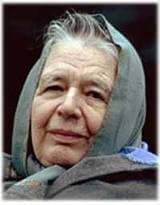
Marguerite Yourcenar was a Belgian-born French novelist and essayist, who became a US citizen in 1947. Winner of the Prix Femina and the Erasmus Prize, she was the first woman elected to the Académie Française, in 1980, as well as the seventeenth person to occupy seat 3.