“We don't become geisha because we want our lives to be happy; we become geisha because we have no choice.”
— Chiyo reflects on the harsh realities of her path into the geisha world.

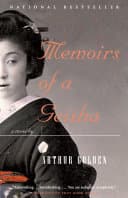
Arthur Golden (1999)
Genre
Historical Fiction / Romance
Reading Time
900 min
Key Themes
See below
Sign in to track this book
A young girl with unique eyes, sold into a geisha house, navigates a world of rivalry and forbidden love to become a sought-after geisha, all while wanting impossible freedom.
In 1929, nine-year-old Chiyo Sakamoto lives in a poor fishing village with her sick mother, father, and older sister, Satsu. Their lives are simple and hard. When her mother becomes very ill, Chiyo's father sells both girls to Mr. Tanaka. Chiyo, with her unusual blue-gray eyes, is taken to Kyoto's Gion district, a world of geisha, and sold to the Nitta okiya. Satsu is sold to a brothel. Chiyo immediately works as a maid, facing the harshness of her new life and the dislike of the okiya's matriarch, Mother, and the mean head geisha, Hatsumomo.
Chiyo's first days in the Nitta okiya are hard due to Hatsumomo's constant cruelty. Hatsumomo, fearing Chiyo might become more popular, tries to ruin her at every turn, even accusing her of stealing a valuable kimono. Wanting to escape and find Satsu, Chiyo tries to leave the okiya by climbing onto the roof. She falls, hurts herself, and is caught. As punishment, Mother cancels her schooling, stops her geisha training, and makes her a maid forever, burdened with the okiya's debts. One day, while crying by a stream, a kind, elegant man, the Chairman, approaches her, offers her a sweet, and encourages her. This gives Chiyo lasting hope.
Years pass, and Chiyo remains a maid, her dreams of becoming a geisha seemingly gone. Hatsumomo continues to bother her. One day, Mameha, the most successful geisha in Gion and Hatsumomo's rival, visits the Nitta okiya and offers Mother a deal: she will take Chiyo as her younger sister and train her to become a geisha, promising to pay all of Chiyo's debts. Mother, seeing a financial chance and a way to annoy Hatsumomo, agrees. Chiyo is renamed Sayuri and begins her training under Mameha, learning dance, music, manners, and conversation, all while dealing with Hatsumomo's increasing jealousy and plans.
Under Mameha's guidance, Sayuri improves. She quickly learns various geisha arts, especially dance, and her unique eyes and quiet charm get attention. Mameha carefully plans Sayuri's debut, introducing her to important men. Sayuri becomes very popular, making her a sought-after geisha. She attracts several prominent men, including Dr. Crab and the powerful Nobu. Hatsumomo's envy grows, and she tries to discredit Sayuri, but Sayuri, with Mameha's help and her own growing strength, overcomes these challenges, making her position in Gion stronger.
As Sayuri's reputation grows, it is time for her mizuage, the ritual deflowering of a maiko, which is auctioned to the highest bidder. Mameha organizes the event carefully, creating much competition among bidders. Dr. Crab, a wealthy man, wins the auction, paying a very high sum. This amount secures Sayuri's financial independence and raises her status. This event makes her one of Gion's most promising young geisha and frees her from her debts to the okiya, making her a strong rival to Hatsumomo.
Hatsumomo, increasingly unstable and jealous, tries a final act of sabotage against Sayuri. She sets fire to the Nitta okiya, hoping to destroy Sayuri's belongings and reputation. Her plan fails, and her destructive behavior, along with her growing debt and lack of patrons, leads to her expulsion from the okiya and her disappearance from Gion. With Hatsumomo gone, and Pumpkin, Hatsumomo's protégé, unreliable, Mother, seeing Sayuri's success and financial value, officially adopts Sayuri as her heir, making her the future owner of the Nitta okiya.
World War II disrupts the geisha world. The Gion district is unsafe, and geisha must leave. Sayuri is sent to the countryside to work in a kimono factory, enduring harsh conditions, a stark contrast to her refined life in Gion. She lives anonymously for several years. After the war, Nobu, a loyal patron and the Chairman's business partner, finds Sayuri and arranges her return to Gion, offering her a chance to rebuild her life and career as a geisha in a changed society.
Returning to a war-torn Gion, Sayuri finds the district and the okiya in ruins. With Nobu's help, she works to restore the Nitta okiya and revive her career. The post-war geisha world is different, with fewer patrons and changed social dynamics. Sayuri, with her strength and established reputation, navigates these challenges, slowly becoming a prominent geisha again. She continues to entertain Nobu, who wants to become her danna, but Sayuri still loves the Chairman, creating a complex emotional problem.
Nobu, who has supported Sayuri, asks to become her danna, offering her financial security and protection. Sayuri is grateful for his kindness, but she does not love Nobu and still has feelings for the Chairman. Desperate to avoid accepting Nobu, she plans a risky move. She arranges a private meeting between Nobu and Pumpkin, hoping Nobu will be disgusted by Pumpkin's behavior and stop pursuing Sayuri. However, Pumpkin, still bitter, betrays Sayuri, bringing the Chairman to witness the arranged meeting instead of Nobu, leading to a misunderstanding.
After the encounter, Sayuri believes she has lost the Chairman forever. However, the Chairman later finds her and reveals that he arranged for Mameha to take her in years ago, having seen her potential and been moved by her tears. He confesses that he has loved her since their first meeting by the stream but felt he could not pursue her while Nobu, his business partner and friend, was also interested. He says he wants her to be his danna. Sayuri accepts, finding her true love and a life of happiness as his secret mistress, eventually retiring from the geisha world.
The Protagonist
From a powerless, orphaned girl, Sayuri transforms into a powerful and sought-after geisha, ultimately finding love and agency in her life.
The Supporting
Mameha maintains her position as a top geisha, strategically guiding Sayuri's rise and ensuring her success.
The Antagonist
Hatsumomo's jealousy and destructive actions lead to her losing everything and disappearing from Gion.
The Supporting
The Chairman discreetly supports Sayuri's rise, eventually revealing his long-held love and becoming her danna.
The Supporting
Nobu consistently provides unwavering support to Sayuri, enduring unrequited love until he eventually accepts her choice.
The Supporting
Pumpkin's initial friendship with Chiyo sours into bitterness and betrayal due to Hatsumomo's influence and her own misfortunes.
The Supporting
Mother maintains her position as okiya proprietress, making decisions based on financial gain, eventually adopting Sayuri as her heir.
The Supporting
Auntie remains a steadfast, if sometimes severe, presence in the okiya, upholding its traditions and rules.
The Mentioned
Satsu's brief presence highlights the harsh realities of their separation, and her disappearance emphasizes the finality of their individual paths.
The novel explores Sayuri's self-discovery as she is stripped of her original identity, Chiyo, and shaped into a geisha. She learns to manage her public self versus her private feelings, always questioning who she truly is beneath the elaborate kimonos and makeup. Her struggle to connect her past as a poor village girl with her present as a geisha, and her search for genuine love in a world of performance, are central to this theme. The 'Sayuri' she presents to the world is a carefully built facade, yet within it, she finds her own strength and defines herself.
“We don't become geisha so that we can lead our lives as we please. We become geisha because we have no other choice.”
The world of geisha is one where appearances are most important. Sayuri's entire existence is built on creating an illusion of beauty, grace, and availability. The novel shows the contrast between the exquisite appearance of the geisha and the often harsh, manipulative, and emotionally complex realities of their lives. From the elaborate makeup and kimonos to the carefully crafted conversations, everything is designed to deceive or enchant. This theme is clear in the contrast between Hatsumomo's beautiful exterior and her cruel interior, or Sayuri's calm manner hiding her inner turmoil and longing for the Chairman.
“A story is not like a road to follow... it's more like a house. You go inside and stay there for a while, wandering from room to room, and you never know what you're going to find around each corner.”
The novel covers different kinds of love and the sacrifices made for it. Sayuri's unrequited love for the Chairman drives many of her decisions and strength. She gives up personal freedom and emotional honesty to navigate the geisha world, hoping to win his affection. Nobu's selfless devotion to Sayuri, despite her inability to love him back, is a different kind of love and sacrifice. The geisha system itself demands giving up conventional love and family life, making its practitioners find fulfillment in other ways, often through art and the subtle power they hold over men.
“We lead a life of appearances, Sayuri. Appearance is everything.”
From her childhood separation from her family to the realities of the okiya and the devastation of World War II, Sayuri's life shows human strength. She endures physical abuse, emotional torment from Hatsumomo, the loss of her sister, and constant pressure to perform. Her ability to adapt, learn, and keep going through great difficulty, always holding onto a bit of hope from the Chairman, is a main part of her character. The geisha system, with its strict rules and competition, makes its members develop strong coping skills and inner strength to survive and succeed.
“You can't call yourself a geisha until you can stop a man in his tracks with a single glance.”
The story is deeply set in the strict social structures of pre- and post-war Japan, focusing on the limited choices women had. Girls like Chiyo are sold into service because of poverty, showing the vulnerability of the lower class. In the geisha world, while geisha have a unique power through their charm and art, they depend on men for their income and status. The mizuage auction clearly shows how women are treated as goods. The novel subtly questions these power structures, even as Sayuri learns to navigate and use them to her advantage, showing the strength and intelligence needed to survive in a society run by men.
“A geisha is an artist of the floating world. She dances, she sings. She entertains you, whatever you want. The rest is shadows, the rest is secret.”
Sayuri recounts her life story from an older, wiser perspective.
The entire novel is narrated by Sayuri, looking back on her life from old age while living in New York. This retrospective viewpoint allows for a reflective and often philosophical tone. It provides the reader with insights into Sayuri's inner thoughts and feelings, as well as the benefit of hindsight regarding past events and character motivations. The 'memoir' style lends authenticity to the narrative, even though it is a work of fiction, creating an intimate connection between the reader and Sayuri's journey. It also allows her to withhold certain key revelations until the appropriate dramatic moment, such as the Chairman's role in her training.
A distinctive physical trait symbolizing Sayuri's uniqueness and destiny.
Chiyo's unusual blue-gray eyes are mentioned repeatedly throughout the novel, serving as a powerful symbol. They distinguish her from other Japanese girls, hinting at her extraordinary destiny. These eyes are what first capture the Chairman's attention and later become a defining feature of her geisha persona. They symbolize her inner spirit, her ability to see beyond the surface, and her inherent allure, making her stand out in a world where individuality is often suppressed. The eyes are a constant reminder of her origins and her unique place in the geisha world.
A symbol of geisha identity, status, and the art of transformation.
Kimono are not merely clothing in the novel; they are central to the geisha's identity, artistry, and status. Each kimono is a work of art, signifying wealth, occasion, and the geisha's ability to transform. Learning to wear, care for, and move gracefully in a kimono is a crucial part of Sayuri's training. The theft of a kimono by Hatsumomo and the meticulous selection of kimonos by Mameha for Sayuri's appearances highlight their significance. They represent the beautiful, elaborate facade of the geisha world, as well as the financial investment and artistry involved in maintaining that image.
A ritualistic plot point signifying a geisha's transition and value.
The mizuage, the auction of a maiko's virginity, is a pivotal plot device in the novel. It marks Sayuri's transition from maiko to full geisha and is a public declaration of her desirability and value. The record-breaking sum paid for Sayuri's mizuage solidifies her status, frees her from debt, and establishes her as a formidable force in Gion. This event is not just a personal milestone but a crucial turning point that empowers Sayuri financially and enhances her reputation, making her a greater threat to Hatsumomo and securing her future within the okiya.
“We don't become geisha because we want our lives to be happy; we become geisha because we have no choice.”
— Chiyo reflects on the harsh realities of her path into the geisha world.
“Adversity is like a strong wind. It tears away from us all but the things that cannot be torn, so that we see ourselves as we really are.”
— Chiyo (later Sayuri) describes how hardship reveals true character.
“A geisha is an artist of the floating world. She dances, she sings. She entertains you, whatever you want. The rest is shadows, the rest is secret.”
— Mameha explains the enigmatic nature of a geisha's profession.
“I could no more have stopped myself from falling in love with the Chairman than I could have stopped the sun from setting.”
— Sayuri confesses her inevitable love for the Chairman.
“The heart dies a slow death, shedding each hope like leaves until one day there are none. No hopes. Nothing remains.”
— Sayuri describes her despair after being separated from her sister.
“A story has been written in my heart, though I have never put it into words.”
— Sayuri reflects on her unspoken life experiences.
“We lead our lives like water flowing down a hill, going more or less in one direction until we splash into something that forces us to find a new course.”
— Sayuri muses on how life's obstacles redirect our paths.
“I felt as the river must feel when the sea tides push against its current.”
— Sayuri describes the conflict between her desires and societal expectations.
“A geisha is not a prostitute. She sells her art, not her body. She sells her illusions.”
— Mameha clarifies the distinction between geisha and courtesan.
“The very word 'geisha' means artist, and to be a geisha is to be judged as a moving work of art.”
— Sayuri explains the artistic essence of being a geisha.
“I had lived my life as a wave upon the sea, rising and falling in the tides of other people's desires.”
— Sayuri reflects on how her life was shaped by others' wishes.
“Happiness is a strange thing. It comes when you least expect it.”
— Sayuri observes the unpredictable nature of joy.
“We are like dolls, waiting for someone to come and dress us and make us pretty.”
— Chiyo describes the passive role of young geisha in training.
“The moment I saw him, I felt as though I had been wandering in a desert and had found an oasis.”
— Sayuri recalls her first encounter with the Chairman.
Ready to see how well you understood this book? Take our interactive quiz with 10 questions.
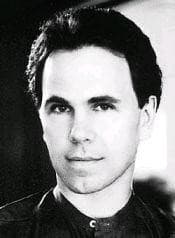
Arthur Sulzberger Golden is an American writer. He is the author of the bestselling novel Memoirs of a Geisha (1997).







