“There is no God, Marius, no God but life!”
— Marius's internal struggle with faith and the nature of existence.

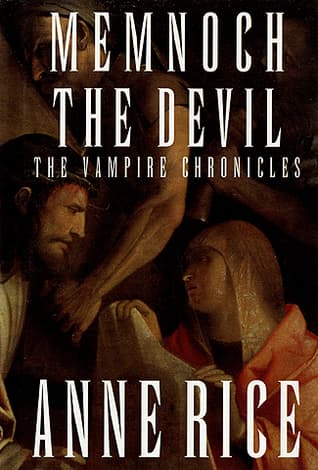
Anne Rice (1995)
Genre
Fantasy
Reading Time
450 min
Key Themes
See below
Sign in to track this book
Hunted by a mortal woman and pursued by the Devil himself, Lestat enters a spiritual battle for his soul, choosing between damnation and salvation across all creation.
Lestat de Lioncourt, growing restless with his immortal life and its moral problems, feels an unseen force pulling him. This force appears as a strong summons, which he first thinks is a delusion. But the summons grows stronger, bringing dread and anticipation. He feels a powerful entity knows him and wants him. This unease is joined by his interest in Dora, a mortal evangelist whose faith and performances captivate him, offering a brief escape from the coming confrontation.
The persistent summons ends in Lestat meeting Memnoch, a powerful, ancient being who introduces himself as the Devil. Memnoch is not the typical demon but a being of great intellect and sadness. He explains that he has watched Lestat, drawn by his mix of darkness and desire for truth. Memnoch offers something extraordinary: he wants Lestat to be his witness and share his burden. This offer immediately throws Lestat into a spiritual crisis, challenging all he thought he knew about good, evil, and the divine.
Accepting Memnoch's invitation, Lestat begins a journey through time and space. Memnoch shows him creation, the Big Bang, the formation of stars and galaxies, and life on Earth. He then takes Lestat to the afterlife, showing him a desolate Purgatory and the suffering of the damned. Lestat sees the sorrow and despair of souls trapped in these states. Memnoch explains his role as a shepherd, guiding these souls to eventual redemption, a task he says God gave him. This journey makes Lestat confront the vastness of existence and the complexities of divine justice.
During their travels, Memnoch shares his personal history, a new interpretation of biblical stories. He explains he was once an angel, a beloved son of God, who chose to descend to the material world to guide humanity. He states his 'rebellion' was not defiance but a necessary sacrifice, a way to give humanity free will and the chance to choose good over evil. He portrays God as distant, sometimes cruel, but loving, and himself as the misunderstood agent of divine will, tasked with the difficult work of salvation through trial. This narrative deeply unsettles Lestat, challenging his understanding of religious beliefs.
Memnoch brings Lestat to the gates of Heaven, the Celestial City, where he sees the divine realm's beauty and God's radiant presence. Lestat is overwhelmed by the pure light and love from the Divine. He sees angels and feels a deep sense of peace and belonging, but also his unworthiness as a vampire. He stands before God, a being of power and mystery, and for a moment, experiences a direct connection to the divine, a spiritual revelation that shakes him. This encounter leaves him awestruck and conflicted.
While Lestat is on his journey with Memnoch, Dora, the mortal evangelist, continues her work. Her faith is strong, and she becomes influential, drawing crowds with her sermons. A key event happens when she gets what she believes is the Veil of Veronica, a sacred relic with divine power. This relic becomes central to her ministry, attracting believers and skeptics. Lestat, even from his journey, knows about Dora's actions and the Veil's growing importance, seeing its potential impact on her life and the world's spiritual state. Her strong belief contrasts with Lestat's spiritual turmoil.
After seeing creation, the suffering of Purgatory, the glory of Heaven, and hearing Memnoch's defense, Lestat faces a final decision. Memnoch asks him to join his cause, to be his companion and witness in the struggle for souls, offering him a unique place in the divine plan. Lestat is torn between Memnoch's insights and the fear of aligning with the traditional 'Devil.' The implications of this choice are huge, affecting his eternal destiny and his understanding of good, evil, and God. He struggles with the weight of responsibility and the allure of purpose.
After making his decision (or not making one), Lestat returns to Earth, but changed. He bears a physical mark of his journey, stigmata on his hands, mirroring Christ's wounds, a sign of his spiritual experience. He finds himself drawn to Dora, who now has an aura of divine power from the Veil of Veronica. The Veil itself proves to be a source of spiritual energy, capable of miracles. Lestat's return, marked by his stigmata, and his meeting with Dora and the powerful Veil, combine the sacred and the profane, the divine and the vampiric.
Lestat's stigmata, along with Dora's public displays involving the Veil of Veronica, create a worldwide sensation. These events spark debate among religious leaders, scientists, and the public. Some call Lestat a saint or prophet, while others call him a blasphemer or a fraud. The Veil, in Dora's hands, seems to have genuine miraculous power, increasing the fervor. This public spectacle forces Lestat to confront the results of his journey with Memnoch and the physical sign of his spiritual trials. It also shows the fragility of human belief and the powerful influence of perceived divine intervention, putting Lestat in an unwanted spotlight.
The events surrounding Lestat's journey with Memnoch and Dora's public ministry leave a lasting impact. Lestat is forever changed, his understanding of God, the Devil, and humanity altered. While he returns to his vampiric life, he carries the burden of his cosmic revelations and the physical reminder of his stigmata. The world grapples with the implications of the miracles and the competing stories of divine and infernal influence. The book ends with Lestat, and the reader, still wrestling with the ambiguous nature of truth, faith, and existence's purpose, leaving many questions unanswered and the possibility of more spiritual journeys.
The Protagonist
Lestat undergoes a profound spiritual awakening and transformation, challenging his understanding of good and evil and emerging with a new, complex perspective on the divine.
The Antagonist/Divine Agent
Memnoch's character is revealed through his narrative and actions, establishing him as a complex, sympathetic figure rather than a purely evil one, redefining his role in the cosmic order.
The Supporting
Dora's faith and influence grow exponentially, culminating in her wielding a powerful religious relic and becoming a public figure of spiritual significance.
The Supporting
Louis remains largely consistent, serving as a grounding presence for Lestat, though he is deeply affected by the implications of Lestat's spiritual ordeal.
The Supporting
David continues his role as an observer and intellectual, providing analysis and perspective on Lestat's spiritual crisis.
The Mentioned/Divine Presence
God's character is not developed in a traditional sense, but his nature and intentions are radically reinterpreted through Memnoch's perspective, challenging conventional theological understanding.
The Supporting
Armand's deep-seated religious torment is re-ignited and challenged by Lestat's experiences, forcing him to confront his own beliefs.
The book challenges traditional definitions of good and evil, especially through Memnoch's story. Memnoch argues his 'fall' was not defiance but a divine role to give humanity free will and spiritual growth through struggle. This changes the Devil into a complex, even sympathetic figure, not pure evil. Lestat's journey through Heaven and Hell further blurs these lines, making him question if suffering is always evil and if divine love can include seemingly cruel acts. The ambiguity leaves the reader, and Lestat, to wonder if true good needs perceived evil.
“"Evil is not a thing. It is a choice, a privation, an absence. It is the refusal to serve, to love, to grow."”
Faith and doubt are central to the narrative, explored through Lestat's constant questioning, Dora's strong conviction, and Memnoch's theological arguments. Lestat, a vampire who has seen much, seeks proof and understanding, yet finds himself in a spiritual crisis without easy answers. Dora's strong faith in God and miracles provides a contrast, showing the human need for belief. Memnoch's reinterpretation of religious history makes Lestat and the reader doubt established beliefs, suggesting divine truth may be more complex than humanity has thought. The book suggests that true faith might exist with deep doubt.
“"I am the ultimate doubter, Lestat. And yet I believe. Perhaps that is the greatest faith of all."”
Memnoch's main argument is about redemption and the need for free will. He states that humanity's ability to choose, even to choose poorly, is essential for genuine spiritual growth and ultimate redemption. His role, he explains, is to provide trials that allow souls to earn their way back to God, rather than being forced into obedience. Lestat sees the suffering in Purgatory and the struggles of souls, emphasizing the difficult path to redemption. The book questions predestination, stressing the individual's power to make choices that determine their eternal fate, even if guided by a seemingly 'evil' force.
“"For what is love if not freely given? And what is good if not freely chosen?"”
Lestat's immortal life is a search for meaning and purpose, a theme that peaks in 'Memnoch the Devil.' He is tired of his aimless immortality and wants a grander story, a reason for his existence. Memnoch offers him this, presenting a cosmic drama where Lestat could play a key role as a witness. This quest for meaning extends beyond Lestat, touching on the universal human desire to understand one's place in the universe and the ultimate significance of life and death. The book suggests that purpose may be found not in definite answers, but in the ongoing struggle and the choices one makes.
“"I wanted to know why. Why all of it. Why the light, why the dark, why the suffering, why the ecstasy. Why me?"”
Memnoch's version of cosmic history may not be entirely truthful, creating ambiguity.
Memnoch himself functions as an unreliable narrator for a significant portion of the book. He presents his account of the Fall, the nature of God, and his own role in the universe with eloquence and apparent sincerity. However, Lestat, and the reader, are constantly left to wonder if Memnoch's narrative is the absolute truth, a skewed perspective, or a carefully constructed deception. This device forces the reader to critically evaluate the information presented and to question the nature of truth itself when dealing with divine or infernal entities.
Lestat's miraculous wounds, serving as a physical manifestation of his spiritual journey.
Lestat's development of stigmata – wounds mirroring those of Christ – after his journey with Memnoch is a powerful plot device. It serves as undeniable physical evidence of his extraordinary spiritual experience, making his story difficult to dismiss as mere hallucination. The stigmata also symbolize Lestat's burden, his connection to both divine suffering and his ambiguous role in the cosmic drama. It forces him into the public eye, making him a figure of both reverence and controversy, and acts as a constant reminder of his ultimate choice.
A sacred relic imbued with spiritual power, serving as a catalyst for miracles and public fervor.
The Veil of Veronica, acquired by Dora, acts as a potent symbol and plot catalyst. Historically believed to bear the image of Christ's face, in the novel it manifests as a conduit for genuine spiritual power, capable of producing miracles and inspiring mass religious fervor. Its presence elevates Dora's ministry and provides a tangible, albeit mysterious, link between the mortal world and the divine. The Veil's power forces a confrontation with the miraculous and challenges the limits of scientific explanation, intensifying the spiritual stakes for Lestat and the world.
Lestat's transportation across time, space, and the afterlife to witness creation and judgment.
The cosmic journey Lestat undertakes with Memnoch is a crucial plot device, allowing the author to present a vast, epic scope of creation and the afterlife. This journey is not merely travel; it's a direct experience of theological concepts. By witnessing the Big Bang, Purgatory, and Heaven firsthand, Lestat (and the reader) gains a visceral understanding of Memnoch's arguments and the stakes involved. It's a didactic tool that immerses the protagonist in the core philosophical questions of the novel, making the abstract concrete and profound.
“There is no God, Marius, no God but life!”
— Marius's internal struggle with faith and the nature of existence.
“Evil is the refusal to see beyond one's own pain.”
— Memnoch's explanation of the nature of evil to Lestat.
“What is love but a name for the recognition of one's own soul in another?”
— Lestat reflecting on his feelings and connections with others.
“Suffering is the sole origin of consciousness.”
— Memnoch presenting his argument for the necessity of suffering.
“Heaven is a place where you are understood.”
— Memnoch describing a fundamental aspect of Heaven.
“The greatest tragedy is to live without ever knowing why.”
— Lestat's existential musings on purpose and meaning.
“God is not a father, not a mother, not a judge. God is a mystery.”
— Memnoch challenging Lestat's conventional understanding of God.
“Every beautiful thing, Marius, is a fragment of the divine.”
— Marius appreciating beauty and its connection to the sacred.
“The Devil is merely God's most loyal servant, sent to test and to tempt.”
— Memnoch's controversial self-description and role.
“We are all merely actors in a play we do not understand.”
— Lestat feeling a lack of control and comprehension over his fate.
“To truly forgive is to abandon all hope of a better past.”
— Memnoch's profound insight into the nature of forgiveness.
“The only true immortality is to be remembered.”
— Lestat contemplating his legacy and the impact of his life.
“There is no freedom without pain, Lestat. No growth without the struggle.”
— Memnoch emphasizing the interconnectedness of suffering and progress.
“The universe is a vast, indifferent machine, and we are but cogs within it.”
— Lestat's moments of despair and nihilistic thought.
Ready to see how well you understood this book? Take our interactive quiz with 10 questions.
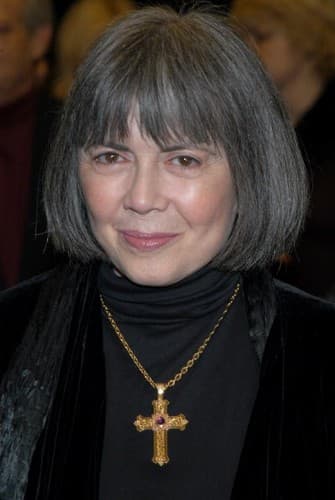
Anne Rice was an American author of gothic fiction, erotic literature, and Christian literature. She was best known for her series of novels The Vampire Chronicles. The first book became the subject of a film adaptation—Interview with the Vampire (1994).







