“When she was hungry, her stomach rumbled like a bear waking from winter sleep.”
— Describing Kaya's physical sensations of hunger.

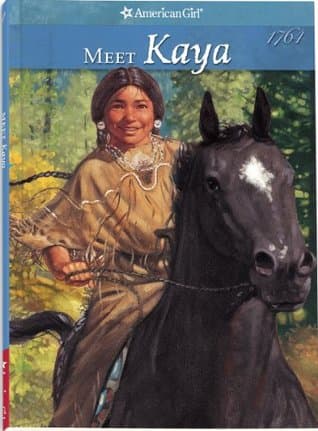
Janet Beeler Shaw (2002)
Genre
Children's / Historical Fiction / Young Adult
Reading Time
60 min
Key Themes
See below
Sign in to track this book
In the Nez Perce homeland, Kaya defies her father's advice and challenges a boy to a horse race, leading to a humbling lesson in responsibility when her brothers disappear during her youthful pride.
Kaya, a young Nez Perce girl, wakes early, wanting to ride her mare, Steps High. She hopes to race, sure that Steps High is the fastest horse in the village. Her father, a leader, sees her excitement but warns that Steps High is not yet ready for racing. He stresses patience and proper training and reminds her of reckless acts' dangers. Kaya, however, wants to prove Steps High's speed and her own skill, often ignoring her father's advice. She spends her days practicing with Steps High, imagining winning races, driven by a youthful urge to achieve her goals.
While riding Steps High, Kaya meets Badger, a boy from a nearby village known for being mischievous. Badger, seeing Kaya's pride in her horse, teases her, saying Steps High is slow compared to his pony. He challenges Kaya to a race, mocking her and her mare. Despite her father's earlier warnings about racing Steps High too soon, Kaya's pride is hurt by Badger's insults. She cannot resist the challenge and accepts it, determined to defend Steps High's honor and prove Badger wrong. This sets the stage for a critical choice.
The race between Kaya and Badger starts quickly. Kaya, focused only on winning and beating Badger, pushes Steps High to her limits. Her two younger brothers, whom she was supposed to be watching, have followed her, wanting to see the race. They trail behind, trying to keep up with the galloping horses. Kaya's attention is entirely on the competition. She does not notice her brothers or their struggle to keep pace. Her single-minded pursuit of victory overrides her responsibilities, putting her siblings in a dangerous situation.
As the race continues, Kaya and Badger ride further from the village. Kaya's competitive nature completely takes over. She urges Steps High to go even faster. In her effort to win, she loses awareness of her surroundings, especially where her younger brothers are. They fall behind, unable to match the racing horses' speed, and soon disappear from Kaya's sight. Her focus stays on Badger and the finish line, blinding her to the possible danger her brothers might be in. This shows her immaturity and lack of foresight.
Kaya, triumphant but out of breath, crosses the finish line, just beating Badger. She feels a surge of pride, having shown Steps High's speed and silenced Badger's taunts. However, her joy is short-lived. As she looks around, expecting to see her brothers cheering, she finds no sign of them. A cold wave of fear comes over her as she realizes: her brothers are gone. The excitement of victory quickly turns to dread as she understands the seriousness of her carelessness and her impulsive actions' possible results.
Panicked, Kaya immediately turns Steps High around and frantically rides back, calling her brothers' names. Her heart pounds with fear, and a heavy guilt settles on her. Every rustle in the bushes, every shadow, brings hope and then despair. The landscape, which moments before was a blur of victory, now seems vast and threatening. She blames herself for her recklessness, for ignoring her father's warnings, and most of all, for forgetting her duty to her younger siblings. The joy of winning the race is completely overshadowed by the desperate search.
After what feels like an endless, fruitless search, Kaya, tired and heartbroken, must return to the village without her brothers. Her failure weighs heavily on her. She approaches her family with a heavy heart, her face stained with tears and dust. With a shaky voice, she confesses what happened, admitting her carelessness and the impulsive race. Her parents, though worried, listen with concern and disappointment. The entire village is told, and a search party quickly forms to find the missing boys, showing the communal responsibility within the Nez Perce tribe.
The search party, including villagers and her father, goes out into the darkening land. After a tense period of searching, filled with anxiety for Kaya and her family, a shout echoes. The search party has found Kaya's brothers! They are safe, though scared and a little lost, having wandered off the path while trying to keep up. Relief washes over Kaya and the entire village. Her brothers are brought back, unharmed, to everyone's gratitude. The event shows the community's strength and the relief after a crisis.
Though her brothers are safe, the incident affects Kaya. Her friends, who saw what happened and the search, begin to call her 'Careless.' This nickname, though not mean, is a constant, painful reminder of her impulsive actions and the distress she caused. Each time she hears it, she remembers her father's warnings, her own recklessness, and the fear she felt when her brothers were lost. The nickname becomes a significant lesson, making her think about responsibility and foresight, forcing her to face her immaturity.
The 'Careless' nickname and the traumatic experience of losing her brothers change Kaya. She begins to understand her father's wisdom about patience, preparation, and responsibility. She spends more time listening to his advice and observing her elders. Her focus shifts from only proving Steps High's speed to truly caring for her mare and understanding her actions' impact. This painful lesson marks a turning point in Kaya's character, as she starts to mature and adopt thoughtfulness and accountability, moving past her initial impulsiveness.
The Protagonist
Kaya transforms from a headstrong and impulsive girl to a more thoughtful and responsible young woman, learning the value of patience and the consequences of her actions.
The Supporting
Steps High remains a constant, loyal companion, serving as the catalyst for Kaya's initial impulsive actions and eventually her growth.
The Supporting
He remains a consistent source of wisdom and support, his lessons becoming clearer to Kaya as she matures.
The Supporting
Badger's character serves as a plot device and does not undergo significant development; he remains a catalyst for Kaya's growth.
The Supporting
They remain children, their role is to be the recipients of Kaya's care and the victims of her initial carelessness, thus driving her character arc.
Kaya's story shows how impulsive choices can lead to serious consequences. Her eagerness to race Steps High, despite her father's warnings, and her quick acceptance of Badger's challenge, directly cause her to lose track of her younger brothers. The fear and guilt she feels when they are lost highlight that quick, thoughtless actions can endanger herself and those she is responsible for. This theme is central to her character's growth, and the nickname 'Careless' serves as a constant reminder of this lesson.
“A good rider knows when to wait, Kaya. Patience is a strong medicine.”
A main theme is Kaya's growing understanding of responsibility. At first, Kaya puts her desires (winning the race) before her duty to watch her younger brothers. The traumatic experience of losing them makes her face her neglect and accept her responsibilities. The story emphasizes that true maturity means recognizing and fulfilling one's duties, especially to family and community. Her journey is about learning that freedom comes with the obligation to care for others.
“You forgot your brothers, Kaya. They depend on you.”
Kaya's father often gives advice about patience and preparation, which Kaya initially ignores in her youthful enthusiasm. His warnings about Steps High not being ready and the dangers of recklessness are proven right by the race. The story shows that true strength and skill are not just about speed or immediate satisfaction, but about careful planning, understanding limits, and listening to elders' experienced guidance. Kaya's growth is marked by her eventual acceptance of these qualities.
“Steps High is fast, yes, but speed is not enough. A horse, like a person, needs time to be truly ready.”
While Kaya's mistake is personal, the response to her brothers' disappearance shows the strong sense of community within the Nez Perce tribe. When Kaya confesses, the entire village mobilizes to search for the lost boys, showing their collective care and support. This communal effort to keep its members safe reinforces the idea that individuals are not alone in their struggles and that shared responsibility is a foundation of their society. The relief when the boys are found is a shared village experience.
“We will find them, Kaya. We will search together.”
Kaya's father's warnings predict the consequences of her actions.
Kaya's father repeatedly warns her about Steps High not being ready for racing and the dangers of recklessness. These warnings serve as clear foreshadowing that Kaya's impulsive actions will lead to negative outcomes. The reader is primed to anticipate trouble, making Kaya's subsequent mistake of losing her brothers a direct fulfillment of the father's earlier wisdom. This device effectively builds tension and underscores the theme of the importance of heeding advice.
A constant reminder of Kaya's mistake and a catalyst for her growth.
The nickname 'Careless' that Kaya earns from her friends after her brothers are lost is a powerful plot device. It acts as a continuous external reminder of her past mistake, forcing her to confront her actions and the consequences. This persistent label prevents her from easily forgetting the incident and serves as a catalyst for her personal growth, pushing her towards greater responsibility and thoughtfulness. It symbolizes the lasting impact of her actions on her reputation and self-perception.
The central event that triggers Kaya's mistake and subsequent learning.
The impromptu race between Kaya and Badger is the pivotal plot device around which the entire story revolves. It is the direct cause of Kaya's distraction and the subsequent loss of her brothers. The race serves as a powerful symbol of Kaya's impulsive nature and her initial disregard for her father's wisdom. By placing her in a high-stakes, competitive situation, the race exposes her character flaws and ultimately leads to the critical lesson she must learn about responsibility and patience.
“When she was hungry, her stomach rumbled like a bear waking from winter sleep.”
— Describing Kaya's physical sensations of hunger.
“The wind was a playful spirit, tugging at her braids, whispering secrets in her ears.”
— Kaya experiencing the natural world around her.
“Her grandmother often said that a good story was like a warm fire on a cold night.”
— Kaya reflecting on her grandmother's wisdom about storytelling.
“A true leader listens to the whispers of the wind and the wisdom of the elders.”
— Kaya's understanding of leadership.
“Every rock, every tree, every stream had a spirit, and it was important to honor them.”
— Kaya's spiritual connection to the natural environment.
“Fear was a shadow that could grow large if you let it, but it could also be chased away by courage.”
— Kaya contemplating the nature of fear and courage.
“The river was a living thing, always moving, always changing, yet always the same river.”
— Kaya observing the constancy and change in nature.
“She learned that patience was a hunter's best friend.”
— Kaya learning a valuable lesson about hunting.
“The stars were like tiny holes poked in the blanket of night, letting the light of other worlds shine through.”
— Kaya gazing at the night sky.
“To forget where you came from was like a salmon forgetting the stream where it was born.”
— Kaya's thoughts on the importance of heritage.
“Even the smallest seed held the promise of a mighty tree.”
— Kaya's grandmother's teaching about potential.
“Her heart beat like a drum, keeping time with the rhythm of the earth.”
— Kaya feeling a deep connection to the natural world.
“Kindness was a gift that never ran out, the more you gave, the more you had.”
— Kaya's understanding of the nature of kindness.
“The past was like a river, flowing behind them, but always shaping the land ahead.”
— Kaya reflecting on the influence of history.
Ready to see how well you understood this book? Take our interactive quiz with 10 questions.

Dan Gemeinhart
4.5

Kate O'Hearn
4.4

Jeanne Birdsall
4.4

Jen Wang
4.4

Wendelin Van Draanen
4.3

John Marsden
4.3

Chris Van Allsburg
4.3
Jennifer A. Nielsen
4.2