“I mean, I'm not saying it's all sunshine and roses, but it's not all doom and gloom either.”
— Greg reflecting on life and his general outlook.

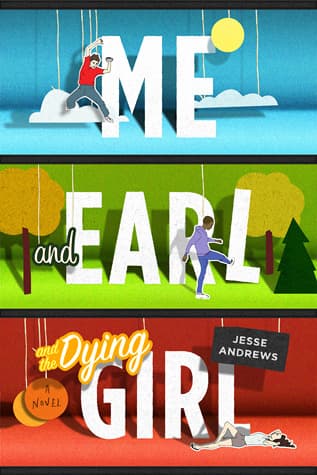
Jesse Andrews (2012)
Genre
Young Adult
Reading Time
295 min
Key Themes
See below
Sign in to track this book
A self-deprecating film nerd and his only friend must face the difficult realities of dying and real connection when they try to make a last, terrible movie for a classmate.
Greg Gaines, a senior at Schenley High School in Pittsburgh, has mastered blending in. He acts friendly with different groups without belonging to any, a strategy he calls 'blending.' His only real friend is Earl Jackson, with whom he has a long, somewhat difficult friendship. They spend most of their free time in Earl's room, making amateur, often terrible, parodies of classic films, using their neighborhood and themselves as the entire crew and cast. Their creative work is a private world, unknown to others, including their families. Greg is happy with this, believing it is the safest way to get through high school without trouble or emotional ties.
Greg's anonymous world breaks when his mother tells him Rachel Kushner, a girl he barely knew from Hebrew school, has acute myeloid leukemia. Feeling obligated and guilty, Greg's mother insists he visit Rachel. Greg hates the idea, finding it incredibly awkward to face illness and offer comfort. He tries to refuse, but his mother's persistence and his inability to defy her force him to go. This command starts events that change Greg's isolation and bring him face-to-face with real human connection and suffering.
Greg's first visit to Rachel's house is very awkward. He tries to make small talk, but his efforts are forced. Rachel, initially guarded and annoyed, is also dealing with her illness. Despite the uncomfortable silences and Greg's self-critical thoughts, he keeps visiting, driven by his mother and a growing, unspoken sense of duty. Slowly, their interactions change. They start watching movies together, and Rachel, despite her illness, finds Greg's humor and film parodies somewhat amusing, forming a tentative and unexpected bond.
Reluctantly, Greg introduces Earl to Rachel. To Greg's surprise, Earl and Rachel get along well, mainly because they both like movies and Earl is more direct and less self-conscious. Earl's honesty and lack of pretense, along with Rachel's growing comfort, ease the tension. The three start spending more time together, watching films or just talking. This new dynamic challenges Greg's idea of his friendship with Earl, as their private filmmaking world now includes Rachel, making their bond more complex and emotionally significant than Greg had wanted or experienced.
As Rachel's condition worsens, her mood drops. Greg's English teacher, Mr. McCarthy, an eccentric and supportive person, suggests Greg and Earl make a film for Rachel. The idea is daunting for Greg, who usually makes parodies for their own fun, not for an audience, especially one facing a terminal illness. However, encouraged by Earl and wanting to help Rachel, they begin this project. They decide to create a unique, personal film, different from their usual spoofs, to lift Rachel's spirits and give her something meaningful. This project becomes a central focus, a creative outlet with emotional urgency.
Making the film for Rachel is full of challenges. Greg struggles with the artistic direction, torn between his usual irreverent style and the need to create something sincere for a dying friend. He experiences creative blocks, self-doubt, and immense pressure. Earl, always practical, provides encouragement and technical help, but even he sees the unique difficulty of this project. The film becomes a symbol of Greg's struggle with vulnerability and his fear of emotional commitment. He puts his anxieties and his changing feelings for Rachel into the project, even while trying to keep his emotional distance.
Rachel's health declines significantly. Chemotherapy treatments become increasingly debilitating, causing great pain without clear recovery. After much thought and difficult talks with her parents, Rachel decides to stop treatment. This choice weighs heavily on Greg and Earl, who see her physical and emotional decline. Rachel's decision casts a shadow over their lives and adds urgency to their film project, as they realize time is running out to finish it for her.
As Rachel's condition worsens, she goes to the hospital. Greg and Earl rush to finish the film, working tirelessly. With Mr. McCarthy's help, they set up a projector and screen in Rachel's hospital room. A small group of friends and family, including Rachel's parents, Mr. McCarthy, and Madison, Greg's former crush, gather for the screening. The film, a personal and heartfelt tribute, is shown to a weakened Rachel. Despite her physical state, Rachel watches the film, a quiet, profound moment shared by everyone, marking the end of Greg and Earl's artistic and emotional journey.
Soon after the film screening, Rachel Kushner dies. Her death deeply affects Greg, who, despite his defenses, had grown to care for her. He attends her funeral, feeling sadness, guilt, and confusion. Rachel's death forces Greg to face loss and the depth of his emotions, something he had avoided. He deals with his grief in his typical awkward, internal way, struggling to process the void left by Rachel's absence and the meaning of their intense, short friendship.
After Rachel's death, Greg visits her empty room. He finds Rachel's journal, which gives him a powerful and unexpected look into her thoughts. Reading her entries, Greg learns that Rachel found comfort and joy in his and Earl's friendship, and she appreciated their film. She also reveals her struggles and fears, and how their quirky friendship helped her. This discovery gives Greg a sense of closure and confirms that his efforts, however awkward, truly mattered to Rachel. It also makes him re-evaluate his own self-perception and his impact on someone else's life.
Inspired by Rachel's journal and her friendship, Greg starts thinking about his future more seriously. He had been aimless, with no plans for college or after high school. However, Rachel's courage and their shared experience spark a change in him. He begins working on his college application essay, choosing to write about Rachel and the film. This shows Greg's willingness to leave his comfort zone, acknowledge his emotions, and pursue a meaningful path, a step in his personal growth.
As Greg moves forward, he reflects on Rachel's impact. He understands that their friendship, though brief, changed his view on connection, vulnerability, and the purpose of his filmmaking. He realizes that while he may never lose all his awkwardness, he no longer wants to be invisible. Rachel's legacy lives on in his new willingness to engage with the world and create art that is both personal and meaningful. He acknowledges that the "Worst Film Ever Made" was the most important film he ever created, not for its quality, but for the human connection it made.
The Protagonist
Greg transforms from an emotionally detached, socially avoidant teenager into someone capable of genuine connection and confronting grief, ultimately finding purpose in his art.
The Supporting
Earl remains a steadfast and supportive friend, his quiet wisdom and loyalty providing a stable anchor for Greg's emotional turmoil.
The Supporting
Rachel faces her illness with increasing vulnerability and courage, finding solace and joy in an unexpected friendship during her final months.
The Supporting
Mr. McCarthy consistently offers guidance and affirmation, subtly pushing Greg towards self-discovery without imposing a direct change.
The Supporting
She remains a consistent, if sometimes irritating, force in Greg's life, her persistence ultimately leading to his growth.
The Supporting
Madison moves from a distant crush to a supportive, empathetic figure, demonstrating unexpected kindness.
The Supporting
He consistently provides a calm, eccentric presence, offering quiet support and an unconventional perspective to Greg.
The Mentioned
Denise navigates the heartbreaking reality of her daughter's illness, her grief and love a constant backdrop.
The novel captures the cringeworthy and often funny awkwardness of adolescence, especially when facing deep emotions. Greg's thoughts are full of self-deprecating humor and social anxieties, reflecting the common teenage struggle with complex feelings. His first talks with Rachel are examples of this, filled with forced small talk and internal panic. However, this awkwardness slowly leads to real connection, showing that meaningful relationships can form even through discomfort. The film project itself is an awkward, yet heartfelt, expression of their growing bond.
“I was having a really hard time maintaining eye contact, because I was thinking about how I was having a really hard time maintaining eye contact.”
A main theme is how young people confront illness, death, and grief. Rachel's leukemia and her decision to stop treatment force Greg and Earl to deal with dying personally. Greg's initial avoidance shows a common human reaction to overwhelming sadness. The book explores different stages of grief—denial, anger, sadness—and how individuals, especially teenagers, process such loss. Rachel's death helps Greg grow emotionally, making him acknowledge his feelings and life's impermanence.
“You can't really control when you're going to die. You can only control how you live. That's what I learned. That's what I'm learning.”
Filmmaking is not just a hobby for Greg and Earl; it is their main way of expressing themselves and connecting. Their parodies of classic films let them process the world humorously. When they make a film for Rachel, art changes from private fun into a tool for empathy, comfort, and legacy. The 'Worst Film Ever Made' becomes the most important, not for its technical quality, but for its intention and emotional impact on Rachel and Greg. It shows how creative acts can offer comfort, communicate unspoken feelings, and create lasting memories.
“Making movies was the only thing I was really good at, and it was the only thing that made me feel like a person.”
Greg spends much of high school 'performing' different versions of himself to fit into social groups, making himself invisible. He avoids being authentic and emotionally involved. His friendship with Rachel, however, makes him drop these pretenses. Rachel, exposed by her illness, shows authenticity. Through their interactions, Greg learns the value of being his true, awkward self, instead of constantly trying to manage others' perceptions. The film for Rachel is a raw, authentic expression of his developing feelings, a departure from his usual parodies, marking a step toward his own authenticity.
“I was really good at being a chameleon. I could blend in anywhere. It was my superpower.”
Greg's internal monologue is filled with awkward humor and self-criticism.
The story is told entirely from Greg's perspective, characterized by his highly self-aware, neurotic, and often hilarious internal monologue. This device allows readers to directly experience Greg's social anxieties, his constant overthinking, and his unique blend of intelligence and insecurity. It makes him an immediately relatable and sympathetic character, even as he tries to distance himself from emotional engagement. The narration also provides a distinctive voice that colors every event with Greg's peculiar worldview, enhancing the comedic and tragic elements of the story.
Greg frequently addresses the reader directly, commenting on the story itself.
Greg often breaks the fourth wall, directly addressing the 'reader' and commenting on the conventions of storytelling, how he's telling the story, or what the reader might expect. He might contradict himself, revise a statement, or explicitly state that he's trying to make himself look good. This device reinforces Greg's self-conscious nature and his unreliable narrator persona, making the reader an active participant in his internal struggles and adding another layer of humor and intellectual engagement to the narrative.
The creation of absurd, low-budget film parodies as a central activity.
Greg and Earl's hobby of making terrible, yet sincere, parodies of classic films serves as a crucial plot device. Initially, it's a way for them to escape and connect. When they decide to make a film for Rachel, this device transforms into a metaphor for their evolving emotions and their efforts to provide comfort. The films become a vehicle for their creativity, their friendship, and ultimately, a poignant tribute, demonstrating the power of art to convey feelings that words sometimes cannot.
A posthumous discovery that reveals Rachel's true feelings and impact.
Rachel's journal, discovered by Greg after her death, acts as a powerful plot device for revelation and emotional closure. It provides an unfiltered glimpse into Rachel's perspective, validating Greg's efforts and showing him the true depth of their friendship from her side. This device allows Rachel's voice to resonate beyond her death, offering Greg the understanding and motivation he needs to move forward and embrace his future, fundamentally changing his self-perception and understanding of their shared experience.
“I mean, I'm not saying it's all sunshine and roses, but it's not all doom and gloom either.”
— Greg reflecting on life and his general outlook.
“It was like she was a character in a movie and I was just the guy holding the boom mic.”
— Greg describing his relationship with Rachel.
“I have no idea what I'm doing. I'm just making it up as I go along, like everyone else.”
— Greg's internal monologue about navigating adolescence and life.
“The thing about life is, it just keeps going. And you have to keep going with it.”
— Greg's realization about the continuous nature of life, even after loss.
“I'm not good at being a person.”
— Greg's self-deprecating humor about his social awkwardness.
“Being a teenager is like being a character in a movie you don't understand, and everyone else seems to have read the script.”
— Greg's analogy for the confusion of being a teenager.
“I was just a kid who made really bad movies with his best friend. And now I was a kid who made really bad movies with his best friend, and one of them was dying.”
— Greg's internal reflection on the impact of Rachel's illness.
“It's not a sad story. It's just a story about a girl who dies, and two guys who try to make a movie for her.”
— Greg's opening statement, setting the tone for the narrative.
“The worst thing about knowing that someone is going to die is that you can't stop them from dying.”
— Greg's painful realization about the helplessness in the face of terminal illness.
“I don't really have any friends. I mean, I have Earl, but he's more of a co-worker.”
— Greg's typical self-description of his social life.
“Some people are just meant to be supporting characters.”
— Greg's self-perception as a secondary figure in others' lives.
“The only way to make sense of something is to make something out of it.”
— Greg's philosophy on coping with difficult experiences through creation.
“I was just a vessel for other people's expectations.”
— Greg feeling pressured by his parents and others to be something he's not.
“If you're going to die, you might as well do it with some dignity.”
— Earl's blunt advice to Rachel, reflecting his pragmatic nature.
“It’s hard to be a person when you don’t know what kind of person you are.”
— Greg's internal struggle with self-discovery during a challenging time.
Ready to see how well you understood this book? Take our interactive quiz with 10 questions.

Biography coming soon.