“Perhaps the world is not real. Perhaps it is all just a dream of God.”
— Early philosophical musings by the narrator, questioning the nature of reality.

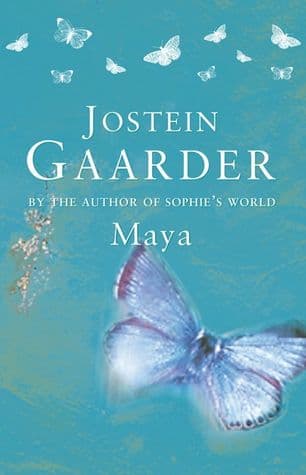
Jostein Gaarder (2005)
Genre
Fantasy / Mystery / Philosophy
Reading Time
700 min
Key Themes
See below
Sign in to track this book
On a remote Fijian island, a grieving author, an estranged biologist, and an enigmatic Spanish couple unravel a philosophical mystery that blurs the lines between art, identity, and the universe, all while a joker steps out of his deck.
John Spooke, a melancholic English author, travels to the remote Fijian island of Taveuni, hoping to escape his grief after his wife, Anne's, death. He settles into a quiet bungalow, intending to write and reflect. Haunted by memories and loss, John is drawn to the island's beauty but remains emotionally distant. His initial days are marked by solitude and a struggle to find meaning without Anne. He feels guilt and regret, believing he could have done more to prevent her passing, and views his journey as a form of penance or an attempt to restart his life in a different environment.
During his stay, John observes a beautiful and devoted Spanish couple, Ana and Jose. Their deep love for each other is palpable and, at times, unsettling. Ana resembles Goya's Maja paintings, a detail that captures John's artistic and intellectual curiosity. Jose, equally absorbed in Ana, seems to exist only in relation to her. John is simultaneously drawn to their powerful connection and disturbed by its intensity, contrasting it with his own recent loss and Anne's absence. Their presence on the small island adds a mysterious element to John's solitary existence.
Frank Andersen, a Norwegian evolutionary biologist, arrives on Taveuni, carrying his own intellectual and personal baggage. Estranged from his wife, Vera, Frank is preoccupied with questions about consciousness, evolution, and the universe. He believes that life on Earth originated from a 'seed' from another dimension or reality, a concept he calls 'Maya.' Frank's scientific rigor is intertwined with a philosophical quest for understanding existence beyond biological processes. He seeks evidence or an experience to validate his radical theories and provide answers to life's fundamental mysteries, a search that often alienates him from conventional scientific thought.
John and Frank, both outsiders on the island, gradually become friends. Their conversations quickly turn to philosophical and scientific topics, with John's literary sensibility complementing Frank's scientific perspective. They both become increasingly intrigued by Ana and Jose, whose otherworldly devotion and Ana's resemblance to the Maja paintings spark their shared curiosity. John, the author, sees a story unfolding, while Frank, the biologist, seeks a deeper, perhaps metaphysical, explanation for their existence and connection. They begin to discuss reality, love, and the universe, each finding a sounding board in the other.
A strange and recurring phenomenon begins to manifest: the Joker card from a deck of playing cards inexplicably appears in various places, often at significant moments. It might be found tucked into a book, lying on a table, or even seemingly materializing out of nowhere. This random occurrence becomes a significant symbolic motif for both John and Frank. For John, the Joker represents the unexpected, the unpredictable element in life, and perhaps the absurdity of existence. For Frank, it hints at a deeper, hidden order or a 'meta-reality' that influences the physical world, aligning with his theories about the universe's origins and the concept of Maya. It acts as a catalyst for their philosophical discussions.
Ana, seemingly out of the blue, begins to tell John and Frank a captivating and increasingly fantastical story. Her narrative is rich with philosophical depth, drawing parallels between her own experiences, the Maja paintings, and existence itself. She speaks of 'the game' and 'the players,' hinting at a reality beyond the one they perceive. Her stories are not mere fiction; they are delivered with a conviction that suggests they might be literal truths from another dimension or a deeper layer of reality. John is fascinated by the literary potential, while Frank is drawn to the philosophical implications, seeing echoes of his 'Maya' theories.
Ana explicitly connects herself to the Maja paintings, not merely as a look-alike, but implying a deeper, almost mystical bond. She speaks of the paintings as portals or representations of a 'meta-reality,' and explains the significance of the Joker as a key figure in this larger cosmic game. According to Ana, the Joker represents consciousness itself, the element that steps out of the predefined rules and observes or influences the game of life. Her explanations challenge John and Frank's understanding of reality, forcing them to reconsider the boundaries between art, life, and the universe. The Maja's gaze, she suggests, is not just a portrait, but an invitation to a deeper truth.
As Ana's narrative unfolds, it becomes clear that Jose is not merely her human lover but something more profound. Ana reveals that Jose is, in essence, a manifestation of her own love, a projection of her desire for connection and meaning within the 'game' of existence. He exists because she loves him, and his presence is linked to her consciousness. This revelation impacts John, who is grappling with the loss of his own beloved Anne, and Frank, who sees it as a powerful illustration of his theories about consciousness shaping reality. Jose's existence shows the power of love and imagination.
Ana elaborates on her central philosophy: life itself is a grand, cosmic 'game' played out across various dimensions. Humanity, she suggests, are the 'players' within this game, bound by certain rules and physical laws. The Joker, however, represents the meta-consciousness, the part of existence that can step outside the game, observe it, and even influence it. This concept resonates with Frank's scientific and philosophical quest, as it offers a framework for understanding the universe's mysteries. For John, it provides a new lens through which to view his grief and the meaning of his own life, suggesting that even loss is part of a larger, intricate pattern.
Through Ana's stories and the shared intellectual journey with Frank, John begins a personal transformation. The abstract philosophical concepts help him to reframe his understanding of death, love, and existence. He starts to process his grief for Anne not as an end, but as a part of the larger, ongoing 'game.' The idea that love can manifest and transcend physical reality offers him solace and a new perspective on his connection with his deceased wife. He finds renewed purpose in his writing, now viewing it as a means to explore these deeper truths, rather than merely an escape from sorrow.
Frank Andersen experiences an intellectual and spiritual epiphany. Ana's narrative, particularly her explanations of the Joker and the 'meta-reality,' validates his 'Maya' theory — the idea that our perceived reality is but one layer of existence, influenced by a deeper, underlying consciousness. He begins to see how his scientific quest for the origins of life aligns with Ana's philosophical framework. His estrangement from Vera, his wife, also gains new context as he understands the profound, almost cosmic, nature of human connection. Frank feels closer to understanding the 'seed' of life and consciousness he has long sought.
As abruptly and mysteriously as they appeared, Ana and Jose vanish from Taveuni. Their departure leaves John and Frank with a lingering sense of wonder, confusion, and deep intellectual and emotional shifts. The island returns to its quiet state, but the two men are irrevocably changed. They are left to ponder what they experienced — was it a shared hallucination, an elaborate philosophical play, or a genuine encounter with beings from another dimension? The mystery of Ana and Jose's existence and disappearance solidifies their newfound perspectives on reality, love, and the universe, leaving them to integrate these lessons into their lives.
Inspired by his experiences on Taveuni, John Spooke begins to write a new book. This novel is not just a recounting of the events, but a creative exploration of Ana's philosophical ideas, the significance of the Joker, and the nature of reality. He incorporates the conversations with Frank, his own grief, and the enigmatic presence of Ana and Jose. His writing becomes a way to process and share the revelations he encountered, turning his personal sorrow into a universal inquiry. This act of creation signifies his healing and his embrace of a more expansive view of existence, continuing the 'game' through his art.
Frank Andersen returns to his scientific and philosophical work with renewed vigor and a radically altered perspective. The encounter with Ana and Jose, and the validation of his 'Maya' theory, fuels his research. He now seeks to bridge the gap between conventional biology and the concept of a meta-reality, striving to articulate his understanding of consciousness and evolution in a way that incorporates the insights gained on Taveuni. His quest for the 'seed' of life is no longer purely scientific but deeply philosophical, recognizing the interconnectedness of all things and the mystery of existence that transcends empirical observation alone.
The Protagonist
John transforms from a grieving, isolated man into someone who finds renewed meaning in life and writing, reconciling with his loss by embracing a broader understanding of existence.
The Protagonist
Frank's theories are validated and expanded through his encounter with Ana, leading him to a more profound and holistic understanding of consciousness and reality.
The Enigmatic Figure/Catalyst
Ana serves as a static, yet profoundly influential, character whose narratives guide the protagonists' transformations.
The Enigmatic Figure
Jose's static, yet profound, existence serves as a living illustration of Ana's philosophical concepts.
The Mentioned Character
Her memory evolves from a source of crippling grief to a catalyst for John's understanding of enduring love and consciousness.
The Mentioned Character
Her role is largely static, representing Frank's personal life from which he is detached.
The novel explores the idea that our perceived reality might be just one layer of existence, a 'game' influenced by a deeper consciousness. Frank Andersen's 'Maya' theory posits that life originates from a meta-reality, a concept echoed and expanded by Ana's narratives. She describes the universe as a grand game with 'players' (humanity) and a 'Joker' (meta-consciousness) that can step outside the rules. This theme challenges conventional scientific and philosophical views, suggesting that consciousness might precede or even create reality, rather than being merely a product of it. The mysterious appearance of the Joker card reinforces this idea of a hidden, playful force shaping events.
“Perhaps what we call reality is only a dream that a higher consciousness is dreaming.”
John Spooke's grief over his wife Anne's death is a central emotional anchor. The novel explores how love can transcend physical death and how understanding a broader reality can help process loss. Ana and Jose's relationship, particularly the revelation that Jose is a manifestation of Ana's love, illustrates the enduring power of connection. John's journey from despair to a renewed sense of purpose is driven by the philosophical insights he gains, suggesting that love, like consciousness, might not be confined to individual lives but is part of a larger, eternal 'game.' His ability to write about his experiences signifies his transcendence of grief.
“Love is not just a feeling; it is a creative force that can conjure reality.”
The dynamic between John, the author, and Frank, the biologist, highlights the novel's exploration of how science and philosophy can complement each other in the search for truth. Frank's scientific theories about evolution and consciousness are grounded in observation but reach for philosophical explanations, while John's literary sensibility allows him to engage with abstract concepts through narrative. Ana's stories bridge this gap, offering a mythological framework that satisfies both their intellectual curiosities. The novel argues that neither pure empiricism nor pure abstract thought can fully explain the universe; rather, a synthesis of both is necessary to grasp the 'mystery of the universe.'
“Science maps the game, but philosophy asks who the players are, and if there's a Joker.”
Storytelling is not merely a narrative device but a central theme. Ana's tales are not just entertainment; they are presented as a means to convey truths about reality. The Maja paintings, to which Ana bears a striking resemblance, serve as a visual 'story' that hints at deeper meanings and connections across time and dimensions. John, as an author, finds healing and purpose in crafting his own narrative, transforming his personal tragedy into a universal inquiry. The novel itself, through its layered structure and meta-narrative, demonstrates how art can be a vehicle for exploring complex philosophical ideas and shaping our understanding of the world.
“Every story we tell is a glimpse into a larger story that is constantly unfolding.”
A recurring symbol of the unexpected, meta-consciousness, and the rules of the 'game'.
The Joker card inexplicably appears throughout the novel, often at pivotal moments or in significant locations. It serves as a potent symbol with multiple layers of meaning. For Frank, it represents the unpredictable element in the universe, hinting at a 'meta-reality' or consciousness that can step outside the conventional 'rules' of existence, much like the Joker in a card game can be any card or no card. For Ana, it embodies the ultimate observer or player in the cosmic 'game' of life. Its mysterious appearances underscore the novel's central theme of a reality more complex and playful than we perceive, constantly reminding characters and readers of the hidden forces at play.
A visual and thematic link to art, identity, and the blurring of reality and representation.
Ana's striking resemblance to the model in Goya's famous Maja paintings is a crucial plot device. It immediately establishes a sense of mystery and timelessness around her character. This resemblance creates a bridge between art and life, suggesting that art can capture or even manifest deeper truths. It prompts John's initial fascination and intellectual curiosity, linking Ana to historical and artistic legacies. More profoundly, it becomes a metaphor for the idea that identities can transcend time and that certain archetypes or forms of consciousness can reappear across different eras, hinting at the cyclical nature of the 'game' of existence and the interconnectedness of all things.
A layered narrative structure where characters tell stories that reflect and inform the main plot.
The novel employs a meta-narrative structure, featuring stories within stories. Ana's fantastical tales about the 'game' of life, the players, and the Joker are not just anecdotes; they are presented as profound philosophical explanations that directly inform the main plot and the characters' understanding of their own reality. John, as an author, eventually begins to write his own book about his experiences, creating another layer of storytelling. This device blurs the lines between author, narrator, and character, and between fiction and reality, reinforcing the theme that life itself is a grand narrative. It encourages readers to question the nature of truth and the power of narrative to shape perception.
A remote, idyllic setting that acts as a liminal space for profound encounters and philosophical revelations.
The remote Fijian island of Taveuni serves as more than just a backdrop; it is a crucial plot device, functioning as a liminal space. Its isolation and idyllic beauty create an atmosphere conducive to introspection and the suspension of disbelief. Away from the distractions of the modern world, John and Frank are open to the extraordinary. The island's natural, untouched quality contrasts with the complex philosophical and metaphysical discussions, suggesting a return to fundamental questions about existence. It acts as a stage where the ordinary rules of reality can be bent, allowing for the mysterious appearance of Ana and Jose and the unfolding of their enigmatic narrative. Taveuni becomes a crucible for transformation.
“Perhaps the world is not real. Perhaps it is all just a dream of God.”
— Early philosophical musings by the narrator, questioning the nature of reality.
“The greatest mystery is not that we are in a world, but that we are in a world with a universe.”
— A reflection on the vastness and complexity of existence beyond our immediate perception.
“Every person is a universe, a world in themselves, with their own sun, moon, and stars.”
— Emphasizing the individuality and inner complexity of each human being.
“We are all storytellers, and our lives are the stories we tell.”
— Highlighting the narrative aspect of human existence and self-creation.
“The search for meaning is perhaps the most human of all endeavors.”
— Underlining a fundamental philosophical drive behind human actions and thoughts.
“To truly see, one must first learn to look beyond what is immediately visible.”
— A lesson in perception, suggesting a deeper level of understanding is required.
“Time is not a river, but a vast ocean, with currents and tides that carry us in unexpected directions.”
— A metaphorical description of time, suggesting its non-linear and unpredictable nature.
“The world is full of signs, if only we know how to read them.”
— Implying that there are hidden messages and patterns in the world waiting to be interpreted.
“Perhaps forgetting is just another way of remembering, a different path to the same truth.”
— A paradoxical thought on memory and its elusive nature.
“What we call reality is often just a consensus, a shared dream we all agree to believe in.”
— Challenging the conventional understanding of reality as objective.
“Every question leads to another, and the journey is more important than the destination.”
— Emphasizing the process of inquiry and philosophical exploration.
“The universe does not answer our questions directly, but it provides us with the tools to find our own answers.”
— Suggesting that understanding comes from within, rather than external revelation.
“Love is the ultimate mystery, for it binds us to the world and to each other, yet defies all logic.”
— A profound statement on the nature and power of love.
“We are all travelers in a strange land, and the only map we have is our own curiosity.”
— Portraying human existence as a journey of exploration driven by curiosity.
Ready to see how well you understood this book? Take our interactive quiz with 10 questions.
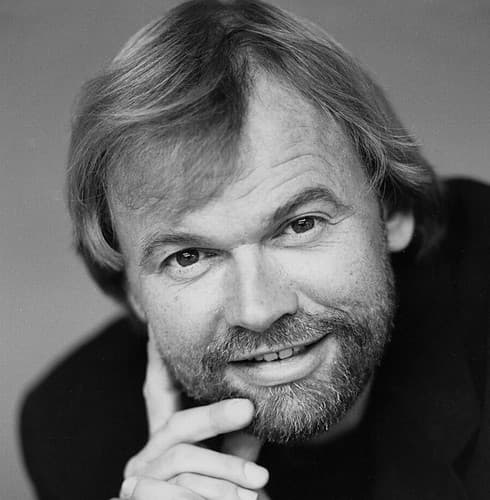
Jostein Gaarder is a Norwegian intellectual and author of several novels, short stories, and children's books. Gaarder often writes from the perspective of children, exploring their sense of wonder about the world. He often utilizes metafiction in his works and constructs stories within stories. His best known work is the novel Sophie's World: A Novel About the History of Philosophy (1991). It has been translated into 60 languages; there are over 40 million copies in print.







