“England has always been disinclined to accept the divinity of love, and to-day she is more disinclined than ever.”
— Reflecting on societal attitudes towards love and passion.

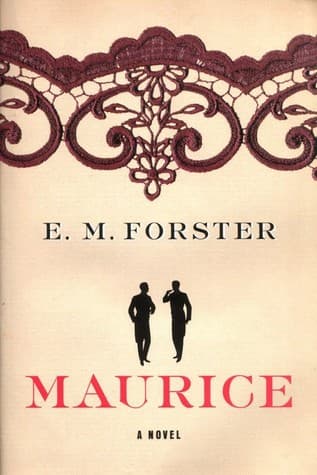
Genre
Historical Fiction / Romance
Reading Time
250 min
Key Themes
See below
Sign in to track this book
In a society that demands conformity, a young man's journey of unrequited love becomes a defiant embrace of his true sexual identity, risking everything for the freedom to love outside the lines of Edwardian expectation.
Maurice Hall grows up in a comfortable, middle-class English family, navigating public school and preparing for Cambridge University. He is at first somewhat naive and conventional, though with an underlying restlessness. At Cambridge, he befriends George Ansell, a more intellectual student. Maurice's life changes when he meets Clive Durham, a charismatic and cultured fellow undergraduate. Their relationship quickly deepens, moving beyond friendship into a strong emotional and intellectual bond. Clive introduces Maurice to a world of literature, art, and philosophical discussions, and Maurice is increasingly drawn to Clive in a way he doesn't fully understand but intensely feels. Their intimacy develops, marked by shared confidences and a growing, unspoken affection that challenges Maurice's ideas of love and companionship.
Maurice and Clive's relationship at Cambridge becomes the central focus of Maurice's life. Their bond is deeply emotional and intellectual, characterized by long conversations, shared literary passions, and a strong sense of mutual understanding. Clive, though clearly affectionate towards Maurice, maintains a strict boundary against physical expression, viewing their love as purely Platonic. Maurice, while at first accepting of this, feels a growing, unfulfilled physical desire for Clive. Their time together is idyllic, filled with secret meetings and shared intimacies that only they understand. However, societal pressures and the unspoken rules of their time weigh heavily on Clive, who, despite his feelings for Maurice, begins to feel he must conform to heterosexual expectations. This internal conflict sets the stage for the eventual end of their intense connection.
After their time at Cambridge, Clive Durham, influenced by societal expectations and a fear of scandal, abruptly decides to end his intense relationship with Maurice. He declares that their youthful affection was a phase and that he must now conform to a respectable, heterosexual life. This decision is a shock and betrayal for Maurice, who had invested all his emotional energy into their bond. Clive then announces his engagement to Anne Woods, a conventional young woman, and soon marries her, settling into a life of country gentry and political aspirations. Maurice is heartbroken and bewildered, struggling to comprehend Clive's sudden change of heart and the loss of the most significant relationship he has ever known. This period is a turning point for Maurice, plunging him into despair and a deep sense of isolation.
Devastated by Clive's rejection and marriage, Maurice falls into a deep depression. He struggles to reconcile his own desires and identity with the societal norms that Clive has embraced. Feeling isolated and believing there is something inherently wrong with him, Maurice seeks help for what he perceives as a 'condition'. He consults Dr. Barry, a family physician, who offers little understanding and suggests a change of scenery. Later, Maurice visits Mr. Ducie, a hypnotist, hoping for a 'cure' for his homosexual feelings. While Ducie's methods are ineffective in changing Maurice's core identity, the sessions do help Maurice confront and articulate his feelings, albeit to himself. This period is marked by Maurice's desperate attempts to conform and suppress his true nature, leading to increased internal conflict and a sense of deep loneliness.
Following his failed attempts at a 'cure' and still reeling from Clive's abandonment, Maurice tries to immerse himself in a conventional life. He takes up a position as a stockbroker in London, a respectable but unfulfilling career. He spends his leisure time engaging in activities deemed appropriate for a young man of his class, such as sports and social gatherings, but finds little joy or genuine connection. He occasionally visits the Durhams at Penge, their country estate, where he observes Clive's seemingly contented heterosexual life with a mix of longing and resentment. Despite his outward conformity, Maurice remains deeply unhappy and unfulfilled, constantly aware of the gap between his inner self and the life he is expected to lead. His discontent grows, signaling that he cannot truly suppress his true nature.
Maurice visits Penge, Clive Durham's country estate, where he encounters Alec Scudder, the young, working-class under-gamekeeper. One night, after a melancholic evening observing Clive's domestic life, Maurice feels a strong longing for companionship. In a moment of intense loneliness, he silently calls out for someone to be with him. Later that night, Alec Scudder, having observed Maurice, climbs through Maurice's window and into his bed. This unexpected and physically intimate encounter is a turning point for Maurice. It is his first truly physical experience of love and desire, and it shatters his previous notions of what a loving relationship could be. Unlike Clive, Alec is uninhibited and direct, offering Maurice a raw, passionate connection that is both shocking and deeply satisfying.
Following their initial encounter, Maurice is thrown into a state of confusion and exhilaration. He is thrilled by the physical and emotional release he experienced with Alec and terrified by the social implications of such a relationship. Alec, at first appearing somewhat aloof, begins to make demands. He writes a letter to Maurice, effectively blackmailing him for money and threatening to expose their relationship if Maurice doesn't comply. This threat forces Maurice to confront the stark realities of his situation: the vast social gap between him and Alec, and the severe legal and social penalties for homosexuality in Edwardian England. Maurice is torn between his growing feelings for Alec and his fear of ruin, leading to a period of intense anxiety and difficult decisions.
Panicked by Alec's blackmail, Maurice travels to London to seek legal advice under a false pretense, trying to understand the potential consequences of his situation without revealing his personal involvement. The solicitor confirms the severe penalties for 'gross indecency.' Overwhelmed and desperate, Maurice then returns to Dr. Barry, his family physician, and for the first time, openly confesses his homosexual nature and his recent encounters. Dr. Barry, though at first shocked, is sympathetic but unhelpful in a practical sense, reinforcing the societal view that Maurice's feelings are a 'problem' to be managed or suppressed. This confession, however, is a significant step for Maurice, as it represents his first open acknowledgment of his identity to another person, though one who cannot offer a solution.
Maurice, having prepared to flee England to escape Alec's blackmail and the threat of exposure, arranges a final meeting with Alec at the British Museum. He expects Alec to demand money and threaten him further. However, at their meeting, Alec reveals a change of heart. He confesses that his previous demands were born out of fear, insecurity, and a desperate desire to keep Maurice's attention, not out of malice. Alec admits that he genuinely loves Maurice and wants to be with him. He tells Maurice that he had planned to emigrate to Argentina, but now he wants Maurice to join him. This revelation completely disarms Maurice, transforming his fear into hope and confirming the depth of Alec's feelings.
After Alec's confession at the British Museum, Maurice returns to Penge, where he finds Alec waiting for him at the boathouse. In an emotional and intimate conversation, they solidify their commitment to each other. Alec expresses his desire to abandon his plans for Argentina and instead stay in England with Maurice, whatever the risks. Maurice, now fully embracing his love for Alec and rejecting the societal expectations that had previously constrained him, agrees to forge a life with Alec. They discuss the practicalities and dangers of their choice, acknowledging the need for secrecy and the challenges they will face. This scene represents Maurice's ultimate decision to choose love and authenticity over conformity and societal approval, marking his full acceptance of his identity and his future with Alec.
Maurice visits Clive Durham one last time at Penge. Clive, having overheard whispers and perhaps sensing a change in Maurice, attempts to engage him in a conversation about his future, still assuming Maurice will follow a conventional path. Maurice, however, is no longer the heartbroken, uncertain man Clive once knew. He bravely confronts Clive, telling him about his relationship with Alec and the happiness and fulfillment he has found. He explains that he has chosen a life true to himself, even if it means societal ostracization. Clive, now a respectable country gentleman, is bewildered and uncomfortable, unable to comprehend or accept Maurice's radical choice. This final encounter shows Maurice's transformation and his liberation from Clive's influence and societal expectations.
The novel concludes with Maurice and Alec Scudder having disappeared from conventional society. They have chosen to live together, forging their own path outside the rigid class structures and homophobic laws of Edwardian England. Their future is uncertain and dangerous, but they are united by a deep love and a shared commitment to authenticity. Maurice has found true happiness and self-acceptance, no longer bound by the expectations of his family or the ghost of his past with Clive. The 'greenwood' ending symbolizes their escape into a more natural, less constrained existence, a hidden life where their love can flourish. Their departure represents a radical act of defiance and a hopeful vision of love's triumph over societal prejudice.
The Protagonist
Maurice transforms from a confused, heartbroken young man seeking a 'cure' for his identity into a self-assured individual who embraces his true nature and chooses love over societal acceptance.
The Antagonist/Catalyst
Clive begins as an unconventional, passionate young man who then retreats into societal conformity, sacrificing his true desires for respectability and a conventional life.
The Love Interest
Alec evolves from an enigmatic, potentially opportunistic figure to a devoted and courageous lover, willing to sacrifice his conventional future for a life with Maurice.
The Supporting
Ansell remains largely static, serving as a foil to Maurice's emotional journey.
The Supporting
Dr. Barry remains static, a symbol of the medical and social establishment's inability to comprehend or help Maurice.
The Mentioned
Ducie's role is brief and functional, facilitating Maurice's internal process rather than changing him.
The Supporting
Anne's character remains static, serving as a symbol of conventional female roles.
The Mentioned
Lascelle's role is static, serving as a background figure to highlight the social dangers of homosexuality.
Maurice's central journey is his quest for a love that aligns with his true self in a society that condemns his desires. He first experiences an intense, though unphysical, love with Clive, which, despite its emotional depth, ultimately proves untrue due to Clive's fear and conformity. This heartbreak forces Maurice to confront his identity and the societal pressures to 'cure' himself. His eventual relationship with Alec, a working-class man, is raw, physical, and deeply fulfilling, allowing Maurice to fully embrace his homosexual identity and find a love that is true and uninhibited, even if it means living outside conventional society. This theme is evident in Maurice's desperate search for a 'cure' and his eventual rejection of it to pursue a life with Alec, as seen in the boathouse scene.
““He was not to be the first man to love another man. He was not to be the last. He had found his home.””
The novel portrays how rigid class structures influence and complicate relationships, particularly same-sex ones. Maurice, from the middle class, and Clive, from the upper class, at first navigate their relationship within the intellectual bubble of Cambridge, where class distinctions are somewhat blurred. However, Clive's eventual conformity is heavily tied to maintaining his upper-class status and respectability. The relationship between Maurice and Alec clearly highlights class divides; Alec is a working-class gamekeeper, and their love defies not only sexual norms but also the deeply ingrained social hierarchy. Their decision to live together signifies a radical rejection of class boundaries, as they choose love over the security and expectations associated with their social strata, evident in Alec's initial blackmail and their eventual understanding.
““England has always been disinclined to accept human nature.””
Forster illustrates the suffocating homophobia and conformity of early 20th-century England. Homosexuality was illegal and deeply taboo, leading to severe social exclusion, legal penalties, and personal torment for individuals like Maurice. Clive's decision to abandon Maurice and marry is a direct consequence of this societal pressure. Maurice's attempts to seek a 'cure' from doctors and hypnotists show the era's ignorance and prejudice. The constant threat of exposure and blackmail (as at first perpetrated by Alec) highlights the precarious existence of gay men. The novel critiques this repression, ultimately championing individual freedom and love over societal dictates, culminating in Maurice and Alec's choice to live a hidden life together, outside the reach of these oppressive norms.
““It was not his fault that he was an outcast. It was the fault of the society that made him one.””
A significant theme is the distinction between purely intellectual/emotional (Platonic) love and love that includes physical intimacy. Maurice's relationship with Clive is at first presented as a deeply intellectual and emotional bond, which Clive insists must remain unphysical. While strong, this lack of physical expression leaves Maurice unfulfilled and contributes to his heartbreak. In contrast, Maurice's relationship with Alec is characterized by immediate and uninhibited physical passion, which develops into deep emotional connection. This contrast suggests that for Maurice, true love and self-acceptance require the integration of both emotional and physical intimacy, and that a love that denies the body is ultimately incomplete, as seen in Maurice's despair after Clive's rejection and his subsequent fulfillment with Alec.
““The love of man for man is a thing, in England, that can exist only as a secret.””
Maurice's narrative traces a clear path from youthful naivety to a deep understanding of himself and the world. At Cambridge, he is innocent of his true desires, which are awakened by Clive. His subsequent heartbreak and confusion force him to confront the harsh realities of societal prejudice and his own identity. The encounter with Alec, at first shocking and dangerous, ultimately leads him to a more mature and authentic form of love and self-acceptance. Maurice's journey is one of shedding illusions and embracing a difficult truth, moving from a conventional upbringing to a radical, self-chosen path, symbolizing a coming-of-age that involves not just growing up but growing into one's true self, as evidenced by his final confrontation with Clive.
““He had been through Hell and come out on the other side. He was not afraid of anything now.””
Symbolizes a hidden, natural refuge outside societal norms.
The 'Greenwood' motif, drawn from English folklore (like Robin Hood), represents a natural, unconventional space where individuals can live freely, outside the restrictive laws and social expectations of established society. In 'Maurice,' it symbolizes the hidden, unconventional life that Maurice and Alec choose together. It is a place of freedom, authenticity, and love, away from the judgmental eyes of Edwardian England, embodying their radical defiance and the hope for a future where their love can thrive, even if it must remain secret. It signifies their escape and the establishment of their own moral and social order.
Used to convey pivotal plot points, emotional shifts, and threats.
Letters play a crucial role in advancing the plot and revealing character motivations. Clive's letter to Maurice, ending their relationship, is a devastating turning point. Alec's initial blackmail letter to Maurice creates intense suspense and forces Maurice to confront the legal dangers of his situation. These written communications serve to externalize internal conflicts, solidify decisions, and create irreversible plot developments, often carrying more weight and finality than spoken words. They also highlight the dangers of written evidence in an era where homosexuality was illegal.
Represents boundaries, transgression, and access to intimacy.
The window serves as a powerful symbol, particularly in the pivotal scene where Alec Scudder climbs through Maurice's window at Penge. This act of transgression breaks down both physical and social barriers, allowing for unexpected intimacy. It represents Alec's directness, his disregard for conventional entrances, and his bold initiation of a physical relationship that Maurice desperately craved but dared not pursue. The window symbolizes a gateway to a different kind of love and life, one that is outside the 'proper' and conventional, leading Maurice to his ultimate self-acceptance.
Represents society's futile attempts to 'cure' homosexuality.
The consultations with Dr. Barry and Mr. Ducie (the hypnotist) serve as a plot device to illustrate the societal and medical ignorance surrounding homosexuality in the early 20th century. Maurice's desperate search for a 'cure' highlights the immense pressure he feels to conform. These figures, though well-meaning in their own way, ultimately fail to change Maurice's fundamental nature, underscoring the futility of trying to 'fix' an inherent identity. Their presence emphasizes the isolation and lack of understanding faced by homosexual individuals during this period, and Maurice's eventual rejection of their 'help' marks his path to self-acceptance.
“England has always been disinclined to accept the divinity of love, and to-day she is more disinclined than ever.”
— Reflecting on societal attitudes towards love and passion.
“I was a boy, and you were a boy, and we were both afraid.”
— Maurice recalling his early, unexpressed feelings for Clive.
“If it was right, it was right, and if it was wrong, it was wrong, but it was not a joke.”
— Maurice's internal struggle with the seriousness of his feelings for Clive.
“He was not a gentleman. He was not a lady. He was not a man. He was not a woman. He was a human being.”
— Maurice's evolving understanding of Alec Scudder, transcending social labels.
“The only possible life for him was in the open, with the sun and wind and rain to help him.”
— Maurice's yearning for a free, unconstrained existence.
“It was impossible for him to do anything but love.”
— Maurice's surrender to the overwhelming power of his feelings for Alec.
“Pity, if it were not allied to love, was a cruel thing.”
— Maurice reflecting on the nature of compassion without genuine affection.
“England has always been disinclined to accept the divinity of love, and to-day she is more disinclined than ever.”
— A recurring theme about England's resistance to passionate love.
“He had wanted to be normal, but he had found his normality in abnormality.”
— Maurice's realization that his true self lies outside societal norms.
“The world was a prison, but he had found a key.”
— Maurice's sense of liberation after finding love with Alec.
“He knew that he was not alone, that there were others like him, and that they had a right to exist.”
— Maurice's growing awareness of a community of homosexual men.
“He was an Edwardian, and the Edwardians were not interested in love.”
— A societal observation about the reserved nature of the Edwardian era.
“He could not be happy without love, and he could not love without happiness.”
— Maurice's internal conflict and dependence on love for his well-being.
“It came to him that he had been born in the wrong age, and for a moment he felt an intense bitterness.”
— Maurice's frustration with the restrictive social norms of his time.
Ready to see how well you understood this book? Take our interactive quiz with 10 questions.

Edward Morgan Forster was an English author, best known for his novels, particularly A Room with a View (1908), Howards End (1910) and A Passage to India (1924).







