BookBrief
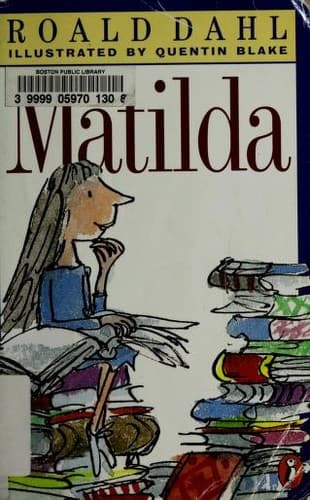
Matilda cover
Archivist's Choice

Matilda

Roald Dahl (1988)

Genre

Fantasy / Children's / Young Adult

Reading Time

240 min

Key Themes

See below

Track Your Reading

Sign in to track this book

A brilliant young girl named Matilda, armed with an extraordinary mind and a knack for clever mischief, navigates a world of neglectful parents and a tyrannical headmistress. She discovers the power within herself to champion justice and find her true home.

Synopsis

Matilda Wormwood is an intelligent and telekinetic young girl born to crass, neglectful parents. At only five-and-a-half, she is a prodigious reader and mathematician, but her parents see her as a nuisance. When she starts school at Crunchem Hall, she meets the kind Miss Honey, who recognizes Matilda's genius. She also meets the terrifying, child-hating headmistress, Miss Trunchbull, who rules the school with physical abuse. Matilda uses her intelligence and developing telekinetic powers to play pranks on her parents and, eventually, to defend her classmates and Miss Honey from Trunchbull's cruelty. She learns about Miss Honey's tragic past: Trunchbull, her aunt, stole her inheritance and forced her into poverty. Matilda plans to fix this. During a lesson, Matilda uses her powers to make chalk write a message on the blackboard, seemingly from Miss Honey's deceased father. It demands Trunchbull return the stolen property. Terrified, Trunchbull faints and flees, never to be seen again. Miss Honey reclaims her home and inheritance, and Matilda, free from Trunchbull's tyranny, advances to a higher class. When Matilda's criminal parents attempt to flee the country, Matilda asks to stay with Miss Honey, who joyfully adopts her, giving Matilda the loving family she always deserved.
Reading time
240 min
Difficulty
Easy
Pacing
Fast
Mood
Whimsical, Empowering, Humorous, Darkly Comedic
✓ Read this if...
You love stories about intelligent, resourceful children triumphing over adversity and wicked adults, with a touch of magic.
✗ Skip this if...
You dislike exaggerated villains or stories where children are in peril, even if they ultimately win.

Plot Summary

A Prodigy's Unloved Childhood

Matilda Wormwood is born into a family of crude and self-absorbed individuals: her father, Harry, a crooked used-car salesman; her mother, Zinnia, obsessed with bingo and her looks; and her dim-witted older brother, Michael. From a young age, Matilda shows great intelligence, teaching herself to read by age three and reading many books from the public library. Her parents disdain and ignore this. They ignore her intellectual needs and often verbally abuse her, calling her names and dismissing her accomplishments. Matilda's early life involves much neglect, yet she finds comfort and escape in books, developing a sharp mind and an independent spirit.

Matilda's Early Acts of Retribution

Frustrated by her parents' constant belittling and lack of appreciation, Matilda starts to find clever ways to get back at them. Her first prank involves secretly replacing her father's hair tonic with her mother's platinum blonde dye, which turns Harry's hair an alarming yellow-white. Later, she borrows a talking parrot from a friend and hides it up the chimney, convincing her superstitious family that their house is haunted. These early acts show Matilda's growing sense of justice and her ability to outsmart her dull parents, giving her some satisfaction in her otherwise dreary home life.

Entering Crunchem Hall Primary School

At five and a half, Matilda attends Crunchem Hall Primary School. She is placed in the lowest class, taught by the gentle Miss Jennifer Honey. Miss Honey immediately recognizes Matilda's exceptional intellect, discovering she can read fluently and perform complex multiplication. However, the school is run by the tyrannical, child-hating headmistress, Miss Agatha Trunchbull, a former Olympic hammer-thrower known for her brutal punishments and physical abuse of students. Miss Trunchbull's intimidating presence makes life a constant terror for the children and even for the teachers.

Miss Trunchbull's Reign of Terror

Miss Trunchbull's cruelty is clear in various incidents. She forces Bruce Bogtrotter to eat an entire enormous chocolate cake as punishment for stealing a single slice, then smashes the plate over his head. She grabs a girl named Amanda Thripp by her pigtails and hurls her across the playground. Matilda is horrified by these displays of power and injustice, feeling a growing sense of outrage and a desire to see the children protected. These events show Matilda that Miss Trunchbull is a truly evil force that needs to be stopped.

Matilda's First Display of Telekinesis

During a particularly difficult class, Miss Trunchbull questions Lavender, a classmate, about placing a newt in her water jug. Though Lavender confesses, Trunchbull accuses Matilda, ignoring her pleas of innocence. In a fit of intense anger and frustration at the injustice, Matilda stares intently at the water glass on Miss Trunchbull's desk. To her astonishment, and to Miss Trunchbull's terror, the glass tips over and spills the newt onto the headmistress. This unexpected event reveals Matilda's telekinetic abilities, a power she initially struggles to understand but quickly realizes could be a strong tool.

Matilda Confides in Miss Honey

After the newt incident, Matilda tells Miss Honey about her ability to move objects with her mind. Miss Honey, though at first skeptical, believes Matilda and is impressed by her gift. Recognizing Matilda's unique situation and the lack of support she receives at home, Miss Honey invites Matilda to her small, poor cottage. This visit changes their relationship, making their bond deeper and allowing Matilda to see the difficult reality of Miss Honey's living conditions. This further makes Matilda want to help her beloved teacher.

Miss Honey's Tragic Story

During their visit, Miss Honey shares her tragic life story with Matilda. She says her father, Magnus, a kind doctor, died mysteriously when she was young. Her cruel aunt, Miss Trunchbull, then became her legal guardian, abusing her for years and forcing her into servitude. Miss Trunchbull also changed the will, stealing Miss Honey's rightful inheritance, including her father's beautiful house and her monthly salary, leaving Miss Honey in poverty, living in a dilapidated cottage. Matilda is heartbroken by Miss Honey's story and feels a strong sense of injustice, deciding to correct the wrongs done to her teacher.

The Plan and the Message

Determined to help Miss Honey, Matilda practices her telekinetic abilities in secret, improving her control. She then plans a daring act. During a particularly terrifying lesson where Miss Trunchbull is tormenting the children, Matilda waits for the right moment. Using her powers, she makes a piece of chalk rise from the blackboard tray and write a message on the blackboard. The message, seemingly from the ghost of Magnus, Miss Honey's father, demands that Miss Trunchbull return Miss Honey's house and money, threatening bad consequences if she refuses. The message names Miss Trunchbull as a 'murderer' and a 'thief'.

Trunchbull's Downfall and Miss Honey's Triumph

The message on the blackboard, delivered with a chilling supernatural air, completely terrifies Miss Trunchbull. Believing it to be a genuine message from her deceased brother-in-law, Magnus, whom she had likely murdered, she faints in front of the entire class. Upon regaining consciousness, she flees Crunchem Hall in a panicked state and is never seen again. The next day, the police investigate, and Miss Honey's father's will is found, proving Miss Honey is the rightful heir. Miss Honey moves back into her childhood home, and her salary is restored, finally freeing her from poverty and fear.

A New Family and a Happy Ending

Matilda's family, the Wormwoods, are soon caught for Harry's illegal car dealings. To escape the police, they decide to flee the country to Spain. As they are about to leave, Matilda desperately asks if she can stay with Miss Honey, explaining that her parents do not truly care for her. Miss Honey, recognizing Matilda's need for a loving home and seeing her as the daughter she always wanted, readily agrees. With her parents' indifferent permission, Matilda is adopted by Miss Honey. Matilda thrives in her new, supportive environment, where her intelligence is cherished, and she finally finds the loving family she always deserved.

Principal Figures

Matilda Wormwood

The Protagonist

Matilda evolves from a neglected child using pranks for self-preservation to a powerful agent of justice, ultimately finding a loving family where her gifts are celebrated.

Miss Jennifer Honey

The Supporting

Miss Honey transforms from a timid, impoverished victim to a liberated and empowered woman, reclaiming her inheritance and finding happiness as Matilda's mother.

Miss Agatha Trunchbull

The Antagonist

Miss Trunchbull's reign of terror culminates in her public humiliation and terrified flight, never to be seen again, bringing justice to Miss Honey and the school.

Harry Wormwood

The Supporting

Harry Wormwood remains static in his unpleasantness, ultimately fleeing the country to escape the law, leaving Matilda behind without a second thought.

Zinnia Wormwood

The Supporting

Zinnia Wormwood remains unchanged in her superficiality, ultimately abandoning Matilda without regret as she flees the country with her husband.

Michael Wormwood

The Mentioned

Michael remains a minor, static character, merely part of the family that flees.

Mrs. Phelps

The Supporting

Mrs. Phelps provides early, crucial support for Matilda's intellectual development, her role concluding once Matilda starts school.

Lavender

The Supporting

Lavender's role is primarily to be a friend and catalyst for Matilda's powers.

Bruce Bogtrotter

The Supporting

Bruce's ordeal serves as a vivid demonstration of Trunchbull's cruelty, uniting the children in silent support.

Themes & Insights

The Power of Knowledge and Imagination

Matilda's intelligence and love for reading are central to her character and her ability to overcome challenges. Books give her an escape from her dismal home life and give her knowledge that far surpasses her age. Her imagination allows her to devise clever pranks and, later, to understand how to use her unique powers. This theme shows how education and a curious mind are strong tools for empowerment and self-discovery, directly contrasting with the ignorance and vulgarity of the Wormwood family and Miss Trunchbull.

''The books transported her into new worlds and introduced her to amazing people who lived exciting lives. She travelled all over the world while sitting in her little room in an English village.'

Narrator

Justice and Retribution

A main theme is Matilda's sense of justice and her determination to correct wrongs. From her early pranks against her parents, like the superglue on her father's hat or the parrot in the chimney, to her confrontation with Miss Trunchbull, Matilda acts to get retribution. She seeks justice not only for herself but, more importantly, for Miss Honey and the other children tormented by Miss Trunchbull. Her telekinetic powers become the ultimate tool for achieving this justice, showing that even the smallest individuals can challenge powerful oppressors.

''It was her strong belief that when a grown-up was nasty to a child, that child had every right to be nasty back. The grown-ups had had their turn. It was the children's turn now.'

Narrator

Family and Belonging

The novel explores what true family means beyond biological ties. Matilda is born into a family that neglects, abuses, and fails to appreciate her. Her biological parents are shallow and self-absorbed, providing no emotional or intellectual support. In contrast, Miss Honey, her teacher, offers the love, understanding, and encouragement that Matilda craves. The story ends with Matilda finding her true family with Miss Honey. This emphasizes that a loving, supportive environment is more important than blood relation for a child's development and happiness. This theme celebrates chosen families and the impact of genuine care.

''And for the first time in her life, Matilda felt that she was with someone who truly understood her.'

Narrator, referring to Miss Honey

Childhood Innocence vs. Adult Tyranny

Roald Dahl clearly contrasts the vulnerability and goodness of children with the often corrupt and abusive power of adults. Miss Trunchbull shows adult tyranny, using her authority and physical strength to terrorize the children of Crunchem Hall. Matilda, despite her intelligence, represents the potential for children to resist and overcome such oppression. The novel criticizes adults who fail their responsibilities to protect and nurture children, choosing instead to inflict fear and cruelty. It supports the idea that children, even without conventional power, can challenge and defeat oppressive adult figures.

''All grown-ups were once children—although few of them remember it.'

Narrator, opening line of the book

Plot Devices & Literary Techniques

Telekinesis

Matilda's supernatural ability to move objects with her mind.

Matilda's telekinetic power is a fantastical element that serves as the ultimate tool for justice in the story. Initially discovered accidentally out of intense anger and frustration at Miss Trunchbull's injustice during the newt incident, Matilda practices and hones this ability in secret. It allows her to directly confront and defeat Miss Trunchbull, a physical force she could not otherwise overcome. This device elevates the narrative from a simple tale of a clever child to one where the oppressed gains a magical, decisive advantage over their oppressor, making the impossible possible.

The Chokey

A terrifying, claustrophobic punishment device used by Miss Trunchbull.

The Chokey is a narrow, cupboard-like cell lined with broken glass and nails, invented and used by Miss Trunchbull to punish misbehaving children. It functions as a symbol of Miss Trunchbull's extreme cruelty and the oppressive atmosphere she creates at Crunchem Hall. The mere threat of being sent to the Chokey instills terror in the students, highlighting the extent of Trunchbull's power and the vulnerability of the children. It serves to underscore the injustices Matilda is fighting against and makes Trunchbull's eventual downfall all the more satisfying.

Books and Reading

A symbol of knowledge, escape, and intellectual liberation for Matilda.

Books are not just a hobby for Matilda; they are her lifeline and her primary source of education and comfort. In a home devoid of love and intellectual stimulation, books transport her to other worlds and provide her with a vast store of knowledge. They symbolize her intelligence, her independence, and her ability to transcend her circumstances. The library and Mrs. Phelps serve as safe havens, contrasting sharply with the ignorance of her parents. This device emphasizes the transformative power of literature and learning.

Magnus's Ghostly Message

A fabricated supernatural message used by Matilda to terrorize Miss Trunchbull.

Matilda uses her telekinetic powers to make chalk write a message on the blackboard, seemingly from the ghost of Miss Honey's deceased father, Magnus. This 'ghostly' message is a brilliant plot device that leverages Miss Trunchbull's hidden guilt and superstition against her. It provides a plausible (within the story's fantastical framework) and terrifying reason for Trunchbull to flee, rather than a direct, physical confrontation. This method allows Matilda to achieve justice for Miss Honey in a way that is both clever and uniquely suited to her powers and Trunchbull's character flaws.

Critical analysis

Notable Quotes

So Matilda’s strong young mind continued to grow, nurtured by the voices of all those authors who had sent their books out into the world like ships on the sea. These books gave Matilda a hopeful and comforting message: You are not alone.

Matilda finds solace and knowledge in books, which become her escape from her neglectful family.

Never do anything by halves if you want to get away with it. Be outrageous. Go the whole hog.

Matilda's father, Mr. Wormwood, gives dishonest advice about his used car business.

I'm right and you're wrong, I'm big and you're small, and there's nothing you can do about it.

Miss Trunchbull bullies a student, Matilda, asserting her power in a cruel manner.

The books transported her into new worlds and introduced her to amazing people who lived exciting lives.

Describing how reading opens up new experiences for Matilda, enriching her imagination.

Sometimes Matilda longed for a friend, someone like the kind, courageous people in her books.

Matilda feels lonely and wishes for companionship similar to the characters she reads about.

You can do it, you can do it, you can do it.

Matilda encourages herself while practicing her telekinetic powers to overcome challenges.

A girl who can do things like that is a girl worth watching.

Miss Honey remarks on Matilda's extraordinary abilities and potential.

The Trunchbull was not a person you could argue with. She was like a steamroller.

Describing the intimidating and unstoppable nature of the headmistress, Miss Trunchbull.

If you are good, life is good.

Miss Honey shares a simple, hopeful philosophy with Matilda about morality and happiness.

It's a funny thing about mothers and fathers. Even when their own child is the most disgusting little blister you could ever imagine, they still think that he or she is wonderful.

Narrator comments on parental love and bias, contrasting with Matilda's neglectful parents.

Matilda felt as though she had touched something that was not quite of this world, something magical.

Matilda experiences the wonder of her newfound telekinetic powers for the first time.

The nice thing about being a child is that you don't have to be a grown-up.

Reflecting on the freedom and innocence of childhood, a theme throughout the book.

I have never been able to understand why children are so disgusting.

Miss Trunchbull expresses her disdain for children, highlighting her cruel nature.

Matilda decided that she would have to do something about it. She would have to punish them.

Matilda resolves to use her intelligence and powers to stand up against injustice from adults.

Quiz

Test Your Knowledge

Ready to see how well you understood this book? Take our interactive quiz with 10 questions.

10
Questions
~5
Minutes
?
Best Score

Key Questions (FAQ)

The story follows Matilda Wormwood, a five-and-a-half-year-old genius with telekinetic powers, as she navigates life with neglectful parents and battles the tyrannical school principal Miss Trunchbull. She uses her intelligence and newfound abilities to defend her kind teacher Miss Honey and ultimately finds a loving home with her.

About the author

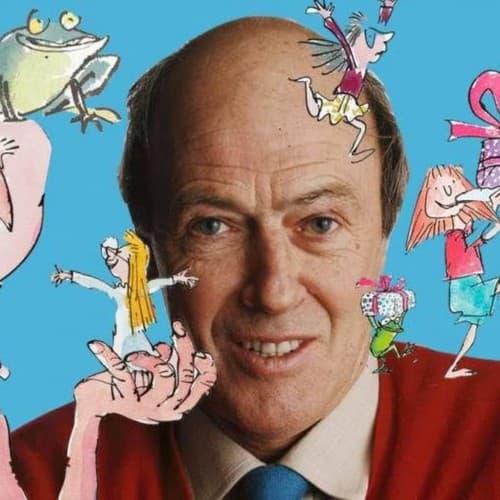
Roald Dahl

Roald Dahl was a British popular author of children's literature and short stories, a poet, and wartime fighter ace. His books have sold more than 300 million copies worldwide. Dahl has been called "one of the greatest storytellers for children of the 20th century".