“On Monday, when I woke up, everything was fine. But then my teacher, Mrs. Fibonacci, said, "You know, you can think of almost anything as a math problem."”
— The opening line, setting up the entire premise of the book.

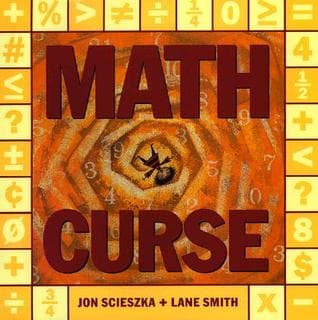
Jon Scieszka (1995)
Genre
Children's / Mystery
Reading Time
10 min
Key Themes
See below
Sign in to track this book
A young girl's ordinary day transforms into an hilariously perplexing mathematical gauntlet, forcing her to outwit a relentless 'Math Curse' before she's completely divided, subtracted, and multiplied into a muddle.
On Monday morning, Mrs. Fibonacci, the math teacher, points at her and says, "You know, almost everything in life is a math problem." This statement immediately starts a flood of mathematical thinking in the young girl's mind. Her breakfast becomes a problem of fractions, her clothes turn into combination puzzles, and her bus schedule is analyzed for time. The world around her, from the number of cookies she wants to eat to the division of marbles among friends, is suddenly and constantly seen as a math problem, to her growing frustration and confusion.
At school, the math curse gets worse. In English class, she counts words in a poem, then letters in each word, leading to a complex total. History class presents problems of timelines and distances. Science class involves calculating water displacement. Even art class is not safe, as she tries to figure out how many squares she can draw on paper. Lunchtime becomes dividing a pizza, and gym class is about calculating angles for kicking a ball. Every interaction, every lesson, is seen through math, leaving her feeling overwhelmed and tired.
The curse does not lift when school ends. Walking home, she calculates steps to her house and her walking speed. Her allowance becomes a complex budget problem, and her chores involve measuring and dividing. Even her attempts to relax are stopped; reading a book turns into counting pages, and playing with toys involves shapes and arrangements. The constant mental math leaves her feeling tired and defeated. She complains that she cannot enjoy anything without a math challenge, making her home life as stressful as school.
Dinner provides no escape from the Math Curse. Her parents present new challenges: how many peas are on her plate, how much spaghetti she can eat, and how to divide a cake into equal slices. Seating arrangements become a problem of order, and even the number of forks and spoons needs counting. She is so busy with these calculations that she struggles to simply enjoy her meal or talk normally. Dinner, usually a time for relaxation, is just another challenge of math puzzles she must solve, further showing how widespread the curse is.
As night falls, she hopes for rest, but the Math Curse has taken over her. She tries to count sheep to sleep, but the sheep become complex fractions, decimals, and algebra. Her dreams are filled with shapes, number sequences, and logic puzzles. She sees herself trapped in a world where every object and action is a number challenge. Sleep becomes impossible as her mind races through endless calculations. The curse has taken over her subconscious, making restful sleep impossible and pushing her to the edge of exhaustion.
After a sleepless night filled with math nightmares, she wakes up feeling defeated. She is tired, frustrated, and almost crying. The world continues to present itself as endless problems: how many minutes until she has to get up, how many clothes she has, how many steps to the bathroom. She feels trapped in a never-ending cycle of calculations, unable to find a moment of peace or simplicity. The curse has become unbearable, and she longs for a way out, a moment when she can just exist without everything being a math problem.
As she lies in bed, completely fed up, she looks at her pillow. She notices its shape – a rectangle. Then she wonders if she can turn it into a triangle. This simple, hands-on thought process, moving beyond abstract numbers to physical manipulation, changes something in her mind. Instead of just calculating, she begins to visualize and experiment. This small act of creative problem-solving, using a different kind of math thinking, offers a subtle glimmer of hope that there might be a way to navigate the curse, rather than just be consumed by it.
Inspired by her pillow realization, she starts to approach the overwhelming math problems differently. Instead of just seeing them as burdens, she begins to see them as puzzles to be solved. She uses logic, estimation, and even some humor to tackle the challenges. She realizes that some problems have many solutions, and some do not need a precise answer. By actively working with the problems and finding her own methods, she starts to gain control. The curse, which once felt like an oppressive force, now feels like a challenge she can meet head-on, leading to a breakthrough.
Through her new problem-solving strategies, she finally manages to 'solve' the ultimate math problem: the curse itself. She realizes that while math is everywhere, it does not have to be an overwhelming burden. She learns to appreciate the patterns and logic without letting them consume her. The world gradually returns to normal, or at least, her perception of it does. She can still see the math, but it no longer dominates her every thought. The constant numerical barrage stops, and she can enjoy simple things again, having learned a valuable lesson about perspective and critical thinking.
The next morning, Tuesday, she wakes up to a normal day. Breakfast is just breakfast, her clothes are just clothes, and the bus is just the bus. The constant math problems have stopped. She is no longer tormented by calculations. However, the experience has left her with a new understanding. She still sees the mathematical foundations of the world, but now it is an interesting observation rather than a curse. She has learned that math is a tool, not a tormentor, and she approaches her day with a new appreciation for both simplicity and the hidden complexities of life.
Just as she believes she is finally free, her English teacher, Ms. Demeanor, points at her and states, "You know, almost everything in life is an English problem." This unexpected twist suggests that the 'curse' is not inherent in math itself, but in how one's mind chooses to see and interpret the world based on a main idea. It implies that while the math curse is broken, she (and perhaps the reader) is now open to seeing the world through a new, equally widespread, lens, showing the power of perspective and suggestion.
The Protagonist
She transforms from a passive victim of the math curse into an active problem-solver, ultimately breaking free by changing her approach to the challenges.
The Supporting
Her role is static; she acts as the instigator but does not undergo personal development.
The Supporting
Their role is static, serving to provide more mathematical challenges for the protagonist.
The Mentioned
Her role is static, serving as a symbolic 'next step' for the protagonist's perceptual journey.
The most prominent theme is how math is in nearly every part of daily life, often unnoticed until pointed out. The protagonist's 'curse' exaggerates this reality, turning everyday tasks like eating breakfast or getting dressed into complex calculations. This theme encourages readers to see the mathematical structures and patterns that support their world, from fractions in food to geometry in building shapes, as seen when her world becomes a series of numerical problems after Mrs. Fibonacci's comment.
“You know, almost everything in life is a math problem.”
The story shows how a simple change in perspective can greatly alter one's experience. Her initial reaction to the math curse is dread and frustration. However, when she shifts her mindset from being a victim to being a problem-solver, the 'curse' turns into solvable puzzles. This theme is clear when she realizes she can change her pillow into different shapes, prompting a new approach to the problems, and eventually breaking the spell. The book suggests that challenges can be overcome by changing one's approach and attitude.
“I was so tired and frustrated, I just wanted to scream. But I couldn't. That would be a math problem too.”
At its core, the book explores problem-solving. She faces endless problems, forcing her to develop and use various strategies to cope. From simple addition and subtraction to more complex geometry and logic, she must use her critical thinking skills. The resolution of the curse is not about math disappearing, but about her learning to effectively tackle the problems, whether through direct calculation, estimation, or creative visualization. This theme is central to her journey from being overwhelmed to finding a solution.
“I tried to count sheep, but that was a problem too. One sheep plus one sheep plus one sheep... How many sheep would it take to put me to sleep?”
While celebrating math, the book also subtly explores the burden of overthinking and how an obsessive focus on one aspect can take away from simple enjoyment. Her inability to eat, sleep, or play without everything becoming a math problem shows how an analytical mindset, when taken to an extreme, can become a 'curse.' This theme is particularly clear when she complains that she cannot just keep 10 cookies without someone taking 3 away, highlighting the loss of simple pleasure due to constant calculation.
“I couldn't even read a book. The number of pages, the number of words on each page... it was all a math problem.”
Math problems are treated as an active, overwhelming force.
The 'math curse' itself acts as a personified antagonist, an omnipresent force that actively torments the protagonist. Instead of math just being a subject, it becomes a sentient entity that infiltrates every aspect of her life, making her feel like a victim. This device helps externalize the internal struggle of feeling overwhelmed by a challenging subject, allowing the reader to empathize with the protagonist's plight as she battles an invisible, yet pervasive, foe.
The consistent and intensifying recurrence of math problems throughout the narrative.
The story employs repetition of the phrase 'and that was a math problem' or similar constructions, coupled with an escalation of the complexity and pervasiveness of the problems. Each new scene introduces more intricate and diverse mathematical challenges, reinforcing the idea that the curse is growing and inescapable. This device effectively conveys the protagonist's increasing frustration and the overwhelming nature of her situation, building tension until her eventual breaking point.
The story subtly comments on its own structure and the act of storytelling.
While not overt, the book subtly plays with meta-narrative elements. The entire premise is built on a teacher's statement changing the protagonist's reality, which can be seen as a metaphor for how stories (or ideas) shape perception. The final twist, with the English teacher, further reinforces this, suggesting that the 'curse' is a construct of the mind. This device encourages readers to think about how narratives and dominant ideas can influence how we perceive the world around us, blurring the lines between fiction and reality.
A single statement that triggers the entire narrative conflict.
Mrs. Fibonacci's initial remark, "You know, almost everything in life is a math problem," serves as the direct catalyst for all subsequent events. This seemingly simple statement transforms the protagonist's world, initiating the 'math curse.' This device is highly effective in establishing the central conflict immediately and demonstrating the profound impact a single idea or perspective can have on an individual's experience, setting the stage for a journey of discovery and problem-solving.
“On Monday, when I woke up, everything was fine. But then my teacher, Mrs. Fibonacci, said, "You know, you can think of almost anything as a math problem."”
— The opening line, setting up the entire premise of the book.
“From then on, things got a little hairy.”
— Narrator's immediate reaction after Mrs. Fibonacci's statement.
“I looked at my plate. I had 1 waffle. My mom cut it into 4 pieces. I ate 1 piece. What fraction of the waffle was left?”
— One of the first math problems the narrator encounters at breakfast.
“If I have 3 shirts and 2 pairs of pants, how many different outfits can I wear?”
— A combinatorial problem the narrator faces while getting dressed.
“Is it possible to divide 16 cookies among 3 friends so that everyone gets the same amount?”
— A division problem at school, leading to a remainder.
“If a train leaves Chicago at 8:00 A.M. traveling at 60 miles per hour, and another train leaves New York at 9:00 A.M. traveling at 50 miles per hour, when will they meet?”
— A classic word problem encountered during class.
“What is the largest number? What is the smallest number? Is there a number between 1 and 2?”
— Philosophical math questions that plague the narrator.
“How many seconds are in a minute? How many minutes in an hour? How many hours in a day? How many days in a week? How many weeks in a month? How many months in a year? How many years in a decade? How many decades in a century? How many centuries in a millennium?”
— A relentless series of unit conversions that overwhelm the narrator.
“I tried to count the stars. But then I fell asleep.”
— The narrator's attempt to quantify the infinite, leading to exhaustion.
“When I woke up, I had a new problem. How many sheep will jump over the fence before I fall back asleep?”
— A new math problem arises even in the realm of sleep and counting sheep.
“I had to find a solution. I had to break the Math Curse.”
— The narrator's determination to overcome the relentless math problems.
“I found the answer! The answer was: 'There is always a solution!'”
— The narrator's breakthrough in understanding how to approach math problems.
“On Tuesday, when I woke up, everything was fine. Until my science teacher, Mr. Newton, said, 'You know, you can think of almost anything as a science experiment.'”
— The ending, implying the cycle of curiosity and problem-solving will continue in another subject.
Ready to see how well you understood this book? Take our interactive quiz with 10 questions.

Biography coming soon.

Dan Gemeinhart
4.5
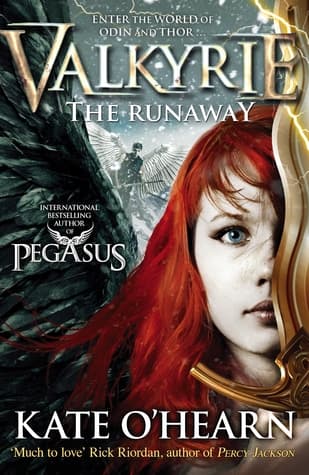
Kate O'Hearn
4.4
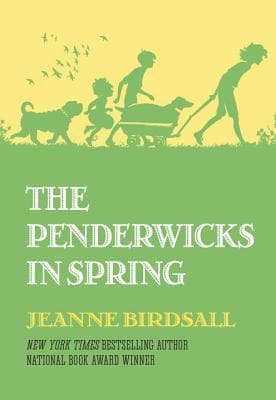
Jeanne Birdsall
4.4

Jen Wang
4.4
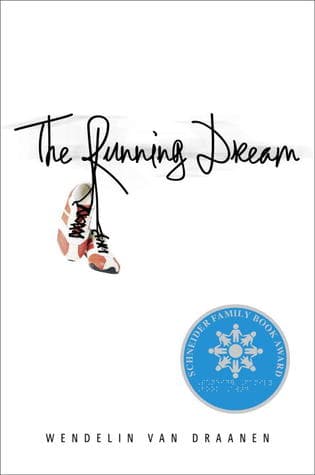
Wendelin Van Draanen
4.3

John Marsden
4.3

Chris Van Allsburg
4.3
Jennifer A. Nielsen
4.2