“The only thing a man can do is do his best, and leave the rest to fate.”
— Jack Aubrey reflecting on his career and the uncertainties of naval life.

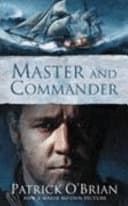
Patrick O'Brian (2003)
Genre
Historical Fiction
Reading Time
10-12 hours
Key Themes
See below
Sign in to track this book
A British captain and a brilliant, secretive surgeon form an unlikely friendship amidst Nelsonic naval battles and 19th-century seafaring life.
The novel opens in Port Mahon, Menorca, where Jack Aubrey, a first lieutenant in the Royal Navy, attends a concert. During the performance, he is annoyed by a man humming off-key beside him, leading to a brief, tense exchange. This man is Dr. Stephen Maturin, an impoverished physician and naturalist. Despite their initial friction, they discover a shared love for music and a mutual respect for intellectual pursuits. Shortly after, Aubrey learns he has been promoted to Master and Commander and given command of HMS Sophie, a brig-sloop. This is a significant moment for Aubrey, his first independent command, and he immediately begins the hard task of staffing and supplying his ship, while also seeking a suitable ship's surgeon.
Aubrey, impressed by Maturin's intellect and medical knowledge, despite his eccentricities, offers him the position of ship's surgeon on the Sophie, which Maturin accepts. Staffing the Sophie proves challenging. Aubrey relies on a mix of volunteers, pressed men (including some from the fishing boat 'Dolphin' who later cause trouble), and experienced but often undisciplined sailors from other ships. He establishes strict but fair command, quickly earning the respect of his crew. The Sophie, a small but agile vessel, finally sails from Port Mahon, seeking prize money and glory in the Mediterranean.
The Sophie patrols the Mediterranean, performing routine blockade and reconnaissance duties. Aubrey shows his daring and tactical skill in several minor engagements, capturing a few small merchant vessels and a privateer, which provide some needed prize money for the crew. Life aboard the Sophie settles into a demanding rhythm of watch-keeping, drills, and maintenance, broken up by occasional chases or skirmishes. Maturin, adapting to naval life, dedicates himself to his medical duties and natural history studies, often exploring local plants and animals during shore leaves. Their friendship deepens through shared meals, musical evenings, and intellectual discussions, despite their different personalities.
The Sophie encounters the much larger Spanish xebec-frigate, the Cacafuego, a formidable vessel with more guns and crew. Despite the overwhelming odds, Aubrey, with characteristic boldness and brilliant seamanship, decides to engage. Under cover of darkness and using a clever tactic of closing to point-blank range, he manages to neutralize the Cacafuego's superior firepower. After a brutal close-quarters battle, the Sophie wins, capturing the Spanish frigate. This stunning victory brings Aubrey considerable fame and prize money, solidifying his reputation as a daring commander, though he is criticized for the excessive risk taken.
After capturing the Cacafuego, the Sophie puts into Malta for repairs and refitting. Aubrey enjoys his newfound celebrity and the social life of the island, while Maturin pursues his natural history interests and quietly begins to gather intelligence for the British government. He contacts various individuals, observing political undercurrents and the movements of French and Spanish agents. This time ashore allows both men a temporary break from the demands of sea life, but also highlights the growing complexities of Maturin's double life as a surgeon and a spy, a path he has chosen carefully.
Back at sea, the Sophie continues its successful run, capturing several more French and Spanish merchant ships and small privateers. Aubrey's reputation as a 'lucky' captain grows, and his crew, now well-drilled and confident, works efficiently to secure their prizes. The prize money greatly improves the morale and financial standing of the crew, making the Sophie a sought-after posting. Maturin, while tending to the crew's health and continuing his scientific observations, also discreetly compiles information gathered from captured documents and overheard conversations, solidifying his role as an intelligence agent for the Admiralty.
The Sophie's successes eventually attract the attention of the French. A formidable French frigate, the Dessaix, commanded by Captain Christy-Pallière, is sent to hunt down and capture the troublesome British brig. The Dessaix is significantly larger, faster, and more heavily armed than the Sophie, posing a clear danger to Aubrey and his crew. The threat of this superior enemy casts a shadow over the Sophie's operations, forcing Aubrey to be even more cautious and strategic in his movements, constantly looking for signs of the powerful French warship.
Eventually, the Dessaix spots the Sophie and begins a relentless pursuit. Aubrey uses every trick of seamanship and navigation to evade his powerful pursuer, but the Dessaix's speed and superior sailing qualities prove too much. Cornered against the Barbary Coast, Aubrey is forced to engage in a desperate battle against overwhelming odds. The Sophie fights valiantly, damaging the Dessaix, but is ultimately outmatched. The battle is fierce and bloody, with heavy casualties on both sides, ending with the Sophie being dismasted and forced to surrender.
Following the Sophie's defeat, Aubrey, Maturin, and the surviving crew are taken prisoner by Captain Christy-Pallière of the Dessaix. Despite the circumstances, Christy-Pallière treats Aubrey with professional respect, acknowledging his bravery. The British prisoners are transported to a French prison camp in Algiers. Life as a prisoner of war is harsh, marked by deprivation and uncertainty, but Aubrey maintains his composure and leadership, while Maturin observes the conditions and continues his covert intelligence work, even in captivity, seeking any chance to gather information or engineer an escape.
While imprisoned in Algiers, Maturin, using his network and ingenuity, plans an escape. Along with Aubrey and a few key crew members, they manage to break out of the prison. Their escape is dangerous, with close calls, navigating through hostile territory. They eventually make their way to the coast, where, through luck and Maturin's prior arrangements, they are spotted and rescued by a passing British frigate. This dramatic escape brings them back to British lines, but Aubrey faces a court-martial for the loss of his ship, despite his heroic efforts.
Upon their return, Aubrey faces the inevitable court-martial for the loss of HMS Sophie. This is standard procedure in the Royal Navy, even for acts of bravery, to formally investigate the circumstances. Despite the clear evidence of his valiant fight against superior force, there is always the risk of a career-ending judgment. However, due to the testimony of his officers, particularly Maturin, and the clear facts of the engagement, Aubrey is honorably acquitted. His reputation for courage and skill remains intact, though he is now without a ship, eagerly awaiting his next command and the chance to return to sea.
The Protagonist
From a frustrated first lieutenant, he rises to his first command, proving his mettle against overwhelming odds and establishing his reputation, only to face the inevitable consequence of losing his ship.
The Protagonist/Supporting
He transitions from an impoverished physician to a ship's surgeon, adapting to naval life while secretly beginning his career as a clandestine intelligence operative.
The Antagonist
Introduced as a formidable hunter, he successfully defeats Aubrey but is portrayed as an honorable adversary.
The Supporting
Remains a steadfast and loyal subordinate, crucial to the Sophie's operations.
The Supporting
Serves competently as the ship's navigator throughout its voyages.
The Supporting
Develops into a more capable medical assistant under Maturin's tutelage.
The Supporting
Maintains his position as Aubrey's superior, acting as both a patron and a critic.
The Supporting
Remains a dedicated and indispensable personal servant to Aubrey.
The lasting and complex friendship between Jack Aubrey and Stephen Maturin is the emotional core of the novel. Despite their very different personalities—Aubrey's boisterousness versus Maturin's introspection—they find common ground in their love for music and a deep mutual respect. Their bond is tested by the demands of naval life, personal challenges, and Maturin's secret life, yet it strengthens through shared experiences, intellectual discussions, and unwavering loyalty. This theme is shown in their shared musical evenings playing violin and cello, and Maturin's steady support during Aubrey's court-martial.
“''There is no need to tell me that I am a fool, Stephen,' said Jack, 'for I know it well enough. But I am a fool of your own making.'”
The novel explores the responsibilities, challenges, and isolation of command in the Royal Navy. Jack Aubrey's journey from lieutenant to captain shows the qualities needed: daring, strategic brilliance, seamanship, and the ability to inspire and discipline a diverse crew. He must balance the pursuit of glory and prize money with the welfare of his men and adherence to naval regulations. His decision to engage the Cacafuego, despite the odds, and his leadership during the desperate fight against the Dessaix, illustrate the immense pressure and ultimate accountability of a captain.
“''There is nothing,' he said, 'absolutely nothing, half so much worth doing as messing about in boats.'”
O'Brian's portrayal of life aboard a Nelsonic man-of-war is a central theme. The novel shows the harsh realities, intricate routines, and specialized language of the Royal Navy. From the hard process of manning a ship with pressed men to the brutal realities of close-quarters combat, the reader is immersed in the period. The daily drills, the discipline, the food, the constant threat of disease, and the camaraderie of the crew are all described with great detail, making the ship itself almost a character. The battles are described with intensity, emphasizing the skill, courage, and brutality of naval engagements.
“''The sea, once it casts its spell, holds one in its net of wonder forever.'”
Stephen Maturin embodies the theme of scientific inquiry and observation. His passion for natural history, especially ornithology and botany, provides a contrasting intellectual pursuit to the military world of the navy. His detailed observations of plants and animals, even in the midst of war, highlight a different way of understanding the world. As a surgeon, he applies scientific principles to medicine, constantly learning and adapting. This theme emphasizes the value of intellectual curiosity and the pursuit of knowledge, offering a quiet counterpoint to the thunder of cannons.
“''The study of birds and beasts is a harmless occupation, and one that gives great pleasure.'”
The characters, especially Aubrey, are driven by a strong sense of duty to King and Country. This duty often demands personal sacrifice, including long separations from loved ones, constant danger, and the potential loss of life or limb. Aubrey's willingness to engage superior forces, and the crew's obedience in the face of such odds, highlight this theme. Maturin's covert intelligence work also represents a deep commitment to duty, often placing him in moral and physical peril. The novel explores the personal cost of such unwavering service.
“''The service, sir, is a jealous mistress.'”
Unexpected meetings that alter the course of events.
O'Brian frequently uses surprise encounters, both personal and naval, to drive the plot. The initial meeting between Aubrey and Maturin at the concert, seemingly random, quickly establishes their pivotal relationship. Similarly, the unexpected sighting of enemy ships, like the Cacafuego or the Dessaix, often throws the Sophie into immediate, high-stakes action. These encounters serve to introduce new characters, escalate conflict, or provide opportunities for Aubrey to demonstrate his tactical genius, often catching characters (and the reader) off guard.
Authentic period language and technical detail to immerse the reader.
O'Brian employs extensive and accurate naval terminology, period slang, and detailed descriptions of ship's operations and sailing maneuvers. This deep immersion in the language and technicalities of the era creates a powerful sense of verisimilitude, making the world of the Royal Navy incredibly real to the reader. While initially challenging, this device ultimately rewards the reader with a profound understanding of the intricacies of a man-of-war and the lives of its crew, enhancing the historical authenticity of the narrative.
Maturin's covert activities subtly influencing the narrative.
Maturin's secret life as an intelligence agent serves as a subtle but persistent plot device. While not always at the forefront of the action, his observations, contacts, and quiet information gathering often provide crucial context or indirectly influence events. This device adds a layer of intrigue and foreshadows future complexities, suggesting that the war is fought not only on the high seas but also in the shadows of political espionage. It sets the stage for Maturin's expanding role beyond that of a mere ship's surgeon.
Aubrey's reputation for improbable success, often defying logical odds.
Jack Aubrey's reputation as a 'lucky' captain is a recurring plot device. This allows O'Brian to place Aubrey in seemingly impossible situations, such as engaging the Cacafuego, and have him emerge victorious through a combination of daring, skill, and sheer improbable fortune. This device builds Aubrey's legend within the narrative and among his crew, while also creating tension by constantly pushing the boundaries of what is believable, making his eventual defeat by the Dessaix all the more impactful as a subversion of this 'luck'.
“The only thing a man can do is do his best, and leave the rest to fate.”
— Jack Aubrey reflecting on his career and the uncertainties of naval life.
“There is no more to be said, and no more to be done. The die is cast.”
— Aubrey making a decisive command decision, accepting the consequences.
“Music, like a good wine, improves with age and a congenial companion.”
— Stephen Maturin musing on the joys of music and shared experience with Aubrey.
“The sea, once it casts its spell, holds one in its net of wonder forever.”
— A general observation on the allure and power of the ocean.
“It is a great pity that we cannot make the world as beautiful as the music we play.”
— Maturin's melancholic reflection on the contrast between art and reality.
“The greatest joy of all is to be at sea, with a good ship under you, and a good friend at your side.”
— Aubrey expressing his profound contentment with his life and friendship with Maturin.
“One must be prepared for anything, especially the unexpected.”
— A pragmatic piece of advice often relevant in naval warfare and life.
“There are times when a man must do what is right, even if it means going against orders.”
— Aubrey contemplating a difficult ethical choice during a mission.
“The human mind is a wonderful thing, but it can also be a terrible one.”
— Maturin's observation on the complexities and dualities of human intellect and emotion.
“Courage is not the absence of fear, but rather the judgment that something else is more important than fear.”
— A philosophical insight into the nature of true courage.
“A ship is not just a collection of wood and canvas; it is a living thing, with a soul of its own.”
— Aubrey's deep affection and respect for his vessel, the 'Sophie'.
“The world is full of wonders, if only one takes the time to look.”
— Maturin's scientific curiosity and appreciation for the natural world.
“To command is to serve, and to serve is to lead.”
— A principle of leadership that Aubrey embodies throughout his career.
“Silence is often the most eloquent answer.”
— Maturin's quiet wisdom in situations where words are inadequate or unnecessary.
Ready to see how well you understood this book? Take our interactive quiz with 10 questions.
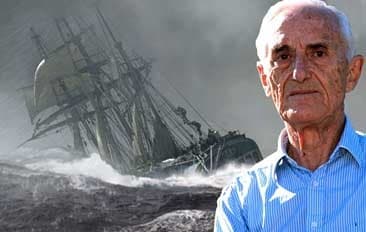
Patrick O'Brian, CBE, born Richard Patrick Russ, was an English novelist and translator, best known for his Aubrey–Maturin series of sea novels set in the Royal Navy during the Napoleonic Wars, and centred on the friendship of the English naval captain Jack Aubrey and the Irish–Catalan physician Stephen Maturin. The 20-novel series, the first of which is Master and Commander, is known for its well-researched and highly detailed portrayal of early 19th-century life, as well as its authentic and evocative language. A partially finished 21st novel in the series was published posthumously containing facing pages of handwriting and typescript.







