“The only thing worse than a man you don't love is a man you do love who is a coward.”
— An observation about love and courage, reflecting the complexities of relationships.


Genre
Literary Fiction / Romance
Reading Time
180 min
Key Themes
See below
Sign in to track this book
In a sad Berlin rooming house, a young Russian émigré remembers his first love, Mary, only to find her unappealing husband is his next-door neighbor, waiting for her.
Lev Ganin, a young Russian émigré, lives in a rundown Berlin boarding house with other exiles, including the old poet Podtyagin, the dancer Lyudmila Rubanski, and the rude Alfyorov. Ganin feels stuck and unhappy with his life, which consists of short romances and no clear goal. He just ended an affair with Klara, another resident, and spends his days thinking, often watching his neighbors' routines. The atmosphere is one of shared sadness for a lost Russia, mixed with the worries and small arguments of their confined lives in a foreign country.
Ganin learns from Alfyorov, a particularly annoying boarder, that Alfyorov's wife, Mary, will arrive from Russia in a few days. Alfyorov, not knowing Ganin's past, constantly brags about Mary, showing Ganin a photo of her. Ganin first thinks it's a coincidence, but a growing sense of familiarity and Alfyorov's detailed description of Mary make Ganin realize something. He is shocked to understand that this 'Mary' is his first and most cherished love from his youth in Russia.
After this discovery, Ganin is lost in vivid memories, reliving his time with Mary in the sunny, perfect setting of pre-revolutionary Russia. He remembers their first meeting, their secret meetings in the woods, their shared innocent joys, and their strong emotional bond. These memories are filled with nostalgia and longing, a stark contrast to his dull Berlin life. The memories are so powerful they feel more real than his present, bringing back old feelings of love and passion.
Ganin's memories go deeper into his affair with Mary. He remembers their passionate moments, their letters, and their promises. He recalls the feeling of endless possibility and the purity of their emotions. However, he also remembers what caused their separation – the coming war, his enlistment, and losing touch. These memories are tinged with a sad understanding of how youth and circumstances pulled them apart, leaving a lasting mark on his heart.
While Ganin is lost in thought, life in the boarding house goes on. The old poet Podtyagin, weak and getting sicker, prepares for his long-awaited trip to Paris, hoping for a new start and inspiration. His departure brings both hope and worry to the other residents. Ganin feels a quiet sympathy for the old man, seeing the shared longing for a lost past and a better future that many émigrés feel. Podtyagin's trip is a subtle contrast to Ganin's own inner journey.
Klara, still in love with Ganin despite their recent breakup, tries to talk to him and restart their romance. She visits his room, tries to get him to talk, and shows her affection. However, Ganin, focused on his memories of Mary and her arrival, remains distant. His mind is entirely on his past love, making him ignore Klara's attempts and her feelings for him. His detachment causes Klara much pain, showing his self-centeredness.
Driven by his renewed love and the strong desire to reclaim his past, Ganin makes a bold plan. He intends to meet Mary at the train station when she arrives, before Alfyorov can. He believes that if he sees her first, he can convince her to leave Alfyorov and start their life together. This plan becomes his only focus, consuming his thoughts and actions, and giving his previously aimless life a new sense of purpose. He carefully plans the timing and details of his secret meeting.
To carry out his plan, Ganin needs to make sure Alfyorov is not at the train station when Mary arrives. He cleverly tricks Alfyorov, subtly changing the time on Alfyorov's alarm clock and encouraging him to drink a lot. Ganin's actions are driven by his strong desire to reunite with Mary, even if it means betraying his unsuspecting neighbor. This deception shows Ganin's desperation and his willingness to ignore ethics to achieve his romantic ideal.
The night before Mary's arrival is a time of intense waiting for Ganin. He lies awake, unable to sleep, his mind full of images of Mary, both from his memories and his imagined future with her. The thought of seeing her again, of perhaps recapturing their first love, fills him with almost unbearable excitement and longing. He carefully imagines their reunion, picturing every detail of their meeting and the words they will say, solidifying his romantic ideal of her.
Ganin leaves for the train station in the early morning, his heart beating with hope and fear. As he travels through the waking city, the harsh reality of Berlin's streets and the grey light of dawn begin to slowly chip away at the idealized image of Mary he has built in his mind. The physical journey reflects an inner change, as the perfect Mary of his memories begins to clash with the possible reality of a woman who has lived a separate life, married another man, and faced the difficulties of revolution.
As Ganin nears the train station, he has a sudden realization. He understands that the Mary he has so clearly brought back in his memories is an idealized version, a ghost of his youth, not the real woman who will step off the train. He recognizes that meeting her now would spoil the perfection of his memories and that the past cannot truly be brought back. He decides, with a deep, sad acceptance, not to meet her. He turns away from the station, leaving his idealized first love forever in his memory.
After making his decision, Ganin returns to the boarding house, packs his bags, and quietly leaves. He leaves behind the dreary Berlin pension, the unappealing Alfyorov, and the lingering presence of his past love. His departure marks a break from his stagnant life and a readiness to move forward, free from the illusions of youth or the weight of nostalgia. He leaves with a sense of freedom, having come to terms with his past and chosen to embrace an uncertain but perhaps more real future, leaving Mary to her new life without ever seeing her again.
The Protagonist
Ganin begins as a disillusioned young man clinging to the past and ends by consciously releasing his idealized first love, choosing to move forward into an unknown future.
The Central Figure (primarily in memory)
Mary exists as an idealized memory for Ganin, a static representation of his lost youth, rather than undergoing a personal arc within the story.
The Antagonist/Foil
Alfyorov remains largely static, a caricature of the unappealing émigré, oblivious to the emotional drama unfolding around him.
The Supporting
Klara experiences the pain of unrequited love but her ultimate fate is left unresolved as Ganin departs.
The Supporting
Podtyagin's arc culminates in his departure for Paris, leaving his ultimate fate unknown but symbolizing the eternal hope of émigrés.
The Supporting
Lyudmila serves more as a background character, her presence contributing to the atmosphere of the boarding house.
The Supporting
Antonina remains a static, authoritative figure, overseeing the lives of her tenants.
The novel is full of nostalgia, especially Ganin's longing for his youth in pre-revolutionary Russia and his first love, Mary. His memories are vivid, sensory, and very romanticized, serving as an escape from the dull reality of his Berlin exile. Nabokov explores how memory can selectively improve the past, creating an ideal that the present can never match. Ganin's entire reason for wanting to meet Mary is fueled by this idealized memory, which ultimately proves to be untouchable and better left alone. The contrast between the vibrant past and the dull present is always there.
“He remembered his past as a man remembers a tune, the words of which he has forgotten, and which he can only hum, with the tune itself becoming distorted in the process.”
Nabokov explores how reality is subjective, especially how memory and desire can shape what we see. For Ganin, the 'real' Mary exists more strongly in his mind than the physical woman arriving on the train. The novel suggests that the idealized past is often more powerful and satisfying than any possible present meeting. Ganin's decision not to meet Mary shows that some illusions, once broken by reality, can never be restored. The physical world of the Berlin boarding house often feels less real to Ganin than his internal world of memories.
“He understood that his love for Mary was at an end. It had ended there, with the ghostly Mary of his imagination, at the moment he recognized her face in Alfyorov's photograph.”
The novel shows the lives of Russian émigrés in Berlin, highlighting their shared sense of loss, displacement, and unhappiness. The boarding house is a small example of this experience, filled with people holding onto parts of their past or to fragile hopes for the future. Ganin's initial aimlessness and his unhappiness with his present life are signs of this larger theme. The émigrés are caught between a lost homeland and an unfulfilling present, their identities often defined by what they have left behind. Their interactions are tinged with a collective sadness and a yearning for what was.
“All of them were exiles, forever separated from their native land, and their lives were like a prolonged, anxious dream.”
Mary looks at the deep and lasting impact of first love. Ganin's romance with Mary is shown as pure, intense, and important in shaping his understanding of love and beauty. It represents a time of innocence and endless possibility. The novel suggests that while first love may not always last in its original form, its memory can become a powerful and almost sacred point of reference throughout one's life. Ganin's final decision to keep the memory rather than face the reality speaks to the unique and often untouchable quality of first romantic experiences.
“He loved her with that pure, boundless, and somewhat absurd love that only first love can be.”
Ganin's extensive and vivid recollections of his past with Mary.
The novel heavily relies on Ganin's extended flashbacks and detailed memories of his first love with Mary. These memories are triggered by the revelation that Alfyorov's wife is Mary, and they form the emotional core of the narrative. The flashbacks are not linear but rather a stream of consciousness, imbued with sensory details and emotional intensity, allowing the reader to experience Ganin's idealized past as vividly as he does. This device creates a strong contrast between the vibrant past and the dull present, highlighting the power of nostalgia and memory to shape perception and motivation.
Characters who contrast with Ganin to highlight his traits and themes.
Alfyorov serves as a primary foil to Ganin. Alfyorov's boorishness, self-importance, and obliviousness contrast sharply with Ganin's introspection, sensitivity, and cunning. This contrast highlights Ganin's internal world and his romantic idealization of Mary. Klara also acts as a foil, representing immediate, unidealized affection that Ganin disregards, further emphasizing his focus on the distant, perfect Mary. These contrasts allow Nabokov to explore Ganin's character and the central themes of the novel more effectively.
The train station as a place of transition, choice, and confrontation with reality.
The train station is a pivotal symbolic location in the novel. It represents a threshold between past and future, between memory and reality. It is the place where Ganin intends to reclaim his past with Mary, but it ultimately becomes the site of his profound realization and his decision to let go. The arrival of the train symbolizes the inevitable confrontation with a changed reality, forcing Ganin to choose between preserving an idealized memory and attempting to revive a past that no longer exists. His turning away from the station marks his acceptance of this truth and his movement towards a new beginning.
The audience knows Ganin's connection to Mary, while Alfyorov remains oblivious.
Dramatic irony is a key element, particularly concerning Alfyorov. The reader is aware of Ganin's intense personal connection to Mary and his burgeoning plan, while Alfyorov remains completely oblivious, continuing to boast about his wife to Ganin. This creates tension and adds a layer of pathos and humor to Alfyorov's character, as his innocent pronouncements inadvertently fuel Ganin's scheme. The irony heightens the sense of Ganin's internal struggle and the emotional stakes of his deception.
“The only thing worse than a man you don't love is a man you do love who is a coward.”
— An observation about love and courage, reflecting the complexities of relationships.
“He knew that the past was not dead, but merely sleeping.”
— Lev Ganin's contemplation of his past with Mary, highlighting memory's persistent presence.
“The world was a mere reflection of his own inner chaos.”
— Ganin's subjective experience of his surroundings, filtered through his emotional state.
“There are people who, for no apparent reason, make you feel terribly alone.”
— A reflection on certain individuals' unsettling effect, even in company.
“He had always been a connoisseur of farewells.”
— Ganin's particular inclination towards the bittersweet nature of goodbyes.
“Memory, of course, is a great artist.”
— A statement on how memory beautifies and reinterprets past events.
“The present moment was always escaping him, dissolving into the past before he could grasp it.”
— Ganin's struggle to live in the present, constantly pulled back by his memories.
“One could not love without a certain amount of self-deception.”
— An cynical view on the nature of love, suggesting it requires some degree of illusion.
“Life's deepest meaning, he often thought, lay in its impermanence.”
— Ganin's philosophical musings on the ephemeral nature of existence.
“The greatest joy lay in anticipation, not in fulfillment.”
— A thought on the nature of desire and its satisfaction, or lack thereof.
“He felt a terrible tenderness for his past, as if it were a child he had abandoned.”
— Ganin's emotional connection to his memories, personifying his past.
“It was impossible to be genuinely sad about something that had never truly existed.”
— A reflection on the nature of regret concerning an idealized past or imagined future.
“The world was full of mirrors, reflecting back only what he wished to see.”
— Ganin's perception of the world as a projection of his own desires and expectations.
Ready to see how well you understood this book? Take our interactive quiz with 10 questions.
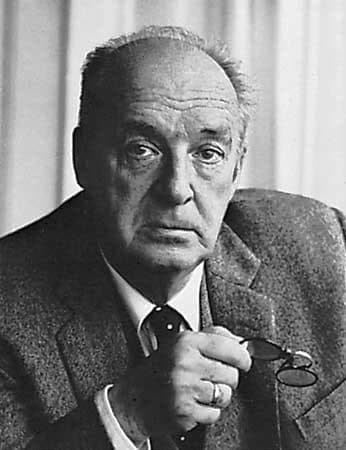
Vladimir Vladimirovich Nabokov, also known by the pen name Vladimir Sirin, was an expatriate Russian and Russian-American novelist, poet, translator, and entomologist. Born in Imperial Russia in 1899, Nabokov wrote his first nine novels in Russian (1926–1938) while living in Berlin, where he met his wife. He achieved international acclaim and prominence after moving to the United States, where he began writing in English. Nabokov became an American citizen in 1945 and lived mostly on the East Coast before returning to Europe in 1961, where he settled in Montreux, Switzerland.







