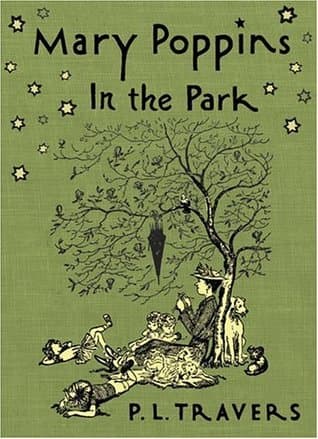
A Walk in the Park
The story starts with Mary Poppins taking Jane, Michael, John, and Barbara Banks for a walk in the park on a bright spring afternoon. The children are happy about their outing. As they walk, Mary Poppins, who always seems to know more than she says, points out things that look ordinary but quickly become special. The park, a familiar place, turns into a doorway to magical events under her eye. The children, especially Jane and Michael, always look forward to what wonders Mary Poppins will reveal during their seemingly simple trips. This day is no different, as magic always follows her.
The Goosegirl and the Swineherd
During their walk, Mary Poppins leads the children to a quiet part of the park. There, they meet a beautiful Goosegirl and a sad Swineherd. These are not just people in costumes; they seem to be the actual characters from the fairy tale, with their animals. The Goosegirl is graceful, and the Swineherd talks about wanting the Princess and being unhappy with his life. Mary Poppins talks to them as if it is normal. The children are fascinated and a little confused by seeing storybook characters in their park. This meeting blurs the line between real life and stories for the children.
The Talking Cats of a Distant Planet
On another day, Mary Poppins takes the children to fly kites. Michael's kite flies higher and higher, seeming to pull them, and Mary Poppins, into the sky. They land on a distant planet, home to smart, talking cats. These cats discuss complex ideas with the children about existence, time, and human behavior. Jane and Michael argue with the cats, trying to explain human views, while Mary Poppins watches with a knowing smile. The experience is both confusing and thought-provoking for the children, broadening their understanding of the universe.
Under the Dandelions
One afternoon, while exploring a grassy area, Mary Poppins points out some dandelions. With a simple move, she shows them a hidden, tiny world underneath. Here, small, whimsical people live, doing their daily tasks, which are like human activities but on a tiny scale. The children watch, fascinated, as these dandelion-dwellers work, play, and talk. Mary Poppins explains their customs and conversations. This meeting shows that special life exists in the most unexpected and unnoticed places. It suggests that magic is part of nature, if one only knows how to look.
Shadow Dancing
Mary Poppins's birthday arrives, and it is a unique celebration. Instead of usual gifts and cake, she plans a special event. In the park, as the sun begins to set and cast long shadows, Mary Poppins teaches the children a special dance. As they move, their shadows separate and dance on their own, copying and sometimes adding to their owners' movements. The children are delighted by this playful, airy show. It is a joyful, whimsical celebration of self and light, showing Mary Poppins's ability to turn an ordinary event into a special, personal experience for the Banks children.
The Invisible Man
During another park visit, Mary Poppins and the children sit on a seemingly empty bench. However, Mary Poppins talks lively with an invisible friend, whom she calls 'Mr. Nobody.' The children, at first doubtful, soon notice small signs of his presence—a slight mark on the cushion, a rustle of leaves that seems to answer Mary Poppins's questions. Mr. Nobody is a kind and wise being, offering thoughts and observations. This encounter teaches the children to look past what is visible and trust in the unseen, helping their imagination and openness to mystery.
The Changing Seasons
One afternoon, Mary Poppins decides to show the children the true magic of changing seasons. She leads them to a certain spot in the park. With a simple, focused effort, the scenery around them begins to change. Spring blossoms quickly turn into summer's green, which then changes to autumn's colors, and finally, a soft blanket of winter snow. The children watch this fast cycle of nature in awe. They understand that Mary Poppins is not just observing the seasons, but is, in a subtle way, influencing and revealing their natural magic, making them feel the essence of each season quickly.
The Star-Gazers
Mary Poppins takes the children to the park late one evening for stargazing. Instead of just looking at the stars, she helps them understand and even interact with the constellations. The stars seem to shine brighter, and the children feel a deep connection to the vastness of space. Mary Poppins shares stories and legends of the stars, giving them personality and history. This experience broadens their view, making them feel part of something much bigger than themselves. It creates a sense of wonder and respect for the night sky and its old mysteries.
The Music of the Benches
During another visit, Mary Poppins draws the children's attention to the park benches. She explains that each bench, having seen countless talks and shared moments, holds its own 'music'—a collection of echoes from the past. By listening closely, guided by Mary Poppins, the children start to hear faint tunes and whispers coming from the wood and metal. These are not sounds in the usual sense, but a feeling of the emotions and stories the benches have absorbed over time. It is a lesson in empathy and the hidden history in everyday objects.
The End of the Day
As the day ends, Mary Poppins gathers Jane, Michael, John, and Barbara, and they begin their walk back to Number Seventeen Cherry-Tree Lane. The park, which had been a lively place for their adventures, slowly returns to its more ordinary look. The children are quiet, thinking about the special events they experienced. Mary Poppins, always mysterious, gives no explanation or comfort, simply guiding them home. They are left with vivid, impossible memories that only she seems able to create, showing her unique role in their lives as a bringer of wonder and magic.