BookBrief
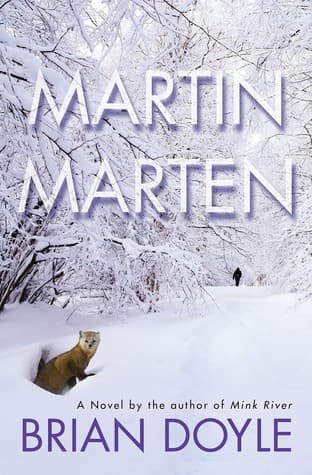
Martin Marten cover
Archivist's Choice

Martin Marten

Brian Doyle (2015)

Genre

Literary Fiction / Young Adult

Reading Time

350 min

Key Themes

See below

Track Your Reading

Sign in to track this book

On Mount Hood, a young man named Dave and a pine marten named Martin begin independent lives, their paths showing the vastness of existence.

Synopsis

Fourteen-year-old Dave lives with his family in a cabin on Mount Hood, which he calls Wy'east, in rural Oregon. As summer ends and he prepares for high school, Dave thinks about growing up and leaving his family. At the same time, Martin, a young pine marten, leaves his family to live on his own in the same wilderness. The story follows their separate journeys of growth and self-discovery; their paths sometimes cross on forest trails and mountain peaks. Through their experiences—Dave navigating friendships, school, and family, and Martin hunting, surviving winter, and finding a mate—the story looks at how all life on Wy'east is connected, ending with a quiet moment they share that shows nature's ongoing cycle.
Reading time
350 min
Difficulty
Medium
Pacing
Moderate
Mood
Atmospheric, Reflective, Whimsical, Poetic
✓ Read this if...
You enjoy contemplative coming-of-age stories, nature writing, and unique narrative structures that blend human and animal perspectives.
✗ Skip this if...
You prefer fast-paced plots, clear-cut human-centric stories, or struggle with non-traditional prose.

Plot Summary

Dave's Summer on Wy'east and Martin's Departure

The story begins by introducing Dave, a fourteen-year-old boy spending his summer on Mount Hood, which he calls Wy'east, in a cabin with his family. He is about to start high school and feels the worries and excitements of becoming an adult. He spends his days exploring the mountain, reading, and watching nature. At the same time, we meet Martin, a young pine marten, who is almost old enough to leave his mother and siblings to find his own territory. Martin is curious and energetic, learning about the forest from his mother. The story sets up the parallel journeys of these two young beings as they prepare for big changes in their lives.

Encounters and Observations on the Mountain

Dave continues his summer explorations, often hiking and observing the many animals on Wy'east. He is thoughtful and sensitive, deeply connected to the sounds and rhythms of the forest. He sees various creatures, from deer to birds, and thinks about their lives. Meanwhile, Martin, now away from his family, starts to navigate the large, difficult world of the forest on his own. He hunts for food, avoids predators like owls and coyotes, and learns to find safe places. The story often brings Dave and Martin close together, though they rarely meet, showing their shared space and separate but parallel lives on the mountain.

Dave's First Days of High School and Martin's Territory

As summer ends, Dave starts high school in the nearby town. He deals with the usual challenges of a new place: making friends, figuring out social groups, and handling school and fitting in. His thoughts often go back to the quiet and peace of Wy'east. At the same time, Martin successfully finds his own territory. He learns the best hunting routes, finds reliable food sources, and discovers a safe den. His life is a constant cycle of hunting, resting, and avoiding danger. The story compares Dave's human struggles with Martin's primal, instinct-driven life, both facing the demands of their own 'worlds'.

Winter on Wy'east: Survival and Resilience

Winter comes to Mount Hood, bringing severe cold and heavy snow. Dave continues his high school routine, often dreaming of the mountain. He experiences winter's challenges, like icy roads and the quiet, thoughtful feeling it brings to his home life. Martin, a creature of the deep woods, adjusts to the winter landscape. He hunts voles and mice under the snow, uses snow tunnels, and finds shelter in hollow logs and rock crevices. The story shows the strength of both boy and marten, illustrating their ability to survive and even do well amid nature's powerful forces, each finding their own rhythm in winter's stark beauty.

Dave's Developing Relationships and Martin's Mating Season

As spring arrives, Dave starts to make stronger connections at school. He makes a close friend, a girl named Sarah, with whom he shares his thoughts and observations, including his love for Wy'east. He also navigates his family relationships, especially with his younger sister. Meanwhile, Martin enters his first mating season. The story describes his instincts driving him to find a female marten, the challenges of finding a mate in the large forest, and the competitive nature of the process. This time marks a big step in both their lives, involving forming new relationships and continuing their species.

The Interconnectedness of Life

Through the changing seasons, the book weaves together the lives of Dave, Martin, and the many other creatures and parts of Wy'east. The story often shifts perspective, showing how a fallen tree provides shelter for Martin, becomes a perch for a bird, and is seen by Dave. The cycles of life and death, predator and prey, are shown as essential and connected. Dave's growing awareness of the mountain's ecosystem reflects the reader's understanding of the complex web of relationships. This section shows the book's main idea: the vast, unknown scope and connection of all life, both human and animal, on the mountain.

Dave's Continued Growth and Martin's Family

Dave continues through high school, his experiences on Wy'east shaping how he sees life, nature, and his place in the world. He develops a deeper sense of care and wonder. His bond with Sarah grows, and he becomes more comfortable with himself. At the same time, Martin mates and raises a litter of kits. The story details the challenges and joys of marten parenthood, from finding enough food to protecting his young. This time marks the completion of a life cycle for Martin, mirroring Dave's own progress towards an adult understanding of responsibility and connection.

A Shared Moment of Observation

One crisp autumn day, Dave, hiking alone, finds a quiet spot overlooking a large stretch of forest. He sits, watching the subtle movements of the trees and the distant calls of birds. Without him knowing, Martin, also thinking alone, is on a nearby branch, grooming himself and looking over his territory. The story describes their individual experiences of the same moment and place, showing the beauty of their parallel lives. This scene illustrates their shared existence on Wy'east, even without direct interaction, emphasizing the quiet majesty of their living together.

The Ongoing Cycle of Life

The story ends with a thought on the ongoing cycles of life and change on Wy'east. Dave, now older and more experienced, looks toward his future, carrying the mountain's lasting mark and its lessons. Martin, having lived a full life as a pine marten, continues his existence in the forest, part of nature's continuous flow. The book ends not with a definite conclusion for either character, but with an affirmation of life's perpetual motion, death, and renewal on the mountain, showing that the story of Wy'east and its inhabitants is always unfolding, vast and ever-present.

Principal Figures

Dave

The Protagonist

Dave grows from an introspective boy on the cusp of adulthood to a more mature and empathetic individual, grounded by his deep connection to nature.

Martin

The Protagonist

Martin matures from a dependent kit to a self-sufficient and successful marten, contributing to the continuation of his species.

Sarah

The Supporting

Sarah remains a consistent and supportive friend, witnessing Dave's growth and offering him companionship.

Dave's Mother

The Supporting

Her character remains a stable and loving presence, representing the domestic anchor for Dave's journey.

Dave's Father

The Supporting

He remains a steady, supportive presence, a quiet guide in Dave's life.

Dave's Sister

The Supporting

She remains a lively and curious younger sibling, contributing to the family's dynamic.

Martin's Mother

The Supporting

She fulfills her role as a protective and instructive mother, preparing Martin for his independent life.

Wy'east (Mount Hood)

The Mentioned/Setting

Wy'east remains a constant, ever-changing, and enduring force, witnessing the cycles of life unfold on its slopes.

Themes & Insights

Coming of Age and Transition

The main idea is about Dave's and Martin's parallel journeys of growing up. Dave deals with adolescence, high school, and the coming responsibilities of adulthood, moving from childhood to a deeper understanding of himself and the world. Martin experiences his own change, leaving his mother's care to find his territory, learn to hunt, and eventually mate. Both characters face new challenges and responsibilities, showing that 'growing up' is a universal experience, regardless of species, marked by independence, learning, and finding identity.

He was fourteen, which was no longer a boy, exactly, and not yet a man, which was a kind of interesting place to be, to hang suspended between two states of being, like a cloud between the valley and the peak.

Narrator

Interconnectedness of Life and Nature

A main idea is the complex web of life on Mount Hood, where every creature and element is connected. The story constantly shows how Dave's observations of a specific tree or animal are part of a larger ecosystem that also supports Martin. The cycles of predator and prey, birth and death, and the changing seasons are shown to be essential and interdependent. This idea shows that humans are not separate from nature but a part of its vast, complex system, creating a sense of shared existence and reliance among all inhabitants of Wy'east.

Everything was connected, he knew, every single thing, the mountain and the river, the eagle and the vole, the boy and the marten, all of it one magnificent, swirling, breathing, singing, living thing.

Narrator

Observation and Wonder

The book celebrates the power of careful observation and the wonder it creates. Dave's character is defined by his attention to the natural world's details—the way light falls on leaves, the sound of a specific bird, an animal's tracks. This detailed focus allows him, and the reader, to appreciate the beauty and complexity of life on Wy'east. The story itself often focuses on descriptions of nature, encouraging a similar sense of awe and reminding us to look closely at the world around us, finding deep meaning in small things.

He learned to hear the tiny voices of the world, the scratch of a squirrel's claws on bark, the rustle of a mouse in the dry leaves, the whisper of the wind in the needles of the firs.

Narrator

The Wild and the Domestic

This idea explores the contrast and coexistence between nature's wild, untamed parts and the domestic, human world. Dave lives in a cabin, a human home, on the edge of the wilderness, constantly moving between his family life and his solitary explorations of the forest. Martin embodies the wild, living purely by instinct and nature's laws. The book suggests that while these two worlds are different, they are not entirely separate, often overlapping and influencing each other. It shows the human desire for connection with the wild and the inherent wildness that exists even within human experience.

There was the world of houses and schools and cars, and there was the world of trees and rocks and snow, and he lived in both, and the border between them was thin as a breath.

Narrator

Plot Devices & Literary Techniques

Parallel Narratives

Alternating chapters or sections between Dave's and Martin's perspectives.

The novel employs a parallel narrative structure, interweaving the stories of Dave, a human boy, and Martin, a pine marten. Chapters or sections often alternate between their experiences, highlighting their individual journeys while simultaneously drawing connections between them. This device allows the reader to witness two distinct 'coming-of-age' stories unfolding concurrently in the same natural environment. It serves to emphasize the book's central theme of interconnectedness and demonstrates that profound life experiences are not exclusive to humans but are shared across the animal kingdom, creating a rich, multi-faceted perspective on life on Wy'east.

Anthropomorphism (Limited)

Attributing human-like thoughts and feelings to Martin, while maintaining animalistic integrity.

While Martin's actions are largely driven by instinct, the narrative occasionally grants him human-like thoughts, feelings, and motivations, particularly regarding his curiosity, determination, and connection to his family. This limited anthropomorphism allows the reader to empathize with Martin and understand his experiences on a deeper level, bridging the gap between human and animal consciousness. However, it is carefully balanced to ensure Martin remains true to his nature as a wild animal, preventing him from becoming a mere human in animal form. This device enriches the emotional depth of Martin's story and reinforces the idea of shared life experiences.

Sensory Language and Imagery

Vivid descriptions appealing to sight, sound, smell, and touch to immerse the reader in the natural setting.

Doyle's writing is rich in sensory details, immersing the reader fully in the environment of Mount Hood. The narrative frequently uses vivid imagery to describe the sights, sounds, smells, and textures of the forest, from the 'whisper of the wind in the needles' to the 'crunch of snow underfoot' or the 'earthy smell of damp moss.' This device is crucial for establishing the mountain as a living, breathing character and for conveying Dave's deep connection to his surroundings. It allows the reader to experience the world through the characters' senses, enhancing the themes of observation and wonder and making the natural world feel immediate and tangible.

Repetition and Rhythmic Prose

Use of repeated phrases or sentence structures to create a lyrical, almost poetic rhythm.

The novel often employs a distinctive rhythmic prose, characterized by the repetition of words, phrases, or sentence structures. This stylistic choice creates a lyrical, almost incantatory quality, mirroring the cyclical nature of life and the steady pulse of the natural world. For instance, the narration might list a series of observations or actions in a similar grammatical pattern, building a cumulative effect. This device enhances the narrative's poetic feel, reinforces key ideas such as interconnectedness, and draws the reader into the story's unique voice and the timeless flow of the mountain's existence.

Critical analysis

Notable Quotes

The river otter, the coyote, the owl, the eagle, the hawk, the deer, the bear, the salmon, the steelhead, the trout, the beaver, the badger, the cougar, the bobcat, the lynx, the wolf, the elk, the moose, the shrew, the vole, the mouse, the squirrel, the chipmunk, the marmot, the pika, the rabbit, the hare, the frog, the toad, the salamander, the newt, the snake, the lizard, the turtle, the raven, the crow, the jay, the magpie, the chickadee, the nuthatch, the wren, the robin, the thrush, the warbler, the vireo, the kinglet, the sparrow, the finch, the grosbeak, the bunting, the tanager, the oriole, the blackbird, the grackle, the starling, the hummingbird, the swift, the woodpecker, the flicker, the sapsucker, the kingfisher, the dipper, the sandpiper, the plover, the gull, the tern, the cormorant, the pelican, the heron, the egret, the crane, the goose, the duck, the swan, the loon, the grebe, the auk, the murre, the puffin, the kittiwake, the guillemot, the petrel, the shearwater, the albatross, the seal, the sea lion, the whale, the dolphin, the porpoise, the otter, the sea otter, the river otter. All these creatures. All this life. All this living.

A long, lyrical list of the creatures inhabiting the Pacific Northwest, emphasizing the sheer abundance and interconnectedness of life.

He was a boy, and he loved the river, and the river loved him back.

Describing Dave, the human boy, and his profound connection to the natural world, particularly the Clackamas River.

The river was his church, his school, his friend, his mother, his father, his brother, his sister, his everything.

Further elaborating on Dave's deep, almost spiritual relationship with the Clackamas River.

And the marten, he was a marten, and he loved the forest, and the forest loved him back.

Parallel to the description of Dave, this line captures Martin Marten's reciprocal love for his forest home.

The forest was his church, his school, his friend, his mother, his father, his brother, his sister, his everything.

Mirroring the description of Dave and the river, this highlights Martin Marten's complete immersion and reliance on the forest.

There was a boy and there was a marten, and they lived in the same valley, and they were, in their own ways, brothers.

A core theme of the book, establishing the deep, unspoken bond between the human boy and the pine marten.

The world was full of stories, and every creature had one, and every creature was a story.

Reflecting on the rich tapestry of life and the inherent narrative in every living being.

Sometimes the best thing you can do is just be quiet and listen.

A quiet reflection on the importance of observation and attentiveness to the natural world.

The river kept flowing, no matter what. It was always there, always moving, always changing, always the same.

Describing the enduring nature of the river, a symbol of continuity and resilience.

Life was a great, rushing, complicated, beautiful, sometimes sad, sometimes joyful, always surprising river.

A metaphor for life itself, drawing parallels to the dynamic and unpredictable nature of the river.

And the boy knew, deep in his bones, that he was part of it all.

Dave's profound sense of belonging and his understanding of his place within the larger ecosystem.

Every single leaf, every single blade of grass, every single drop of water, every single creature, was a miracle.

Emphasizing the inherent wonder and preciousness of all life and natural elements.

He learned to read the river, and the forest, and the sky, as easily as he read a book.

Highlighting Dave's deep understanding and intuitive connection to his natural environment, akin to literacy.

The world was a gift, and it was his job to cherish it.

A simple yet profound statement on responsibility and stewardship towards the environment.

Quiz

Test Your Knowledge

Ready to see how well you understood this book? Take our interactive quiz with 10 questions.

10
Questions
~5
Minutes
?
Best Score

Key Questions (FAQ)

Martin Marten is a coming-of-age story set on Oregon's Mount Hood (Wy'east), following two protagonists: Dave, a fourteen-year-old boy on the cusp of high school and adulthood, and Martin, a young pine marten leaving his mother to forge his own path in the wilderness. The book explores their parallel journeys of independence and the deep interconnectedness of all life on the mountain.

About the author

Brian Doyle was an acclaimed American author known for his lyrical prose and deep connection to the natural world. His novel "Martin Marten" was a finalist for the Oregon Book Award, celebrating his distinctive voice in contemporary fiction. Doyle's work often explored themes of nature, family, and the simple wonders of everyday life with a unique blend of humor and heart.







