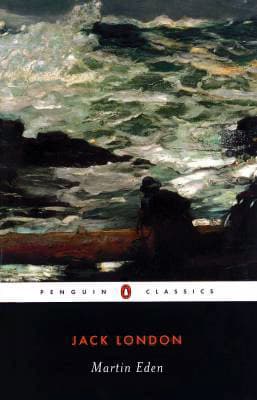
A Sailor's Awakening: Martin Meets Ruth
Martin Eden, a strong, uneducated sailor from Oakland's working class, enters the refined world of the Morse family after saving their son, Arthur, from a street fight. He is immediately taken with Ruth Morse, a beautiful, educated young woman from a wealthy background. Her delicate features, cultured speech, and intellectual interests show Martin a new and fascinating world. This meeting starts a strong desire in him to educate himself, to become worthy of Ruth, and to close the large social and intellectual gap between them. He starts to read many books, driven by a fierce will to understand her world and express his own developing thoughts.
The Arduous Path of Self-Education
Inspired by Ruth, Martin starts a hard self-education program. He spends all his time in public libraries, reading widely from philosophy to science, literature to history. He tries to learn grammar and rhetoric, carefully working to improve his rough language. His working-class friends and family are skeptical and do not understand his efforts, seeing his intellectual pursuits as impractical and strange. Even Ruth, though she first encourages him, struggles to fully grasp his deep ambition and intense struggle. She often tries to guide him toward more conventional, less ambitious jobs, like becoming a clerk.
Discovering His Literary Voice
Through his reading and the awakening of his own mind, Martin finds a strong desire to write. He sees the world with new eyes, feeling a powerful urge to capture the beauty, harshness, and truth of life as he has known it, from the sea to the poor areas. He starts to write constantly, producing stories, poems, and essays that use his own life and the philosophical ideas he encounters. He believes his unique view and raw power of expression will connect with the world, sure of his own talent.
Rejection and Financial Desperation
Martin's writing goals clash sharply with the reality of publishing. He sends out many manuscripts but receives a steady stream of rejection letters. Publishers find his work too raw, too unusual, or not profitable. His bad financial situation adds to his frustration. He pawns his clothes, works odd jobs like laundry, and often goes hungry, all while trying to keep up his strict writing schedule. Ruth, increasingly worried by his lack of money and his unusual life, urges him to stop writing and find a steady job, which further strains their relationship.
Ruth's Wavering Loyalty and Martin's Steadfast Belief
Despite being poor and unrecognized, Martin remains confident in his talent. He sees himself as an artist meant for greatness and ignores the business demands of the literary market. Ruth, however, is increasingly influenced by her family's disapproval of Martin's bohemian life and his inability to support her. Her parents, especially her father, openly mock his writing ambitions and see him as unsuitable. Ruth, torn between her feelings for Martin and her ingrained wealthy values, eventually ends their engagement, unable to handle the social pressure and his continued failure to achieve conventional success.
Meeting Lizzie Connolly and the Socialist Circle
During his struggles, Martin meets Lizzie Connolly, a factory girl from his own background, who loves and cares for him without judgment. He also joins a socialist intellectual group, where he discusses philosophy and economics. While he respects their intelligence and sincerity, Martin, a strong individualist, ultimately rejects socialism. He believes in the power of the individual and the 'superman' idea, greatly influenced by Herbert Spencer and Friedrich Nietzsche. He supports the fight for individual achievement, viewing society as a battleground where the strongest succeed, a philosophy that separates him from the socialists.
The Tide Turns: Martin's Sudden Success
Suddenly, the literary world discovers Martin Eden. A few of his long-rejected manuscripts are finally accepted, and then, his work is published quickly. His unique voice, powerful style, and unusual themes, once thought unsuitable, are now praised as new. He becomes famous overnight, achieving the literary recognition and money he had wanted. Articles are written about him, critics praise him, and his books become bestsellers. The very publishers who had rejected him now want his work.
The Bitter Taste of Triumph
Success brings a deep and unexpected disappointment. Martin finds that the fame and wealth he had desired are empty. The people who once scorned him, including the Morse family, now flatter him, eager to be associated with him. Ruth, seeing his success, tries to restart their romance, but Martin sees her as shallow and society as fake. He realizes that they never truly valued him for his art or his mind, but only for his material achievements. This discovery leaves him feeling alone and disgusted, convinced that the world is a fraud and that true beauty and sincerity are rare.
Escaping the Emptiness
Overwhelmed by his empty success and the hypocrisy of those around him, Martin starts to get rid of his possessions. He gives away most of his money, helping his working-class friends and family live comfortably, though they often misunderstand why he does it. He buys a yacht and tries to escape society's constant demands and superficiality, seeking peace in solitude and nature's simplicity. He feels a deep tiredness, a spiritual exhaustion that no amount of fame or money can fix. His great intellectual and artistic journey ends in a devastating sense of meaninglessness.
The Final Descent into the Abyss
Despite trying to escape, Martin finds no peace. The deep disappointment has taken away his will to live. He feels a great boredom, a spiritual fatigue that no longer lets him find joy or purpose in anything. He tries to find meaning in the sea, the one constant in his life, but even that fails him. During a voyage on his yacht, he goes into the ocean, fully aware, letting the water cover him. He fights the instinct to survive for a moment, then gives up, finding a final, dark peace in the depths, ending his life by suicide. His journey from an uneducated sailor to a celebrated intellectual ends with a tragic rejection of life itself.