“Poverty and sickness, and a hundred ills, will find their way where they will, but you'll not find them in the house of a good man, unless he has done something to deserve them.”
— Spoken by Pecksniff, reflecting his hypocritical moralizing.

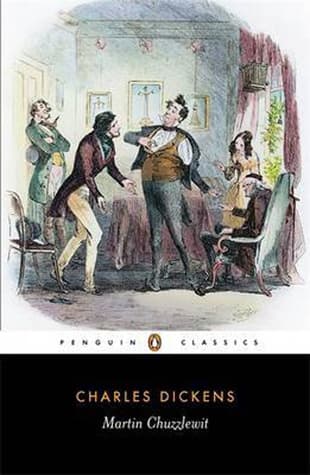
Charles Dickens (1800)
Genre
Historical Fiction
Reading Time
18-25 hours
Key Themes
See below
Sign in to track this book
In a sharp transatlantic satire, Dickens examines the Chuzzlewit family's selfishness, following one Martin's journey from moral decay to redemption and another's descent into greed, blackmail, and crime, all while introducing the memorable Mrs. Gamp.
Old Martin Chuzzlewit, a wealthy and unusual man, deeply distrusts his relatives' motives, believing them all to be selfish. He lives in a large country house with his distant cousin and companion, Mary Graham, an orphaned girl he adopted. To test his grandson, Young Martin Chuzzlewit, and to annoy his other greedy relatives, Old Martin suddenly sends Young Martin away, effectively disinheriting him. Young Martin, proud and somewhat self-centered, is left to make his own way, believing his grandfather acts purely on whim. This action starts a series of events Old Martin designed to reveal his family members' true natures.
After his grandfather casts him out, Young Martin Chuzzlewit seeks work and becomes an apprentice to Seth Pecksniff, a self-righteous architect in Salisbury. Pecksniff, a master of hypocrisy, outwardly preaches virtue while secretly planning for his own gain and inheritance from Old Martin. Young Martin, still somewhat naive and self-absorbed, struggles under Pecksniff's guidance, often clashing with Pecksniff's two daughters, Charity and Mercy (Merry), and the patient Tom Pinch, Pecksniff's kind and loyal assistant. Martin's time with Pecksniff shows him the extent of human deceit, though he is slow to fully recognize it at first.
Jonas Chuzzlewit, another cousin and a famously cruel and greedy man, is the son of Anthony Chuzzlewit, Old Martin's brother. Jonas schemes to marry one of Pecksniff's daughters for her potential inheritance. He first courts Charity but eventually marries Mercy Pecksniff, much to the sadness of Tom Pinch, who secretly loves Merry. After their marriage, Jonas shows his true, brutal nature, abusing Mercy emotionally and physically. His villainy grows as he gets involved in shady business with Montague Tigg and plots to hasten his own father's death for his inheritance, demonstrating the extreme depths of Chuzzlewit selfishness.
Unhappy with his life in England and still estranged from his grandfather, Young Martin Chuzzlewit decides to seek his fortune in America, joined by the always optimistic Mark Tapley, who wants to prove his 'jolly' nature in hardship. They invest in a fraudulent land scheme in the desolate settlement of Eden, a swampy, disease-ridden wasteland. In America, they meet various unusual and often dishonest characters, including the unethical General Choke and the boastful Colonel Diver. Martin experiences hardship, illness, and the realities of American frontier life, forcing him to face his own selfishness and realize his past pride was foolish.
Tom Pinch, the kind and honest assistant to Seth Pecksniff, remains a symbol of integrity amid widespread hypocrisy. He secretly has deep feelings for Mary Graham, Old Martin's companion, and is upset when Pecksniff tries to win her over, believing she will inherit Old Martin's fortune. When Tom discovers Pecksniff's true intentions and his deceit, he confronts his employer, leading to his immediate firing. Penniless and without prospects, Tom moves to London, where he continues to search for work and worries about Mary, unaware of Old Martin's larger plan.
Montague Tigg, a former hanger-on and associate of Jonas Chuzzlewit, changes dramatically. With Jonas's financial help, Tigg reinvents himself as the showy and seemingly respectable 'Tigg Montague, Esquire,' and starts a fraudulent insurance company called the Anglo-Bengalee Disinterested Loan and Life Assurance Company. This business preys on the public's greed, promising huge returns while actually being a Ponzi scheme. Tigg's rise shows how easily appearances can trick and how easily people can be swindled by a charming con artist offering quick wealth.
After a long period of seeming weakness and dependence on Pecksniff, Old Martin Chuzzlewit dramatically reveals that his infirmity was a trick to observe his relatives' true characters. He exposes Seth Pecksniff's deep hypocrisy and selfishness, publicly denouncing him and disinheriting him. Old Martin makes peace with his grandson, Young Martin, who has returned from America a changed and humbled man, having learned the hard lessons of self-reliance and the problems of selfishness. This revelation marks a turning point, as Old Martin begins to correct injustices and expose the moral corruption within his family.
Jonas Chuzzlewit, deeply involved in Tigg Montague's fraudulent insurance scheme, becomes increasingly desperate as Tigg learns of Jonas's earlier crime—the murder of his own father, Anthony Chuzzlewit. Fearing exposure and Tigg's blackmail, Jonas plans and carries out Tigg's murder in a secluded woods. The murder is investigated by the sharp detective Nadgett. Jonas's guilt is made worse by his declining mental state and his continued abuse of Mercy. His actions heighten the novel's dark themes of crime and punishment, setting the stage for his downfall as he is trapped.
The relentless investigation by Nadgett, along with others' testimony and Jonas's own incriminating behavior, leads to his arrest for the murder of Montague Tigg. Facing justice and the full exposure of his crimes, including poisoning his father, Jonas Chuzzlewit takes his own life by poison while in custody. His death brings a grim but fitting end to his life of greed and cruelty, serving as a stark warning against unchecked selfishness and villainy. His demise allows for some peace for his abused wife, Mercy, and the other characters he tormented.
With the villains exposed and punished, the good characters find their deserved happiness. Young Martin Chuzzlewit, having shed his selfishness and matured into a responsible and caring man, marries Mary Graham, the woman he has always loved. Tom Pinch, the model of goodness, finds contentment in his modest life, working as a librarian and continuing his selfless acts. Old Martin Chuzzlewit lives to see his family reconciled and his values confirmed. The novel ends with a sense of moral order restored, emphasizing that true happiness and worth come not from wealth or status, but from kindness, integrity, and selflessness.
The Protagonist
Transforms from a proud, selfish young man into a humble, compassionate, and responsible adult.
The Protagonist/Architect of the plot
Reveals his feigned infirmity to expose hypocrisy and guide his grandson towards moral redemption.
The Supporting
Remains steadfast in his goodness, finding quiet contentment and a measure of respect.
The Antagonist
His elaborate facade of virtue is dismantled, leading to his public exposure and ruin.
The Antagonist
Descends into increasingly desperate crime, culminating in murder and suicide.
The Supporting
Remains steadfast and loyal, eventually marrying the reformed Young Martin.
The Supporting
Remains cheerfully optimistic throughout all trials, proving his 'jolly' nature.
The Antagonist
Rises from destitution to lead a grand fraud, only to be murdered by his accomplice.
The Supporting/Comedic
Remains consistently self-serving and comically oblivious, a static but memorable character.
The widespread theme of selfishness is central to 'Martin Chuzzlewit.' Almost every character, especially within the Chuzzlewit family, is driven by personal gain, greed, and a disregard for others. Old Martin plans his elaborate scheme precisely to reveal this selfishness. From Pecksniff's self-righteous manipulation of Old Martin's will to Jonas's ruthless pursuit of wealth and eventual murder, the novel carefully examines the destructive power of greed. Young Martin's initial pride and self-absorption also come from this core flaw, which he must overcome to find redemption. The American sections, with the fraudulent Eden scheme, further show how greed can lead to widespread deception and ruin.
“There are some men who can go through life, and never be ruffled by a breath of passion. There are others who are so constituted, that they can't be at peace with themselves, unless they are at war with all the world. And there are others, again, who are perpetually striving, and never at rest.”
Hypocrisy is clearly shown through characters like Seth Pecksniff, who outwardly projects an image of moral correctness and kindness while secretly having selfish and malicious intentions. His elaborate pretense of piety and his 'moral' statements are a constant source of irony. Montague Tigg's change from a poor follower to the showy 'Tigg Montague' and his creation of the fraudulent Anglo-Bengalee Company further demonstrate how appearances can be misleading and how easily people can be fooled by a convincing facade. Old Martin's pretended illness is a deliberate deception, used to expose his relatives' deeper deceptions.
“He was a sleek, smiling, subservient, obsequious, fawning, crawling, and canting rascal, but he was a rascal.”
While many characters are caught in vice, the novel also explores the possibility of moral growth and redemption, mainly through Young Martin Chuzzlewit. His journey to America, the hardships he faces, and his near-death experience in Eden force him to confront his own selfishness and pride. He returns to England a changed man, humbled and committed to goodness. This transformation contrasts with Jonas Chuzzlewit's irreversible descent into evil. The novel suggests that while natural goodness (like Tom Pinch's) is admirable, conscious effort and suffering can lead to deep personal change and a more virtuous life.
“He knew that in his selfishness, he had wronged the man who had been true to him when all the world was false.”
The novel presents several characters who embody true goodness, serving as moral anchors against the tide of selfishness and deceit. Tom Pinch, with his unwavering kindness, humility, and loyalty, is the most prominent example. He acts out of pure altruism, seeking no personal gain, and his simple, honest life stands in sharp contrast to the Chuzzlewit family's schemes. Mary Graham also represents integrity and steadfastness. These characters highlight that true goodness is not about outward displays of piety or wealth, but about an inner moral compass, compassion, and selflessness. Their ultimate happiness emphasizes Dickens's belief in virtue's triumph.
“Oh, a world of good will come of it, Tom! A world of good!”
Dickens's visit to America in 1842 deeply influenced the novel, leading to a satirical and often harsh portrayal of American society. The parts set in America depict a land full of boastfulness, crude manners, widespread speculation, and a superficial sense of democracy. The fraudulent land scheme of 'Eden' symbolizes the broken promises and harsh realities of the American frontier. Characters like General Choke and Colonel Diver, with their exaggerated patriotism and self-serving talk, are caricatures of American types. This critique highlights Dickens's disappointment with what he saw as the hypocrisy and materialism beneath American idealism.
“A perfect Paradise, sir. That's what Eden is. A perfect Paradise.”
The pairing of characters who share similar names or traits but represent opposing moral paths.
Dickens frequently uses doubles in 'Martin Chuzzlewit' to highlight contrasts and similarities. The most prominent example is the pairing of Young Martin Chuzzlewit and Jonas Chuzzlewit. Both are members of the same family and initially exhibit aspects of Chuzzlewit selfishness. However, Young Martin embarks on a path of redemption and moral growth, while Jonas descends into deeper depravity and crime. This device emphasizes the choices individuals make and the potential for both good and evil within similar starting points. Other doubles include the Pecksniff sisters, Charity and Mercy, who initially seem similar but have different fates.
The audience's knowledge of Old Martin's feigned illness and Pecksniff's true character.
Dramatic irony is a key device, particularly concerning Old Martin Chuzzlewit's 'infirmity.' For much of the novel, the reader is aware that Old Martin is feigning senility and dependence, while characters like Seth Pecksniff are completely oblivious, believing they are successfully manipulating him. This creates tension and anticipation, as the reader waits for Old Martin's grand revelation and Pecksniff's inevitable downfall. It also allows Dickens to highlight the characters' self-deception and the depths of their greed, as they reveal their true motives under the false impression of privacy and control.
Exaggerated characters and situations used to critique societal flaws, especially in America.
Dickens employs extensive satire and caricature to critique various aspects of society, most notably in the American sections of the novel. Characters like General Choke, Colonel Diver, and the inhabitants of Eden are exaggerated to highlight American boastfulness, land speculation, and a superficial sense of national pride. Mrs. Gamp is another prime example of caricature, her eccentricities and speech patterns serving to satirize the unregulated and often incompetent nursing profession of the era. This device allows Dickens to deliver sharp social commentary through humor and exaggeration, making his criticisms memorable and impactful.
Young Martin's physical and spiritual journey to America and back.
Young Martin Chuzzlewit's journey to America and his subsequent return is a pivotal plot device. This physical journey serves as a metaphor for his spiritual and moral transformation. The hardships, illness, and disillusionment he experiences in the desolate settlement of Eden strip away his youthful pride and selfishness. It forces him to confront his own flaws and develop empathy and self-reliance. The return journey signifies his readiness for redemption and his reconciliation with his grandfather, marking his transition from a self-absorbed youth to a responsible and compassionate man.
“Poverty and sickness, and a hundred ills, will find their way where they will, but you'll not find them in the house of a good man, unless he has done something to deserve them.”
— Spoken by Pecksniff, reflecting his hypocritical moralizing.
“There are some happy wights, however, to whom a new idea is not a monster, but a child.”
— Narrator's observation on the human mind's reception of novelty.
“The wisdom of the world is but foolishness in the eyes of God.”
— A general reflection on earthly vs. divine wisdom, often echoed by religious characters.
“It is good to be selfish, and it is good to be rich. But it is better to be unselfish and to be poor.”
— A sarcastic observation on prevailing societal values, possibly by a cynical character.
“The air was so thick with cards, and dice, and half-burnt cigars, and the fumes of hot punch, that you might have cut it with a knife.”
— Description of a gambling den or a particularly smoky, boisterous gathering.
“A man who can't say 'No' is no man.”
— A statement about assertiveness and strength of character.
“It is a most extraordinary thing, that the richest people are always the most anxious to save money.”
— A humorous and ironic observation on the habits of the wealthy.
“What a fine thing it is to be a rich man, and to do what you like!”
— A character expressing the perceived freedom and power of wealth.
“He was a man who had no other occupation in life than to be a gentleman.”
— Description of a character whose sole purpose is to maintain a social facade.
“There are some people who are so fond of their own opinions that they cannot bear to hear anybody else's.”
— A general comment on obstinacy and close-mindedness.
“The world is a great stage, and we are all actors on it.”
— A classic metaphor, often used to describe the performative aspect of human life.
“It's a pleasant thing to reflect upon, and to be able to say to oneself, 'I have done my duty.'”
— A character expressing satisfaction in fulfilling obligations.
“There is a dignity in the very name of a great man, which is not to be found in any other.”
— Reflecting on the respect and awe associated with prominent figures.
“He was a man of that peculiar make, that if he had been born a king, he would have been a despot; if a beggar, a thief.”
— A sharp character assessment, highlighting inherent tendencies.
“It is a melancholy thing to see a man who has outlived his usefulness.”
— A somber reflection on aging and loss of purpose.
Ready to see how well you understood this book? Take our interactive quiz with 10 questions.
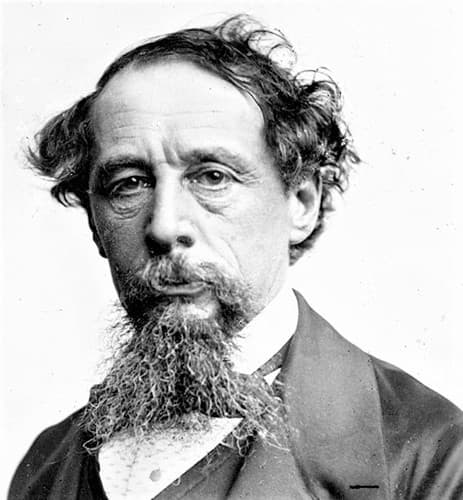
Charles John Huffam Dickens was an English writer and social critic who created some of the world's best-known fictional characters and is regarded by many as the greatest novelist of the Victorian era. His works enjoyed unprecedented popularity during his lifetime and, by the 20th century, critics and scholars had recognised him as a literary genius. His novels and short stories are widely read today.