“The past is a place, and you can go there. You can do more than remember it, you can inhabit it.”
— Julia's initial realization about her ability to travel through time.

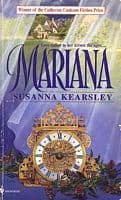
Susanna Kearsley (1994)
Genre
Fantasy / Historical Fiction / Mystery / Romance
Reading Time
352 min
Key Themes
See below
Sign in to track this book
A woman buys her dream house, only to discover it's a portal to 17th-century England, where she relives a past life of forbidden love and danger that threatens her present.
Julia Beckett, an antique dealer in London, has been drawn to a house called Greywethers since childhood. She clearly remembers seeing it at age five and feeling a strong connection, believing it was 'her house.' As an adult, she can finally buy Greywethers. Despite its poor condition and her friends' doubts, Julia feels an undeniable pull to the property. She decides to buy it, convinced her destiny is linked to the house. This decision changes her life, setting the stage for the unusual events that will happen within its old walls.
Soon after moving into Greywethers, Julia experiences something strange. While exploring the house, she suddenly feels disoriented, and her surroundings change. She wakes up in a different time and place, in the body of a young woman named Mariana in 17th-century England. This first transition is brief and confusing, leaving Julia questioning her mind. She struggles to understand if the vivid experience was a dream or something more. The experience is frightening yet interesting, sparking her curiosity about Mariana's life.
As Julia continues to experience these unplanned time shifts, she slowly learns about Mariana's life. She finds out Mariana lives with her stepmother, Aunt Elinor, and her stepbrother, Richard. Mariana is promised to the rich but unpleasant Sir Robert, a marriage arranged by her family for money. Through Mariana's eyes, Julia experiences the strict social rules, the dangers of life, and the few choices available to women then. She also meets Mariana's true love, the charming and honorable Richard de Mornay, her stepbrother, with whom a relationship is scandalous and forbidden.
Julia, as Mariana, finds herself increasingly drawn to Richard de Mornay. Their shared history as step-siblings and their genuine affection create a powerful, but forbidden, bond. They often meet in secret, their stolen moments filled with tenderness and longing. Julia, at first an observer, becomes deeply involved in Mariana's feelings for Richard, experiencing the intensity of their love and the despair of their situation. The upcoming arranged marriage to Sir Robert darkens their secret romance, adding urgency and danger to their every interaction and making their future together seem impossible in 17th-century society.
Sir Robert, Mariana's intended, begins to show his true nature. He is not just unpleasant but also cruel and possessive. Julia, as Mariana, endures his increasingly aggressive advances and manipulative behavior. Sir Robert's actions hint at a darker motive beyond marriage, suggesting a desire to control Mariana's inheritance and possibly her life. The threat he poses becomes clear, creating constant fear and urgency for Mariana and Richard. His presence looms large, making their forbidden love even more dangerous and their attempts to be together risky, as they fear for Mariana's safety.
Back in her own time, Julia becomes focused on researching Greywethers' history and the families who lived there. She visits local archives, libraries, and antique shops, looking for any mention of Mariana or the de Mornay family. She finds old documents, family trees, and historical records that confirm some of the details she experiences as Mariana. These findings strengthen her belief in the reality of her time travel and deepen her commitment to understanding Mariana's story. Julia finds herself caught between two worlds, using modern resources to solve a 17th-century mystery that feels very personal.
Through more jumps into the past, Julia, as Mariana, uncovers a sinister plot. She realizes that Sir Robert, with Aunt Elinor, is not only seeking Mariana's hand in marriage but also her large inheritance. They plan to marry her, secure her fortune, and then get rid of her. This discovery adds more danger to Mariana's situation, turning her romantic problem into a fight for survival. Julia experiences Mariana's fear and desperation, knowing her very existence is threatened by the greed and betrayal of those closest to her, making escape a matter of survival.
As the wedding day to Sir Robert nears, Richard de Mornay takes desperate steps to save Mariana. He plans their escape, knowing the immense risks. Julia, as Mariana, experiences the tension and terror of their flight, constantly fearing discovery and capture. Their escape is dangerous, relying on secrecy and quick thinking. This act of defiance strengthens their bond and commitment to each other, but it also puts them in the path of Sir Robert's revenge, forcing them to live as fugitives, always looking over their shoulders.
The climax of Mariana's story is a dramatic confrontation. Julia, as Mariana, is present as Richard and Mariana face Sir Robert and Aunt Elinor. The truth of their betrayal is revealed, leading to a tense and dangerous standoff. The confrontation is intense, filled with accusations and threats, as Mariana and Richard fight for their lives and future. Julia experiences the full emotional weight of this moment, as Mariana's fate hangs in the balance, the result of all the dangers and betrayals they have endured throughout the 17th-century story.
After the confrontation, Mariana's story finds resolution. Richard and Mariana secure their future together, overcoming social rules and their enemies' schemes. Julia witnesses Mariana's happiness and the start of her own family with Richard. This final, satisfying part of Mariana's life brings Julia a deep sense of closure and peace. The vividness of Mariana's experiences begins to fade, and Julia feels the pull of her own time growing stronger, signaling that Mariana's purpose for her is fulfilled, and the past is finally laid to rest.
With Mariana's story resolved, Julia feels more present in her own time. She meets Ben, an architect working on Greywethers' restoration, who is also drawn to the house. Their relationship grows naturally, mirroring the deep connection and love she experienced as Mariana with Richard. Julia falls in love with Ben, recognizing in him qualities that echo Richard's strength and kindness. This modern romance feels earned and real, allowing Julia to embrace her own future without the lingering shadows of the past, showing she is ready for happiness.
Julia understands the true reason for her connection to Mariana. She realizes she was not meant to change the past, but to witness Mariana's life, to ensure her story was remembered, and perhaps, to learn from Mariana's strength and love. With Mariana's story complete and her own future with Ben unfolding, Julia feels a deep sense of peace and belonging at Greywethers. She is no longer just an observer of the past but an active participant in her own present, ready to build a life and a family, fulfilling her own destiny within the walls of the house she always knew was hers.
The Protagonist
Julia transforms from a career-focused individual into someone who embraces love and connection, finding her own happiness after resolving Mariana's story.
The Protagonist (historical)
Mariana evolves from a young woman trapped by circumstances to a strong, independent woman who secures her own future and love.
The Romantic Interest (historical)
Richard remains steadfast in his love and commitment, ultimately succeeding in protecting Mariana and building a life with her.
The Antagonist
Sir Robert's true villainy is exposed, and his plot is ultimately foiled.
The Antagonist
Aunt Elinor's treachery is revealed, and her schemes are ultimately defeated.
The Romantic Interest (modern)
Ben becomes Julia's partner, helping her to build a future in her own time.
The Supporting
Mrs. Finch remains a constant, supportive presence in Julia's life.
The Supporting (historical)
Thomas plays a vital role in protecting Mariana and Richard.
The main theme explores how love, both romantic and familial, lasts through time and challenges. Julia experiences Mariana's intense, forbidden love for Richard, which drives the 17th-century story. This strong connection deeply affects Julia, shaping her understanding of love in her own life. The lasting nature of Mariana and Richard's bond, against all odds, shows love's strength. Julia's eventual love for Ben reflects this depth, suggesting that true love is timeless and finds a way to appear.
““Love, she thought, was not something that came and went, but a deep river that flowed through the heart, unwavering.””
The book often features the idea that certain people and places are meant to be connected. Julia's childhood memory of Greywethers and her strong desire to buy it as an adult suggest a destined link. Her time-travel experiences are not random but serve a purpose: to witness Mariana's story and perhaps to resolve an unfinished historical thread. This theme implies that some connections are so strong they defy time, guiding individuals to fulfill a specific role or purpose that spans centuries, ultimately bringing a sense of belonging.
““She knew, with a certainty that transcended logic, that Greywethers was her house. It always had been.””
The book constantly examines how the past affects the present and vice-versa. Julia's modern life is deeply changed by her experiences in the 17th century, shaping her views on relationships, danger, and happiness. Conversely, her modern understanding and research sometimes provide context or clarity to Mariana's difficult situation. The house, Greywethers, acts as a physical link, a constant portal between two different eras. This theme shows that history is not just facts but a living thing that continues to affect contemporary lives.
““The past wasn't dead; it was merely sleeping, waiting for someone to wake it up.””
This theme is clear in Mariana's 17th-century life, where women faced major societal restrictions regarding marriage, property, and personal control. Mariana's struggle against the forced marriage to Sir Robert and her fight for her inheritance highlight these limits. In contrast, Julia in the modern era has much greater freedom and independence. The book contrasts these two realities, showing the progress made in women's rights while also showing Mariana's fierce resolve to create her own freedom despite overwhelming odds, making her a symbol of resilience.
““To be a woman in her time meant to be a pawn, unless one had the courage to break the game.””
The story weaves together themes of betrayal and loyalty, especially in Mariana's story. Aunt Elinor and Sir Robert represent deep betrayal, plotting against Mariana for her inheritance and happiness. Their actions show the dangers of trusting those closest to you when greed is involved. On the other hand, Richard de Mornay and the loyal servant Thomas show unwavering loyalty, risking their lives to protect Mariana. These opposing forces drive much of the plot's conflict and show the deep impact of both treachery and faithfulness on a person's fate.
““Some betrayals cut deeper than any blade, for they came from hands once thought to be loving.””
Julia physically and mentally inhabits Mariana's body in the past.
Unlike traditional time travel where a character physically moves through time, Julia's experience is more immersive. She doesn't just observe the past; she *becomes* Mariana, experiencing her memories, emotions, and physical sensations. This device allows the reader to deeply connect with Mariana's plight and the historical setting, blurring the lines between Julia's identity and Mariana's. It also creates a unique mystery as Julia must piece together Mariana's life from within, without full control over her shifts. This makes the past feel incredibly real and immediate.
An ancient house serving as a portal and repository of historical memory.
Greywethers is more than just a setting; it's a character in itself, acting as the catalyst and conduit for Julia's time travel. The house is imbued with a sense of history and memory, drawing Julia to it and facilitating her shifts. Its dilapidated state in the present and its vibrant life in the past highlight the passage of time. The house functions as a tangible link between the two eras, holding the 'echoes' of Mariana's life within its walls and compelling Julia to uncover its secrets. It represents both mystery and destiny.
Julia's modern life subtly mirrors Mariana's historical experiences.
This device highlights the thematic connections between the two protagonists. Julia's initial independence and later search for love echo Mariana's own journey for autonomy and true affection. The threats Mariana faces (e.g., control over her life, potential danger) find subtle contemporary parallels in Julia's own emotional landscape or choices. This creates a sense of destiny and suggests that certain life lessons or patterns might repeat or resonate across generations, reinforcing the idea that Julia's experience of Mariana's life is meant to teach her something for her own.
Julia questions her own sanity and the reality of her experiences.
In the early stages of the novel, Julia frequently doubts her time-travel experiences, attributing them to vivid dreams, stress, or hallucinations. This device draws the reader into her confusion and uncertainty, making them question the reality of the events alongside her. It builds suspense and emphasizes the extraordinary nature of what is happening. As Julia gathers more evidence and her experiences become more consistent, this initial unreliability gives way to a growing conviction, mirroring the reader's own acceptance of the fantastical premise.
“The past is a place, and you can go there. You can do more than remember it, you can inhabit it.”
— Julia's initial realization about her ability to travel through time.
“There are some things that we know, and some things that we don't know, and some things that we don't know that we don't know.”
— Julia reflecting on the mysterious nature of her experiences.
“Love is not a single thing. It is a many-faceted gem, and each facet reflects a different light.”
— Julia contemplating the different forms of love she experiences across centuries.
“The house was more than just bricks and mortar; it was a living, breathing entity, with a memory of its own.”
— Julia's description of the ancient house, Prior's Gate, and its connection to the past.
“Sometimes the greatest courage lies not in fighting, but in letting go.”
— Julia's internal struggle with her feelings for Richard and her life in the present.
“History isn't just dates and names; it's people, living and breathing, loving and losing.”
— Julia's perspective on history, informed by her direct experiences.
“There is a kind of magic in old things, a whisper of lives lived and stories told.”
— Julia's appreciation for antiques and the echoes of the past they carry.
“To truly understand someone, you have to walk in their shoes, even if those shoes are centuries old.”
— Julia's journey of understanding Mariana through living her life.
“Fate is a curious thing. It can lead you down paths you never imagined, to people you never expected.”
— Julia musing on the unexpected turns her life has taken.
“The heart remembers what the mind forgets.”
— Julia's deep emotional connection to the past, even when details are hazy.
“Every choice we make ripples through time, affecting not just our present, but our past and future too.”
— Julia's growing awareness of the interconnectedness of time and decisions.
“Some connections transcend time, binding souls together across the centuries.”
— Julia's reflection on her profound bond with Richard and the people of the past.
“It’s not about changing the past, but understanding it, and letting it change you.”
— Julia's ultimate realization about the purpose of her time travel.
“The greatest adventure is not in seeking new lands, but in seeing with new eyes.”
— Julia's shift in perspective after her experiences in the 17th century.
Ready to see how well you understood this book? Take our interactive quiz with 10 questions.







