“The future belongs to crowds.”
— A general observation on the nature of society and power.

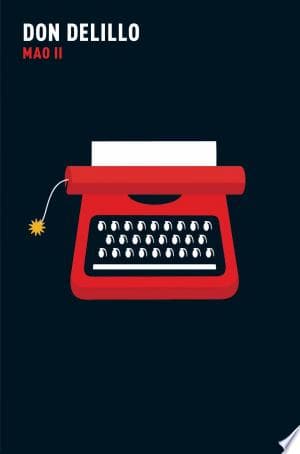
Don DeLillo (2016)
Genre
Literary Fiction
Reading Time
300 min
Key Themes
See below
Sign in to track this book
A reclusive novelist leaves his quiet life to help release a hostage in Beirut, finding that the power to shape culture has moved from writing to violent acts, leaving his personal life in disarray.
Bill Gray, a famous novelist, has not published a book in decades. He lives in extreme seclusion in a large house in upstate New York. His loyal, almost obsessive assistant, Scott, and a younger woman named Karen, who is Scott's lover but also shares an intimate, unclear relationship with Bill, attend to him. Bill spends his days in a state of suspended animation, observing the outside world through news and photographs, especially those of mass events and revolutionary figures. His isolation is a deliberate choice, a perceived necessity for his art, yet it has become a cage, blurring the lines between creation and paralysis. Scott carefully manages Bill's life, protecting his privacy while also subtly controlling his access to the outside world, creating a strange system of artistic stagnation and personal dependency.
Brita Nilsson, a Swedish photographer known for her portraits of reclusive public figures, arrives at Bill's home, determined to photograph him. Her presence disrupts the carefully maintained balance of Bill's isolated life. Brita sees her work as an attempt to capture the 'aura' of individuals who avoid public attention, seeing Bill as the ultimate subject. Her pursuit of Bill's image highlights the novel's main tension between the individual and the crowd, the artist's private world versus public consumption. Bill, initially resistant, slowly begins to engage with Brita, sensing in her a connection to the external world he has so deliberately avoided, and perhaps a chance to regain some control.
Charles, Bill's publisher, arrives at the compound with an urgent and unexpected proposal. He reveals that a Swiss poet, Jean-Claude Julien, has been taken hostage by Islamic fundamentalists in Beirut. Charles believes that if Bill, as a respected literary figure, were to travel to Beirut and participate in a press conference, his presence might persuade the captors to release Julien. This proposal shatters Bill's long-standing reclusion, forcing him to confront the political realities of a world he has only observed from afar. The request challenges Bill's artistic detachment, suggesting that the power of the writer might still matter, even in a world increasingly dominated by violence and mass movements.
Despite Scott's strong objections and pleas to remain in his safe haven, Bill decides to leave his secluded home. He travels to London, accompanied by Karen, who is both confused and intrigued by this sudden change in Bill's behavior. The journey is disorienting for Bill, who has been cut off from modern life for so long. London, with its busy crowds and widespread media, serves as a jarring reintroduction to the outside world. Karen, while supportive, struggles to understand Bill's reasons, sensing a deep change within him. Their arrival in London marks the beginning of Bill's descent into the political world, moving him closer to the dangerous reality of Beirut and the hostage crisis.
In London, Bill attends a series of meetings with publishers, journalists, and security consultants involved in the efforts to free Jean-Claude Julien. He learns the harsh realities of the hostage situation, the political complexities, and the dangers of traveling to Beirut. These meetings expose Bill to a world of real consequences, far removed from the abstract world of literature. He faces the cold logic of terrorism and the fragility of human life. The discussions highlight the diminishing power of the novelist in the face of such brutal forces, a theme that deeply connects with Bill's own artistic anxieties and his sense of being outdated. He begins to question the effectiveness of his mission.
Back in New York, Scott, left alone in the house he shared with Bill and Karen, struggles deeply with Bill's absence. His carefully built world, centered entirely around Bill, collapses. Scott's devotion to Bill borders on obsession, and he sees Bill's departure as a betrayal, a shattering of their symbiotic relationship. He descends into a state of anxiety, paranoia, and delusion, obsessively replaying Bill's words and actions. Scott's breakdown shows the novel's exploration of dependency and the fragile nature of identity when tied to another person. His inability to cope without Bill highlights how much Bill's reclusion had become a shared prison for them both, though with different bars.
Bill, accompanied by a guide, finally arrives in Beirut. The city is a chaotic, war-torn place, a stark contrast to his ordered, secluded life. He is immediately immersed in an atmosphere of constant tension, danger, and political intrigue. The streets are filled with armed men, checkpoints, and visible scars of conflict. Bill experiences a deep sense of disorientation and vulnerability, realizing the vast difference between his literary world and the harsh realities of the Middle East. He observes the widespread presence of death and destruction, which further strengthens his growing belief that the power of literature has been eclipsed by the power of violence and mass movements, particularly those driven by extremist ideologies.
While in Beirut, Bill tries to gather information about Jean-Claude Julien and his captors. He learns that Julien is being held by a shadowy fundamentalist group, and the negotiations for his release are complex and dangerous. Bill encounters various individuals involved in the hostage crisis, including journalists and intermediaries, who offer fragmented insights into the terrorists' motivations. He also begins to understand the symbolic power of the hostage, not just as an individual, but as a representation of Western influence and perceived injustices. Bill senses a disturbing parallel between the reclusive novelist and the anonymous bomb-maker, both operating outside conventional society, yet wielding different forms of power.
Bill Gray's time in Beirut ends abruptly and ambiguously. He is found dead, seemingly of natural causes, in a hotel room. His death is understated, almost anti-climactic, leaving his mission to save Jean-Claude Julien unfulfilled. The circumstances surrounding his death are left open to interpretation, reflecting the larger uncertainties and inexplicable violence of the city. Bill's death symbolizes the ultimate powerlessness of the individual artist in the face of overwhelming global forces and the futility of his attempt to re-enter a world he no longer understood. His death marks the definitive end of his literary journey and his physical presence, leaving behind unwritten novels and unanswered questions.
Brita Nilsson, having followed Bill's trail, also arrives in Beirut shortly after his death. Her initial goal to photograph Bill is no longer relevant, but her artistic drive remains. She quickly turns her attention to a new, more compelling subject: the young men involved in the fundamentalist groups, the anonymous faces behind the violence. Brita begins to photograph these figures, seeking to capture their essence and the forces that drive them. Her new focus signifies a shift in the novel's exploration of celebrity and power, moving from the fading presence of the individual artist to the emerging, terrifying power of the anonymous collective. She seeks to understand the new icons of influence, those who shape the world through acts of terror rather than words.
Following Bill's death, and after further negotiations and uncertainty, Jean-Claude Julien is eventually released by his captors. His release is presented as an almost random event, separate from Bill's specific mission. The reasons behind it remain unclear, highlighting the unpredictable nature of the terrorists' power and the often-unpredictable outcomes of such situations. Julien emerges from captivity physically and psychologically scarred, showing the trauma he endured. His release, while a success, supports the idea that the world's major events are often shaped by forces beyond the control or influence of individual artists or intellectuals, further emphasizing the novel's main argument about the decline of the novelist's power.
Karen returns to New York, deeply affected by Bill's death and her experiences in Beirut. She grapples with the complexities of her relationships with both Bill and Scott, and the sudden emptiness left by Bill's absence. Her journey with Bill to Beirut and his subsequent death have forced her to confront the realities of a world far beyond her previous understanding. Karen's perspective offers a more grounded, human response to the novel's larger philosophical questions, as she navigates personal grief and the changing landscape of her own identity. She represents the lasting impact of Bill's choices and the ripple effects of political violence on individual lives.
The Protagonist
Bill transitions from extreme reclusion to active engagement with the dangerous political world, ultimately finding an ambiguous end that symbolizes the obsolescence of the individual artist.
The Supporting
Scott's carefully constructed world collapses with Bill's departure, leading him into a profound psychological breakdown.
The Supporting
Karen moves from passive observer in Bill's isolated world to an active participant in his journey, experiencing the dangers of the outside world and finding a more defined sense of self.
The Supporting
Brita shifts her photographic quest from the reclusive individual artist (Bill) to the anonymous, collective power of revolutionary figures, reflecting the changing nature of cultural influence.
The Mentioned
Julien's arc is entirely external, moving from being a captive to being released, symbolizing the arbitrary nature of terrorist power.
The Supporting
Charles acts as the catalyst for Bill's departure from reclusion, setting the main plot in motion.
The Supporting
George facilitates Bill's navigation through Beirut, providing a grounded perspective amidst the chaos.
The Mentioned
The 'Maoist' remains a static, symbolic presence, representing the rising power of the collective.
A central theme is the obsolescence of the novelist and literature in a world increasingly dominated by mass media, political violence, and the anonymous collective. Bill Gray believes that the power to influence culture and people's inner lives has shifted from writers to bomb-makers and terrorists. His long isolation and inability to write stem from this belief. His journey to Beirut is an attempt to test this theory, to see if the written word can still make a difference. The novel suggests that the 'aura' of the individual artist has been replaced by the collective energy of revolutionary movements and the immediate impact of violence. This is highlighted by Bill's ambiguous death and Brita's shift from photographing reclusive artists to anonymous figures of terror.
“What the terrorists are doing is what the novelist once did. The novelist tried to tell us who we are. Now the terrorists are doing it. They are the new novelists.”
The novel explores the tension between the unique, individual self and the overwhelming force of the mass mind. Bill Gray represents the extreme individualist, retreating into isolation to preserve his distinct voice, yet becoming increasingly irrelevant. In contrast, the 'Maoist' image and the anonymous terrorists symbolize the power of the collective, where individual identity is absorbed into a larger movement. DeLillo suggests that in the modern world, the individual struggles to assert meaning against global events, mass media, and the homogenizing effects of crowds. This theme is evident in Bill's discomfort with crowds in London and his fascination with the uniformity of the 'Maoist' photographs, as well as Brita's quest to capture the singular essence of individuals who resist the collective.
“The Mao II image. The more people that die, the more vital the image becomes. The life of the image is in the death of the people.”
Mao II examines the nature of reclusion, both as a chosen artistic discipline and as a psychological prison. Bill Gray's decades of isolation are presented as both necessary for his art and a crippling inability to engage with life. This reclusion creates an environment of obsession, particularly evident in Scott's near-pathological devotion to Bill. Scott's life revolves entirely around Bill, making Bill's departure a catastrophic event for him. The novel questions whether such extreme isolation fosters creativity or simply leads to stagnation and a distorted view of reality. It suggests that while reclusion might protect a certain kind of artistic purity, it ultimately disconnects the artist from the very world they seek to interpret, leading to a loss of relevance.
“He was an artist of the secret life, the underground man, the novelist who hid behind the work and then hid behind the hiding.”
The novel carefully looks at the widespread influence of images and media in shaping modern consciousness. Brita Nilsson's photography, the iconic 'Mao II' image, and the constant stream of news photos and television broadcasts show how visual representations can become more powerful than written narratives. Images of mass gatherings, revolutionary figures, and acts of terror often carry more immediate impact and symbolic weight than complex literary texts. DeLillo suggests that this shift from word to image contributes to the novelist's diminished role, as visual media more effectively capture and transmit the collective anxieties and ideological fervor of the age. The act of photographing Bill, a man resistant to being seen, highlights the power struggle between visibility and anonymity in a media-saturated world.
“The future belongs to crowds. The future belongs to images.”
Mao II deals with the widespread threat of terrorism and the resulting global chaos as a defining characteristic of the late 20th century. The hostage crisis in Beirut is not just a plot device but a manifestation of a world where violence has become a primary means of communication and power. The novel explores the motivations of terrorists, not just as political actors, but as figures who have taken control of the narrative, dictating events and capturing the collective imagination. It depicts Beirut as a city scarred by constant conflict, a small example of a world where order has broken down. This theme directly contrasts with the structured, contemplative world of literature, highlighting how real-world violence can overwhelm and redefine the intellectual and artistic landscape.
“Terror is the new pornography. It's the new reality.”
A humanitarian crisis that forces the protagonist out of his reclusion.
The kidnapping of Swiss poet Jean-Claude Julien serves as the primary catalyst for Bill Gray's journey. It is a classic 'call to adventure' that shatters Bill's isolated existence. More than just a plot driver, the hostage crisis is a symbolic representation of the novel's central themes: the vulnerability of the artist in a violent world, the struggle between individual and collective power, and the diminishing relevance of literature in the face of political extremism. The resolution of the crisis, arbitrary and detached from Bill's efforts, reinforces the novel's argument about the futility of the individual artist's intervention in large-scale global conflicts.
A recurring visual motif symbolizing the power of the anonymous collective.
The 'Mao II' image, a photograph of countless identical Mao Zedong figures, is a powerful and recurring visual motif. It symbolizes the overwhelming force of the anonymous collective, the mass mind, and the erosion of individual identity. For Bill Gray, it represents the shift in power from the unique artist to the uniform crowd, and the terrifying efficacy of mass movements. This image contrasts sharply with Brita Nilsson's quest to capture the singular 'aura' of individuals. Its repetition emphasizes the novel's concern with the loss of individuality and the rise of ideological conformity, particularly in the context of political and revolutionary fervor.
A state of self-imposed isolation that defines the protagonist's initial character and dilemma.
Bill Gray's decades-long reclusion is both a character trait and a central plot device. It establishes his character as an enigmatic, almost mythical figure, and creates the initial tension when he is asked to leave his sanctuary. This reclusion serves as a metaphor for the artist's struggle for relevance and the perceived necessity of withdrawal for creative work. It highlights the psychological effects of isolation, seen in Bill's detachment and Scott's obsession. The act of breaking this reclusion drives the entire narrative, as Bill ventures into the very world he has sought to escape, testing the boundaries of his self-imposed prison and his own artistic beliefs.
A character whose profession highlights the novel's themes of image, celebrity, and reclusion.
Brita Nilsson functions as a plot device by physically representing the power of images and the media's relentless pursuit of celebrity. Her arrival at Bill's compound is a direct challenge to his reclusion and forces him to consider his public image. Her profession allows DeLillo to explore the difference between the word and the image, and how visual representations increasingly shape public perception. Brita's ultimate shift in photographic subject from the reclusive novelist to the anonymous terrorist underscores the novel's central argument about the changing nature of power and influence in the modern world, making her a thematic mirror to Bill's own journey.
“The future belongs to crowds.”
— A general observation on the nature of society and power.
“The world is full of people who are no longer needed.”
— A reflection on obsolescence and the individual's place in modern society.
“What we are looking for is not the meaning of life, but the feeling of being alive.”
— A philosophical musing on human desire and experience.
“The novelist is a person who thinks he knows what's happening to him.”
— A self-aware comment on the role and perception of the writer.
“Terror is the given of our lives. Terror is the most basic emotion.”
— A grim observation about the pervasive nature of fear in contemporary society.
“The camera is a kind of firearm. It's an instrument of observation and power.”
— A photographer's perspective on the power dynamics inherent in photography.
“We are born to be a crowd.”
— A fatalistic view of humanity's collective destiny.
“The more you fail, the more you learn. The more you learn, the more you fail.”
— A paradoxical statement on the cyclical nature of learning and failure.
“The power of the image is that it's a memory you can't quite grasp.”
— A reflection on the elusive and potent nature of visual imagery.
“Every crowd has a heart. Every crowd has a mind. Every crowd has a soul.”
— An anthropomorphic view of the collective consciousness of crowds.
“The future belongs to the people who can see the future.”
— A simple yet profound statement on foresight and leadership.
“The greater the power, the greater the number of people who want to control it.”
— A cynical observation on the universal desire for control over power.
“It's all one vast system of information and control.”
— A character's view of modern society as a pervasive network.
“The writer is a figure of the past, a pre-photographic being.”
— A comment on the changing relevance of the writer in a visually dominated world.
Ready to see how well you understood this book? Take our interactive quiz with 10 questions.
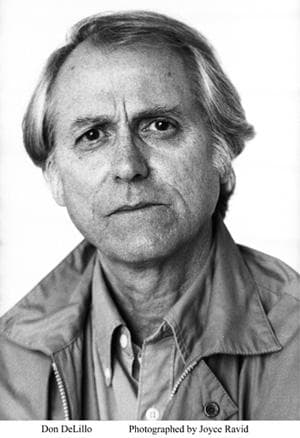
Donald Richard DeLillo is an American novelist, short story writer, playwright, screenwriter and essayist. His works have covered subjects as diverse as television, nuclear war, the complexities of language, art, mathematics, politics, economics, and baseball.







