“The world changes in the blink of an eye. And what once was, is no longer.”
— The Copt's opening reflection on the transient nature of existence.

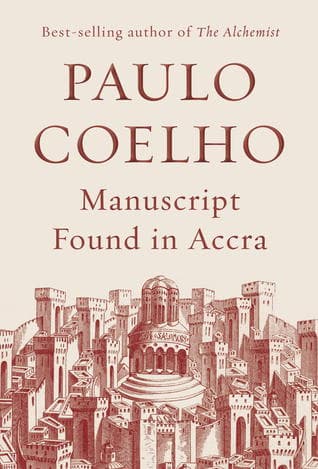
Paulo Coelho (2012)
Genre
Historical Fiction / Spirituality / Philosophy
Reading Time
180 min
Key Themes
See below
Sign in to track this book
On the eve of a crusader invasion, a wise Copt gathers the people of Jerusalem to share wisdom on fear, love, and the human spirit, urging them to find peace within amidst chaos.
On July 14, 1099, Jerusalem is under siege, with Crusader armies ready to invade. Inside the city, people of different faiths and ages are afraid. They gather in the central square, not to prepare for battle, but to hear a wise man known as the Copt. He has called them together to share wisdom and address their worries about the invasion and the unknown future. The Copt states their purpose is not to record history, but to think about the human condition and daily challenges, urging them to set aside their immediate fears.
The townspeople begin asking questions, focusing on their main concerns: defeat and struggle. One person asks about defeat. The Copt replies that defeat is not an end, but a chance for change and a test of strength. He explains that true strength often comes from admitting weakness, and that continuing through hardship is vital. The Copt encourages them to see struggles as chances for growth, not punishments, saying that even when things seem lost, the human spirit can find new purpose.
Someone asks about their enemies, meaning the Crusader forces outside the city. The Copt shifts their focus, saying the most dangerous enemies are often internal: fear, doubt, and hatred. He explains that by giving in to these inner foes, people unintentionally empower external ones. The Copt teaches that true victory is not beating an outside enemy, but overcoming one's own inner problems and keeping peace and honesty during conflict, urging kindness even to those seen as enemies.
The talk moves to the desire for change, which many find difficult when facing an uncertain future. The Copt explains that change, though often scary, is a necessary part of life. He stresses that real courage is not the absence of fear, but the willingness to act despite it, embracing the unknown with an open heart. He advises that holding onto the past or resisting change only leads to stagnation and more suffering, encouraging the people to see coming changes as paths to new possibilities and personal growth.
The townspeople ask about loyalty and solitude. The Copt explains that loyalty, while important for community, must not mean sacrificing one's own truth. He advises that true loyalty starts with being true to oneself and one's principles. He also praises solitude, not as isolation, but as a time for self-reflection and spiritual connection. The Copt suggests that periods of solitude help renew the spirit and understand one's true path, which then allows for more genuine connections with others.
Questions about beauty and elegance come up. The Copt teaches that true beauty is not just superficial, but comes from within, reflecting a peaceful and loving soul. He explains that elegance is not about possessions or looks, but about the grace, dignity, and honesty with which one acts. He encourages people to develop inner beauty and elegance through kindness and sincerity, stating that these qualities will show through even in hard times.
The Copt discusses the topics of love and sex. He describes love as a powerful force that connects people to each other and to the divine. He emphasizes that love needs openness, courage, and a willingness to give without expecting anything back. For sex, the Copt speaks of it as a sacred act, a deep expression of closeness between two people, urging them to approach it with reverence and mutual respect. He distinguishes it from mere physical desire, highlighting its potential for spiritual unity and deep emotional connection.
The discussion turns to wisdom and knowledge. The Copt clarifies that knowledge is gathering facts, while wisdom is using that knowledge, gained through experience, thought, and understanding life's deeper truths. He advises that true wisdom comes not just from books, but from living fully, making mistakes, learning from them, and keeping an open heart and mind. He suggests that wisdom helps one handle life's challenges with grace and insight, seeing beyond immediate situations.
A key question is asked: "What is success?" The Copt's answer redefines common ideas of achievement. He says, "Success is being able to go to bed each night with your soul at peace." He explains that true success is not measured by external achievements, wealth, or public recognition, but by one's inner contentment and honesty. He teaches that failure is not the opposite of success, but a necessary part of the journey, offering lessons that lead to eventual peace and self-understanding.
Finally, the townspeople ask about the future and how to handle worry. The Copt acknowledges that worry is a natural human emotion that cannot be fully controlled. He advises them not to focus on what might happen, but to concentrate on the present moment, as it is the only time they truly have. He encourages them to live each day fully, with purpose and courage, accepting worry as part of life rather than fighting it, and to trust in a higher purpose, even when the future is unclear.
As the sun sets, ending their gathering, the Copt gives his last words of wisdom. He repeats the importance of living genuinely, embracing both joy and sorrow, and finding strength within. He leaves them understanding that while outside events may be difficult, the inner spirit remains a safe place. His teachings are not about avoiding their fate, but about facing it with dignity, love, and a firm belief in the human soul's resilience. The people leave, taking his words as a guide into the uncertain dawn.
The Mysterious Sage
The Copt's arc is less about personal development and more about his role as a catalyst for the spiritual awakening and understanding of the townspeople.
The Collective Protagonist/Audience
The townspeople collectively move from a state of intense fear and confusion to a more centered and understanding perspective on life's challenges.
The Antagonistic Force (External)
The Crusaders' 'arc' is static; they remain an external, unchanging threat that frames the narrative's central conflict.
The book explores how hardship, symbolized by the Crusader siege, is a part of life. The Copt teaches that true strength is not found in avoiding struggle, but in facing it with inner calm. He redefines defeat not as an end, but as a chance for change and growth, urging the townspeople to find strength within themselves. This theme is clear when the Copt advises them to see struggles as chances for self-discovery, allowing them to face the coming invasion with dignity.
“Tomorrow, harmony will become discord. Joy will be replaced by grief. Peace will give way to war.... None of us can know what tomorrow will hold, because each day has its good and its bad moments. So, when you ask your questions, forget about the troops outside and the fear inside.”
A central theme is that true peace and happiness are internal, not dependent on outside events. The Copt consistently moves the townspeople's focus from the invading Crusaders and the destruction they bring, towards developing inner tranquility. He teaches that by mastering one's inner self—conquering fear, doubt, and hatred—one can achieve a deep sense of peace that no outside force can disturb. This is shown when he says that success is going to bed with one's soul at peace, regardless of worldly achievements.
“What is success? It is being able to go to bed each night with your soul at peace.”
Despite being set in 1099 Jerusalem, the book highlights that the questions and worries of the townspeople are timeless. The Copt's teachings address basic human experiences—love, death, courage, fear, change, and purpose—making the story relevant across cultures. The diverse group of people of 'every age and every faith' shows that these spiritual and philosophical dilemmas go beyond specific cultural or religious lines, emphasizing shared humanity.
“Anxiety was born in the very same moment as mankind. And since we will never be able to master it, we will have to learn to live with it-just as we have learned to live with storms.”
The Copt consistently challenges common ideas of 'enemy,' 'success,' 'beauty,' and 'love.' He redefines the 'enemy' as internal fears rather than outside forces, 'success' as inner peace, and 'beauty' as something that comes from the soul. This re-framing encourages a deeper, more spiritual view of life, moving past superficial ideas. His teachings prompt both the characters and the reader to rethink their own definitions and values.
“Our task is not to leave a record of what happened on this date for those who will inherit the Earth; history will take care of that. Therefore, we will speak about our daily lives, about the difficulties we have had to face.”
The narrative is presented as a rediscovered ancient manuscript.
The entire story is framed as a 'manuscript found in Accra,' implying its historical authenticity and timeless relevance. This device immediately lends an air of wisdom and gravitas to the text, suggesting that the teachings within are ancient, preserved truths. It allows the author to present profound philosophical discussions as if they were actual historical records, inviting the reader to consider their enduring impact and universal applicability across centuries, linking the past to the present.
The Copt answers questions posed by the townspeople.
The core of the book's structure is a series of questions and answers, reminiscent of Socratic dialogue. The townspeople pose their anxieties and uncertainties, and the Copt responds with parables, insights, and philosophical explanations. This device allows for a natural exploration of various themes and topics, addressing the specific concerns of the 'audience' while simultaneously revealing universal truths. It makes the abstract philosophical concepts more accessible and engaging, as they are presented in response to relatable human dilemmas.
The Crusader siege creates a sense of urgency and focuses the philosophical discussion.
The impending Crusader invasion of Jerusalem serves as a crucial plot device, creating a powerful sense of urgency and existential crisis. This external threat forces the townspeople to confront their deepest fears and seek profound answers, making the Copt's wisdom immediately relevant and vital. Without this backdrop, the philosophical discussions might feel abstract; with it, they become a matter of spiritual survival. It underscores the theme that true peace must be found within, even when the world outside is in chaos.
“The world changes in the blink of an eye. And what once was, is no longer.”
— The Copt's opening reflection on the transient nature of existence.
“Defeat is not when we fall, but when we refuse to rise.”
— A lesson from the Copt on perseverance and the true meaning of defeat.
“Love is not an emotion, it is a choice. And it is not about what we get, but what we give.”
— The Copt's definition of love as an active decision and selfless act.
“The greatest enemy is not the one who attacks us, but the one who lives within us: doubt.”
— Addressing the internal struggles and self-doubt that hinder human progress.
“Beauty is not in the eye of the beholder, but in the heart of the creator.”
— A philosophical take on the origin and nature of beauty, linking it to divine creation.
“Fear is a veil that covers the truth. And truth is always simple.”
— Discussing how fear obscures understanding and complicates simple realities.
“Humility is not thinking less of yourself, but thinking of yourself less.”
— A redefinition of humility, emphasizing focus on others rather than self-deprecation.
“Courage is not the absence of fear, but the triumph over it.”
— Explaining that true courage involves confronting and overcoming fear, not lacking it.
“Solitude is not the absence of company, but the moment when our soul is free to speak to us.”
— A positive view of solitude as a time for introspection and spiritual connection.
“Life is a constant challenge, but it is also a constant invitation to grow.”
— Encouraging a perspective where challenges are seen as opportunities for personal development.
“The past is a memory, the future is an imagination. The present is the only reality.”
— Emphasizing the importance of living in the present moment.
“Joy is not a possession to be acquired, but a state of being that comes from within.”
— Defining joy as an internal state rather than something external to be sought.
“The true meaning of life is to plant trees, under whose shade you do not expect to sit.”
— A profound statement on legacy, altruism, and contributing to the future.
“We are not punished for our anger, we are punished by our anger.”
— Highlighting the self-destructive nature of holding onto anger.
Ready to see how well you understood this book? Take our interactive quiz with 10 questions.
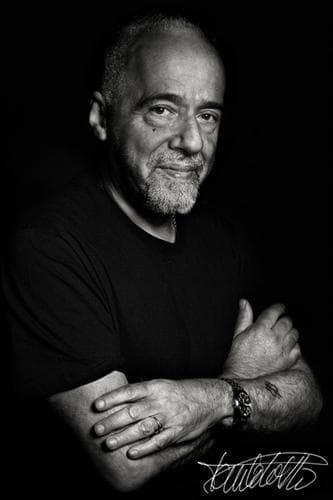
Paulo Coelho de Souza is a Brazilian lyricist and novelist and a member of the Brazilian Academy of Letters since 2002. His novel The Alchemist became an international best-seller and he has published 30 more books since then.







