“We have all a better guide in ourselves, if we would attend to it, than any other person can be.”
— Fanny's internal reflection on personal integrity.

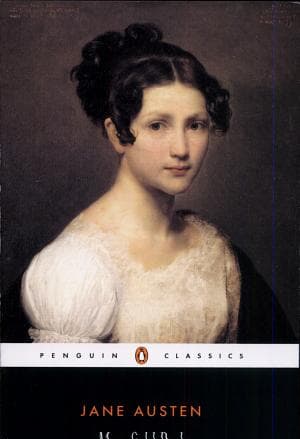
Jane Austen (2003)
Genre
Historical Fiction / Romance
Reading Time
1124 min
Key Themes
See below
Sign in to track this book
Amidst the glittering social maneuvers and moral compromises of high society, a young woman's quiet strength reveals the true meaning of integrity and love.
Ten-year-old Fanny Price, from a large, poor family in Portsmouth, is brought to live with her wealthy aunt, Lady Bertram, and her husband, Sir Thomas Bertram, at Mansfield Park. Fanny's mother is Lady Bertram's sister. Aunt Norris, Lady Bertram's other sister, constantly reminds Fanny of her lower status. Fanny finds it hard to adjust to the rich but emotionally cold home, finding comfort only in her cousin Edmund, who is studying to become a clergyman. The other Bertram children, Tom, Maria, and Julia, mostly ignore or look down on her.
Sir Thomas Bertram goes to Antigua to handle issues on his plantations, leaving his family under the relaxed watch of Lady Bertram and the bossy Aunt Norris. During his absence, Mary and Henry Crawford, siblings of Mrs. Grant (the local parson's wife), arrive at the nearby parsonage. They are sophisticated, witty, and used to London society, quickly charming the Bertram sisters, Maria and Julia. Henry, known for flirting, starts playing with the feelings of both sisters, even though Maria is engaged to the rich but boring Mr. Rushworth. Mary, intelligent and beautiful, quickly becomes interested in Edmund Bertram, despite his chosen career.
Without Sir Thomas's strict presence, Tom Bertram, the oldest son, suggests that the family and their guests stage a play, 'Lovers' Vows.' Edmund has doubts, fearing the improper behavior and potential for too much closeness, but the project goes ahead with excitement. Henry Crawford's acting talent and charm become central to the play, letting him act in openly flirtatious scenes with Maria Bertram. This increases the tension between her and her fiancé, Mr. Rushworth. Fanny Price, watching from the side, feels very uncomfortable with the loose morals and emotional problems caused by the plays, especially the suggestive interactions between Henry and Maria.
Just as the 'Lovers' Vows' rehearsals are at their peak, Sir Thomas Bertram unexpectedly returns from Antigua. His sudden appearance immediately stops the plays, as he disapproves of the whole thing and senses the improper behavior. The young people are humbled, though some, like Tom and Henry, are just annoyed. Maria Bertram, already deeply involved emotionally with Henry Crawford, proceeds with her marriage to Mr. Rushworth. This marriage is mainly for his wealth and social standing, despite her clear lack of affection for him. Her sister Julia, also in love with Henry, is left disappointed and resentful.
Henry Crawford, after charming the Bertram sisters and causing much emotional trouble, turns his attention to Fanny Price. At first, he sees her as a challenge, wanting to make her fall in love with him for fun. However, as he spends more time with her, seeing her quiet honesty and true goodness, he finds himself truly captivated and proposes marriage. Fanny, though pleased by his attention, firmly refuses him. She is wary of his past flirtations, his lack of firm principles, and her own hidden love for Edmund. Her refusal shocks her family, especially Sir Thomas, who cannot understand why she would reject such a financially good match.
Frustrated by Fanny's continued refusal of Henry Crawford, Sir Thomas Bertram decides to send her back to her family in Portsmouth for a visit. He believes that experiencing the discomforts and lack of refinement of her original home will make her appreciate the advantages of Mansfield Park and Henry's offer more. Fanny is at first excited to see her family but quickly finds her parents' crowded, noisy, and less refined home overwhelming and discouraging. She misses the peace and order of Mansfield Park, and most of all, Edmund's company and intellectual talks. This confirms her preference for a life of principle over just material comfort.
While Fanny is in Portsmouth, she receives news of a terrible scandal. Henry Crawford, despite having proposed to Fanny and seeming to have changed, elopes with Maria Rushworth (formerly Bertram), who has left her husband. This act brings great disgrace upon the Bertram family and ruins their social standing. Soon after, Julia Bertram, feeling neglected and resentful, elopes with Mr. Yates, one of the play participants. These events show the moral failures and superficiality that Sir Thomas had unknowingly encouraged in his daughters, proving Fanny's earlier moral judgments to be tragically correct.
After the scandalous elopements, Fanny is immediately called back to Mansfield Park. Her quiet strength, moral honesty, and steady presence become a source of comfort and stability for the shattered Bertram family. Sir Thomas, humbled by the disgrace and realizing his deep mistake in judging Fanny and his own daughters, finally acknowledges Fanny's true worth. He apologizes for his harshness and expresses his deep regret for pressuring her about Henry Crawford. Fanny, though pained by the family's suffering, offers comfort and support, proving herself to be Mansfield Park's true moral guide.
During the period of disgrace, Edmund Bertram struggles with his feelings for Mary Crawford. Despite his initial attraction, Mary's reaction to the scandal—her greater concern for social appearances and her brother's reputation than for the moral consequences—shows her basic lack of principle. Her attempts to explain Henry's actions and her inability to truly understand Edmund's moral distress finally disappoint him. He realizes that her values are not compatible with his own, especially his commitment to his church duties. In contrast, Fanny's unwavering goodness and deep sympathy shine brightly, leading Edmund to finally recognize his deep love for her.
With Mary Crawford's true character revealed and Edmund's disappointment complete, he gives his affection fully to Fanny. He proposes, and Fanny, whose love for him has been steady for years, happily accepts. Their marriage brings peace, happiness, and moral stability back to Mansfield Park. Edmund becomes the parson of Mansfield, fulfilling his calling with Fanny by his side. Sir Thomas, having learned hard lessons from his children's misfortunes, now fully appreciates Fanny's virtues and acknowledges her as the true blessing to his family, ensuring a future of honesty and contentment for the estate.
The Protagonist
Fanny transforms from a timid, dependent girl into a confident woman whose moral strength ultimately guides the Bertram family to a better path, culminating in her marriage to Edmund.
The Supporting/Love Interest
Edmund evolves from being somewhat naive about human nature and initially drawn to superficial charm, to fully recognizing true virtue in Fanny and aligning his affections with his principles.
The Supporting/Pivotal
Sir Thomas undergoes a significant transformation, realizing the errors of his stern, unfeeling approach to parenting and his misjudgment of Fanny, leading to a more humble and appreciative view of true virtue.
The Antagonist/Love Interest
Mary's character remains largely static; her inherent superficiality and lack of moral depth are revealed through her reactions to the scandals, ultimately making her an unsuitable partner for Edmund.
The Antagonist/Suitor
Henry's character arc is a tragic downfall; despite a moment of genuine feeling for Fanny, he reverts to his unprincipled ways, culminating in his scandalous elopement and ruining his own and others' reputations.
The Supporting/Foil
Maria's arc is a descent into disgrace, as her superficiality and lack of moral grounding lead her to make disastrous choices that ruin her reputation and happiness.
The Supporting/Foil
Julia's arc mirrors Maria's in its downfall, though her elopement with Mr. Yates is less scandalous than Maria's, it still reflects a lack of prudence and moral guidance.
The Supporting/Antagonist
Aunt Norris remains static in her unpleasantness, serving as a consistent source of cruelty and a foil to Fanny's gentle nature. She eventually faces a form of poetic justice by having to care for the disgraced Maria.
This theme is central to the novel. It contrasts Fanny Price's firm moral compass and quiet goodness with the charming but ultimately empty nature of the Crawford siblings. Fanny always puts principle, duty, and true feeling above social status, wealth, or passing attractions. Her refusal of Henry Crawford, despite strong pressure from Sir Thomas, shows her commitment to integrity. The downfall of Maria and Julia, who are tempted by the shallow appeal of Henry and Mr. Yates, highlights the destructive results of valuing outward appearance and temporary pleasure over deep moral character.
“''I think it is the best plan, and I am sure it is the safest,' said Fanny, with a faint smile, and a sigh which had more than half a wish in it. 'There is no danger in it, and there is no temptation.'”
Austen explores how upbringing and social values shape character. The Bertram children, especially Maria and Julia, grow up in a world of indulgence, idleness, and a focus on social status. This leads to their loose morals and eventual downfall. Sir Thomas, though well-meaning, fails to teach his daughters strong moral principles. In contrast, Fanny, despite her humble beginnings and difficult position at Mansfield, develops a strong moral core. This comes partly from her own thoughtful nature and partly from Edmund's guidance. The Crawfords, from a more worldly London society, combine charm with moral relativism. This shows how a lack of firm principles can lead to ruin.
“''We are all apt to think that when we are in the right, we shall be able to make others think us so too. I am afraid it is not always the case.'”
The novel strongly emphasizes the importance of duty, both personal and social, and the dictates of one's conscience. Edmund's commitment to his church calling, despite Mary Crawford's attempts to discourage him, shows his strong sense of duty. Fanny's refusal to marry Henry Crawford comes from her conscience, which cannot accept his character alongside her principles or her true feelings. The tragic events involving Maria and Henry highlight the disastrous results of ignoring duty and moral obligation for selfish desires and fleeting passions. Sir Thomas's eventual understanding of his duty as a father underscores the theme's importance.
“''I must do my duty, and I hope I shall be enabled to do it properly.'”
Austen critiques marriages based on money or social convenience. She contrasts them with unions built on mutual respect, affection, and shared moral principles. Maria's marriage to Mr. Rushworth, driven only by his wealth, is loveless and ends in scandal. The flirtations and proposed marriages involving the Crawfords are often transactional or based on superficial attraction. In contrast, Fanny and Edmund's relationship, built on years of shared understanding, kindness, and deep respect for each other's moral character, represents the ideal. Their eventual marriage is presented as the only truly fulfilling and lasting union, bringing stability and happiness to Mansfield Park.
“''If I am to lose Edmund, I will not do it for Henry Crawford.'”
A play within the novel that exposes character and creates moral conflict.
The decision to stage 'Lovers' Vows' during Sir Thomas's absence acts as a catalyst, revealing the true characters and moral boundaries (or lack thereof) of the young people. It provides a sanctioned outlet for flirtation and emotional intimacy, particularly between Henry Crawford and Maria Bertram, escalating their forbidden attraction. Edmund's moral objections to the play highlight his principled nature, while Fanny's discomfort underscores her sensitivity to impropriety. The play's subject matter (a tale of illegitimate birth and moral compromise) also foreshadows the future scandals that plague the Bertram family, functioning as a microcosm of the larger moral failings in the story.
A symbolic setting representing order, tradition, and eventually, moral regeneration.
Mansfield Park is more than just a setting; it symbolizes the traditional English landed gentry and its values. Initially, it represents a place of strict decorum but also emotional coldness and subtle injustices (Fanny's treatment). Sir Thomas's long absence and the subsequent moral decay within its walls (theatricals, flirtations) signify a breakdown of order. The eventual restoration of peace and moral stability through Fanny and Edmund's marriage transforms Mansfield Park into a haven of true virtue, reflecting the triumph of principle over superficiality and the regeneration of a moral order.
A contrasting setting that highlights Fanny's refinement and the harsh realities of poverty.
Fanny's forced return to Portsmouth serves as a crucial contrast to Mansfield Park. The crowded, noisy, and less refined environment of her birth family's home emphasizes the material comforts and, more importantly, the intellectual and moral order that Fanny has come to appreciate at Mansfield. It solidifies her understanding of what she values, making her even more resistant to Henry Crawford's proposals and more appreciative of Edmund's refined character. Portsmouth highlights Fanny's personal growth and her detachment from her impoverished past, underscoring her developed sensibility and preference for a life of principle over mere family ties or material hardship.
Correspondence used to convey crucial plot developments and character insights.
Letters play a significant role in advancing the plot and revealing character, especially when characters are separated. Fanny's letters to Edmund from Portsmouth convey her disillusionment with her birth family and her longing for Mansfield. Crucially, the letters announcing the scandals of Maria and Julia reach Fanny while she is away, emphasizing her isolation from the direct events but also her role as a moral observer. They allow for the rapid dissemination of shocking news and provide insight into the characters' reactions and moral judgments, particularly Mary Crawford's unsympathetic response to the elopements, which ultimately seals her fate with Edmund.
“We have all a better guide in ourselves, if we would attend to it, than any other person can be.”
— Fanny's internal reflection on personal integrity.
“If a woman be ever so agreeable, she will soon cease to be so, if she does not behave as if she is agreeable.”
— Mrs. Norris discussing social graces and expectations.
“To sit in judgment on the conduct of others is a dangerous amusement.”
— Edmund contemplating the complexities of human judgment.
“Seldom, very seldom, does complete truth belong to any human disclosure; and seldom may an individual be thoroughly good, or thoroughly bad.”
— Narrator's observation on the nuanced nature of human character.
“Happiness in marriage is entirely a matter of chance.”
— Mary Crawford's cynical view on marital bliss.
“I was quiet, but I was not blind.”
— Fanny's self-assessment of her observant nature despite her reserved demeanor.
“There will be a something to separate to the end of time.”
— Mary Crawford on the inevitable divisions and differences in society.
“Every body is in a hurry to be married, or why they should marry at all, is a question that I cannot pretend to answer.”
— Mary Crawford expressing her skepticism about the rush to marry.
“A man who has nothing to do, thinks himself fit for every thing.”
— A reflection on idleness and overconfidence.
“An advantage to be in love with a woman of character, for love is then a better principle.”
— Edmund's thoughts on the importance of character in a beloved.
“It is not the eye, but the mind, which sees.”
— Fanny's understanding of true perception beyond mere sight.
“We are all apt to think that we can do without that which we have never had.”
— A general observation on human adaptability and contentment with one's current state.
“There will be a time, I trust, when you will look back upon this as a period of trial.”
— Edmund offering comfort and hope to Fanny during a difficult time.
“Let other people do as they will, I shall always know what is right.”
— Fanny's unwavering commitment to her moral compass.
Ready to see how well you understood this book? Take our interactive quiz with 10 questions.
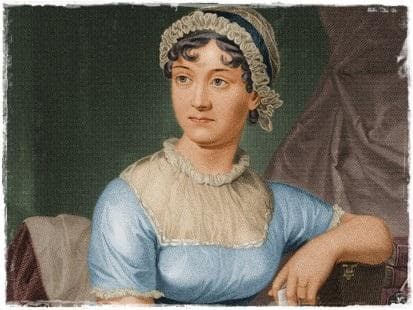
Jane Austen was an English novelist known primarily for her six major novels, which implicitly interpret, critique, and comment upon the British landed gentry at the end of the 18th century. Austen's plots often explore the dependence of women on marriage for the pursuit of favourable social standing and economic security. Her works are an implicit critique of the novels of sensibility of the second half of the 18th century and are part of the transition to 19th-century literary realism. Her deft use of social commentary, realism and biting irony have earned her acclaim among critics and scholars.







