“Maniac Magee was not born in a house or a hospital like other people. He was born in a dump.”
— Opening lines introducing Maniac's mysterious origins.

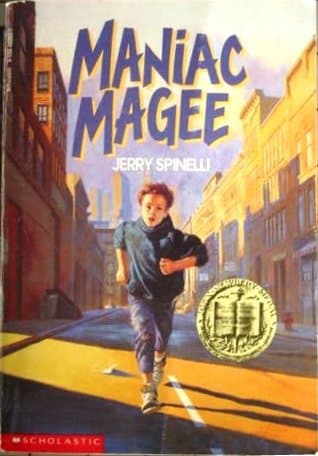
Jerry Spinelli (1990)
Genre
Children's / Historical Fiction / Young Adult
Reading Time
180 min
Key Themes
See below
Sign in to track this book
An orphaned boy with a knack for legendary feats and an aversion to standing still runs into a racially divided town, inadvertently weaving himself into its fabric and challenging its deep-seated prejudices.
Jeffrey Lionel Magee, an orphan since his parents were killed in a trolley accident when he was three, lives with his Aunt Dot and Uncle Dan. Their house is tense and silent, with the couple refusing to speak to each other, communicating only through separate duplicate items. This goes on for eight years. One day, during a spring musical at his school, Jeffrey suddenly stands up, screams, and runs away from the performance, from his aunt and uncle, and from his hometown of Bridgeport. He runs for over a year, covering hundreds of miles, until he eventually arrives in the racially divided town of Two Mills, Pennsylvania, where his legend begins to grow.
Upon arriving in Two Mills, Jeffrey, now known as Maniac Magee, immediately makes an impact. He intercepts a football pass from the high school star, Hands Down, and punts it back farther than anyone could imagine. He then runs onto the baseball field and hits every pitch from the best pitcher, McNab, out of the park. Later, he unties a notoriously tangled knot at the Pickwell's backyard, a feat no one else could accomplish. These impossible feats, combined with his constant running, earn him the nickname 'Maniac' and establish his mythical status among the townspeople, both black and white, who are amazed by his abilities.
Maniac, having nowhere to live, is taken in by Amanda Beale, a young black girl he met while she was carrying her suitcase of books. The Beale family – Mr. and Mrs. Beale, Amanda, Hester, and Lester – welcome him into their home on the East End, the black side of town. Maniac experiences genuine family love and stability for the first time since his parents' death. He helps around the house, reads to the younger children, and enjoys the warmth of a loving family. However, his presence as a white boy living in the East End causes tension and resentment among some of the black residents, who deface the Beale's house with racial slurs.
While living with the Beales, Maniac faces growing animosity from both sides of Two Mills. On the East End, some residents are uncomfortable with his presence. On the West End, he encounters John McNab and his gang, the Cobras. McNab, still bitter about Maniac's baseball prowess, tries to bully him. Maniac outruns them repeatedly, even after McNab throws a stone that hits Maniac in the head. This incident further solidifies Maniac's reputation for invincibility and his ability to navigate the town's racial divide, though he remains an outsider to both communities.
Despite the comfort and love he found with the Beales, Maniac realizes his presence is causing problems for them. The racial slurs on their house and the general tension make him feel like a burden. Believing he is bringing trouble to the family, Maniac decides to leave the Beales' home. He finds temporary shelter in the deer pen at the Elmwood Park Zoo, living among the animals. This period highlights his deep loneliness and his inability to find a lasting place where he truly belongs, despite his desire for a family.
While living at the zoo, Maniac encounters Earl Grayson, an old, alcoholic zookeeper who was once a minor league baseball pitcher. Grayson, initially prejudiced against Maniac because he's a 'ragamuffin,' soon warms to him. Maniac discovers that Grayson is illiterate and patiently teaches him to read, starting with simple words and progressing to books. Their friendship deepens, and they share stories and holidays, creating a makeshift family. Grayson, in turn, teaches Maniac about baseball and provides him with a sense of belonging, something Maniac desperately wants.
Maniac and Grayson spend a joyful Christmas together, filled with reading and shared meals. However, shortly after Christmas, Grayson dies in his sleep. Maniac is devastated by the loss of his friend and the only true family he had known since his parents' death. He finds himself alone again, wandering the town aimlessly and sleeping in various places, including the band shell in the park. Grayson's death is a blow, reinforcing Maniac's recurring experience of loss and his inability to find a permanent home.
Maniac encounters two young, runaway boys, Russell and Piper McNab, who are the younger brothers of John McNab. He realizes they are living in squalor and fear in their West End home, which is fortified like a fortress against the perceived 'enemy' of the East End. Maniac tries to help them, enticing them with challenges and feats to get them to go to school and improve their lives. He hopes that by engaging with them, he can prevent them from falling into the same racist patterns as their older brother and help them escape their bleak home life.
In a desperate attempt to show Russell and Piper that the East End isn't as dangerous as they've been taught, Maniac brings Mars Bar Thompson, a tough black kid from the East End, to Piper's birthday party at the McNabs' house. The party is a chaotic scene of poverty and prejudice. The presence of Mars Bar immediately causes a tense standoff, highlighting the deep racial hatred and fear that permeate Two Mills. Maniac's attempt at reconciliation backfires, further emphasizing the seemingly insurmountable division.
Maniac, frustrated by his inability to make a difference with the McNabs, finds himself running again, contemplating his endless search for a home. He encounters Mars Bar Thompson, who challenges him to a race. During the race, Russell McNab, Piper's younger brother, gets stuck on a trestle, paralyzed by fear of heights. Mars Bar, despite his previous animosity towards Maniac and white people, rescues Russell. This act of bravery and Maniac's presence during the rescue begin to forge an unexpected connection between the two boys.
After the trestle incident, Mars Bar, having seen Maniac's deep loneliness and his refusal to return to the McNabs' toxic home, understands Maniac's plight. He finds Maniac sleeping in the deer pen again and convinces him to return to the Beales. Mars Bar pulls Maniac back to the East End, where the Beale family welcomes him with open arms. Maniac, finally realizing that he is loved and wanted, accepts their offer of a permanent home. He has found his family, not just a place to stay, and the legend of Maniac Magee finds its enduring peace.
The Protagonist
Maniac transforms from a wandering, homeless orphan into a boy who finally accepts and finds his true home and family with the Beales.
The Supporting
Amanda remains a steadfast friend to Maniac, ultimately playing a crucial role in bringing him back to the Beale family permanently.
The Supporting
Grayson learns to read and finds companionship and purpose through Maniac, overcoming his loneliness and some of his prejudices before his death.
The Supporting
Mars Bar evolves from a prejudiced antagonist to a compassionate friend, ultimately overcoming his initial hostility to help Maniac find a home.
The Antagonist
McNab remains largely unchanged, serving as a symbol of the town's intractable divisions, though Maniac's presence challenges his worldview.
The Supporting
They are briefly influenced by Maniac's kindness but remain largely products of their environment, though Russell's rescue by Mars Bar offers a glimmer of hope.
The Supporting
They remain consistently loving and supportive, ultimately providing Maniac with his permanent home.
Maniac's entire journey is driven by his yearning for a permanent home and a loving family after the traumatic loss of his parents. He runs away from his unhappy aunt and uncle, finds temporary solace with the Beales, experiences a brief, close connection with Grayson, and eventually returns to the Beales. Each temporary home is a step in his quest, highlighting his emotional vulnerability despite his physical prowess. The theme culminates when he finally accepts the Beales' love as his true home, realizing that home is about connection and belonging, not just a physical place.
“A home isn't a place--it's a feeling. It's the feeling of being wanted, of belonging.”
The town of Two Mills is divided by race, with a clear East End (black) and West End (white). This theme is central to the novel, as Maniac, who is colorblind and treats everyone equally, acts as a catalyst for exposing and challenging these divisions. His presence in the East End with the Beales, and his attempts to bridge the gap by bringing Mars Bar to the McNabs' party, highlight the deep hatred, fear, and misunderstanding between the communities. The novel portrays the destructive nature of prejudice and the difficulty of overcoming it.
“He was an unknown, all right, but not because nobody knew his name. They knew his name, all right. They just didn't know what to make of him. Because he was white. And he was in the East End.”
Maniac Magee's story is presented as a legend, with his extraordinary feats becoming exaggerated tales passed down by word of mouth. His ability to untangle the 'knot,' hit home runs, and outrun bullies contributes to his mythical status. This theme explores how stories shape perception, create identity, and provide a way for a community to understand and explain the extraordinary. The narrator frequently refers to Maniac's 'legend,' emphasizing that his impact extends beyond his physical actions, residing in the collective imagination of Two Mills.
“And the legend of Maniac Magee, which had begun in the East End, was now growing in the West End.”
The theme of literacy is explored through Maniac's relationship with Grayson. Maniac, an avid reader, patiently teaches the illiterate Grayson to read, opening up a new world for the old man. This highlights the power of education and the joy of discovery that comes with it. Amanda Beale's fierce protection of her books also shows the value of reading. Literacy is presented not just as a skill but as a key to understanding, connection, and personal growth, contrasting with the ignorance and prejudice that often stem from a lack of exposure to new ideas.
“He taught Grayson the alphabet. He taught him how to read. And the old man, who had never known the joy of a book, was reborn.”
Exaggerated feats and descriptions that build Maniac's legendary status.
The novel uses hyperbole extensively to describe Maniac's abilities, such as his incredible speed, his ability to hit every pitch out of the park, and his knack for untangling the 'knot.' These exaggerated descriptions contribute to the 'tall tale' quality of Maniac's story, making him a mythical figure rather than just a normal boy. This device serves to elevate Maniac's character, explain his profound impact on the town, and give the narrative a whimsical, legendary feel, allowing the author to address serious themes through a fantastical lens.
A physical representation of the town's intractable problems and divisions.
The 'knot' at the Pickwell's backyard, which Maniac effortlessly untangles, symbolizes the complex and seemingly unsolvable problems of Two Mills, particularly its racial division. Just as no one else could untie the physical knot, no one seems capable of resolving the deep-seated prejudice and hatred that separate the East and West Ends. Maniac's ability to untie it suggests his unique, innocent approach to problems, hinting at his potential to bridge divides, even if the larger societal 'knot' proves more resistant.
A literal and metaphorical representation of racial segregation and prejudice.
The physical division of Two Mills into the predominantly black East End and the white West End serves as a central plot device. This geographical split directly mirrors the racial segregation and the deep-seated prejudice that characterize the town. Maniac's constant movement between these two areas, and his inability to truly belong to either, highlights the absurdity and destructiveness of the division. The divide creates conflict, shapes character interactions, and underscores the novel's main themes about race, belonging, and the search for unity.
Maniac's inability to perceive or understand racial differences.
Maniac's 'colorblindness' is a crucial plot device. He genuinely does not understand or acknowledge racial differences, treating everyone simply as people. This innocence allows him to move freely between the East and West Ends, baffling and challenging the established social norms. His lack of prejudice makes him a unique catalyst for change and a mirror reflecting the town's ingrained biases. It also makes him vulnerable to the harsh realities of racism, as he struggles to comprehend why people would hate each other based on skin color, driving much of the plot's conflict.
“Maniac Magee was not born in a house or a hospital like other people. He was born in a dump.”
— Opening lines introducing Maniac's mysterious origins.
“He was a kid, all right, but he was more than that. He was a legend.”
— Describing Maniac's reputation among the townspeople.
“Nobody had ever seen a white kid on the East End. Or a black kid on the West End.”
— Highlighting the strict racial segregation of Two Mills.
“Fishbelly, go home!”
— A common taunt Maniac hears from both sides of town.
“He was an orphan, but he wasn't alone. Not anymore.”
— Maniac finding a sense of belonging with the Beale family.
“He wasn't really running from anything. He was running to something. To find a home.”
— Explaining Maniac's constant movement and underlying motivation.
“You can't eat a whole town, can you?”
— Maniac's simple but profound question about overcoming racial division.
“He had a name, but it was like a secret, a treasure he kept to himself.”
— Referring to Maniac's birth name, Jeffrey Lionel Magee, which he rarely uses.
“A man's gotta do what a man's gotta do.”
— Mars Bar's tough guy mantra, often used to justify his actions.
“He was a legend, all right. But a legend doesn't have an address.”
— Maniac's realization that his fame doesn't provide a stable home.
“He wasn't white. He wasn't black. He was a kid.”
— Amanda Beale's simple perspective on Maniac, cutting through racial labels.
“Nobody liked being called a name, especially by somebody who didn't even know you.”
— Maniac reflecting on the unfairness of the racial slurs he hears.
“You can't just go around fixing everybody, Maniac. Some things you just gotta leave alone.”
— A wise observation about Maniac's efforts to solve all problems.
“He didn't have a house, but he had a home. He had a family. And he had a friend.”
— Maniac finally accepting his place with Amanda and Mars Bar.
Ready to see how well you understood this book? Take our interactive quiz with 10 questions.

Biography coming soon.
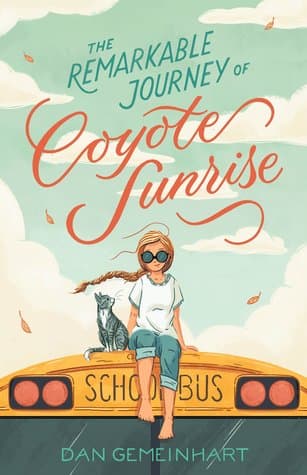
Dan Gemeinhart
4.5
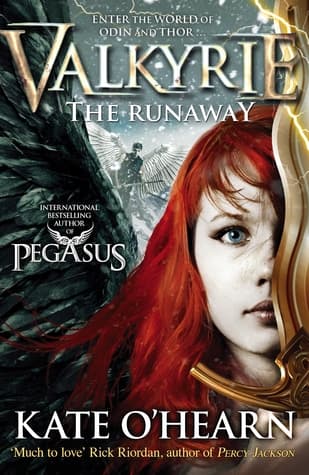
Kate O'Hearn
4.4

Jeanne Birdsall
4.4

Jen Wang
4.4
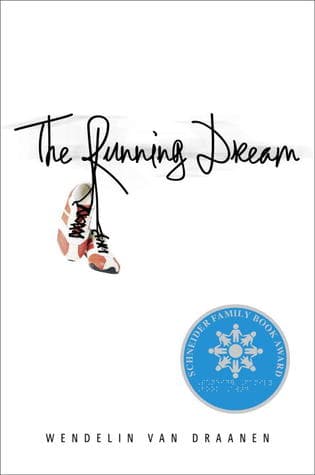
Wendelin Van Draanen
4.3

John Marsden
4.3

Chris Van Allsburg
4.3
Jennifer A. Nielsen
4.2