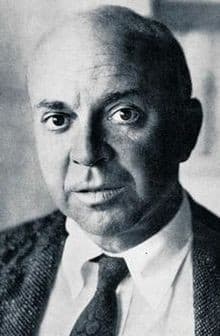
John Roderigo Dos Passos was an American novelist, most notable for his U.S.A. trilogy.

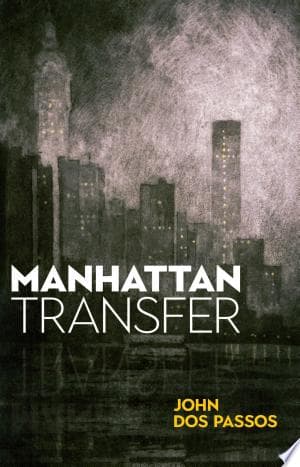
John Dos Passos (2022)
Genre
Historical Fiction
Reading Time
12 Minutes
Key Themes
See below
Sign in to track this book
The novel begins with Ellen Thatcher's birth in a New York City tenement, against the sounds of ferryboats and the city's constant movement. This scene immediately shows Manhattan's large, impersonal nature. At the same time, readers meet other new characters: Jimmy Herf, a young boy arriving with his mother, and Congo, a sailor, who sees someone try to commit suicide from a ferry. The story quickly moves between these different lives, stressing the city's size and lack of personal connection. The first chapters are a fast-paced collection, showing parts of lives that meet and separate, setting up the novel's non-linear, fragmented style. The city itself becomes a main character, an indifferent force shaping the lives of its residents.
This section looks at the difficult economic conditions many New Yorkers faced. Anna Cohen, a young Jewish woman, works hard in a sweatshop to support her family. Her brother, Harry, commits small crimes, showing the desperation and limited options for the city's working class. The story also introduces Bud Korpenning, a naive country boy who comes to New York, immediately overwhelmed by its size and lack of care. He quickly becomes poor, unable to find steady work. These linked stories highlight the constant chase for money and the clear class divisions in the city. The fast pace of city life and the fight to survive become important themes, with characters often defined by their economic role.
Ellen Thatcher, now an aspiring actress, navigates New York's competitive and often morally unclear theater world. She uses her charm and looks to get ahead, forming relationships that are more about business than feeling. Meanwhile, Jimmy Herf, after various odd jobs, grows more disappointed with the city's promises. He works as a reporter, seeing the city's darker side and the superficiality of its upper classes. Their paths cross sometimes, suggesting a possible connection, but the city's size and their individual goals keep them mostly apart. The section explores the appeal of fame and money, and the compromises made to get them, contrasting Ellen's calculated rise with Jimmy's growing doubt.
George Baldwin, a driven and ambitious lawyer, starts his rise in New York's legal and political fields. His story shows the ruthless ambition that drives many in the city, as he deals with power struggles and makes strategic partnerships. The story also continues to follow other characters: Bud Korpenning's mental state worsens, and he becomes more isolated, while Congo gets involved in crime. The city's fast industrial growth is clear, shown by constant building and tearing down. This section emphasizes how progress can be like a 'steamroller,' crushing those who cannot adapt and lifting up those with the drive to use its opportunities. Individuals are often made small by the city's unstoppable march.
Ellen Thatcher achieves some success in theater, becoming a celebrated actress. Her life now involves lavish parties and a group of wealthy, often superficial, friends. She marries J.W. Compton, a rich older man, for security and status, not love. This time reflects the Jazz Age's excesses and the pursuit of pleasure. However, beneath the glittering surface, Ellen feels a growing emptiness and emotional distance. The short nature of happiness and the illusion of fulfillment are explored. The section shows how success in New York often costs genuine connection and personal honesty, leaving characters feeling alone even among crowds and celebrations.
Jimmy Herf continues his work as a journalist, becoming more involved in New York life's tougher parts. He covers strikes, political corruption, and social unfairness, strengthening his skeptical view of the world. His experiences show him the clear inequalities and moral compromises that support the city's wealth. This section also looks at the lives of other characters, such as Joe Harland, a former Wall Street success now an alcoholic and homeless, serving as a warning about the city's harshness. The story stresses the constant movement and impersonal interactions of the urban environment, where people are often just brief encounters, their stories quickly forgotten in the daily rush.
The lives of various characters, though still mostly separate, start to meet more often, though usually not deeply. Ellen Thatcher's marriage to Compton is strained by her ongoing affair with Stan Emery, a bohemian artist. Jimmy Herf watches the social scene from a detached view, his skepticism deepening. Joe Harland's decline continues, showing the city's ability to both build and destroy. The section reinforces the idea of New York as a large, indifferent city where individual struggles are made small by the collective experience. The city's overwhelming sensory input—its sounds, sights, and smells—becomes a character itself, shaping how its residents see and act. A lack of real connection remains despite closeness.
Ellen Thatcher, despite her material success, feels increasingly trapped and unfulfilled. Her affair with Stan Emery is intense but ultimately destructive, ending tragically with Stan's accidental death. This event deeply affects Ellen, showing how fragile her carefully built life is. Her marriage to Compton becomes unbearable, leading to their separation. Jimmy Herf continues to observe the city with a critical eye, his personal life marked by moving around and a lack of deep commitment. The section looks at the emotional cost of the city's fast pace and superficial demands, highlighting the deep loneliness that can exist among millions. Characters struggle with what they want versus the realities of city life.
Jimmy Herf, having seen the city from many angles and grown tired of its constant demands and superficiality, decides to leave New York. His departure symbolizes a rejection of the American Dream as the city presents it. He seeks a simpler, more real existence away from the urban chaos. Ellen Thatcher, though now divorced and financially independent, remains caught in the city's social structure, forever shaped by its influences. The final chapters emphasize New York's cyclical nature, with new people constantly replacing those who leave or fail. The city remains an indifferent, powerful entity, its appeal and destructiveness continuing unchecked.
The novel ends with a series of short scenes, offering glimpses into the ongoing lives of various characters, some still struggling, some finding a new path, and others simply disappearing into the city's background. Jimmy Herf hitches a ride out of the city, looking back at the skyline as he leaves, feeling relief mixed with a lasting impression of its power. Ellen Thatcher, though successful, still searches for meaning. The final impression is one of constant change, of lives meeting and separating, all against the backdrop of an ever-changing, indifferent New York. The city itself remains the main force, a symbol of both chance and disappointment, forever drawing in and pushing out its residents.
The Protagonist
Ellen transforms from a naive aspirant into a successful but emotionally detached actress, ultimately finding financial independence but still searching for personal fulfillment.
The Protagonist
Jimmy evolves from an impressionable youth to a disillusioned journalist, eventually choosing to leave New York in search of a different life.
The Supporting
George steadily rises in his legal career, becoming a powerful and influential figure in the city.
The Supporting
Congo remains a transient figure, navigating the city's underbelly, always on the move.
The Supporting
Bud's initial hope quickly gives way to despair and mental deterioration, leading to his tragic demise.
The Supporting
Anna endures the harsh realities of working-class life, her future uncertain but her struggle ongoing.
The Supporting
Joe experiences a dramatic fall from wealth and status, becoming a symbol of urban decay and despair.
The Supporting
Stan lives a passionate, unconventional life, ending tragically and profoundly impacting Ellen.
Despite being a city of millions, Manhattan Transfer clearly shows the deep sense of alienation and isolation its characters feel. People often feel disconnected from each other, reduced to brief meetings in a large, indifferent city. The fast pace and focus on money leave little room for real human connection, leading to emotional emptiness and loneliness even in crowds. Characters like Bud Korpenning are completely overwhelmed and alone, while even successful figures like Ellen Thatcher feel emotionally distant. The city creates a sense of anonymity that can be both freeing and deeply isolating.
“The city was a great magnet, drawing them in, grinding them up, spitting them out.”
The novel critically examines the American Dream in early 20th-century New York. While the city promises opportunity, wealth, and success, it often brings disappointment, hardship, and moral compromise. Characters arrive with hopes, but many are crushed by the system, like Bud Korpenning, or achieve success by sacrificing their honesty and happiness, like Ellen Thatcher. The dream is shown to be mostly materialistic and superficial, failing to provide real fulfillment. The constant pursuit of money and status often leads to a lack of spirit and a cynical view, as seen in Jimmy Herf.
“New York was a city of gold and sewage, of dreams and despair, all tangled up together.”
New York City is not just a setting but a powerful, active character. It is a living entity that shapes its residents' lives, both driving ambition and causing destruction. Its constant movement, noise, and sheer size are always present, influencing every part of the characters' lives. The city is portrayed as indifferent, overwhelming, and ultimately unforgiving, able to lift some to great heights while crushing others. Its industrial growth, social classes, and cultural changes are essential to the story, making it a dominant force.
“The city had a million voices, and none of them spoke to you.”
Dos Passos carefully details the clear class divisions and economic inequalities in New York. The novel contrasts the rich lives of the wealthy with the harsh poverty and exploitation faced by the working class, especially immigrants. Characters like Anna Cohen and Bud Korpenning show the struggles of those at the bottom, highlighting the lack of social mobility and the harsh realities of the capitalist system. The story implicitly criticizes the unfairness of industrial capitalism, showing how wealth is concentrated while many work in difficult conditions, often with little hope of moving up. This theme highlights the harsh realities beneath the city's glamorous appearance.
“There was always another hungry mouth, another pair of hands ready to work for nothing.”
Many characters struggle with living an authentic life versus giving in to the superficial demands of New York society. Ellen Thatcher succeeds by adopting a persona and making practical, often emotionally distant, choices, which leads to an inner emptiness. Jimmy Herf's disappointment comes from his rejection of the city's superficiality and his search for deeper meaning. The Jazz Age's excesses and the focus on appearances, wealth, and fleeting pleasures are shown to often hide a deep lack of genuine connection and purpose. The novel suggests that true authenticity is hard to maintain in a city that values surface over substance.
“Everything was a show, a great big Broadway show, and nobody was real.”
Fragmented narrative style mirroring urban chaos
Dos Passos employs a collage or montage technique, presenting numerous brief, fragmented vignettes and shifting rapidly between different characters and storylines. This non-linear, kaleidoscopic approach mirrors the overwhelming, chaotic, and disconnected experience of urban life in New York. The rapid shifts in perspective and focus prevent the reader from forming deep attachments to any single character, emphasizing the collective experience of the city over individual narratives. This device creates a sense of simultaneity and the impersonal nature of the metropolis, reflecting the idea that no single story can capture the entirety of Manhattan.
Capturing inner thoughts and sensory overload
While not a pure stream-of-consciousness novel, Dos Passos frequently integrates elements of this technique through internal monologues and sensory descriptions that mimic the characters' subjective experience of the city. This allows the reader to glimpse the characters' inner turmoil, anxieties, and fleeting thoughts amidst the external chaos. The rapid-fire sensory details – sounds, sights, smells – contribute to the overwhelming atmosphere of New York, immersing the reader in the characters' perception of their environment and highlighting the constant bombardment of urban stimuli. It emphasizes the individual's mental state within the vastness.
Detached, panoramic view of the city and its inhabitants
The novel is narrated from a detached, omniscient third-person perspective that allows Dos Passos to move seamlessly between a multitude of characters and their experiences. This wide-ranging viewpoint emphasizes the sheer scale of New York and the interconnectedness (often superficial) of its inhabitants. The narrator rarely delves deeply into any one character's psyche for extended periods, maintaining a certain distance that reinforces the theme of urban alienation. This perspective gives the reader a panoramic, almost sociological view of the city, presenting it as a complex system rather than a collection of individual dramas.
New York as a powerful, multifaceted symbol
New York City itself functions as a powerful, multifaceted symbol throughout the novel. It represents the promise of the American Dream, a crucible for ambition and opportunity, but also symbolizes the destructive forces of capitalism, urban alienation, and the loss of individual identity. The city's landmarks, its constant construction and demolition, its specific neighborhoods, and its relentless pace all contribute to its symbolic weight. It is a symbol of both modern progress and profound human cost, an indifferent entity that both creates and destroys, embodying the contradictory nature of the era.
Ready to see how well you understood this book? Take our interactive quiz with 10 questions.
John Roderigo Dos Passos was an American novelist, most notable for his U.S.A. trilogy.