“The spirit who now stirs within me.”
— Manfred's initial invocation.

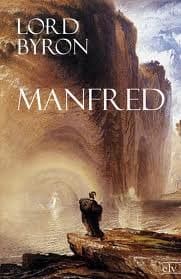
Sign in to track this book
Tormented by a sin like Byron's own scandalous exile, Manfred grapples with ancient spirits and his incestuous past, seeking oblivion for a love that defies human and divine law.
In his Alpine gallery at midnight, the noble Manfred paces, troubled by an unspecified, deep guilt he cannot escape. He hates life but cannot die, haunted by memories. He calls upon the Spirits of the Universe for oblivion or forgetfulness. Seven spirits appear, each representing an element or celestial body. They offer him power, knowledge, and control, but Manfred rejects these, wanting only forgetfulness. The spirits, unable to grant this, leave. One spirit, however, appears as a beautiful female figure, reminding Manfred of a lost love, which deepens his despair.
Manfred climbs a dangerous cliff in the Jungfrau mountains, planning to jump. He thinks about nature's beauty, which only makes his inner trouble worse. Just as he is about to leap, a chamois hunter, Manuel, appears and pulls him back. Manuel is concerned by Manfred's wild look and suicidal intent. He offers to lead Manfred to safety and offers simple human company, which Manfred first resists, finding peace only in his solitude and suffering. Manuel, however, insists on helping him down the mountain.
Manuel brings Manfred back to his castle. Manfred dismisses him but not before Manuel expresses his concern about Manfred's isolation and the rumors about him. Alone again, Manfred thinks about his past, haunted by the memory of Astarte, a woman he loved and lost, and their mysterious, destructive relationship. He admits his suffering is self-inflicted punishment for an unspeakable sin tied to her. He feels a great sense of loss and lasting damage, believing himself permanently stained.
Manfred travels to a waterfall in the Alps and calls forth the Witch of the Alps. He tells her his life story, describing himself as one who sought knowledge and power beyond human limits, but found only disappointment. He confesses his love for Astarte, suggesting an incestuous or forbidden nature to their bond, and the ruin it brought them both. He blames himself for her death and his torment. He begs the Witch for forgetfulness, but she says it is beyond her power, offering instead power over others, which he rejects.
The Abbot of St. Maurice visits Manfred at his castle, having heard of his suffering and despair. The Abbot, a man of faith, tries to offer spiritual guidance, urging Manfred to repent and seek redemption through God. Manfred, however, strongly rejects the Abbot's advice, stating that his guilt is too deep for human or divine forgiveness. He declares that his penance is self-imposed and eternal, and that he cannot find peace in common religion, further separating himself from society and spiritual comfort.
Driven by his constant torment, Manfred journeys to the Hall of Arimanes, the Prince of Darkness, with Nemesis and other infernal spirits. He demands to see Astarte's spirit. The spirits are at first unwilling, but Manfred's strong will forces them. Astarte's ghost appears, silent and sad. Manfred pleads with her to speak, to forgive him, and to say if they will ever reunite. She finally speaks, telling him he will die tomorrow and that they will meet again, but refuses to forgive him, leaving him with a mix of hope and dread.
The Abbot returns to Manfred's castle, sensing his coming death and wanting to offer last rites. He finds Manfred weak but still defiant. Manfred repeats his refusal of absolution, insisting on facing his fate alone. As they speak, strange sounds and shadows begin to appear around the castle. The Abbot sees these as demonic beings trying to claim Manfred's soul. He tries to shield Manfred with holy symbols and prayers, while Manfred remains calm, ready to face whatever comes.
As the demonic spirits gather around him, trying to drag his soul to hell, Manfred stands firm. He confronts them with his unyielding will, saying he is master of his own destiny and has never bowed to any power, human or supernatural. He declares that his sins and his redemption are his own, and that he will not be commanded by them. The spirits pull back, unable to use their power over his defiant spirit. Manfred then collapses and dies peacefully, having faced his end on his own terms, leaving the Abbot confused and amazed by his deep independence.
The Protagonist
Manfred begins in deep despair, seeking oblivion. He ultimately finds a form of peace not in absolution, but in defiant self-mastery over his own fate and the supernatural forces attempting to claim him.
The Supporting/Mentioned
As a spirit, Astarte's arc is limited. Her appearance provides a moment of clarity and a prophecy for Manfred, but she offers no absolution.
The Supporting
Manuel has a minor, unchanging arc, serving primarily to introduce an element of human compassion into Manfred's isolated world.
The Supporting
The Abbot's arc shows his increasing bewilderment and eventual awe at Manfred's spiritual independence, but he remains steadfast in his faith.
The Supporting
The Witch of the Alps remains a consistent, powerful, but ultimately limited supernatural entity, unable to provide the specific solace Manfred seeks.
The Mentioned
These spirits serve as an initial demonstration of Manfred's power and the limitations of external aid for his internal suffering.
The Mentioned
Arimanes is a static figure, representing the ultimate dark power that Manfred challenges and partially overcomes.
Manfred is consumed by an unspeakable guilt, often seen as incestuous, that drives his every action. He seeks forgetfulness or oblivion, not traditional forgiveness or atonement through religion. His suffering is his self-imposed penance, and he strongly rejects the Abbot's offers of Christian redemption. This theme explores the limits of human and divine forgiveness when faced with a deep, self-perceived wrong, and the idea that some sins may need an internal, solitary form of atonement, as seen in Manfred's defiance against the demons at his death.
“My embrace was fatal: but my kiss / Slew not thy life, nor cursed thee with my living.”
Manfred is the prime example of the Byronic hero. He is fiercely independent and defies all authority – human, divine, and supernatural. He refuses to bow to the spirits he summons, rejects the Abbot's religious comfort, and stands firm against the demons trying to claim his soul. This theme highlights the power of individual will and the romantic ideal of self-mastery, even in great suffering and death. His final act of defiance is his ultimate victory, asserting his control until his last breath.
“I will not bow to any spirit less than the Highest, nor to him were he to be found.”
The grand and often frightening Alpine landscapes are a constant background to Manfred's inner trouble. The towering peaks, glaciers, and waterfalls mirror the grandeur and chaos of his soul. Manfred finds a strange comfort and reflection of his own isolation and power in these natural settings, which often inspire awe and terror. His thoughts of suicide on a cliff edge, or his summoning of the Witch of the Alps by a waterfall, show how nature is not just scenery but an active part, reflecting and increasing his emotions, and offering a refuge from human society.
“Ye mountains, whose bald, eminence / Casts its long shadow o'er the ruined world!”
The play is full of supernatural elements, from Manfred's summoning of spirits and his talks with the Witch of the Alps to his journey to the Hall of Arimanes. This theme explores humanity's fascination with and dangerous search for knowledge beyond human limits. Manfred has explored forbidden arts, giving him power over spirits but not peace. The supernatural beings are powerful but cannot ease his deepest, internal suffering, suggesting that some torments are beyond even their reach and that such knowledge comes at a great personal cost.
“I have been from my youth a seeker, and had known / The magic of the mind, and the might of spells.”
A proud, tormented, and defiant protagonist alienated from society.
Manfred embodies the classic Byronic hero archetype. He is a man of intense passion, profound intellect, and deep melancholy, haunted by a mysterious, unspeakable past. His alienation from conventional society, his pursuit of forbidden knowledge, and his ultimate defiance against all external authority (human, divine, and supernatural) are defining characteristics. This device allows for the exploration of themes like individualism, guilt, and the limits of human endurance, as the audience is drawn to his magnetism despite his moral ambiguity and suffering.
A play intended to be read rather than performed on stage.
Manfred is structured as a play but was primarily intended for reading. This device allows for extensive soliloquies, detailed descriptions of internal states, and elaborate supernatural scenes that might be difficult or impossible to stage effectively. The focus shifts from theatrical spectacle to profound psychological and philosophical exploration. The reader is invited to delve into Manfred's mind through his lengthy monologues, which reveal his complex thoughts and emotions without the constraints of stage realism.
A central, unnamed transgression that drives the protagonist's suffering.
Manfred's profound guilt is never explicitly named, though it is strongly implied to be incestuous and related to Astarte. This narrative device creates an aura of mystery and allows the audience to project their own understanding onto Manfred's torment. By keeping the exact nature of the sin ambiguous, Byron heightens the sense of universal suffering and the idea that some transgressions are so profound they defy articulation. This ambiguity also contributes to the psychological depth of the character, making his internal struggle more compelling and relatable on an existential level.
The use of awe-inspiring and terrifying natural settings to reflect psychological states.
The dramatic Alpine scenery—towering peaks, deep chasms, raging waterfalls—is not merely a backdrop but a crucial plot device. It mirrors Manfred's internal turmoil, his grandeur, his isolation, and his despair. The sublime quality of these landscapes evokes both awe and terror, reflecting the extremes of Manfred's emotional state and his defiance of conventional human scale. His communion with nature, rather than with humanity, underscores his alienation and provides a visual metaphor for his untamed spirit and profound suffering.
“The spirit who now stirs within me.”
— Manfred's initial invocation.
“Sorrow is knowledge: they who know the most Must mourn the deepest o'er the fatal truth, The Tree of Knowledge is not that of Life.”
— Manfred's reflection on his suffering.
“My slumbers—if I slumber—are not rest, But a continuance of enduring thought.”
— Manfred describing his sleepless torment.
“I can call spirits from the vasty deep.”
— Manfred asserting his power to the Chamois Hunter.
“We are the fools of Time and Fate and Chance.”
— Manfred's fatalistic outlook.
“There is a power upon me which withholds And makes it not a thing of choice but strong Necessity to be so.”
— Manfred explaining his internal compulsion.
“Old man! 'tis not so difficult to die.”
— Manfred's defiant last words to the Abbot.
“The mind which is immortal makes itself Requital for its good or evil thoughts— Is its own origin of ill and end— And its own hell and heaven.”
— Manfred's philosophy on the mind's power.
“I have no dread, and feel no shame To meet the omens of a future flame.”
— Manfred's fearless stance against damnation.
“But a most living life, and burning thought, And quivering heart, and a most sleepless eye.”
— Manfred describing his intense existence.
“Away! away! there's blood upon the brim! Will it not wash off?”
— Manfred's hallucination, reflecting his guilt.
“Peace! I have said it—and I feel it now. I have no power upon me, but myself.”
— Manfred rejecting external powers in his final moments.
“I am not of your order, nor your tribe.”
— Manfred's declaration of his unique and isolated nature.
“The fiends who have tormented me have fled.”
— Manfred acknowledging the departure of his tormentors before his death.
Ready to see how well you understood this book? Take our interactive quiz with 10 questions.
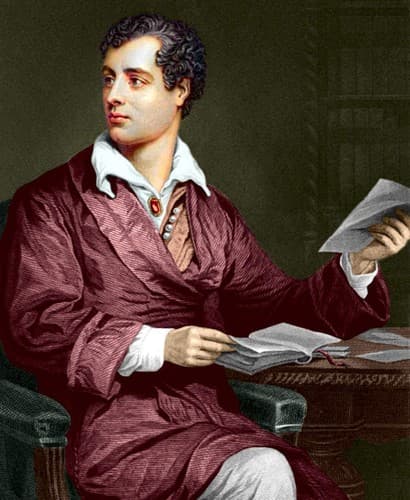
George Gordon Byron, 6th Baron Byron was an English romantic poet and peer. He was one of the leading figures of the Romantic movement, and has been regarded as among the greatest of English poets. Among his best-known works are the lengthy narratives Don Juan and Childe Harold's Pilgrimage; many of his shorter lyrics in Hebrew Melodies also became popular.







