“Forgiveness is between them and God. It's my job to arrange the meeting.”
— Creasy's chilling resolve after learning Pita's fate.

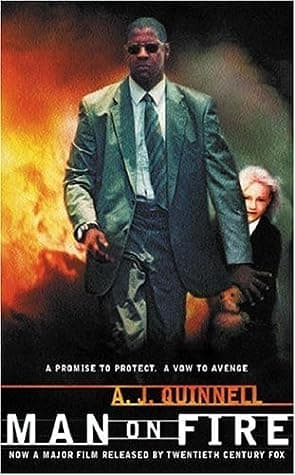
A.J. Quinnell (2004)
Genre
Thriller / Mystery
Reading Time
6-8 hours
Key Themes
See below
Sign in to track this book
A burnt-out mercenary, awakened to love by his young charge, unleashes a terrifying, single-minded rampage of revenge when she is brutally taken from him.
John Creasy, an ex-CIA operative and mercenary, arrives in Italy, haunted by his violent past and struggling with alcoholism and despair. He seeks a quiet life but accepts a job as a bodyguard for Lupo and Laura Balletto, a wealthy industrialist and his American wife, and their ten-year-old daughter, Pinta. Initially reluctant and detached, Creasy views the assignment as a means to an end. The Balletto family lives in a secluded villa, a setting that seems peaceful but holds the subtle threat of kidnapping, a common problem for the wealthy in Italy at the time. Creasy's reputation makes him a desirable, though expensive, choice for protection.
Creasy's initial interactions with Pinta Balletto are professional and distant. However, Pinta, a bright, curious, and perceptive girl, quickly sees past Creasy's gruff demeanor. She asks him many questions, shares her dreams, and treats him with unwavering warmth and trust. Her innocent affection slowly chips away at Creasy's emotional walls. He starts to enjoy their time together, teaching her to swim and helping with her homework. This unexpected bond revitalizes Creasy, pulling him out of his self-destructive spiral and giving him a sense of purpose he thought he had lost. He begins to feel again, experiencing genuine joy and a protective love for the first time in years.
The fragile peace shatters when Pinta is ambushed and kidnapped while leaving her piano lesson. Creasy, waiting for her outside, is caught in a brutal firefight with the kidnappers. Despite his training, he is outnumbered and outgunned. He fights valiantly, killing several assailants, but is severely wounded, shot multiple times and left for dead as the kidnappers escape with Pinta. The scene is chaotic and bloody, a stark contrast to the quiet life Creasy had begun to build. His failure to protect Pinta, despite his efforts, plunges him into deep despair, amplified by the physical pain of his injuries.
Creasy is rushed to the hospital, hovering between life and death for days. While he slowly recovers from his physical wounds, his emotional state is more precarious. He is wracked with guilt, convinced that Pinta is dead because of his failure. The Balletto family, particularly Laura, is devastated. Lupo negotiates with the kidnappers, who demand a substantial ransom. Creasy, still recovering, is informed of the negotiations and demands. His initial despair is profound, believing Pinta is already gone, and he withdraws, haunted by the image of her capture and his inability to prevent it. He sees himself as a failure, unworthy of Pinta's love.
Lupo Balletto gathers the ransom money, a vast sum, and follows the kidnappers' instructions for the drop. The exchange is planned, but it goes disastrously wrong. The kidnappers take the money without returning Pinta. Shortly after, a small piece of Pinta's clothing, stained with blood, is sent to the family. This brutal act, combined with Pinta's continued absence, leads authorities and the family to conclude that Pinta has been killed. The news shatters the Balletto family and pushes Creasy over the edge. His guilt transforms into rage, fueled by the betrayal and Pinta's perceived death.
From his hospital bed, still weak but driven by fury, Creasy makes a solemn vow: he will kill every person involved in Pinta's kidnapping and presumed murder, from the lowest foot soldier to the mastermind. His friend and colleague, David, visits him, offering support and a stark warning about the path Creasy is about to embark on. Creasy, however, is beyond dissuasion. He begins to plan his revenge, using his extensive network of contacts from his mercenary days. His focus becomes absolute, abandoning any pretense of a normal life. He transforms back into the ruthless killing machine he once was, but now with a deeply personal motive.
Creasy's vengeance begins with cold, calculated precision. He uses his contacts in the Italian underworld and intelligence community to identify the initial members of the kidnapping ring. His methods are brutal. He tracks down and eliminates the foot soldiers, interrogating them mercilessly for information before delivering a swift, often gruesome, end. Each kill is not just revenge, but a step further up the chain of command. The Italian police, led by Inspector Ristori, are baffled and horrified by the escalating violence, recognizing the professional nature of the killings but struggling to identify the perpetrator. Creasy leaves a trail of bodies, each one a message that he is coming for the rest.
As Creasy goes deeper, he uncovers a complex web of corruption and betrayal that extends beyond a simple kidnapping. He discovers that the initial kidnapping was not just for ransom, but part of a larger scheme involving powerful figures in Italian society, including corrupt businessmen and possibly politicians. He learns that the initial contact for the kidnapping was a lawyer named Bruno, who had connections to Lupo Balletto's business dealings. Creasy's interrogations become more intense, his targets more influential, and the information he extracts paints a picture of a conspiracy driven by greed and ruthless ambition. The stakes grow higher as he closes in on the true masterminds.
In a shocking turn, Creasy discovers that Pinta is not dead. Through a brutal interrogation of a key figure, he learns that Pinta was sold to another criminal organization after the failed ransom drop, rather than killed. This revelation electrifies Creasy. His mission shifts from pure revenge to a desperate rescue. The guilt he carried over her presumed death is replaced by a renewed, fierce determination to bring her back alive. The knowledge that she is still suffering, still in danger, fuels his every action, making him even more relentless. He races against time, knowing every moment is critical.
Creasy's relentless pursuit leads him to the true mastermind behind the kidnapping: Lupo Balletto, Pinta's own father. Lupo, facing severe financial difficulties and deeply in debt, orchestrated the kidnapping to claim insurance money and extort a ransom, planning to have Pinta returned safely after the payout. The plan, however, spiraled out of his control. Creasy confronts Lupo in a tense and emotional showdown. Lupo confesses his desperation and the tragic miscalculation that led to Pinta being sold. This ultimate betrayal is a profound shock, adding another layer of tragedy to Creasy's already brutal journey. Creasy's rage is now mixed with a deep sense of horror at Lupo's depravity.
Armed with the knowledge of Pinta's location, Creasy launches a daring, one-man assault on the secluded compound where she is being held. He battles through heavily armed guards, utilizing all his tactical skills and ruthless efficiency. The rescue is violent and intense, a culmination of his entire quest. He finds Pinta, traumatized but alive. As he attempts to escape with her, he is gravely wounded in a final confrontation. He manages to get Pinta to safety, into the care of authorities and eventually her mother, Laura. Creasy's body, already riddled with old scars and new wounds, finally gives out as he ensures Pinta's freedom, collapsing after fulfilling his promise.
Pinta is reunited with her mother, Laura, who is overjoyed but also heartbroken by the circumstances. The full extent of Lupo's betrayal is revealed, leading to his arrest and the dismantling of the criminal network. Creasy's fate is left ambiguous; he is last seen gravely wounded, possibly dying, having fulfilled his mission. The police find him, but his condition is critical. His sacrifice, however, ensures Pinta's future. The story concludes with the lingering impact of Creasy's actions — the justice he delivered, the lives he ended, and the life he saved. Pinta, though scarred by the experience, carries the memory of her protector, the man who brought her back from the brink. Creasy's actions, while brutal, ultimately brought about a form of justice and redemption.
The Protagonist
Creasy transforms from a despairing, self-destructive man into a focused, vengeful, and ultimately redemptive figure, finding purpose in protecting Pinta and enacting justice.
The Catalyst/Victim
Pinta endures a traumatic kidnapping but ultimately survives, serving as the symbol of hope and the reason for Creasy's ultimate sacrifice.
The Antagonist
Lupo descends from a respected but desperate father to a revealed villain, exposed and brought to justice for his heinous betrayal.
The Supporting
Laura endures the agony of her daughter's kidnapping and the revelation of her husband's betrayal, ultimately reuniting with Pinta and facing a shattered life.
The Supporting
David remains a constant, albeit peripheral, presence, witnessing Creasy's transformation and the consequences of his actions.
The Supporting
Ristori attempts to solve the case through legal means, constantly playing catch-up to Creasy's vigilante justice.
The Antagonist
Bruno is exposed as a key conspirator and meets a brutal end at Creasy's hands, revealing deeper layers of the plot.
The Antagonist
The 'Voice' orchestrates the kidnapping, but his greed and ruthlessness lead to his downfall at Creasy's hands.
The core theme explores whether a man can find redemption not through forgiveness or peace, but through a brutal, single-minded quest for revenge. Creasy, initially a broken and despairing individual, finds new purpose and self-worth in his violent pursuit of those who harmed Pinta. His actions, while morally ambiguous, are framed as a necessary purging of his past guilt and a righteous response to an unforgivable act. This theme is evident from the moment Creasy vows to kill everyone involved, transforming his despair into a focused, bloody mission.
“''Creasy was a man who had lost the power of feeling, but Pinta's touch had awakened something. Now, that something was a consuming rage, a fire that would burn until all responsible were ash.'”
The novel exposes how extreme wealth can lead to moral decay and horrific acts. Lupo Balletto, a wealthy industrialist, orchestrates his own daughter's kidnapping due to financial desperation, showing how money can warp human values. The larger conspiracy involves powerful figures who abuse their positions for personal gain, highlighting pervasive corruption in society. This theme is starkly illustrated by Lupo's betrayal and the network of accomplices willing to participate in such a heinous crime for profit.
“'The rich had their own laws, their own justice. And sometimes, their own children were just another commodity.'”
Pinta Balletto embodies innocence, and her brutal kidnapping and trauma highlight how easily purity can be shattered by the world's darkness. Her initial joy and trust in Creasy contrast sharply with the terror and suffering she endures. Her vulnerability makes Creasy's quest more poignant and urgent, as he fights to preserve what innocence remains or to avenge its loss. The novel shows the devastating impact of violence on the most vulnerable, and the profound emotional cost of such acts.
“'She was ten years old, and the world had already shown her its teeth.'”
The story constantly blurs the lines between 'justice' and 'vengeance.' Creasy's actions are undeniably brutal and outside the law, yet they are driven by a deep moral conviction to punish those who wronged Pinta. The official police investigation, led by Inspector Ristori, struggles to keep pace with Creasy's methods, suggesting the inadequacy of conventional justice in dealing with such depravity. The narrative challenges the reader to consider whether Creasy's violent retribution is a justifiable, albeit extreme, form of justice, or merely a descent into primal vengeance.
“'When justice sleeps, a man like Creasy wakes.'”
The unexpected bond between Creasy and Pinta forms the emotional heart of the novel. Their relationship, initially professional, evolves into a deep, almost paternal love that reawakens Creasy's humanity. This unconventional love serves as the catalyst for Creasy's redemption and his subsequent, violent transformation. It shows that love can emerge in unexpected places and between unlikely individuals, and that its power can be a driving force for both immense good and terrifying retribution. This bond gives Creasy's mission its profound personal weight.
“'He had forgotten what it felt like to care, until a little girl reminded him. And then, he remembered how to kill for it.'”
Pinta's character and her pure affection act as the driving force for Creasy's transformation.
Pinta's innocent and trusting nature is the primary catalyst that pulls Creasy out of his nihilistic despair. Her unadulterated love and belief in him reawaken his dormant humanity and give him a reason to live. Her subsequent kidnapping and presumed death then transform his reawakened emotions into a furious, relentless drive for vengeance. Without Pinta's influence, Creasy would likely have continued his self-destructive path, making her pivotal to the entire plot's initiation and progression.
The belief that Pinta is dead fuels Creasy's initial, brutal revenge, only to be subverted later.
The initial reports and evidence (the bloody clothing) suggesting Pinta's death serve as a powerful emotional trigger for Creasy. This 'false death' is a classic plot device that escalates the stakes and justifies Creasy's extreme violence. When it is later revealed that Pinta is alive, the device pivots, shifting Creasy's mission from pure vengeance to a desperate rescue, adding a layer of urgency and renewed hope to his already brutal quest. This twist intensifies the emotional impact and complicates Creasy's moral landscape.
Creasy is a former elite operative whose dormant skills are reawakened by a personal crisis.
This device establishes Creasy as a man with extraordinary, almost superhuman, combat and intelligence skills that he has actively tried to suppress. His past as a mercenary and CIA operative provides the backstory and justification for his ruthless efficiency as he unleashes his 'inner demon.' The personal tragedy of Pinta's kidnapping acts as the trigger, forcing him to embrace the very skills he tried to leave behind, transforming him into an unstoppable force of vengeance. This trope allows for the depiction of extreme violence and tactical brilliance.
The revelation that Lupo Balletto orchestrated his daughter's kidnapping.
This plot device is a shocking twist that elevates the story's emotional impact and moral complexity. The betrayal by Pinta's own father, the person who should be her ultimate protector, adds a profound layer of depravity to the crime. It not only intensifies Creasy's sense of outrage but also underscores the theme of corruption extending even to the most sacred bonds. This revelation reshapes the understanding of the entire conspiracy and provides a deeply personal, tragic climax to Creasy's journey.
“Forgiveness is between them and God. It's my job to arrange the meeting.”
— Creasy's chilling resolve after learning Pita's fate.
“A man can be an artist, a musician, a writer, but if he's a professional killer, he's a professional killer first.”
— Creasy reflecting on his past and identity.
“The memory of her laughter, of her small hand in his, was the fuel that stoked the fire.”
— Creasy's motivation to seek vengeance for Pita.
“He moved like a ghost, leaving only destruction in his wake.”
— Description of Creasy's methodical hunt for those responsible.
“There are no innocent bystanders in a war.”
— Creasy's brutal philosophy applied to his mission.
“He had found a reason to live, and then it had been taken from him.”
— Creasy's despair and subsequent rage after Pita's kidnapping.
“When you kill a man, you kill his future, his past, his present. You kill everything.”
— A rare moment of introspection from Creasy.
“The world was a dark place, but sometimes, a small light could shine through.”
— Creasy's initial interactions with Pita, before the tragedy.
“He wasn't a man anymore. He was an instrument of retribution.”
— Creasy's transformation into a relentless force of vengeance.
“Fear is a powerful weapon, if you know how to use it.”
— Creasy's tactical understanding of psychological warfare.
“The line between good and evil was blurred, almost invisible, in the heat of his rage.”
— Creasy's moral ambiguity during his violent quest.
“Every bullet had a name. Every act of violence had a purpose.”
— Creasy's precision and determination in his methodical revenge.
“Some men are born to fight, others are forced to. He was both.”
— A summary of Creasy's character and fate.
“He didn't want justice. He wanted blood.”
— The raw intensity of Creasy's desire for revenge.
Ready to see how well you understood this book? Take our interactive quiz with 10 questions.







