BookBrief
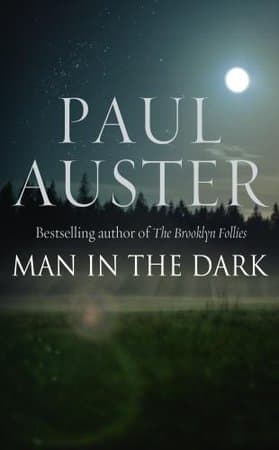
Man in the Dark cover
Archivist's Choice

Man in the Dark

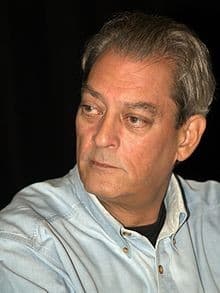
Paul Auster (2008)

Genre

Literary Fiction

Reading Time

180 min

Key Themes

See below

Track Your Reading

Sign in to track this book

After a family tragedy, a 72-year-old insomniac creates an alternate America at war, finding the violence of his imagined world reflects his grief.

Synopsis

August Brill, a 72-year-old retired book critic, lies awake in his daughter's Vermont home. He is recovering from a car accident and dealing with the recent death of his wife and the murder of his granddaughter Katya's boyfriend, Titus. To escape these painful events, August invents a fictional world. In this alternate America, the 2000 election caused a civil war, splitting the country. A magician named Owen Brick wakes up in a ditch with no memory. His mission is to kill August Brill. As August tells Owen's story, his own memories and worries appear in the narrative. Katya, also unable to sleep, joins him, and August shares the story of his marriage and, eventually, the details of Titus's death. The novel shows how storytelling helps people both avoid and face reality, blurring the lines as August's fiction and his grief mix, leading him to confront what he tried to escape.
Reading time
180 min
Difficulty
Medium
Pacing
Slow
Mood
Introspective, Melancholy, Thought-provoking, Philosophical
✓ Read this if...
You enjoy introspective literary fiction that blurs the lines between reality and imagination, and are interested in exploring themes of grief, trauma, and the nature of storytelling.
✗ Skip this if...
You prefer fast-paced plot-driven narratives, or find stories with a strong focus on internal monologue and philosophical musings less engaging.

Plot Summary

A Sleepless Night in Vermont

August Brill, a 72-year-old retired book critic, stays at his daughter Miriam's house in Vermont, recovering from a car accident. His leg is in a brace, and he cannot sleep, troubled by the quiet and the dark. He tries to distract himself from the grief of his wife Sonia's recent death and the murder of his granddaughter Katya's boyfriend, Titus. To cope with his insomnia and painful memories, August begins to invent a story in his mind, a detailed alternate reality that helps him escape his sorrow.

The Fictional World: Owen Brick's Awakening

August's invented story takes place in a parallel America where the 2000 presidential election led to widespread secession and a civil war, instead of the Iraq War. In this world, the Twin Towers still stand. The story's main character is Owen Brick, a 29-year-old magician who wakes up in a ditch in rural Pennsylvania, disoriented and with no memory. He finds himself in a war-torn country, a foreign place, and realizes he has been drafted into an army he does not understand, forced to fight unknown enemies.

Owen's Mission: Assassinating August Brill

Owen Brick learns from a commanding officer that his mission is to kill a man named August Brill. This news disturbs Owen, as he is a character in the real August Brill's imagination. The goal is to eliminate the 'creator' of the alternate reality, possibly ending the war or disrupting its story. Owen, a pacifist magician, struggles with this violent order, finding himself trapped in a world where his existence is a construct and his mission is to destroy his own author.

Katya's Arrival and Shared Insomnia

In the real world, as August continues his story, his granddaughter Katya, also unable to sleep, comes into his room. She is 23 years old and still affected by the murder of her boyfriend, Titus, a year earlier. Katya's presence offers a break from August's mental narrative. They share a quiet closeness, both dealing with grief and insomnia, finding comfort in each other during the night.

The Story of Sonia and August

Katya asks August for a story, and he begins to tell her how he met and fell in love with Sonia, his late wife. He describes their early days, their deep connection, and their lasting relationship. This story is a bittersweet journey through memory, full of tenderness and nostalgia, allowing August to revisit a happier time while processing his recent loss. Katya listens closely, finding solace in her grandfather's personal history.

Owen's Journey and Moral Conflict

Back in August's imagined world, Owen Brick continues his journey to find August Brill, the man he must kill. He travels through a desolate, war-torn landscape, seeing parts of the conflict and its suffering. Owen, a man of peace, struggles with the moral implications of his mission. He questions his situation, the random violence, and his identity within this fabricated existence, showing the dread of being a pawn in a larger, incomprehensible game.

The Nature of Reality and Storytelling

August pauses his story for Katya, reflecting on reality, imagination, and the human need for stories. He considers how stories, true or invented, help people understand their lives, cope with pain, and shape their view of the world. He acknowledges the artificiality of Owen Brick's world but also the emotional truth it holds for him as a way to process his worries about violence, war, and the fragility of peace, both personal and societal.

Katya's Sleep and August's Return to Owen

As the night grows deeper, Katya eventually falls asleep, leaving August alone again in the quiet house. With Katya sleeping beside him, August returns to his imagined world and Owen Brick's story. The quiet allows him to fully immerse himself in the alternate reality, where the stakes feel more urgent, and the line between his waking thoughts and the fabricated world begins to blur, reflecting his need to face difficult truths through fiction.

Owen's Confrontation and Crisis

In the fictional world, Owen Brick finally reaches the location where August Brill is supposedly staying. He confronts his mission, holding the weapon, and grappling with the impossibility of killing someone he knows nothing about, yet who represents his very existence. The moment of confrontation is tense, as Owen, the created, stands before the imagined image of his creator, forced to make a choice that questions his being and the reality he inhabits.

The Unveiling of Titus's Death

As dawn nears, August, no longer able to postpone it, forces himself to revisit the traumatic memory of Titus's murder. He recalls the details: Titus, Katya's boyfriend, was stabbed to death by a random attacker in a park. This memory is the raw pain August had been trying to outrun with his fictional world. Facing this real-world horror is more profound and devastating than any imagined civil war.

The Aftermath of Trauma

August processes the lingering grief and shock from Titus's death. He thinks about Katya's devastation, his own helplessness, and how such random acts of violence shatter lives and leave lasting scars. The imagined war in his head, while a metaphor for societal conflict, is less impactful than the personal horror of a loved one's senseless death. This reflection highlights the novel's main theme: the inescapable presence of violence and suffering, both large and deeply personal.

Morning Light and Lingering Shadows

As the first rays of morning light enter the room, the long, sleepless night ends. Katya stirs, and August is left with the echoes of his fictional world and the reality of his grief. The imagined civil war and Owen Brick's story fade, but the pain of Sonia's death and Titus's murder remains. The novel ends with August having faced, rather than escaped, the 'darkness' of his personal traumas, though healing is still a long process.

Principal Figures

August Brill

The Protagonist

August moves from escaping his grief through fiction to finally confronting the raw, painful reality of his personal losses, particularly Titus's death.

Katya

The Supporting

Katya remains largely in a state of grief, but her presence allows August to begin processing his own trauma, and she finds a temporary respite in his stories.

Sonia

The Mentioned

Her memory serves as the catalyst for August's emotional journey.

Titus

The Mentioned

His death is the catalyst for much of the characters' internal struggles and the novel's thematic exploration of violence.

Owen Brick

The Protagonist (Fictional)

Owen is forced to confront violence and the arbitrary nature of his existence, struggling with the moral implications of his imposed mission.

Miriam

The Supporting

Miriam's role is primarily functional, providing the physical setting for the narrative.

Themes & Insights

The Power of Storytelling and Imagination

August Brill uses storytelling as a way to cope, building an elaborate alternate reality to distract himself from deep personal grief and trauma. His creation of Owen Brick and the civil war in the parallel America shows how imagination can be both an escape and a way to process worries about violence and societal breakdown. The novel itself, as a story, reflects August's internal process, highlighting the human need for narrative to understand, or at least survive, a chaotic world. This is clear as August tells Katya the story of his marriage, using narrative to connect and share warmth amid their shared sorrow.

What does one do when there's nothing to be done? One makes up a story. And in that story, one invents a character who is in the same predicament as oneself. It's a way of being two places at once.

August Brill

Grief, Trauma, and Memory

The novel is full of themes of grief and trauma. August mourns his wife Sonia's death and struggles with the brutal murder of his granddaughter's boyfriend, Titus. Katya shares this trauma, shown in her sleeplessness and quiet despair. Remembering, both painful and comforting, is central to August's journey. He first tries to avoid the memory of Titus's death through his fictional world, but he must ultimately confront it, showing that true healing requires facing, not avoiding, deep loss. His recounting of his marriage to Sonia honors memory while processing its absence.

The past is a country we can never leave. It's always there, just beyond the horizon, waiting for us to come back to it.

August Brill

The Nature of Reality and Illusion

Auster blurs the lines between reality and illusion, both in August's mind and for the reader. Owen Brick's existence within August's imagination raises questions about free will, purpose, and the nature of being. Is Owen truly 'real' in his constructed world? His mission to kill August Brill, his creator, comments on the author-character relationship. This theme extends to how people perceive the world, suggesting that personal and collective 'realities' are often shaped by narrative and perspective, as seen in August's alternate America versus the actual world's conflicts.

Is this real? Or am I dreaming? The question had been pounding in his head for hours.

Owen Brick

Violence and War

The presence of violence, both personal and societal, runs through the novel. August's invented civil war in America reflects his worries about political division, national conflict, and widespread devastation. This large-scale violence is a metaphor for real-world conflicts, like the Iraq War, that August tries to avoid thinking about. However, the novel's true horror lies in the personal violence of Titus's senseless murder, which is more devastating to August and Katya than any imagined war. The novel places these forms of violence side by side, suggesting their connection and widespread impact.

The war was everywhere and nowhere, a fog that had settled over the entire country.

Narrator (describing Owen's world)

Plot Devices & Literary Techniques

Story-within-a-story (Metafiction)

August's imagined narrative of Owen Brick exists within the primary narrative.

This device is central to the novel's structure. August Brill, the protagonist, invents an elaborate story about Owen Brick in a parallel America. This fictional narrative serves multiple purposes: it's a coping mechanism for August's insomnia and grief, a way to explore anxieties about war and reality, and a metafictional commentary on the act of creation itself. The story of Owen Brick directly mirrors August's own struggles, with Owen's mission to kill his creator being a symbolic act of the character's struggle for autonomy against the author's control, blurring the lines between the 'real' and the 'imagined'.

Parallel Worlds / Alternate History

August creates a divergent reality where America experiences a civil war.

August's imagined world posits an alternate history for America, where the 2000 election results led to secession and a civil war, rather than the Iraq War. This device allows Auster to explore societal anxieties and political divisions through a speculative lens. It serves as a symbolic representation of the psychological civil war within August himself, torn between confronting his grief and escaping into fantasy. The contrast between this imagined, grand-scale conflict and the intensely personal tragedy of Titus's murder highlights different facets of violence and human suffering.

Insomnia as a Catalyst

August's sleeplessness drives his storytelling and internal journey.

August's inability to sleep is the primary catalyst for the entire narrative. The long, dark hours of the night force him to confront his thoughts and memories, leading him to construct his elaborate fictional world. Insomnia strips away the distractions of daily life, leaving him vulnerable to his grief and anxieties. It creates a liminal space where the boundaries between waking and dreaming, reality and imagination, become fluid, allowing for the deep introspection and the eventual confrontation with his trauma that defines the novel's emotional core.

The Unreliable Narrator (Self-Created Fiction)

The 'reality' of Owen Brick's world is entirely dependent on August's mind.

While August Brill is the primary narrator, his creation of Owen Brick's world introduces a layer of narrative unreliability. The events in Owen's world are entirely subject to August's imagination and state of mind, making it a 'reality' that is consciously constructed and mutable. This device highlights the subjective nature of truth and the power of individual perception. The reader understands that Owen's story is a projection of August's anxieties, making the 'unreliability' a deliberate and transparent artistic choice rather than a deceptive one, inviting deeper thematic exploration.

Critical analysis

Notable Quotes

As if the world weren’t strange enough, as if it weren’t baffling enough that the earth is spinning through space at 67,000 miles per hour and we’re all just clinging to it, upside down and sideways, and if we let go we’re dead.

Owen Brick reflects on the strangeness of existence and the fragility of life.

The world is full of things we can't explain, and the older I get, the more I realize how little I know.

August Brill, the protagonist, muses on the limits of human understanding.

A story is a way of seeing. It's a way of understanding. It's a way of making sense of the world.

August Brill discusses the purpose and power of storytelling.

Sleep is a country you visit every night, and you can never be sure what you're going to find there.

August Brill reflects on the nature of sleep and dreams.

What does a person do when he can't sleep? He thinks. He remembers. He invents.

August Brill describes his nightly routine of invention to combat insomnia.

The past is never dead. It's not even past.

A common theme throughout the novel, reflecting how past events influence the present.

Every life is a story, and every story has a beginning, a middle, and an end. But not necessarily in that order.

August Brill muses on the non-linear nature of life and narrative.

We live in a world of endless possibilities, and sometimes the most improbable ones are the ones that come true.

A reflection on the unpredictable nature of reality and fate.

The world is full of ghosts, and some of them are still alive.

August Brill considers the lingering presence of the past and people in one's life.

Imagination is a disease, and I'm suffering from it.

Owen Brick, trapped in his invented world, expresses frustration with his situation.

You never know what's going to happen next. That's the beauty of it, and that's the terror of it.

A general observation on the unpredictability of life.

A book is a world you can carry in your hands.

August Brill, a reader and storyteller, reflects on the power of books.

Loneliness is a kind of death, isn't it? A slow, quiet death.

August Brill contemplates the profound impact of isolation.

Every person is a book, and every book is a mystery.

A metaphor for the complexity and unknowability of human beings.

Quiz

Test Your Knowledge

Ready to see how well you understood this book? Take our interactive quiz with 10 questions.

10
Questions
~5
Minutes
?
Best Score

Key Questions (FAQ)

The novel primarily revolves around 72-year-old August Brill, a retired book critic recovering from an accident. Unable to sleep, he invents an elaborate alternate reality where the United States is embroiled in a civil war, all while grappling with personal grief over his wife's death and the murder of his granddaughter's boyfriend, Titus.

About the author

Paul Auster

Paul Benjamin Auster is an American writer and film director. His notable works include The New York Trilogy (1987), Moon Palace (1989), The Music of Chance (1990), The Book of Illusions (2002), The Brooklyn Follies (2005), Invisible (2009), Sunset Park (2010), Winter Journal (2012), and 4 3 2 1 (2017). His books have been translated into more than forty languages.