“The only way you can get the truth is to cross that bridge and ask the dead.”
— Miranda "Mama" Day explaining the nature of truth and ancestral wisdom on Willow Springs.

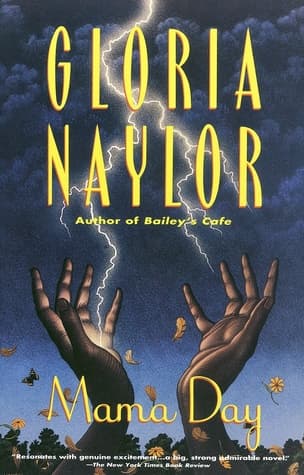
Gloria Naylor (1988)
Genre
Literary Fiction / Fantasy
Reading Time
360 min
Key Themes
See below
Sign in to track this book
On a mystical island where ancestral magic intertwines with modern skepticism, a powerful healer must reconcile with her headstrong great-niece to combat a looming darkness threatening to consume their legacy.
The novel opens with an unconventional, collective narrative voice introducing Willow Springs, an island off the coast of Georgia and South Carolina. It is unique for its self-governance and its history rooted in the legacy of Bascombe Wade. Wade, an enslaver, lost the island in a card game to his enslaved woman, Sapphira, in 1823. Sapphira then divided the land among her descendants, establishing a community independent and connected to its ancestral roots. The narrative highlights the island's magical and spiritual essence, where the boundary between the living and the dead, the natural and the supernatural, is fluid. This introduction sets the stage for the stories of Mama Day and her great-niece, Cocoa, establishing the deep historical and mystical context that shapes their lives.
Ophelia, known as Cocoa, recounts her life in New York City, working in an office and navigating modern urban existence. She often thinks about her childhood in Willow Springs, raised by her great-aunt, Miranda Day, and her grandmother, Abigail. Cocoa's narrative shows her deep affection for Mama Day, who embodies the island's ancient wisdom and healing powers. Despite her love for her family and the island, Cocoa has embraced a more conventional, city-dweller's life, often finding herself at odds with the mystical and communal ways of Willow Springs. Her memories show the contrast between her current reality and the magical, tradition-bound world she left behind, setting up her eventual return.
Cocoa meets George Andrews, a kind and somewhat naive man, in New York City. George, having grown up in an orphanage, lacks a deep connection to family or a sense of place, making him a contrast to Cocoa's rooted background. Their relationship develops steadily, built on mutual affection and a shared desire for stability. George, a dedicated and practical man, is bewildered by Cocoa's stories of Willow Springs and its mystical inhabitants, unable to fully grasp the spiritual dimensions she describes. Despite their differences, they fall in love and eventually marry, creating a life together in the city. Their bond is strong, but George's rational worldview will soon be tested by the supernatural realities of Willow Springs.
Cocoa experiences a mysterious and debilitating illness in New York, characterized by extreme fatigue, hallucinations, and a sense of spiritual decay. Modern medicine does not work, and her condition worsens rapidly. Sensing a spiritual attack, Mama Day, from Willow Springs, uses her powers to discern that Cocoa is in danger and needs to return to the island. Mama Day sends word for Cocoa and George to come to Willow Springs, believing that the illness is rooted in the island's spiritual forces and can only be cured there. This urgent call marks a turning point, forcing Cocoa and George to confront the realities of a world beyond their urban experiences.
George and Cocoa arrive on Willow Springs, a place that immediately challenges George's rational understanding of the world. The islanders greet them with warmth and subtle scrutiny, accustomed to outsiders. George is struck by the island's isolation, its reliance on communal customs, and the pervasive sense of history and spirituality that is part of daily life. He struggles to adapt to the lack of modern conveniences, the superstitions, and the traditions that govern the community. Cocoa, though ill, feels a pull back to her roots, while George remains an outsider, his skepticism and urban sensibilities clashing with the island's ancient ways. Mama Day observes them both, understanding the spiritual battle unfolding.
As Cocoa's condition deteriorates further on Willow Springs, Mama Day works to diagnose the spiritual cause of her illness. She discovers that Ruby, an envious islander, is behind Cocoa's affliction. Ruby, a practitioner of dark magic, is using 'roots' (folk magic) to harm Cocoa, driven by resentment and perhaps a desire for George. Mama Day understands that this is not a physical ailment but a spiritual attack, requiring traditional island remedies and a confrontation with Ruby's forces. The revelation of Ruby's involvement escalates the conflict, making it clear that Cocoa's survival depends on Mama Day's spiritual prowess and the island's ancient magic.
Mama Day uses a range of traditional healing practices to combat Ruby's magic and save Cocoa. She uses herbs, incantations, and spiritual rituals, drawing upon generations of ancestral knowledge. Despite her efforts, Ruby's 'roots' are strong, and Cocoa's health continues to wane. Mama Day realizes that the situation requires a deeper intervention, a symbolic 'sacrifice' or offering to appease the forces at play and break Ruby's spell. She understands that the solution is not just in physical remedies but in a spiritual exchange, one that involves George, the outsider, and his willingness to embrace the island's unseen realities. This realization sets the stage for the confrontation.
Mama Day instructs George to retrieve a specific object from the ancestral chicken coop, believing it is essential for breaking Ruby's spell. She gives him very specific, seemingly nonsensical instructions, including bringing her 'the hand.' George, still a skeptic and struggling to understand the island's ways, misinterprets her instructions. Driven by his love for Cocoa and a desperate desire to save her, he attempts to chop off his own hand, believing it to be the 'hand' Mama Day requested. In his weakened state from a storm and his own internal conflict, George accidentally falls and strikes his head, dying from the injury. His death is a tragic misunderstanding, a sacrifice born of love but hindered by his inability to fully comprehend the spiritual language of Willow Springs.
George's death, though accidental, fulfills the necessary 'sacrifice' to appease the spiritual forces and break Ruby's hold over Cocoa. Immediately following his death, Ruby's magic collapses, and her own life force is drained. The islanders discover Ruby's body, showing the full extent of her malevolence and the power of the 'roots' she wielded. With Ruby's power gone, Cocoa begins a slow but steady recovery, though deeply traumatized by George's death. Mama Day, heartbroken by the loss of George, understands the complex interplay of love, sacrifice, and spiritual forces that led to this tragic outcome, recognizing that George's love ultimately saved Cocoa, even at the cost of his own life.
Devastated by George's death, Cocoa enters a period of mourning. She struggles to reconcile her love for George with the strange, mystical circumstances of his passing and the island's role in it. Mama Day supports her through her grief, helping her understand the spiritual complexities of Willow Springs and the nature of George's sacrifice. Over time, Cocoa begins to heal, finding solace in the island's community and her ancestral heritage. She decides to remain on Willow Springs, embracing her roots and the unique connection to the land and its people. This decision means she accepts the spiritual world and her role within the Day family legacy, bringing her journey full circle from urban independence to rooted belonging.
The Protagonist/Matriarch
Mama Day's arc is less about personal change and more about the enduring strength and responsibility of her role, as she navigates the challenges to her family and island, ultimately reaffirming her power.
The Protagonist
Cocoa's arc moves from urban independence and skepticism to a profound acceptance of her mystical heritage and a rooted connection to Willow Springs after experiencing deep personal loss.
The Supporting/Love Interest
George's arc is a tragic journey from urban skepticism to a desperate, loving attempt to engage with the mystical world, culminating in his accidental sacrifice.
The Antagonist
Ruby's arc is one of escalating malevolence through dark magic, leading to her own destruction when her spell is broken.
The Supporting
Abigail's arc remains consistent as a loving and supportive matriarch, providing stability amidst the island's spiritual trials.
The Mentioned/Ancestral Figure
As a historical figure, Bascombe Wade has no personal arc, but his legacy profoundly shapes the setting and characters' understanding of their history.
The Mentioned/Ancestral Figure
As an ancestral figure, Sapphira's 'arc' is complete in her founding act, which continues to influence the present-day characters.
The Supporting/Foil
Dr. Buzzard's arc is minor, primarily serving to illustrate the spectrum of magical practice on the island and Mama Day's superior wisdom.
The novel explores what it means to belong, both to a physical place and a heritage. Cocoa's journey from urban independence to embracing her ancestral roots on Willow Springs shows this theme. Her struggle to reconcile her modern identity with the mystical traditions of her family highlights the tension between individual autonomy and communal connection. George, as an orphan, wants a sense of belonging, which he finds with Cocoa, but struggles to connect with the island itself. Ultimately, the book suggests that true identity is linked to one's past and the community that shapes it, especially within the context of Willow Springs.
“Just like your mama and her mama and her mama before her, they all come back to Willow Springs, one way or another.”
The history of Willow Springs, founded by Sapphira after winning the island from Bascombe Wade, is central to the novel. This foundational story, passed down through generations, shapes the islanders' identity, their independence, and their deep connection to the land. Mama Day, as a direct descendant, is a living embodiment of this ancestral power, drawing strength and wisdom from those who came before. The past is not just remembered; it actively influences the present, manifesting in spiritual forces, healing traditions, and the community's collective consciousness. The novel emphasizes that understanding and honoring one's ancestry is important for navigating life's challenges.
“We were a family then, and we're a family now. And there's some things that you can't outrun, not even in New York City.”
'Mama Day' is steeped in the supernatural, particularly the folk magic known as 'roots' or conjure. Mama Day's healing powers, Ruby's destructive spells, and the pervasive spiritual presence on Willow Springs show the reality of magic within the narrative. The island itself is a magical entity, where the veil between the living and the dead is thin, and natural elements hold spiritual significance. The conflict between Mama Day and Ruby highlights the dual nature of this magic – its potential for both healing and destruction. The theme challenges Western rationalism, asserting the validity and power of spiritual belief systems.
“There are some things that can't be explained away by what they teach you in them city schools.”
The novel explores various forms of love—familial, romantic, and communal—and the sacrifices made in their name. Mama Day's unconditional love for Cocoa drives her to confront powerful spiritual forces. George's deep love for Cocoa compels him, a rational outsider, to enter a world he doesn't understand, ultimately leading to his accidental, yet profound, sacrifice. His death, born of a desperate attempt to save his beloved, shows that love can transcend understanding and even lead to the ultimate self-giving. The theme highlights the transformative and redemptive power of love, even in the face of tragedy.
“He loved her so much, he would have done anything.”
Cocoa's character embodies the tension between the modern, urban world and the traditional, mystical life of Willow Springs. Her initial skepticism and preference for city life contrast with Mama Day's wisdom and the island's ancient customs. George, representing modernity and rationalism, is bewildered by Willow Springs. The novel suggests that while modernity offers progress, it often comes at the cost of spiritual connection and communal understanding. Ultimately, the story advocates for a synthesis, where the strength of tradition can enrich and ground the individual, rather than being discarded for modern advancements.
“She had to choose between the world they taught her and the world she knew.”
An 'us' narrative that speaks for the community of Willow Springs, blurring individual perspectives.
The novel often employs a unique collective narrative voice, using 'we' or 'us' to represent the shared consciousness and oral tradition of the Willow Springs community. This device blurs the lines between individual storytellers and the island's collective memory, emphasizing the communal nature of their history and identity. It allows for a multifaceted perspective, conveying the island's legends, beliefs, and judgments, while also providing a sense of intimacy and authenticity to the island's unique culture. This 'us' voice reinforces the idea that the island itself is a character, a living entity with its own stories and perspectives, distinct from the individual character narratives.
The system of traditional African American folk magic used by Mama Day and Ruby.
Folk magic, or 'roots' and conjure, is a central plot device, driving much of the supernatural conflict and resolution. Mama Day's healing powers, her ability to communicate with ancestors, and her use of herbs and rituals are all manifestations of this system. Conversely, Ruby's malevolent spells and the 'roots' she uses to afflict Cocoa demonstrate the destructive potential of conjure. This device grounds the fantastical elements of the story in a specific cultural tradition, making the magic feel authentic and deeply intertwined with the characters' heritage and the island's spiritual landscape. It serves as both a source of power and a source of danger.
The physical setting functions as a character, imbued with its own history, spirit, and influence.
Willow Springs is more than just a setting; it is a character in itself. The island possesses a distinct personality, a deep historical memory, and its own spiritual forces that actively influence the lives of its inhabitants. It is a place of both profound healing and potential danger, where the past is ever-present and the natural world is imbued with magic. The island's isolation and self-governance contribute to its unique culture, making it a crucible for the conflicts between tradition and modernity, and the natural and supernatural. Its 'soul' is intricately linked to the Day family, especially Mama Day, and its well-being directly impacts the characters.
The foundational myth of how Sapphira won the island, shaping its history and identity.
The legend of Bascombe Wade losing Willow Springs to his enslaved woman, Sapphira, in a card game in 1823, is a pivotal plot device. This origin myth establishes the island's unique history of self-determination and freedom, making it a powerful symbol of black autonomy. It underpins the Day family's deep connection to the land and their ancestral heritage, providing a historical context for Mama Day's powers and the community's fierce independence. The legend is passed down orally, reinforcing the importance of storytelling and collective memory in shaping the islanders' identity and their understanding of their place in the world.
Subtle parallels to Shakespeare's 'The Tempest' in characters and plot elements.
The novel draws subtle parallels to Shakespeare's 'The Tempest,' enriching its thematic depth without being an overt retelling. Mama Day can be seen as a Prospero figure, a powerful, wise magician governing her island domain, protecting her 'Miranda' (Cocoa) from external threats and internal malevolence (Ruby as a Caliban-like figure, George as Ferdinand). The island's isolation, its magical atmosphere, and the themes of power, exile, and reconciliation echo Shakespeare's play. This device invites readers to consider the novel within a broader literary tradition, highlighting its exploration of universal human experiences through a distinctly African American lens.
“The only way you can get the truth is to cross that bridge and ask the dead.”
— Miranda "Mama" Day explaining the nature of truth and ancestral wisdom on Willow Springs.
“You got to be still enough to hear the grass grow.”
— Mama Day advising on patience and deep listening to nature's rhythms.
“Willow Springs ain't in no state. It never has been, never will be.”
— Narrator describing the island's unique, independent existence outside legal boundaries.
“A man ain't nothing but a man. But a son of the soil is a different thing.”
— Reflecting on George's outsider status versus the rootedness of Willow Springs residents.
“The past is a ladder that can help you climb into the future.”
— Mama Day emphasizing the importance of history and heritage for progress.
“Love don't always come in the package you expect.”
— Commentary on the unconventional relationship between Cocoa and George.
“Every generation has to find its own way to remember.”
— Discourse on how traditions evolve while maintaining core values.
“The wind here tells stories if you know how to listen.”
— Describing the mystical, communicative essence of Willow Springs' environment.
“You can't heal a body without tending to the spirit.”
— Mama Day's holistic approach to medicine and well-being.
“Some things are too deep for words; they live in the silence between.”
— Reflecting on unspoken understandings and emotional depths in relationships.
“A woman's power is in knowing when to act and when to wait.”
— Mama Day discussing feminine strength and strategic patience.
“The island remembers what the mainland forgets.”
— Highlighting Willow Springs' preservation of African American history and culture.
“Magic is just another word for what we don't understand yet.”
— Rationalizing the supernatural elements as part of natural wisdom.
“Home isn't a place you find; it's a truth you carry inside.”
— Exploring themes of belonging and internal identity versus physical location.
Ready to see how well you understood this book? Take our interactive quiz with 10 questions.
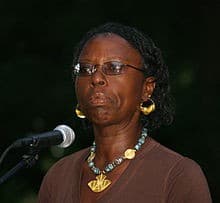
Biography coming soon.







