BookBrief
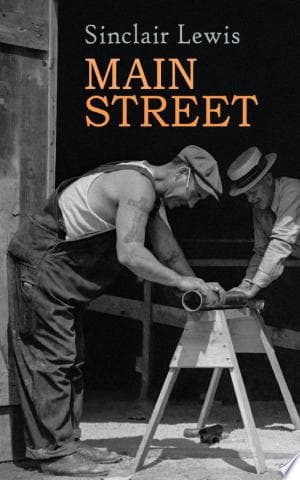
Main Street cover
Archivist's Choice

Main Street

Sinclair Lewis (2020)

Genre

Literary Fiction / Historical Fiction

Reading Time

17-20 hours

Key Themes

See below

Track Your Reading

Sign in to track this book

An educated woman's progressive ideas conflict with the suffocating conformity and provincialism of Gopher Prairie, Minnesota, in a satire of small-town American life.

Synopsis

Carol Milford, an educated woman with hopes for social reform, marries Dr. Will Kennicott, a conventional physician, and moves to his hometown of Gopher Prairie, Minnesota. Carol initially believes she can transform the dull town into a place of beauty and intellectual life. She tries to introduce new ideas, organize clubs, and suggest improvements in everything from architecture to town planning. However, Carol quickly encounters the town's resistance to change, gossip, and conservatism. Her efforts are met with misunderstanding, ridicule, and hostility, leading to isolation and disappointment. Despite brief connections with a few like-minded people, Carol feels increasingly stifled by Gopher Prairie's narrow views. Overwhelmed by her unfulfilled dreams and the stifling atmosphere, she eventually leaves for Washington D.C., seeking intellectual stimulation and personal freedom. After a period of independence, Carol returns to Gopher Prairie, not defeated, but with a weary acceptance of the town and her place in it. She understands that while she cannot change Gopher Prairie, she has changed herself.
Reading time
17-20 hours
Difficulty
Medium
Pacing
Slow
Mood
Satirical, Melancholy, Reflective, Critical
✓ Read this if...
You enjoy classic American literary fiction, character studies of women pushing against societal norms, or satirical critiques of small-town life and conformism.
✗ Skip this if...
You prefer fast-paced plots, optimistic narratives, or stories with clear-cut victories for the protagonist.

Plot Summary

Aspiration in St. Paul

Carol Milford grows up in St. Paul, Minnesota, and attends Blodgett College. There, she develops an idealistic view of life, art, and social reform. She is intelligent, sensitive to beauty, and wants a life of purpose, often feeling held back by the perceived provincialism around her. She works briefly as a librarian, which exposes her to diverse ideas, but she remains restless, believing she is meant for more than the domestic life expected of women then. Her encounters with various men, including a free-spirited journalist and a more conventional suitor, show her internal conflict between independence and the societal pressure to marry.

Meeting Dr. Kennicott

While working at the library, Carol meets Dr. Will Kennicott, a physician from the small town of Gopher Prairie, Minnesota. Will is practical and has a straightforward charm that contrasts with Carol's intellectual and artistic nature. He represents a stable, traditional life, and Carol is initially hesitant. However, she is intrigued by his earnestness and the idea of a simpler, more authentic existence away from the superficiality she sees in the city. She views Gopher Prairie as a potential place for her reform ideas, believing she can bring culture and progress to a seemingly untouched community. They quickly fall in love and marry, with Carol anticipating an adventure.

Arrival in Gopher Prairie

Carol arrives in Gopher Prairie as Mrs. Will Kennicott, full of enthusiasm and plans for improving her new home. However, her first impressions are disappointing. The town, with its unpaved streets, drab architecture, and plain storefronts, is far from the ideal she imagined. She is especially dismayed by Main Street, which she finds ugly and monotonous. The townspeople, like Mrs. Bogart, the gossipy neighbor, and various shopkeepers, appear narrow-minded and resistant to change. Carol's initial attempts at conversation are met with suspicion and a lack of understanding, leaving her feeling isolated and disappointed.

Early Attempts at Reform

Driven by her desire for reform, Carol tries to introduce improvements to Gopher Prairie. She tries to redecorate her own home, suggesting modern furnishings, much to Will's amusement. She proposes forming a drama club, a literary society, and even advocates for improved town planning and aesthetics. Her ideas are consistently met with polite but firm resistance from the town's established social circles, particularly from the women of the Thanatopsis Club, who prefer their traditional book reviews and social customs. Carol's enthusiasm is often misinterpreted as arrogance, and her suggestions are dismissed as impractical, fueling her growing frustration and sense of alienation.

Growing Isolation and Disillusionment

As months turn into years, Carol feels increasingly isolated in Gopher Prairie. Her attempts to connect with the townspeople on a deeper intellectual or artistic level repeatedly fail. Conversations revolve around gossip, prices, and ordinary local events, leaving Carol longing for stimulating discussion. She tries to cultivate friendships, but finds them superficial. Even her relationship with Will, though loving, is strained by his inability to fully understand her artistic and social aspirations. He is content with the town as it is, and his practicality often clashes with her idealism. Carol feels trapped, her spirit slowly eroding under the weight of the town's conformity.

Brief Sparks of Connection

Amidst her despair, Carol encounters a few individuals who offer temporary comfort. She forms a brief, intense friendship with Fern Mullins, a new, independent schoolteacher who shares Carol's dislike for Gopher Prairie's narrowness. However, Fern is soon ostracized and forced to leave town after being seen dancing with a man at a party, reinforcing the town's rigid moral code. Carol also develops a complex relationship with Erik Valborg, a young, artistic tailor's assistant who appreciates her aesthetic sensibilities. Their shared love for beauty creates a bond that almost crosses into romantic territory, providing Carol with a much-needed intellectual and emotional outlet, though this too proves unsustainable within the town.

The War and Its Aftermath

World War I brings a temporary shift in Gopher Prairie's focus. There is a flurry of patriotic activity, Red Cross drives, and community events, which briefly unite the town and offer Carol a sense of purpose. She throws herself into war work, feeling a renewed connection to her community. However, as the war ends, the town quickly returns to its familiar patterns of provincialism and resistance to genuine change. The brief period of collective effort fades, and Carol realizes that the underlying issues of narrow-mindedness and cultural stagnation remain, deepening her sense of futility and reinforcing her desire to escape.

Escaping to Washington D.C.

After years of struggling against Gopher Prairie's inertia, Carol reaches her breaking point. She feels her spirit dying, her dreams unfulfilled, and her identity consumed by the town's expectations. With Will's reluctant consent, she decides to leave him and Gopher Prairie, moving to Washington D.C. She takes her young son, Hugh, with her, hoping to find a more intellectually stimulating environment and a place where she can rediscover herself. In Washington, she finds work and enjoys the anonymity and cultural richness of a large city, reveling in the freedom to pursue her own interests and engage with diverse ideas, a stark contrast to her life in Minnesota.

Life in Washington D.C.

In Washington D.C., Carol experiences a period of intellectual and personal renewal. She works in various government offices, attends lectures, explores museums, and engages in stimulating conversations with new acquaintances. She enjoys the anonymity of the city, the freedom from constant scrutiny, and the opportunity to define herself outside Gopher Prairie's rigid social structures. However, even in the city, she eventually confronts new forms of superficiality and social climbing. She realizes that while the city offers more opportunities, it does not automatically solve her internal struggles or provide a perfect escape from human flaws. The initial glow of freedom begins to fade as she recognizes universal aspects of human nature.

The Return to Gopher Prairie

After two years in Washington D.C., Carol makes the decision to return to Gopher Prairie. Her son, Hugh, has fallen ill, prompting Will to visit and express his longing for her return. Carol, having gained perspective and a renewed sense of self-awareness, realizes that while Gopher Prairie may never fully satisfy her grandest aspirations, it is her home, and Will is her anchor. She returns not with the naive idealism of her first arrival, but with a more mature understanding of the town's unchanging nature and her own ability to endure and find meaning within it. She realizes that true change comes from within, rather than solely from external circumstances.

A New Acceptance

Upon her return, Carol no longer tries to radically transform Gopher Prairie. Instead, she adopts a more nuanced approach, finding small ways to cultivate beauty and intellectual life within her own sphere. She continues to read, to think, and to engage with the world on her own terms, even if her efforts are not always recognized by the town. She realizes that her battle is not necessarily to change Gopher Prairie, but to prevent Gopher Prairie from changing her. While the town remains largely the same, Carol herself has evolved, finding a quiet strength and a sense of belonging that transcends her earlier disappointment.

Principal Figures

Carol Kennicott (née Milford)

The Protagonist

Carol evolves from a naive idealist to a more mature and resilient woman who learns to find meaning and maintain her individuality within the limitations of her environment.

Dr. Will Kennicott

The Supporting

Will remains largely unchanged, serving as a constant, grounded force in Carol's life, though he eventually comes to a reluctant acceptance of her need for personal space.

Mrs. Bogart

The Supporting

Mrs. Bogart remains a static character, consistently representing the unchanging, conservative forces of Gopher Prairie.

Erik Valborg

The Supporting

Erik provides a brief, intense emotional connection for Carol, but ultimately proves unable to sustain his own artistic spirit within Gopher Prairie, leading to his departure.

Fern Mullins

The Supporting

Fern's character arc is brief but impactful, serving as a cautionary tale about the consequences of defying Gopher Prairie's social norms.

Guy Pollock

The Supporting

Guy remains a static character, symbolizing the intellectual stagnation that can occur even among the more educated members of the community.

Bea Sorenson

The Supporting

Bea's character remains largely unchanged, serving as a contrast to Carol's intellectual pursuits and reinforcing the idea of contentment in simplicity.

Themes & Insights

The Conflict Between Idealism and Reality

Carol arrives in Gopher Prairie with ideals of transforming the drab town into a cultural center, only to be met with the reality of provincialism and resistance to change. Her hopes for beauty, art, and intellectual discussion constantly conflict with the townspeople's practicality, conservatism, and preference for the familiar. This theme is central to Carol's disappointment, as seen in her futile attempts to reform the Thanatopsis Club or improve the town's architecture. The novel explores how an individual's dreams are often crushed or tempered by the mundane and resistant forces of the world.

It was not only the unlovely houses and the unpaved streets and the dreariness of the stores that dismayed her. It was the feeling that the people of Gopher Prairie were content with these things, that they were proud of them.

Narrator

The Suffocating Nature of Conformity

Gopher Prairie embodies the oppressive power of social conformity in small-town America. The town's residents adhere to rigid social codes, moral judgments, and a collective resistance to anything new or different. Carol's attempts to introduce modern ideas, fashion, or intellectual pursuits are met with suspicion, gossip, and ostracism. The fate of Fern Mullins, driven out of town for her independent spirit, warns about the consequences of nonconformity. This theme highlights how individual expression and progressive thought can be stifled by a community's fear of change and its insistence on sameness.

A village in a small Western state is the most hide-bound of social units.

Narrator

The Search for Identity and Self-Fulfillment

Carol's journey is a quest for her own identity and a life that feels authentic. She struggles to reconcile her inner desires for intellectual stimulation and artistic expression with the roles imposed upon her as a wife and a small-town resident. Her temporary escape to Washington D.C. is an attempt to redefine herself outside Gopher Prairie. Ultimately, her return signifies a more mature understanding that self-fulfillment is not solely dependent on external circumstances but also on internal resilience and the ability to cultivate one's spirit despite limitations. She learns to find her identity not by escaping, but by asserting her inner self within her given reality.

She had not reformed Gopher Prairie, but Gopher Prairie had not reformed her.

Narrator

The Provincialism of American Small Towns

'Main Street' offers a critique of the cultural barrenness and narrow-mindedness in many American small towns during the early 20th century. Lewis details the drab architecture, the lack of intellectual curiosity, the pervasive gossip, and the resistance to anything perceived as 'highbrow.' Gopher Prairie is a microcosm for this provincialism, where practical concerns overshadow aesthetic appreciation, and traditional values stifle innovation. The novel argues that this insularity limits individual growth and hinders societal progress, creating an environment where ambitious spirits like Carol feel stifled and alone.

It was an unimaginatively standardized background, a sluggishness of speech and thought which infected all but the strongest.

Narrator

Plot Devices & Literary Techniques

The Main Street as Metaphor

The physical Main Street of Gopher Prairie symbolizes the town's aesthetic barrenness and spiritual conformity.

The novel's title and its recurring description of Main Street serve as a potent metaphor. Carol's first impression of the street—its ugliness, uniformity, and lack of charm—reflects her initial and lasting impression of the town's inhabitants and their collective mindset. The street represents the pervasive mediocrity, the resistance to beauty, and the stifling conformity that Carol battles throughout the narrative. It's not just a physical location but a symbol of the spiritual and cultural landscape of small-town America that Lewis critiques.

The Outsider's Perspective

Carol's status as an educated outsider highlights the provincialism of Gopher Prairie.

By positioning Carol, an educated and idealistic woman from the city, as the protagonist observing Gopher Prairie, Lewis effectively uses her as a lens through which to critique the small town. Her outsider's perspective allows the reader to see the town's flaws, narrow-mindedness, and resistance to change more clearly. Her constant internal monologues and frustrated attempts at reform underscore the contrast between her progressive ideals and the town's entrenched conservatism, making the critique more impactful and personal.

Character Foils

Contrasting characters highlight Carol's unique qualities and the town's limitations.

Lewis frequently uses character foils to emphasize Carol's struggles and the nature of Gopher Prairie. Will Kennicott, with his practicality and contentment, serves as a foil to Carol's idealism and restlessness. Mrs. Bogart's gossipy conservatism contrasts sharply with Carol's progressive aspirations. Even figures like Erik Valborg and Fern Mullins, while initially sharing Carol's sensibilities, ultimately highlight the fragility of such spirits in the face of Gopher Prairie's pressures, reinforcing Carol's unique endurance and the town's oppressive nature.

Irony

The use of irony highlights the discrepancy between Gopher Prairie's self-perception and its reality.

Lewis employs irony to expose the contradictions and absurdities of Gopher Prairie. The townspeople's pride in their 'progress' and 'culture' is ironic given their resistance to genuine improvement and their narrow artistic tastes. Carol's initial hope that she can 'uplift' the town is met with the ironic outcome that the town nearly 'crushes' her spirit instead. This device underscores the satirical nature of the novel, allowing Lewis to critique societal flaws through understated humor and sharp observation of human behavior.

Critical analysis

Notable Quotes

It is an unimaginatively standardized background, a sluggishness of speech and thought which affects even the immigrants, so that instead of receiving new impulses, Main Street is another melting pot in which all fierce, dangerous materials are sublimated in an insipid amalgam.

Carol Kennicott's initial impression of Gopher Prairie.

Carol had a way of being sorry for herself in the most charming manner.

Narration describing Carol's self-pity.

She was not a pioneer, a crusader, a reformer, or even a public speaker. She was merely a woman who wanted to make her life her own.

Carol's internal reflection on her desires.

The one thing that gave Carol's life meaning was the certainty that she was not happy.

Carol's prolonged dissatisfaction in Gopher Prairie.

But the town, of course, was not to be changed by the arrival of one woman, however much she might try to change it.

Realization of the futility of Carol's efforts to reform Gopher Prairie.

It was an admirable town, a model town, a town that ought to be able to make any woman happy. And it was destroying her.

Carol's perspective on Gopher Prairie.

She found that the town did not care a hang what she thought, so long as she kept her thoughts to herself.

Carol's experience with the town's indifference to her opinions.

Main Street is the climax of civilization. That this climax should be depressing is a proof of the folly of education.

Carol's cynical observation about Main Street.

She was a woman with a mission, but she had no clear idea of what that mission was.

Narration describing Carol's vague aspirations.

He was a good man, a dear man, but she did not love him with the splendid madness that she had once imagined love to be.

Carol's feelings about her husband, Will Kennicott.

I may not have fought the good fight, but I have kept the faith.

Carol's final reflection on her life in Gopher Prairie.

The village that was not a village, but a city in miniature, with all the vices and none of the virtues of a city.

Carol's observation about the nature of Gopher Prairie.

It was not a matter of principles, but of persons; not of ideals, but of instincts.

Carol's understanding of the driving forces in Gopher Prairie.

She had a sudden vision of herself as an old woman, still in Gopher Prairie, still vaguely discontented, still reading books.

Carol's fear of her future if she remains in Gopher Prairie.

Quiz

Test Your Knowledge

Ready to see how well you understood this book? Take our interactive quiz with 10 questions.

10
Questions
~5
Minutes
?
Best Score

Key Questions (FAQ)

Carol Kennicott's central conflict stems from her progressive ideals and desire for cultural enrichment clashing with the entrenched provincialism and narrow-mindedness of Gopher Prairie. She dreams of uplifting the town through art, literature, and social reform, but is met with complacency, gossip, and resistance from the conservative townspeople who prefer their routines.

About the author

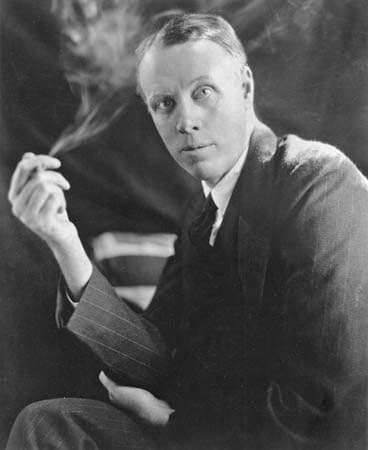
Sinclair Lewis

Harry Sinclair Lewis was an American writer and playwright. In 1930, he became the first author from the United States to receive the Nobel Prize in Literature, which was awarded "for his vigorous and graphic art of description and his ability to create, with wit and humor, new types of characters." Lewis wrote six popular novels: Main Street (1920), Babbitt (1922), Arrowsmith (1925), Elmer Gantry (1927), Dodsworth (1929), and It Can't Happen Here (1935).