BookBrief
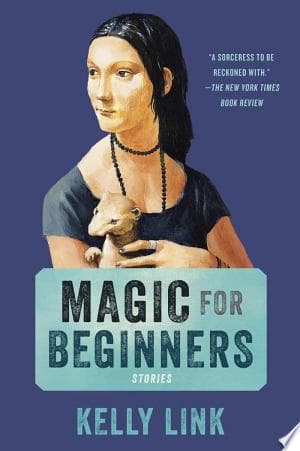
Magic for Beginners cover
Archivist's Choice

Magic for Beginners

Kelly Link (2005)

Genre

Fantasy / Science Fiction

Reading Time

9-10 hours

Key Themes

See below

Track Your Reading

Sign in to track this book

Suburban life meets the surreal, as everyday existence unfolds into a world of magic, humor, and unsettling wonder.

Synopsis

"Magic for Beginners" is a collection of ten short stories that mix fantasy, science fiction, and surreal elements with daily life. Each story creates a unique, often strange, world where the ordinary meets the magical. In "The Faery Handbag," a girl explores the complex, miniature world inside her grandmother's handbag, home to a faery civilization. "Stone Animals" shows a couple moving into a new house where their things multiply and their dreams become real. The story "Magic for Beginners" follows teenagers obsessed with a TV show that seems to affect their reality. Other stories include ghost boyfriends, summer camps for people with unusual abilities, and detectives solving impossible crimes. The collection examines memory, identity, domestic life, and the boundary between normal and extraordinary, often leaving endings open and encouraging readers to think about the strange worlds Link creates.
Reading time
9-10 hours
Difficulty
Medium
Pacing
Variable
Mood
Dreamlike, Surreal, Whimsical, Unsettling, Mysterious
✓ Read this if...
You enjoy surreal, dreamlike fiction that blurs the lines between genres and leaves you pondering its meaning long after you finish.
✗ Skip this if...
You prefer straightforward narratives with clear plots, definitive resolutions, and traditional genre boundaries.

Plot Summary

The Faery Handbag

Genevieve's grandmother, the Grandmama, owns a handbag that is more than it seems. Inside, it holds a vast world inhabited by the 'Granny' people, a race of tiny, dog-like creatures with their own society, history, and postal service. The handbag fascinates and sometimes frightens Genevieve, who often has to get things from its depths, navigating dangerous places and interacting with its inhabitants. The Grandmama protects the handbag and its secrets, subtly using its contents to affect events in the normal world, while Genevieve deals with the responsibility and surreal nature of her grandmother's unique item.

Stone Animals

Catherine and Doug move into a new suburban house with their children. At first, the house seems normal, but soon, strange things happen. Their possessions, starting with sheets, begin to duplicate. This grows to include small animals like rabbits and eventually, the house itself starts to replicate, creating new rooms. The family reacts differently: Doug tries to explain it, Catherine becomes overwhelmed and distant, and the children adapt with fear and wonder. The multiplying objects and spaces show the family's growing worries and the feeling of being overwhelmed by their new life and unspoken tensions in their marriage, leading to a quiet breakdown of their domestic peace.

Magic for Beginners

Jeremy, Fox, and their friends are big fans of 'The Library,' a TV show about a family that runs a library. The show has a strange, almost magical quality, and its fans believe it has deeper meanings and affects their lives. The story mixes descriptions of the fictional show with the real-life interactions and relationships of the teenagers. As the show's final season nears, the lines between 'The Library' and their reality blur. The teenagers meet characters and situations similar to those on screen, suggesting the show is more than entertainment, perhaps a channel for magic or an alternate reality entering their own.

The Specialist's Hat

Hilaria house-sits for the absent, seemingly immortal, D_'s. The house is full of odd objects and a strong sense of history. Hilaria is haunted by her dead twin sister, Viola, and often feels Viola's presence. She finds a hat belonging to 'the Specialist,' who seems to have power over the house. Hilaria performs strange rituals, including wearing the hat, and becomes drawn into the house's routines and the D_'s' timeless life. The story explores grief, memory, and the blurring of identity as Hilaria's reality becomes tied to the house's past and her sister's lingering presence.

Lull

Annie and Miles are a couple trapped in an unending night. A mysterious 'they' told them they are in a 'lull,' a period of suspended time and darkness. During this lull, strange beings visit them, giving cryptic instructions. They try to keep some normalcy, making tea and talking, but the constant darkness and unsettling visits wear on them. The story suggests the lull is a magical state, perhaps from a forgotten lullaby or cosmic event, and their survival depends on understanding its rules. Their relationship is tested as they navigate this surreal existence, looking for a way to bring back the day.

The Hortlak

In a desolate, post-apocalyptic world, a team of ghost hunters—Tamsin, her boyfriend Fox, and their leader, the Professor—travel through ruined towns in a special vehicle. They hunt 'hortlaks,' a powerful type of ghost that seems to be a manifestation of collective memory and forgotten stories. The team uses strange equipment to find and interact with these entities, often facing danger. Tamsin has a strong connection to the hortlaks, suggesting a deeper reason for her involvement. The story blends horror and science fiction, exploring memory, loss, and the lingering echoes of past civilizations in a broken world.

Summer People

Fran lives in an isolated cabin in the woods, working odd jobs and trying to escape her past. She starts to meet the 'summer people,' mysterious beings who appear only in warmer months. These beings have strange customs, powerful magic, and a detached curiosity about human affairs. Fran becomes drawn into their world, forming a complex relationship with one of them, Ophelia. The summer people are both appealing and dangerous, offering Fran an escape from her mundane life but also hinting at a deeper, more perilous reality. The story explores loneliness, connection, and the allure of the supernatural, as Fran navigates her place between the human world and the magical realm of the summer people.

The Surfer

The narrator, Eileen, tells the story of her long, unusual relationship with 'the surfer.' He is an enigmatic figure who appears and disappears from her life without explanation, seemingly able to travel through time or dimensions. Their encounters are sporadic but intense, marked by a deep connection. The surfer brings a sense of the extraordinary, often leaving Eileen strange gifts or cryptic messages. Eileen struggles with his unpredictable nature and his impact on her life, even as she builds a seemingly normal existence. The story reflects on love, loss, memory, and a life lived on the edges of reality, always waiting for the next wave.

The Girl Detective

The unnamed 'girl detective' is a young, clever investigator looking for her missing parents. Her world is a surreal place with talking animals, cryptic messages, and impossible situations. She follows bizarre clues, often leading her into dreamlike scenarios and encounters with fantastical characters. The story mimics classic detective fiction, but with a fantastical twist, where logic often gives way to magical realism. Her quest is less about finding a concrete solution and more about navigating the strange rules of her world. The story explores childhood innocence, the search for meaning, and how children process loss and absence through imaginative play and storytelling.

Catskin

This story is a modern, dark retelling of 'Donkeyskin.' A young woman, a king's daughter, flees her home to escape an incestuous marriage to her father. Before leaving, she demands three magical dresses and a cloak made from the skin of a magical cat, which grants her invisibility and allows her to blend in as a simple servant. The catskin cloak is a sentient, powerful entity, guiding and protecting her, but also subtly influencing her actions. She finds work in a new kingdom, where she eventually meets a prince. The story explores trauma, survival, and agency, as the protagonist uses her wits and the magic of the catskin to navigate a dangerous world and reclaim her identity.

Principal Figures

Genevieve

The Protagonist

Genevieve grows from a passive observer to someone more actively engaged with the magical world, developing a deeper understanding of her grandmother's legacy.

Grandmama

The Supporting

Her character remains largely static, serving as a powerful, unchanging force of magic and tradition in Genevieve's life.

Catherine

The Protagonist

Catherine descends into a state of quiet resignation and detachment, reflecting the unraveling of her domestic life.

Jeremy

The Protagonist

Jeremy's perception of reality blurs as he becomes more enmeshed with the show's influence, forcing him to question what is real.

Hilaria

The Protagonist

Hilaria's identity becomes increasingly intertwined with the house and the memory of her sister, leading to a profound transformation.

Tamsin

The Protagonist

Tamsin's journey involves confronting the echoes of the past and her own connection to the world's forgotten narratives.

Fran

The Protagonist

Fran moves from isolation to a deeper, more perilous connection with the supernatural, blurring her ties to the human world.

Eileen

The Protagonist

Eileen learns to navigate a life defined by extraordinary, intermittent love, finding peace in its unconventional nature.

The Girl Detective

The Protagonist

Her journey is less about finding a concrete solution and more about navigating and making sense of a nonsensical world, symbolizing the child's coping mechanism for loss.

The Catskin Girl

The Protagonist

She transforms from a victim fleeing her circumstances to a powerful agent of her own destiny, reclaiming her identity and finding love on her own terms.

Themes & Insights

The Blurring of Reality and Fiction

Many stories in 'Magic for Beginners' explore the boundary between the ordinary and the fantastic, suggesting that the supernatural is not separate but part of everyday life. In 'Magic for Beginners,' the TV show 'The Library' starts to appear in the real lives of its teenage fans, blurring the lines between the show and their experiences. Similarly, in 'Stone Animals,' objects and rooms multiplying in a suburban house turn a domestic setting into a surreal, impossible space, challenging the characters' idea of what is real. This theme suggests that reality is subjective and shaped by our beliefs, stories, and subconscious worries.

What if the show wasn't just a show? What if it was a window, or a door, and some of the things from the other side were starting to bleed through?

Narrator, 'Magic for Beginners'

Grief, Memory, and Loss

Several stories explore the impact of grief and memory on individuals, often showing up in supernatural ways. In 'The Specialist's Hat,' Hilaria's grief for her dead twin sister, Viola, makes Viola's presence almost real, blurring past and present within the mysterious house. In 'The Hortlak,' the ghosts are not just spirits, but manifestations of collective memory and forgotten stories, suggesting that loss and the past continue to haunt and shape the post-apocalyptic present. This theme explores how the weight of what is lost can create its own reality, influencing perceptions and interactions with the world.

Sometimes I felt like Viola was still there, a ghost in the corners of my eyes, a whisper in the rustle of the curtains.

Hilaria, 'The Specialist's Hat'

The Domestic Surreal

Link often puts surreal and fantastic elements into ordinary domestic settings, making the familiar uncanny. 'Stone Animals' is an example, as a typical suburban home becomes a place of impossible multiplication, turning everyday objects and spaces into sources of anxiety and wonder. 'The Faery Handbag' puts an entire miniature civilization inside a grandmother's accessory, making a mundane item a portal to another world. This theme highlights the hidden magic, strangeness, and psychological depths that can be found in home and family life, suggesting that even the most ordinary existence contains extraordinary possibilities or terrors.

The house was duplicating itself, quietly, politely, as if it were a matter of course. A second set of sheets, a duplicate rabbit, a new, identical room. It was like a slow-motion magic trick, performed just for them.

Narrator, 'Stone Animals'

Escape and Transformation

Many characters seek escape from their mundane or painful lives, often finding it through encounters with the magical or extraordinary, leading to personal change. Fran in 'Summer People' goes to an isolated cabin, only to be drawn into the appealing and dangerous world of the magical beings, offering her an escape from loneliness and a chance for a different kind of connection. The Catskin Girl disguises herself with a magical cloak to escape an unwanted marriage, changing her identity and destiny. This theme explores the human desire for change, the appeal of the unknown, and how embracing the fantastical can lead to major shifts in self-perception and life path.

She wanted to be someone else, someone who could disappear, someone who was not herself. And the catskin, she knew, could make her so.

Narrator, 'Catskin'

The Power of Storytelling and Narrative

Stories themselves, both fictional and personal, hold great power in Link's work, often shaping or changing reality. 'Magic for Beginners' is a prime example, where the TV show 'The Library' clearly influences the lives of its devoted viewers, blurring the lines between story and reality. 'The Girl Detective' uses the framework of detective fiction to navigate a surreal world and cope with her parents' absence, showing how story structures can provide order or meaning in chaos. This theme suggests that the stories we tell, consume, and believe in can create new worlds, influence our perceptions, and even appear in the physical world.

The show was a kind of magic, a spell that they all cast together, every week.

Narrator, 'Magic for Beginners'

Plot Devices & Literary Techniques

Magical Realism

Integration of fantastical elements into realistic settings.

Kelly Link frequently employs magical realism, seamlessly weaving supernatural or impossible elements into otherwise mundane, contemporary settings. This device allows the extraordinary to exist alongside the ordinary without extensive explanation, challenging the reader's perception of reality. For example, in 'Stone Animals,' a suburban house mysteriously duplicates objects and rooms, while the characters react with a mix of bewilderment and resignation, treating the impossible as a strange new normal. This creates a dreamlike, unsettling, and often humorous atmosphere, highlighting the hidden strangeness within everyday life and suggesting that the world is far more unpredictable than it appears.

Unreliable Narration

Narrators whose perspectives may be biased, incomplete, or distorted.

Several of Link's stories utilize unreliable narration, where the reader must question the full truth of what is being presented. This can be due to the narrator's youth, trauma, or their own distorted perception of reality. In 'The Specialist's Hat,' Hilaria's grief for her twin sister and her immersion in the strange D_ household create a subjective reality where the line between memory, hallucination, and supernatural presence is blurred. Similarly, the fragmented, often dreamlike perspectives in 'The Girl Detective' reflect a child's way of processing absence. This device deepens the mystery, forces the reader to actively interpret events, and emphasizes the subjective nature of truth and experience.

Intertextuality and Allusion

References to other texts, myths, and pop culture.

Link's work is rich with intertextuality, drawing on and subverting various genres, myths, and popular culture references. 'Catskin' is a direct retelling of a classic fairytale, but with a modern, darker twist that reinterprets its themes. 'Magic for Beginners' revolves around a fictional cult TV show, using the tropes of fandom and media consumption to explore the blurring of reality. This device adds layers of meaning, inviting readers to engage with familiar narratives in new ways and highlighting the enduring power of storytelling. It also creates a sense of shared cultural understanding while simultaneously twisting expectations, enriching the narrative with echoes of other worlds and stories.

Dream Logic/Surrealism

Narrative and events that follow the irrationality of dreams.

Many of Link's stories operate on a dreamlike logic, where cause and effect are often obscure, and events unfold with a symbolic or intuitive rather than strictly rational progression. In 'Lull,' the characters are trapped in an unending night, visited by strange entities, and given cryptic instructions, reflecting the disorienting and often nonsensical nature of dreams. 'The Girl Detective' presents a world where talking animals and impossible clues are commonplace, mirroring the fluid and symbolic landscape of the subconscious. This device allows Link to explore deeper psychological truths and emotional states without being constrained by conventional realism, creating an atmosphere that is both captivating and unsettling.

The Unseen/Hidden Worlds

The presence of secret or parallel worlds existing alongside the mundane.

A recurring device is the revelation of hidden worlds or dimensions that coexist with our own, often accessible through seemingly ordinary objects or locations. The most prominent example is the 'Faery Handbag,' which contains an entire miniature civilization, demonstrating that magic can be found in the most unexpected places. In 'Summer People,' the woods surrounding Fran's cabin conceal the ethereal 'summer people' and their magical realm. This device creates a sense of wonder and possibility, suggesting that the world is far larger and more mysterious than it appears, and that extraordinary experiences are always just beneath the surface of the mundane.

Critical analysis

Notable Quotes

The house was a house, and it was empty, and it was a house that was not a house, and it was not empty. It was full of the ghost of a house, and the ghost of a house was full of the ghosts of people.

Describing a mysterious, possibly haunted house in 'Stone Animals'.

Sometimes you just have to go with it, no matter how weird it gets. Because if you don't, you'll miss out on something even weirder.

A character's philosophy on embracing the strange in 'The Hortlak'.

All stories are ghost stories. We are all haunted by the stories we tell, and the stories we are told.

A meta-commentary on the nature of narrative, a recurring theme.

The world was full of invisible things, and sometimes they became visible, and sometimes they became visible only to you.

Reflecting on hidden realities and personal experiences of the uncanny.

It was like that with everything good. It ended. And then you had to find something else good.

A poignant observation on transience and resilience.

What if you lived in a story and didn't know it? What if you were a character, and you thought you were real?

Exploring the boundaries between fiction and reality, often in 'Magic for Beginners'.

There are always two stories. The one you tell, and the one that's true.

Highlighting the subjective nature of truth and narrative.

He thought of all the things he hadn't done, all the places he hadn't gone, all the people he hadn't loved. It was a vast and terrible landscape.

A moment of regret and reflection on unfulfilled potential.

The past was a country you could never visit again, but it was always there, just over the horizon, waiting.

Meditating on memory and the lingering presence of the past.

It wasn't that she didn't believe in magic. It was just that she believed in the kind of magic that was difficult to explain, and even more difficult to prove.

Defining a subtle, integrated form of magic in everyday life.

Sometimes the best way to get over something is to go through it, even if 'through it' means getting lost in a labyrinth of your own making.

A metaphor for processing grief or difficult emotions.

The quiet hum of the universe, which was sometimes a whisper, and sometimes a scream.

Evoking the underlying strangeness and intensity of existence.

You don't get to choose what haunts you. It chooses you.

A stark statement on the involuntary nature of being haunted, literally or figuratively.

He understood then that some people were like houses, and some people were like rooms. And some people were like the spaces in between.

A metaphorical classification of human relationships and identities.

Quiz

Test Your Knowledge

Ready to see how well you understood this book? Take our interactive quiz with 10 questions.

10
Questions
~5
Minutes
?
Best Score

Key Questions (FAQ)

'Magic for Beginners' revolves around a popular, long-running television show called 'The Library' which features a diverse cast of characters, including a charismatic wizard and various magical creatures. The story primarily follows a group of teenagers, particularly Jeremy, who are devoted fans of the show and whose lives become intertwined with its fictional world in unexpected ways.

About the author

Kelly Link

Kelly Link is an American editor and author of short stories. While some of her fiction falls more clearly within genre categories, many of her stories might be described as slipstream or magic realism: a combination of science fiction, fantasy, horror, mystery, and realism. Among other honors, she has won a Hugo award, three Nebula awards, and a World Fantasy Award for her fiction, and she was one of the recipients of the 2018 MacArthur "Genius" Grant.






