“The blues ain't nothin' but a good woman feelin' bad.”
— Willie Mae's reflection on the origin and essence of the blues.

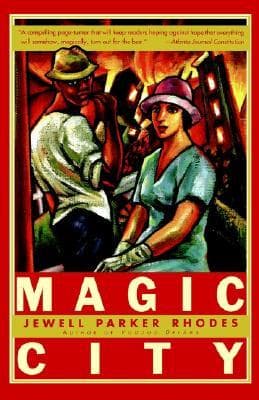
Jewell Parker Rhodes (1997)
Genre
Historical Fiction
Reading Time
6-8 hours
Key Themes
See below
Sign in to track this book
In 1921 Tulsa, a young Black man accused of rape by a white woman must escape a lynch mob while the woman, scarred by her own trauma, finds the courage to reveal the truth before the city erupts in racial violence.
In Tulsa, Oklahoma, 1921, Joe, a young Black man who wants to be a magician, finds himself alone in an elevator with a white woman, Mary. Joe accidentally brushes against Mary while trying to exit, causing her to scream. Startled and fearing the consequences of being alone with a white woman during that time, Joe panics and flees. His hurried escape is seen as an admission of guilt, and Mary's cry is taken as an accusation of rape. This incident immediately ignites racial animosity, starting a chain of events that will engulf the city.
After Mary's accusation and Joe's flight, authorities quickly arrest Joe. He is taken to the Tulsa County Courthouse. News of the alleged assault spreads quickly through the white community, fueled by racial prejudice and exaggerated reports. A large and increasingly angry white mob gathers outside the courthouse, demanding Joe's immediate lynching. The mob's intentions are clear, and the sheriff struggles to maintain control, understanding the threat to Joe's life.
Mary, a young woman from a rural background, feels guilt and fear. She knows her scream was from fright, not an actual assault, but the accusation has gained its own momentum. Her family and community pressure her to maintain the story of an attack. However, the image of Joe's terrified face and the growing violence against him weigh on her conscience. She eventually confesses to her father that Joe did not assault her, explaining that her initial panic caused her scream.
As the white mob grows in size and aggression, news reaches Tulsa's prosperous Black community, Greenwood, known as 'Black Wall Street.' Black World War I veterans, led by figures like O.W. Gurley and J.B. Stradford, are aware of the history of lynchings and racial violence. They arm themselves and organize, determined to prevent Joe from being lynched and to defend their community. They march to the courthouse, offering to help the sheriff protect Joe, but the white mob sees their presence as defiance, further increasing tensions.
The armed Black men arrive at the courthouse, creating a tense standoff with the white mob and authorities. A scuffle occurs, and a shot is fired, though its origin is unclear. This shot breaks the fragile peace and starts a full riot. Gunfire erupts between the two groups, and the situation quickly becomes chaotic. The sheriff's attempts to control the situation are overwhelmed, and the conflict shifts from protecting Joe to a broader racial conflict in the city center.
Following the courthouse confrontation, the white mob, now inflamed and largely unchecked, turns its destructive attention toward Greenwood. They invade the district, looting businesses, burning homes, and attacking residents without distinction. The once-thriving 'Black Wall Street' becomes a war zone, with Black families fighting for their lives and property against overwhelming odds. The destruction is systematic and brutal, aimed at destroying the economic and social heart of the Black community.
While the riot rages, Joe, still imprisoned, recognizes his dangerous situation. The courthouse is no longer safe but a potential death trap. He uses his emerging magical skills and quick thinking to attempt an escape from his cell. His desire to be a magician, to perform the ultimate escape, now becomes a desperate fight for survival. He manages to slip away amidst the pandemonium, hoping to disappear into the burning city and evade both the mob and authorities.
Driven by overwhelming guilt and the horrifying reality of the destruction she inadvertently helped start, Mary, despite the danger, tries to publicly retract her accusation. She tries to make her confession known, risking her own safety and social standing in a community unwilling to hear it. Her efforts are met with hostility and disbelief, as the mob is too consumed by hatred and violence to listen to reason or truth. Her journey from victim to reluctant truth-teller is full of peril.
As the riot escalates and the destruction of Greenwood becomes clear, the Oklahoma National Guard is eventually called in. However, their intervention is not always a force for justice. While they eventually restore order, their initial actions sometimes involve complicity in the violence, disarming Black residents while allowing white rioters to continue. The Guard's arrival marks the beginning of the end of the active violence, but not before immense damage has been done and many lives lost.
The Tulsa Race Massacre finally ends, leaving Greenwood in ruins. The destruction is immense, with hundreds of homes and businesses destroyed, and an unknown number of lives lost. Joe's fate remains uncertain, as does Mary's. The city tries to hide what happened, with official reports downplaying the violence and blaming the Black community. Survivors are left to deal with the trauma, loss, and systemic injustices that allowed such an atrocity to occur, forever changing the place and its residents' lives.
The Protagonist
Joe transforms from an innocent dreamer into a survivor forced to use his wits for actual escape, confronting the harsh realities of racial injustice.
The Supporting
Mary evolves from a frightened, passive girl into a conscience-stricken woman attempting to rectify her unwitting role in a tragedy, despite personal danger.
The Supporting
Gurley embodies the determined defense of Greenwood, facing the destruction of his life's work with stoicism and resolve.
The Supporting
The Sheriff attempts to maintain order but is ultimately powerless to prevent the massacre, reflecting the systemic failures of justice.
The Supporting
He grapples with his own prejudices and the truth of his daughter's confession, witnessing the devastating impact of his community's actions.
The Supporting
Stradford represents the collective leadership and tragic loss experienced by the Greenwood community.
The Antagonist
The mob escalates from an angry crowd to a destructive force, culminating in the massacre of Greenwood.
The main theme is the brutal reality of racial injustice and the devastating effects of systemic racism. The novel shows how a false accusation against a Black man can ignite racial hatred, leading to widespread violence and the destruction of an entire community. The disproportionate response to Joe's accidental touch, the immediate assumption of guilt, and the targeting of Greenwood show the deep prejudice and constant threat of violence faced by African Americans in the early 20th century. The massacre itself illustrates racial terror.
““Magic City was a place where black people could be free, could be rich. But the white folks saw it, and they couldn’t stand it.””
The novel explores the struggle between an individual's truth and the overwhelming force of societal prejudice. Mary's initial scream is a moment of panic, not an accusation of rape, but racial bias immediately twists it into a story of Black male aggression against white female purity. Despite Mary's later attempts to confess the truth, the mob will not hear it, preferring the convenient lie that justifies their hatred and violence. This theme highlights how prejudice can blind people to facts and perpetuate injustice, making it difficult for truth to prevail.
““Her scream had started it. A tiny seed of fear, blooming into a forest of hatred.””
Despite the horrific violence and injustice, the novel also shows the resilience and strength of the Black community in Greenwood. The residents, especially the Black veterans, organize and arm themselves not just to protect Joe, but to defend their homes, businesses, and way of life. This theme emphasizes the power of collective identity, mutual support, and the determination to thrive even in extreme adversity. The initial prosperity of 'Black Wall Street' itself shows this resilience, built through hard work and community solidarity.
““They called it Black Wall Street, and it was. A city built on dreams and sweat and hope, strong as any white man’s.””
The novel powerfully conveys the illusion of safety that can exist for minority communities, especially when economic success is achieved within a racially hostile society. Greenwood, a thriving Black district, felt like a safe haven where Black people could prosper. However, the elevator incident shatters this illusion, revealing how precarious their safety was and the constant threat of white supremacist violence. The swift and brutal destruction of Greenwood shows that no amount of success or self-sufficiency could truly protect them from the ingrained prejudice of the time.
““No matter how high you built your walls, hate could always find a way to climb over them.””
A seemingly minor accident that acts as the inciting incident for the entire plot.
The accidental brush between Joe and Mary in the elevator serves as the pivotal inciting incident. It's a seemingly innocuous moment, but its interpretation is immediately filtered through the lens of deep-seated racial prejudice. This device is crucial because it highlights how easily racial tensions can escalate, turning a misunderstanding into a catalyst for widespread violence. It sets the entire narrative in motion, showcasing the fragility of peace and the explosive potential of racial animosity in 1920s Tulsa.
Joe's dream of becoming a magician, particularly an escape artist.
Joe's ambition to be a magician, specifically an escape artist like Houdini, functions as a powerful symbolic plot device. Initially, it represents his desire for wonder and control, a way to transcend his circumstances. However, as the plot unfolds, his magical skills transform into a literal means of survival, forcing him to perform the 'greatest escape' from actual imprisonment and a lynch mob. This device underscores the theme of freedom and constraint, and how an innocent dream can become a desperate reality.
The prosperous black community as both a setting and a symbol.
The Greenwood District, known as 'Black Wall Street,' functions as more than just a setting; it is a powerful symbolic plot device. It represents black achievement, self-sufficiency, and community building in the face of systemic racism. Its existence challenges white supremacist narratives and fuels the resentment that ultimately leads to its destruction. The vibrant life and subsequent devastation of Greenwood serve to highlight the injustice of the massacre and the immense cultural and economic loss inflicted upon the black community.
Mary's internal struggle and attempts to reveal the truth.
Mary's evolving guilt and her desperate attempts to confess the truth about the elevator incident serve as a crucial plot device. Her internal conflict provides a moral counterpoint to the mob's unchecked hatred and highlights the human cost of racial prejudice. Her confession, though initially unheard, represents the novel's exploration of truth versus convenient lies, and the personal courage required to challenge a dominant, oppressive narrative. It underscores the theme of individual responsibility within a collective tragedy.
“The blues ain't nothin' but a good woman feelin' bad.”
— Willie Mae's reflection on the origin and essence of the blues.
“History is a story, and sometimes the truth in a story is more important than the facts.”
— A philosophical musing on the nature of history and storytelling.
“Sometimes you gotta make your own magic.”
— Willie Mae's resilient spirit in the face of adversity.
“Grief is a ghost that haunts the living.”
— Reflection on the lingering impact of loss.
“The past ain't never really past, not as long as folks remember it.”
— Emphasizing the enduring legacy of historical events and personal memories.
“A good song can heal a broken heart, even if it just for a little while.”
— The therapeutic power of music, particularly the blues.
“Fear is a powerful master, but hope, that's a stronger one.”
— Contrasting the forces of fear and hope.
“You can't outrun your shadow, but you can learn to dance with it.”
— A metaphorical take on confronting one's past or inner struggles.
“The world ain't always fair, but that don't mean you gotta give up.”
— A testament to perseverance in an unjust world.
“Every person got a story, and every story deserves to be heard.”
— Highlighting the importance of individual narratives and empathy.
“Sometimes, the only way to get through the darkness is to find your own light.”
— A message of self-reliance and inner strength during difficult times.
“Love ain't always easy, but it's always worth fighting for.”
— A reflection on the challenges and rewards of love.
“The land remembers what the people forget.”
— A deep connection between the physical environment and historical memory.
Ready to see how well you understood this book? Take our interactive quiz with 10 questions.
Biography coming soon.







