“The wind was blowing from the sea, a cold wind that lifted the skirts of the women and made them shiver, even in the bright sunlight.”
— Describing the setting and atmosphere in the early part of the story.

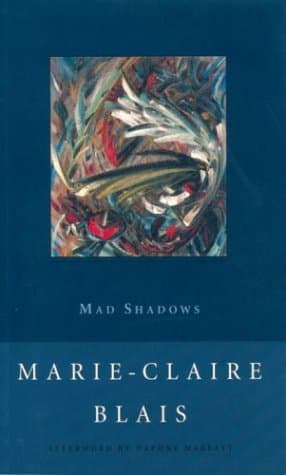
Marie-Claire Blais (1960)
Genre
Fantasy
Reading Time
120 min
Key Themes
See below
Sign in to track this book
In a world where beauty is a curse and love a mirage, a narcissistic son, his cruel sister, and their vain mother destroy themselves, each consumed by their own obsessions.
The novel opens by introducing Louise, a woman consumed by her own fading beauty, and her son, Patrice, who shares her narcissism with his striking good looks. They live in a world of mirrors, constantly admiring themselves and each other, unaware of the world outside their opulent, if decaying, estate. Isabelle-Marie, Louise's daughter and Patrice's sister, is exceptionally ugly, constantly overshadowed and ignored by her mother and brother. Her deep isolation and the cruel indifference she experiences from her family begin to grow, setting the stage for her future malice. Their home, a symbol of their inward-looking existence, becomes a stage for their self-obsessed drama.
Antoine, Louise's blind father, arrives at the estate. His blindness prevents him from seeing the family's physical beauty, making him immune to their superficial charm. Isabelle-Marie, seeing a chance for attention and power, begins to manipulate him. She describes the world to him, but her descriptions are twisted and malicious, reflecting her inner darkness. She finds a perverse pleasure in controlling his perceptions, a stark contrast to her powerlessness in the eyes of Louise and Patrice. This relationship, though based on deception, gives Isabelle-Marie a sense of control she has never known.
Patrice, used to adoration, experiences his first genuine rejection when a young woman, for reasons not explicitly stated but implied to be beyond his superficial charm, spurns his advances. This unexpected blow shatters his carefully built world of self-admiration. He becomes deeply despondent, unable to accept this rejection with his belief in his own irresistible beauty. His mother, Louise, also struggles to understand this, as she has always seen his beauty as an unassailable shield. This incident marks the beginning of Patrice's slow, agonizing fall from his pedestal.
Driven by years of neglect and her growing resentment, Isabelle-Marie's cruelty grows. She sees Patrice's vulnerability as an opportunity for revenge. In a particularly disturbing act, she leads Patrice, who is now emotionally distraught and aimless, to a place where he encounters a group of men who brutally assault him. Her intention is not just to harm him, but to destroy the very beauty that she envies and that has been the source of her suffering. This act shows her complete embrace of her own darkness and her desire to inflict pain on those who have hurt her.
The assault leaves Patrice physically disfigured, his once-perfect face now irrevocably marred. This disfigurement is not just physical; it is a deep blow to his identity, which has always been linked to his beauty. He can no longer recognize himself in the mirror, and the world no longer reflects the image he cherished. Louise, horrified, tries to deny the change, clinging to the memory of his former beauty. Isabelle-Marie, however, enjoys his suffering, seeing it as a twisted form of justice for her own perceived ugliness and years of being overlooked.
Louise, unable to accept Patrice's disfigurement, retreats further into her self-delusion, trying to convince herself and others that his beauty remains. She tries to mask his scars, both literally and figuratively. Meanwhile, Isabelle-Marie's manipulations of Antoine reach their peak. She leads him to believe he is witnessing beautiful scenes, but these are fabrications. When Antoine eventually realizes he has been deceived and that his granddaughter's heart is filled with malice, he is overcome with despair. He dies, his death a quiet tragedy amidst the family's escalating turmoil, unmourned by Louise or Patrice.
With his beauty gone, Patrice is forced to confront the shallowness of his existence. He realizes that his identity was based solely on his physical appearance, and without it, he is nothing. He struggles with deep despair and a sense of meaninglessness. He attempts to find solace in other ways, but his past life has left him unprepared for genuine connection or introspection. His journey becomes one of internal decay, mirroring the external decay of his once-perfect face. He is a ghost of his former self, haunted by the loss of his defining attribute.
For a brief period, Isabelle-Marie enjoys her revenge. With Patrice disfigured and Louise lost in denial, she feels a sense of triumph. The power balance in the household has shifted, and she is no longer the ignored, ugly sister. She continues to exert her manipulative influence, finding pleasure in the suffering of others. However, her triumph is short-lived. Her malice is a consuming fire, and her actions have isolated her further, even as she desired connection. Her victory is hollow, leaving her ultimately unfulfilled and still consumed by her own bitterness.
Louise's grip on reality completely unravels. She becomes utterly consumed by her memories of Patrice's beauty, constantly talking to his past image as if it were still present. She dresses him in fine clothes, applies makeup to his disfigured face, and praises his former perfection, completely ignoring his current state. Her madness is a tragic culmination of her lifelong vanity, a refusal to acknowledge the harsh truths of aging and loss. She lives in a world of her own making, where beauty is eternal and suffering is merely an illusion to be ignored.
The novel concludes with the complete dissolution of the family. Patrice, unable to live with his disfigurement and the emptiness of his life, commits suicide. Louise, already lost in her madness, soon follows, unable to survive without her beautiful son to mirror her own vanity. Isabelle-Marie, having achieved her destructive goals, is left alone, consumed by her own malice and the emptiness of her victory. The house, once a symbol of their gilded cage, becomes a tomb. Each character is ultimately destroyed by their own obsessions, leaving behind only the shadows of their self-inflicted tragedies.
The Protagonist/Antagonist
Louise's arc is one of tragic descent into madness, as her denial of reality intensifies with Patrice's disfigurement, ultimately leading to her complete mental collapse and death.
The Protagonist
Patrice's arc is a tragic fall from grace, as his disfigurement strips him of his identity, leading to profound despair and ultimately suicide.
The Antagonist
Isabelle-Marie's arc is a descent into pure malevolence, fueled by her desire for revenge, which she achieves, but finds it ultimately unsatisfying and isolating.
The Supporting
Antoine's arc is brief and tragic, as he is manipulated and deceived, ultimately dying from despair upon realizing the true malice of Isabelle-Marie.
The Mentioned
Her arc is static, serving as a plot device to propel Patrice's story.
Narcissism is the central, pervasive theme. It appears as an all-consuming self-love that blinds characters to reality and leads to their destruction. Louise and Patrice are trapped in a cycle of mutual admiration, incapable of genuine connection or empathy. Their obsession with physical beauty makes them emotionally sterile and unable to cope with imperfection or loss. Patrice's disfigurement, a direct attack on his narcissistic core, plunges him into despair, while Louise's denial of it leads to madness. The theme shows how an excessive focus on self-image destroys the soul and prevents any meaningful existence. The entire family unit collapses under the weight of this collective self-obsession, demonstrating its corrosive power.
“She was a woman who had never loved anything but her own image, and in her son, she loved herself again.”
Isabelle-Marie's character shows how deep neglect and perceived ugliness can corrupt the soul. Ignored and reviled by her family, her initial suffering turns into bitter resentment and active malice. Her 'ugliness' is not just physical but becomes a metaphor for her internal state, shaped by the cruel indifference of her mother and brother. Her acts of revenge, particularly against Patrice, are a direct result of her emotional starvation and the constant devaluation she experiences. This theme explores the psychological damage caused by a lack of love and acceptance, demonstrating how it can breed destructive hatred and a desire to inflict pain.
“Her ugliness was a shield, a weapon, a silent scream against the beauty that had excluded her.”
The novel constantly contrasts the superficiality of physical beauty with the harshness of reality. Louise and Patrice live in a delusional world where beauty is most important, and ugliness, suffering, or old age are denied. Mirrors are a recurring symbol, reflecting their self-obsession but never revealing the truth of their inner decay. Patrice's disfigurement is the ultimate shattering of this illusion, forcing him to confront a reality he cannot escape. Louise's subsequent madness is her final retreat into a world where the illusion of beauty remains unbroken, even as reality crumbles around her. The theme suggests that relying solely on outward appearance leads to a deep disconnect from genuine human experience.
“The mirror was their only truth, and it lied beautifully.”
A striking absence of genuine love and empathy characterizes the family's relationships. Louise's 'love' for Patrice is a narcissistic projection, and she shows no true affection for Isabelle-Marie or Antoine. Patrice, in turn, is incapable of loving anyone but himself. This emotional emptiness creates a sterile and cruel environment where characters are isolated despite their closeness. Isabelle-Marie's malice is a twisted cry for attention, born from this deep lack. The novel portrays a world where human connection is replaced by self-interest and indifference, leading to an inevitable breakdown of the family unit and individual souls. This theme highlights the devastating consequences when love is absent.
“There was no tenderness in that house, only reflections and shadows.”
Mirrors symbolize narcissism, self-delusion, and the superficiality of beauty.
Mirrors are a pervasive and crucial motif throughout the novel. They are constantly present in Louise and Patrice's lives, serving as extensions of their self-obsession. They reflect only what the characters wish to see – their own flawless beauty – reinforcing their narcissism and blinding them to reality. The mirrors represent the characters' inability to look inward or outward with genuine perception. When Patrice is disfigured, the mirror becomes an instrument of horror, reflecting a truth he cannot bear, ultimately leading to the shattering of his identity. For Louise, the mirror eventually reflects only her madness, as she projects her delusional image onto her disfigured son.
Her physical unattractiveness serves as a catalyst for her malice and a symbol of internal decay.
Isabelle-Marie's profound ugliness is more than a physical attribute; it is a central plot device that drives much of the narrative's conflict. It is the direct cause of her neglect by Louise and Patrice, fueling her resentment and desire for revenge. Her ugliness becomes a symbol of her internal state – the bitterness, jealousy, and malevolence that grow within her. It also serves as a stark contrast to the superficial beauty of her family, highlighting the novel's critique of outward appearances. Her ugliness empowers her in a twisted way, making her immune to the charms that captivate her family and allowing her to see their vulnerabilities.
His lack of sight provides a unique perspective and allows for manipulation, symbolizing a different kind of perception.
Antoine's blindness is a significant plot device. Because he cannot see, he is initially immune to the physical beauty that obsesses Louise and Patrice. This makes him a blank slate for Isabelle-Marie's manipulations. His blindness symbolizes a different mode of perception, one that is not reliant on superficial appearance. However, it also makes him vulnerable to deception, as Isabelle-Marie exploits his trust by painting false pictures with her words. His eventual realization of her malice, despite his physical blindness, signifies a moment of moral clarity, contrasting with the sighted characters' inability to see truth.
The physical scarring of Patrice symbolizes the destruction of identity and the shattering of illusion.
Patrice's disfigurement is the pivotal turning point in the plot. It is a violent, external manifestation of the internal decay and hollowness that define his character. By stripping him of his defining attribute – his beauty – it forces him to confront the emptiness of his existence. This act, orchestrated by Isabelle-Marie, shatters the illusion of his invincibility and the family's self-contained world of superficiality. It serves as a catalyst for his despair and Louise's descent into madness, directly leading to the tragic climax of the story. It is a brutal assertion of reality against the family's persistent denial.
“The wind was blowing from the sea, a cold wind that lifted the skirts of the women and made them shiver, even in the bright sunlight.”
— Describing the setting and atmosphere in the early part of the story.
“Isabelle, with her face like a white flower, and Louise, with her hair like dark seaweed, were two sisters who lived in a house by the sea.”
— Introducing the two main characters, Isabelle and Louise.
“She was a woman who always wore black, as if she were in perpetual mourning for a life she had never lived.”
— Describing the melancholic nature of the mother figure.
“The house itself seemed to breathe with a sigh, a long, drawn-out sigh that spoke of forgotten dreams and whispered secrets.”
— Personifying the house, hinting at its oppressive atmosphere.
“Love was a fragile thing, easily broken, like a glass bird falling from a great height.”
— A reflection on the nature of love within the family's troubled dynamics.
“They danced in the moonlight, their shadows long and grotesque, like creatures from another world.”
— Describing a scene of revelry that takes on a sinister tone.
“The mirror, reflecting only her own despair, was her only confidante.”
— Highlighting a character's isolation and self-pity.
“Beauty was a curse, a magnet for envy and destruction.”
— A character's bitter realization about the perils of physical attractiveness.
“The sea, indifferent to their human struggles, continued its relentless rhythm.”
— Emphasizing the vastness and indifference of nature compared to human drama.
“He was a man haunted by the ghosts of his own desires, forever chasing what he could never truly possess.”
— Characterizing a male figure's internal struggles and unfulfilled longing.
“The silence in the house was not peaceful, but heavy, pregnant with unspoken words and festering resentments.”
— Describing the oppressive atmosphere within the family home.
“Their lives were a tapestry woven with threads of deceit and illusion, a beautiful lie.”
— A summary of the complex and deceptive relationships within the narrative.
“The night held its breath, waiting for the inevitable tragedy to unfold.”
— Building suspense and foreshadowing a dark event.
“To be loved was to be vulnerable, to expose one's heart to the sharpest knives.”
— A character's cynical view on the risks associated with love.
Ready to see how well you understood this book? Take our interactive quiz with 10 questions.
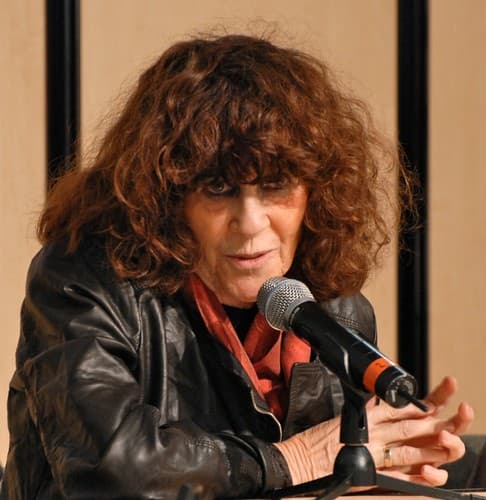
Biography coming soon.







