“The only difference between a madman and a genius is success.”
— Character reflecting on the fine line between brilliance and madness in the criminal world.

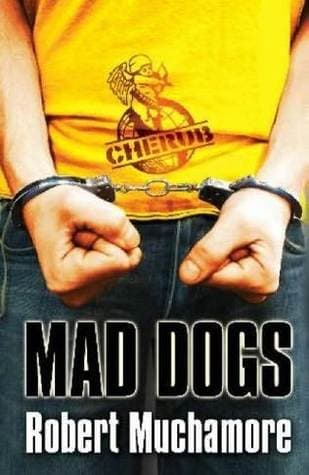
Robert Muchamore (2007)
Genre
Thriller / Children's / Mystery / Young Adult
Reading Time
389 min
Key Themes
See below
Sign in to track this book
A teenage spy infiltrates a ruthless gang war, using his youth to uncover the truth hidden in Britain's criminal world.
James Adams, a CHERUB agent, gets a new assignment from his controller, Ewart. He must infiltrate the Mad Dogs, a London gang led by Julian "Mad Dog" Lennon. Police struggle to get information on the gang's operations and a growing turf war with a rival group, the KOTL (Kings of the London). James's job is to go undercover as 'Jez,' a street kid wanting to join the gang. He needs to gather information to help police dismantle their organization and stop more violence. He trains intensely for street life and gang culture, including fighting and navigating the criminal world.
James, as Jez, infiltrates the Mad Dogs' territory in South London. He initially struggles to gain acceptance, facing suspicion from members like Kyle and the ambitious Rat. He proves himself by doing petty crimes and showing loyalty. He catches the eye of Julian Lennon's second-in-command, Dave. James observes the gang's structure, drug dealing, and constant fear of rival gangs and police. He learns about Julian's temper and the Mad Dogs' strict hierarchy, realizing the immense danger if his cover is exposed.
As James proves himself, he gains trust, especially from Dave, who sees him as reliable. He participates in more serious crimes, including drug runs and intimidating rival gang members. This deeper involvement helps him gather significant information on the Mad Dogs' supply chains, safe houses, and plans to expand territory. He also learns about internal gang politics, especially tension between Dave and Kyle. James records all information, sending it to CHERUB headquarters through secure channels, giving police actionable intelligence.
The turf war between the Mad Dogs and the KOTL reaches a critical point. Both gangs engage in retaliatory attacks, leading to stabbings, muggings, and shootings. James finds himself in these violent clashes, forced to participate to maintain his cover. During one brutal confrontation, he sees the devastating effects of gang violence. The conflict makes his mission more dangerous, as police need information quickly to prevent more bloodshed, pressuring James to deliver crucial intelligence, even if it means taking greater risks.
Julian "Mad Dog" Lennon's paranoia grows as the turf war rages, making him more unpredictable. He suspects informants among his members, putting James on edge. Julian also targets innocent people who cross him, showing his ruthless nature. James sees Julian's cruelty when he orders a brutal beating of someone suspected of disloyalty, making James question his deep cover's morality. Pressure mounts as CHERUB pushes James for information on Julian's network and his true power source. They believe he is more than a street-level gang leader.
Through observation and eavesdropping, James discovers that Julian Lennon is not an independent gang leader. A larger, more sophisticated criminal organization supplies and supports him. This group provides the Mad Dogs with drugs and weapons, fueling their operations. James realizes the mission is more complex than first thought. Dismantling the Mad Dogs alone might not stop the larger threat. He focuses on gathering intelligence about this network, seeking names, locations, and communication methods to expose their operations.
James's cover is almost blown when a detail about his past or a slip of the tongue makes some Mad Dogs, especially Kyle, suspicious. He faces interrogation and physical threats. Using his CHERUB training, James talks his way out of immediate danger, but the incident leaves him shaken and aware of the constant threat to his life. This near-exposure forces him to take extreme precautions and makes him wonder how long he can maintain his facade without a fatal mistake.
With police preparing their move, James must gather one final, critical piece of evidence. This involves infiltrating a secure location where the Mad Dogs store cash and drugs, or identifying a key meeting between Julian and his suppliers. He takes a significant risk, putting himself in extreme danger to get the proof. He successfully gets the evidence, including details about the larger criminal network. This gives police irrefutable information to launch a raid and dismantle the Mad Dogs, as well as target higher-level criminals.
Based on James's intelligence, police launch a massive, coordinated raid on the Mad Dogs' operations, including safe houses and drug stashes. Julian Lennon and many key gang members, including Dave and Kyle, are arrested. James, still undercover, extracts himself from the chaos without suspicion. The mission is a success. The Mad Dogs are dismantled, and the turf war ends. James reflects on his traumatic experiences, the moral ambiguities of his actions, and the lasting impact of his time in the gang. He knows he helped save lives but also saw suffering.
After the mission, James returns to the CHERUB campus. He undergoes debriefing and psychological evaluation, as his street experiences have taken a toll. He struggles to readjust to campus life, haunted by the violence and moral compromises he made. His friends, like Kerry and Lauren, try to help him. But James carries the burden of his undercover identity and the lives he witnessed. The mission, though successful, gives him a deeper understanding of humanity's dark side and the sacrifices of a CHERUB agent.
The Protagonist
James transforms from a capable agent into a more emotionally mature individual, grappling with the psychological cost of his deep-cover mission.
The Antagonist
Julian remains a static character, a force of chaos and violence, until his eventual capture.
The Supporting
Dave's character remains consistent as a loyal, albeit less erratic, enforcer for Julian, never questioning the gang's life.
The Supporting
Kyle remains a persistent antagonist to James within the gang, embodying the constant threat of exposure.
The Supporting
Ewart serves as a stable, guiding force for James, his role primarily to facilitate the mission.
The Mentioned
Rat's arc is minor, serving as an example of a younger, impressionable gang member.
The Supporting
Kerry's role is primarily supportive, offering a stable friendship for James.
The Supporting
Lauren's character remains consistent as a supportive sister, concerned for James's safety.
The novel explores the mental toll deep-cover infiltration takes on a young agent. James must adopt a violent, morally ambiguous persona, committing minor crimes and seeing brutal acts to maintain his cover. This deception and exposure to violence leave him shaken and struggling to readjust to normal life. Scenes where James questions his identity or has nightmares after the mission show the psychological impact of living a lie and engaging with the criminal underworld.
“You don't just switch off 'Jez' like a light. He's still there, under my skin.”
The book shows the brutal realities of gang life, driven by turf wars, drug dealing, and the search for power in impoverished areas. It illustrates how young people, like Rat, get drawn into this cycle of violence, often with devastating results. The constant threat of stabbings, muggings, and retaliatory attacks highlights gang culture's futility and destructive nature. The novel suggests socioeconomic factors contribute to gangs, showing them as a complex social issue, not just a criminal one.
“On the streets, respect wasn't given, it was taken. And if you didn't take it, someone would take it from you.”
James often grapples with his mission's ethical dilemmas. He must participate in illegal activities, deceive those who trust him (like Dave), and witness horrific acts without intervention to maintain his cover. The novel asks how far an agent should go to achieve their goal and if the ends always justify the means. James's internal conflict over his actions, especially when he must allow certain crimes to happen, shows the moral tightrope CHERUB agents walk.
“Every lie I told, every crime I helped with, felt like a scar on my soul.”
Identity is a central theme, as James must shed his CHERUB persona and become 'Jez,' a hardened street kid. He learns to mimic speech, mannerisms, and attitudes alien to his true self. The constant need for deception blurs the lines between his real and undercover identities, making it hard to distinguish between them. This struggle with identity is a key part of the psychological toll, as James fears losing himself in the character he created.
“Jez wasn't just a name; he was a whole new person I had to become, and sometimes I worried he was becoming me.”
The primary method for gathering intelligence, where the protagonist assumes a false identity to join a target group.
This device is central to the entire plot. James Adams adopts the persona of 'Jez' to infiltrate the Mad Dogs gang. This allows the narrative to explore the inner workings of the criminal organization from a first-person perspective. It creates constant tension as James must maintain his deception, participate in illegal activities, and navigate dangerous social dynamics without revealing his true purpose. The success of the mission hinges entirely on James's ability to convincingly portray his false identity and gain the trust of dangerous individuals.
A violent conflict between rival gangs that drives much of the immediate danger and plot progression.
The escalating turf war between the Mad Dogs and the KOTL serves as a constant backdrop of violence and urgency throughout the story. It not only provides the initial impetus for CHERUB's involvement (to prevent further bloodshed) but also creates numerous dangerous situations for James. He is forced to participate in gang skirmishes, witness brutal acts, and constantly fear for his life, which heightens the stakes and pushes the plot forward by demanding quicker intelligence gathering from James.
The protagonist must appear loyal to the target group while secretly working against them, creating moral and practical dilemmas.
James operates under the classic double agent paradox. He must actively assist the Mad Dogs in their criminal enterprises, gain their trust, and appear to be one of them, all while secretly gathering information to bring them down. This creates profound moral conflicts for James, as he is complicit in crimes and deception. It also generates suspense, as any slip-up could lead to his immediate exposure and potentially death. This device explores the psychological strain of betraying trust, even for a greater good.
“The only difference between a madman and a genius is success.”
— Character reflecting on the fine line between brilliance and madness in the criminal world.
“You can never truly escape your past. It always finds a way to catch up.”
— A character realizing that their previous actions have consequences that follow them.
“Sometimes, the biggest monsters aren't under your bed, but inside your head.”
— Internal struggle of a character dealing with their own fears and psychological demons.
“Trust is a weapon. Use it wisely, or it will be used against you.”
— An agent advising a younger operative about the dangers and utility of trust in espionage.
“The truth is rarely simple. It's usually a tangled mess of lies and half-truths.”
— A detective struggling to unravel a complex conspiracy.
“Even the strongest chains can be broken with enough will.”
— A character finding inner strength to overcome a seemingly impossible obstacle.
“Fear makes people do terrible things. And sometimes, it makes them do brave things too.”
— Observing how different individuals react under extreme pressure and fear.
“The world isn't black and white. It's a thousand shades of grey.”
— A character grappling with moral ambiguities in their mission.
“Every secret has a shelf life. Eventually, it spoils.”
— Discussing the inevitable revelation of hidden information.
“It's not about how hard you hit, but how hard you can get hit and keep moving forward.”
— A moment of resilience and determination from a protagonist facing adversity.
“Sometimes, the only way to save someone is to let them go.”
— A difficult decision made by a character for the greater good, involving personal sacrifice.
“A good plan is only as good as the information it's built upon.”
— An operative emphasizing the importance of thorough intelligence gathering.
“The silence can be louder than any scream when you're waiting for an answer.”
— The tension of waiting for crucial information or a response in a high-stakes situation.
“You don't fight fire with fire. You fight it with water, or better yet, a well-placed extinguisher.”
— A character advocating for strategic and measured responses rather than escalating conflict.
Ready to see how well you understood this book? Take our interactive quiz with 10 questions.

Biography coming soon.







