“Luv ya bunches, girl.”
— The main character, Winnie, often uses this phrase to express affection to her best friend, Amy.

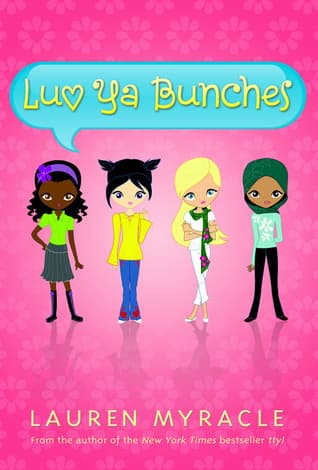
Lauren Myracle (2009)
Genre
Children's / Young Adult
Reading Time
240 min
Key Themes
See below
Sign in to track this book
Four middle school girls with flower names, from different cliques, find their lives entwined through messages, blogs, and film dreams, all while navigating the social scene led by the school's queen bee.
The novel begins on the first day of seventh grade. We meet Katie-Rose, an aspiring filmmaker, through her screenplay. Yasaman, a computer expert, communicates via instant messages. Milla, a popular girl and Modessa's second-in-command, navigates the social scene. Violet, the new girl, feels out of place and observes the established groups. Modessa, the queen bee, immediately shows her dominance, making it clear she controls the social order. Violet tries to find her place but struggles to connect, feeling isolated among the busy school halls and unspoken popularity rules.
Modessa controls the school's social structure, using her blog, 'Modessa's Memos,' to spread gossip and keep her power. She subtly manipulates friendships and pushes away those who don't fit her standards. Katie-Rose, Yasaman, Milla, and Violet, despite their different social standings, share a common trait: their names are all flowers. This detail is initially overlooked by the girls but hints at a connection Modessa tries to prevent. The girls remain cautious of each other, influenced by Modessa's rules and their own insecurities.
An art class assignment requires students to work in pairs on a photography project. Violet, being new, is paired with Katie-Rose, who is more interested in directing her own films than collaborating. Their first interactions are awkward. Katie-Rose is bossy, while Violet is shy. Despite their differences, the project forces them to spend time together, slowly breaking down barriers. They begin to see each other's personalities beyond their first impressions, though a real friendship is still far off.
Yasaman, known for her computer skills, is drawn into Modessa's circle. Modessa, seeing Yasaman's talent, asks for help with tech tasks, including managing her influential blog. Yasaman, flattered and eager to fit in, agrees, even when some of Modessa's requests are unethical. This involvement puts Yasaman in a difficult position, torn between wanting social acceptance and her growing discomfort with Modessa's manipulation. She sees firsthand the harm Modessa's gossip can cause.
Milla, a popular girl and Modessa's lieutenant, begins to doubt her role in the 'A-List' hierarchy. She sees Modessa's cruelty and manipulation, especially how Modessa treats those outside their group. A specific incident, perhaps involving another student being publicly shamed, makes Milla reflect on her own involvement. She starts to feel guilty and questions if keeping her popular status is worth sacrificing her integrity. These internal struggles mark the start of her disillusionment with Modessa.
Modessa's blog, 'Modessa's Memos,' causes significant conflict. A particularly harsh or untrue post targeting a student causes widespread upset, and the school administration might get involved. This incident shows the destructive power of Modessa's gossip and further alienates students, including some who were previously neutral. Yasaman, who helped Modessa with the blog, feels increasing guilt. The event acts as a catalyst, sparking broader discontent with Modessa and making students question her authority and the validity of her 'A-List' status.
As Modessa's actions become more problematic, Katie-Rose, Yasaman, Milla, and Violet find themselves, almost by chance, sharing a common enemy. Violet, still trying to fit in, finds common ground with Katie-Rose through their photography project. Yasaman, burdened by her involvement with Modessa's blog, starts to confide in others. Milla, having distanced herself from Modessa, is now more open to new connections. This shared experience of being targeted or disillusioned by Modessa's behavior begins to form an unexpected alliance among the four girls, slowly turning them into a group.
The girls decide they can no longer tolerate Modessa's behavior. They realize that by combining their strengths, they might be able to challenge her. Katie-Rose suggests using her filmmaking skills to expose Modessa's true nature, perhaps creating a documentary or a satirical video. Yasaman offers her tech skills to help with editing and sharing. Milla, with her knowledge of Modessa's strategies, provides insights. Violet, initially hesitant, finds her voice and contributes her perspective. This collaboration is a turning point, as they actively work together for the first time.
The girls put their plan into action. Using Katie-Rose's vision, Yasaman's tech skills, Milla's insights, and Violet's observations, they create a compelling piece of media—a video, a blog post, or a combination—that subtly exposes Modessa's manipulative and cruel behavior. This 'unveiling' is shared with the students, perhaps during an assembly or through a viral online post. The impact is immediate. Students who were once intimidated by Modessa begin to see her for who she truly is, leading to a shift in the school's social dynamic and Modessa's loss of power.
With Modessa's reign over, the social climate at Northwood Middle School changes. The strict cliques loosen, and a more inclusive atmosphere appears. Katie-Rose, Yasaman, Milla, and Violet, having successfully challenged the established order, find their bond strengthened. They realize they genuinely like and respect each other, despite their initial differences. Their individual strengths complement one another, and they discover what true friendship means. The novel ends with the four girls solidifying their 'Bunches' friendship, ready to face future challenges together.
The Protagonist
Katie-Rose learns to channel her strong will into collaborative efforts and develops empathy for others, moving from an individualistic artist to a valued friend.
The Protagonist
Yasaman moves from being a manipulated follower to finding her voice and using her talents for positive change and genuine friendship.
The Protagonist
Milla evolves from a complicit follower to an independent thinker who prioritizes true friendship and moral integrity over social status.
The Protagonist
Violet gains confidence and finds her voice and a true sense of belonging by forging authentic friendships and standing up for what is right.
The Antagonist
Modessa experiences a significant loss of social power and influence, being dethroned from her queen bee status.
The Supporting
Amber's arc is less developed, primarily remaining a loyal follower of Modessa throughout the story.
The Supporting
Ms. G. remains a consistent, positive influence, providing guidance and opportunities for the protagonists.
The novel explores how friendships form, dissolve, and change during middle school. It shows the initial superficiality of some alliances, like Milla's with Modessa, and contrasts it with the deeper connections that develop between the four protagonists. The girls' journey from strangers to allies to close friends shows that true friendship can come from unexpected places, often built through shared experiences and mutual respect, rather than social hierarchies. The story emphasizes choosing friends who uplift and support you.
“''Sometimes the best flowers grow in the wildest, most unexpected gardens.'”
Modessa's blog, 'Modessa's Memos,' is a way for her to gain social power and manipulate others. The novel shows how online platforms can spread gossip, build or destroy reputations, and create fear. Yasaman's reluctant involvement in managing the blog highlights the ethical issues with digital communication. The theme emphasizes the responsibility that comes with an online presence and the potential for both harm and empowerment that social media holds for young people, as the girls eventually use digital means to counter Modessa.
“'Words, even online, have a way of leaving bruises.'”
Each of the four protagonists has unique talents and personalities – Katie-Rose's artistic vision, Yasaman's tech skills, Milla's social awareness, and Violet's quiet observation. Initially, some, like Yasaman and Milla, are tempted to conform to Modessa's social norms for acceptance. However, the story champions the idea that embracing one's individuality is more rewarding than trying to fit into a mold. Their collective success against Modessa comes from using their distinct skills, proving that standing out can be a strength.
“'Why be a rose in a bouquet when you can be a whole field of wildflowers?'”
A core theme of the book is the courage it takes to confront bullying and social injustice. Modessa's character shows social bullying, using her popularity to intimidate and control others. The journey of Katie-Rose, Yasaman, Milla, and Violet is about finding the collective strength to challenge this power dynamic. Their decision to work together to expose Modessa's manipulation shows the importance of not being a passive bystander and how collective action can dismantle oppressive social structures, even in a middle school setting.
“'Sometimes, being quiet is just as bad as being mean.'”
The story is told through various narrative formats, reflecting different characters' viewpoints.
The novel employs an inventive narrative style, utilizing different forms of media to tell the story. Katie-Rose's perspective is often presented through her screenplays, Yasaman's through instant messages and blog coding, Milla's through more traditional narrative, and Violet's through internal monologue or blog posts. This allows the reader to experience the story from multiple angles, gaining insight into each character's inner world, thoughts, and unique way of processing events. It also highlights the different ways middle schoolers communicate and interact in the digital age.
The girls' flower names subtly link them and symbolize their blossoming friendship.
The fact that all four protagonists – Katie-Rose, Yasaman, Milla, and Violet – are named after flowers is a recurring motif. Initially, it's a simple, almost coincidental detail. However, as the story progresses and their friendship blossoms, the flower names become symbolic of their individual growth, their collective strength, and the beauty of their developing bond. It hints at their inherent connection and the potential for them to 'bloom' together, contrasting with Modessa's more harsh and less natural imagery.
A fictional blog used as a tool for social manipulation and information dissemination.
Modessa's Memos is a crucial plot device, serving as the primary instrument of Modessa's social power. It is her platform for spreading gossip, making pronouncements, and controlling the social narrative of Northwood Middle School. It creates conflict by targeting individuals and setting social norms, and it also functions as a central point around which Yasaman's tech skills are utilized and Milla's disillusionment grows. Ultimately, it becomes a target for the protagonists' counter-strategy, highlighting the power of online media.
A school assignment that forces two protagonists to interact and collaborate.
The photography project assigned in art class is a catalyst for the initial interaction between Violet and Katie-Rose. It forces two characters who might not otherwise connect to spend time together, overcome their differences, and begin to understand each other. This device is essential for breaking down their initial barriers and laying the groundwork for their eventual friendship. It provides a structured environment for character development and the slow forging of a relationship that becomes central to the plot.
“Luv ya bunches, girl.”
— The main character, Winnie, often uses this phrase to express affection to her best friend, Amy.
“Sometimes it feels like everyone else knows what they're doing, and I'm just fumbling around.”
— Winnie reflects on her insecurities and feelings of being lost during a difficult period.
“A true friend is someone who lets you be yourself, even when 'yourself' is a little bit messy.”
— Winnie contemplates the nature of true friendship after a disagreement with Amy.
“Growing up is weird. One minute you're playing with dolls, the next you're trying to figure out boys and high school.”
— Winnie muses on the rapid changes and challenges that come with adolescence.
“It's okay to not have all the answers. Nobody does, even if they pretend to.”
— An adult character offers Winnie some wisdom when she's feeling overwhelmed.
“Sometimes you just need to scream into a pillow, and that's perfectly normal.”
— Winnie finds a way to cope with her frustrations and emotions privately.
“Being brave doesn't mean you're not scared. It means you do it anyway.”
— Winnie gathers courage to face a difficult conversation or situation.
“The best kind of day is when you laugh so hard your stomach hurts.”
— Winnie recalls a joyful moment shared with her friends.
“You can't control what other people do, but you can control how you react.”
— Winnie learns a valuable lesson about managing her own feelings in response to others' actions.
“Even when things are tough, there's always something good if you look for it.”
— Winnie tries to maintain a positive outlook despite facing challenges.
“Secrets are heavy. Sometimes sharing them makes them lighter.”
— Winnie considers confiding in someone about a secret she's been keeping.
“It's never too late to say you're sorry, or to forgive.”
— Winnie reflects on mending a broken relationship or friendship.
“Home isn't just a place; it's the people who make you feel safe.”
— Winnie finds comfort and belonging in her relationships.
“Don't ever let anyone dull your sparkle.”
— A supportive character encourages Winnie to embrace her unique self.
Ready to see how well you understood this book? Take our interactive quiz with 10 questions.

Biography coming soon.
Dan Gemeinhart
4.5

Kate O'Hearn
4.4

Jeanne Birdsall
4.4

Jen Wang
4.4
Wendelin Van Draanen
4.3

John Marsden
4.3

Chris Van Allsburg
4.3
Jennifer A. Nielsen
4.2